
Introduction
Scalable TMS software becomes essential the moment your trucking business starts expanding.
What works with 5 trucks rarely works at 20. Dispatch starts getting harder to manage without the right dispatching software, driver communication becomes inconsistent, and billing delays begin affecting cash flow. Growth brings opportunity, but without the right trucking management software, it also creates operational pressure.
A platform like Fast Forward TMS is designed to handle this shift. As a reliable carrier TMS software, instead of forcing you to change systems as you grow, it evolves with your operations, keeping everything structured from day one.
This perspective comes from Dr. Nitin Shankar, Product Owner at Fast Forward TMS, who brings over 18 years of experience in transportation technology, carrier finance, and SaaS platforms. His work focuses on building systems that solve real operational challenges for carriers and dispatch teams.
Key Takeaway
- Scaling a fleet without the right system leads to loss of control as dispatch, communication, and billing start breaking down
- Growth increases operational complexity, which cannot be managed with manual processes or basic trucking management software
- A system like Fast Forward TMS works as a reliable carrier TMS software that keeps operations structured at every stage
- As your fleet grows, using the right dispatch software for trucking and connected fleet management software becomes essential to maintain efficiency
- The real advantage of scalable TMS software is the ability to grow your business without changing systems or losing operational control
What Happens When Your Fleet Starts Growing
Fleet growth sounds good on paper, but operationally, this is where things start slipping.
At 5 to 10 trucks, dispatch is manageable. Once you cross that, small inefficiencies start showing up. Load assignments take longer without proper truck load management software, drivers call more frequently for updates, and coordination starts depending on constant follow-ups instead of structured dispatch software for trucking.
As the fleet grows further, these small issues compound. Dispatch becomes reactive instead of planned. Drivers miss updates. Billing starts lagging behind operations. You are moving more loads, but with less control.
This is not a capacity problem, it is a system problem.
That is exactly where Fast Forward TMS changes the equation. Instead of letting growth create pressure, it keeps dispatch, communication, and financial workflows structured as your fleet expands with a connected fleet management software.
How Fast Forward TMS Scales With You at Every Stage
Growth in trucking is not one jump, it happens in stages. The real advantage of Fast Forward TMS is that you do not need to change systems at each stage. It evolves with your operations as a scalable carrier TMS software designed for TMS for small to large fleets.
Stage 1: Small Fleet (1–10 Trucks)
At this stage, most operations are manual. Dispatch happens through calls, updates are scattered, and tracking is limited.
Fast Forward TMS helps you:
Bring dispatch into one structured system
Track loads and drivers in one place
Reduce dependency on calls and manual coordination
You move from managing chaos to building a clear operational foundation with modern trucking management software.
Stage 2: Growing Fleet (10–50 Trucks)
This is where things usually start breaking.
Fast Forward TMS helps you:
Centralize dispatch and remove confusion
Keep drivers updated with real-time visibility
Automate invoicing and reduce payment delays
Keep dispatch, drivers, and billing connected
Instead of reacting to problems, you start controlling operations using a reliable fleet management software.
Stage 3: Scaling Fleet (50+ Trucks)
At this level, complexity increases fast and mistakes become expensive.
Fast Forward TMS supports you by:
Automating workflows across dispatch, tracking, and billing
Managing multiple drivers, routes, and loads efficiently
Providing real-time operational visibility
Giving insights to improve decisions and performance
Here, the system is no longer just a tool, it becomes part of your growth engine powered by carrier TMS software.
In simple terms, you are not changing how you work every time you grow. The system grows with you, keeping everything structured at every stage.
Key Capabilities That Make Scaling Easy
What makes Fast Forward TMS effective is not just features, but how those features support growth without adding complexity. It works as a connected fleet management software built for scaling operations.
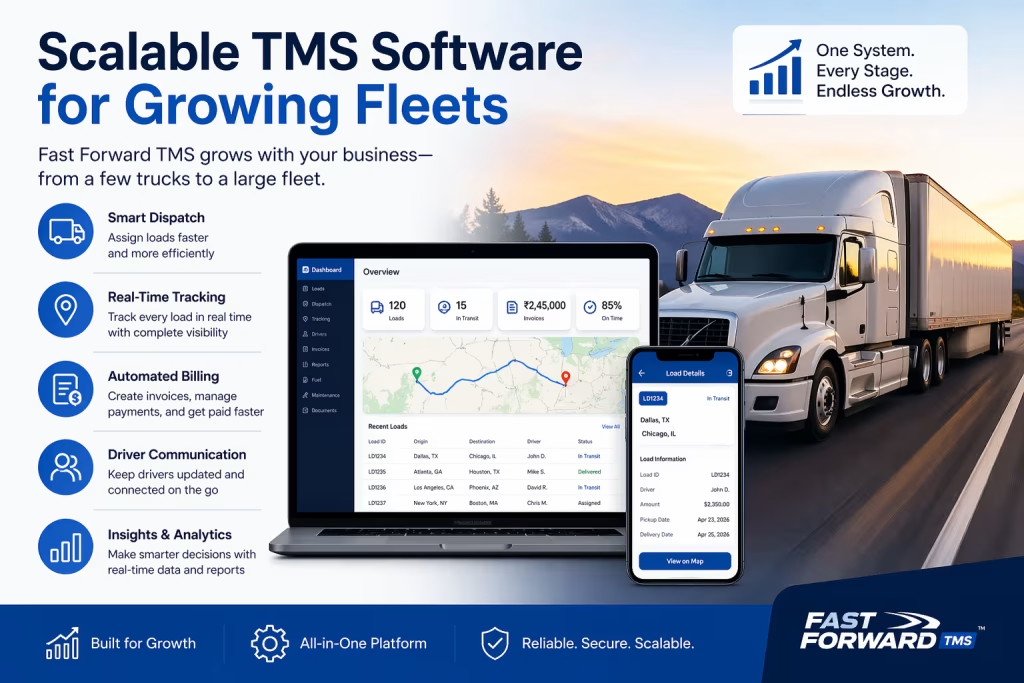
Smart Dispatch Management
As load volume increases, dispatch can become difficult to manage. The system keeps assignments structured so you can handle more loads efficiently with reliable dispatch software for trucking.
Real-Time Tracking and Visibility
You always have clear visibility into your trucks and shipments with truck tracking software.This reduces constant follow-ups and helps you make faster, better decisions.
Automated Billing and Settlements
As operations grow, manual invoicing leads to delays and errors. Automation ensures billing stays accurate and improves cash flow.
Driver Communication System
Drivers receive updates directly within the system through a driver mobile app instead of relying on calls. This keeps communication consistent and reduces gaps.
Compliance and Documentation Management
Managing documents manually becomes risky at scale. The system keeps records organized and helps maintain compliance as your fleet expands.
Analytics and Performance Insights
With better data visibility through analytics software, you can track performance, identify inefficiencies, and make smarter business decisions.
Each capability works together to ensure that growth remains structured and manageable.
Real Impact on Growing Trucking Businesses
When your system scales with your fleet, growth becomes easier to manage instead of harder to control.
With Fast Forward TMS, operations become more stable as your fleet expands:
- Load assignments move faster without constant follow-ups or manual coordination
- Errors reduce as dispatch and billing follow a structured workflow
- Payments stay consistent with smoother invoicing and driver payroll software
- Drivers remain updated without repeated calls, reducing communication gaps
- Daily operations stay under control even as load volume increases
As your fleet grows, these improvements make a clear difference. You are not just handling more loads, you are managing them with better control and less operational stress.
Signs Your Current System Is Not Built to Scale
Growth should make operations smoother, not more stressful. If the opposite is happening, your current system may be the problem.
Here are clear signs your setup is not built for scaling:
You still rely heavily on spreadsheets or manual tracking instead of proper dispatch software for trucking
Dispatch depends on one or two people to manage everything
Drivers keep calling for updates instead of getting real-time visibility
Billing delays are increasing as load volume grows
Errors are becoming more frequent with expansion
These issues do not appear suddenly. They grow with your fleet and slowly start affecting efficiency, cash flow, and overall control.
This is the point where many carriers either struggle to keep up or switch to a reliable carrier TMS software that can handle growth.
With Fast Forward TMS, these gaps are addressed early, so scaling does not turn into operational pressure.
Why a Carrier-Focused TMS Makes the Difference
Not every TMS is built for carriers, and this difference becomes clear as your fleet grows.
Many tools in the market are generic trucking management software designed for brokers, not for managing trucks, drivers, and daily operations. This creates gaps in execution.
Fast Forward TMS is built specifically for carriers, which makes a practical difference:
- Works according to real dispatch workflows used by fleet operators
- Supports driver-heavy operations instead of just load tracking
- Keeps dispatch, drivers, and back-office teams connected in one system
- Focuses on execution and operational control, not just visibility
As your fleet grows, this becomes important. A system designed as a proper fleet management software helps you scale smoothly, while generic tools create friction.
Choosing a carrier-focused TMS is not just about features, it directly impacts how efficiently your business grows.
Conclusion
Scaling a trucking business is not just about adding more trucks. It is about maintaining control as complexity increases.
Without the right fleet management software, growth starts creating pressure across dispatch, communication, and financial workflows. Small inefficiencies turn into bigger operational challenges.
Fast Forward TMS is built to handle this transition. It supports your business from early-stage operations to large-scale fleet management without forcing you to change systems or processes.
The goal is simple: grow without losing control.
With a scalable TMS software and the right dispatch software for trucking in place, your operations stay structured, your team stays aligned, and your business is ready to handle the next stage of growth with confidence.
FAQs
What is scalable TMS software?
Scalable TMS software is a system that adapts to your fleet size, workflows, and operational complexity as your trucking business grows. It helps carriers scale without changing tools.
How does Fast Forward TMS help in fleet growth?
It works as a carrier TMS software by centralizing dispatch, improving driver communication, automating billing, and keeping operations structured as your fleet expands.
When should a trucking company start using a TMS?
A trucking company should start using a TMS when manual processes or basic trucking management software can no longer handle dispatch, communication, and billing efficiently.
Can a TMS handle both small and large fleets?
Yes, especially systems designed as TMS for small to large fleets, which support operations at every stage without requiring system changes.
Why is a carrier-focused TMS important?
Because it functions as a purpose-built fleet management software that aligns with real trucking workflows like dispatch, driver management, and load execution.