
Introduction
Dispatchers play a pivotal role in keeping trucking operations running smoothly every day. They assign loads, track drivers, manage paperwork, and ensure compliance with industry rules. When these tasks are handled manually through spreadsheets, phone calls, and paper records, operations slow down, mistakes multiply, and growth becomes harder to achieve.
A modern TMS Software Dispatch system changes the game. By automating load assignments, providing real-time fleet visibility, and digitizing paperwork, it reduces dispatcher workload and improves accuracy. According to Gartner (2024), fleets using TMS platforms have cut dispatcher admin time by up to 40%, proving how automation reshapes the trucking industry.
In this guide, we’ll explore the top 5 ways a TMS reduces manual work for dispatchers, highlight the key challenges of manual processes, and explain how carriers can successfully adopt dispatch automation.
What is TMS Dispatch in Trucking?
TMS Dispatch in trucking refers to using a TMS Software to automate daily dispatch operations. These include scheduling, assigning loads, tracking drivers, and managing communication between dispatchers and drivers.
A TMS Software platform brings all dispatch operations together on a single platform, eliminating the need for spreadsheets, phone calls, and manual logs. This streamlines workflows, eliminates repetitive work, and offers dispatchers and drivers instant operational visibility.
Carriers that adopt TMS dispatch systems experience fewer errors, faster deliveries, and improved fleet productivity, whether managing 5 trucks or 500.
Also Read – How Trucking Dispatch Software Optimizes Load Planning & Delivery
What Are the Primary Functions of a TMS Dispatch Software?
Modern TMS Software for dispatch is built to simplify trucking operations, reduce manual work, and boost overall fleet efficiency. By centralizing dispatch tasks on a single digital platform, dispatchers can save time, minimize errors, and make informed decisions quickly. The key functions of TMS dispatch software include:
Automated Load Assignment
TMS dispatch software automatically matches loads with the most suitable drivers based on factors like real-time location, availability, truck capacity, and Hours of Service (HOS) compliance. This automation eliminates guesswork, reduces scheduling conflicts, prevents empty miles, and ensures each shipment is assigned to the right driver efficiently.
Real-Time Fleet Visibility
With integrated GPS tracking, dispatchers can monitor truck locations, estimated arrival times (ETAs), and potential delays instantly. This real-time visibility allows for proactive route adjustments, faster decision-making, and improved communication with customers, ensuring that shipments are delivered on time.
Digital Document Management
Paperwork such as proof of delivery (PODs), receipts, and invoices can slow down dispatch workflows and create errors. A TMS dispatch system replaces paper-based processes with secure digital storage. Dispatchers and drivers can upload, access, and share documents instantly, simplifying billing, compliance, and record-keeping while eliminating manual errors.
Seamless Driver Communication
Communication between dispatchers and drivers is centralized through in-app messaging, reducing the need for phone calls or texts. Dispatchers can quickly relay updates, handle route changes, or share load details in real time. This streamlined communication ensures fewer miscommunications and faster response times across the fleet.
These core functions form the foundation of a TMS dispatch system, enabling carriers to reduce manual work, improve operational efficiency, and maintain a competitive edge in the fast-paced trucking industry. By leveraging these features, fleets can optimize routes, enhance productivity, and scale operations with ease.
What Major Challenges Do Dispatchers Face with Manual Truck Operations?
Many carriers still depend on spreadsheets, whiteboards, and phone calls to assign drivers and manage routes, but TMS software can replace these manual processes efficiently. While these methods may work for very small fleets, they create significant challenges as operations expand. Manual truck dispatching can lead to inefficiencies, increased errors, delayed deliveries, and higher administrative workloads. Key challenges include:
- Scalability Issues – Manual dispatch cannot keep up with increasing fleets or load volumes, leading to burnout, poor load utilization, and higher costs.
- Error-Prone Processes – Assigning drivers, tracking deliveries, and maintaining compliance manually increases mistakes, missed deadlines, and unhappy customers.
- Time-Intensive Operations – Adjusting schedules, handling cancellations, and tracking truck status manually slows decision-making and reduces fleet responsiveness.
These challenges highlight why a TMS Dispatch system is critical for carriers seeking efficiency, accuracy, and scalable operations.
Top 5 Ways TMS Dispatch Cuts Down Manual Work for Dispatchers
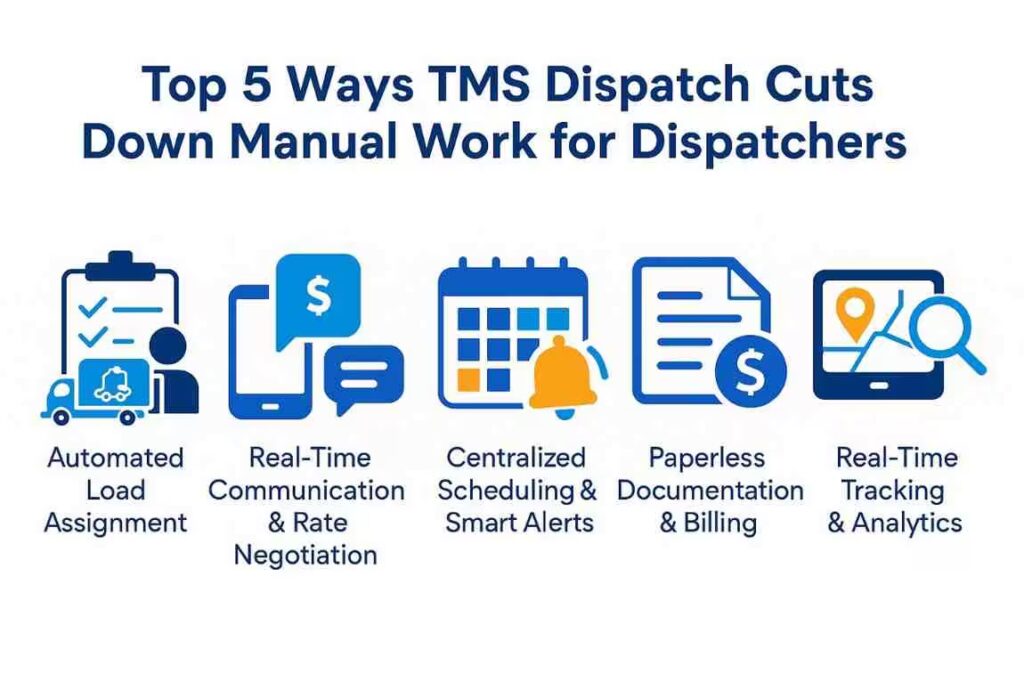
Manual dispatching can overload teams with constant phone calls, spreadsheets, and paperwork, which TMS software can automate.. A modern TMS Dispatch system automates these repetitive tasks, helping dispatchers save time, reduce errors, and focus on smarter decision-making. Key ways TMS dispatch reduces manual work include:
Automated Load Assignment
Rather than relying on manual assignment, the system automatically identifies the ideal driver using live location data, availability status, truck capacity, and compliance criteria. Features like Driver Availability & Smart Geo-Location Matching ensure the closest and most suitable driver is assigned instantly, reducing empty miles and eliminating scheduling conflicts.
Real-Time Communication & Rate Negotiation
Endless calls and texts slow operations. Load Offer Negotiation allows dispatchers to send load offers digitally to drivers, enabling instant acceptance or counter-offers for real-time rate negotiation. All communication is stored in the system, saving hours of follow-up and providing transparency.
Centralized Scheduling & Smart Alerts
Managing multiple loads manually leads to errors and overlaps. A TMS dashboard consolidates schedules, offers drag-and-drop rescheduling, and sends automatic alerts for conflicts or delays. This ensures smoother operations at scale.
Paperless Documentation & Billing
Paper-based PODs, receipts, and invoices slow billing. With TMS, drivers upload documents via a TMS mobile app, which links directly to billing. Invoices are automatically created, missing documents are flagged, and dispatchers can focus on operations instead of administrative tasks.
Real-Time Tracking & Analytics
Instead of calling drivers for updates, dispatchers monitor locations, ETAs, and traffic conditions on a live dashboard. Built-in analytics generate reports on performance, fuel usage, and driver efficiency—enabling faster, data-driven decisions.
Also Read – Top 10 Features of Trucking Management System Software: TMS Features Explained
TMS Dispatch Automation vs. Manual Dispatch: Key Differences
| Feature | Manual Dispatch | Automated TMS Dispatch |
| Speed | Hours spent on calls, texts, and spreadsheets | Instant assignments with real-time optimization |
| Accuracy | Higher risk of errors, missed HOS compliance | Algorithmic matching reduces mistakes |
| Scalability | Requires more staff for more loads | Handles thousands of loads without extra staff |
| Customer Visibility | Limited or no updates | Live tracking, ETAs, proactive notifications |
| Cost Efficiency | Empty miles, idle time, slow billing | Optimized routes, paperless billing, faster cash flow |
| Compliance | Manual HOS/IFTA checks | Automated alerts and audit-ready records |
How to Implement TMS Dispatch Software: Step-by-Step
Implementing a TMS Software for dispatch system goes beyond installing software—it’s about transforming your fleet operations for efficiency, accuracy, and scalability. A Step-by-Step Approach to Ensure a Smooth Transition:
1. Evaluate Current Workflows
Start by identifying bottlenecks in scheduling, communication, and paperwork. Understanding these pain points helps define clear goals for the Transportation Management System (TMS) implementation and ensures the system addresses your fleet’s specific needs.
2. Select the Right TMS Platform
Choose a TMS solution that aligns with your fleet size, budget, and long-term growth plans. Key TMS features to consider include automated load assignment, real-time truck tracking, driver mobile apps, analytics dashboards, and compliance tools.
3. Train Your Team Thoroughly
Even intuitive systems require proper onboarding. Provide hands-on training for dispatchers and drivers to ensure everyone is comfortable using the platform, reducing errors and boosting adoption rates.
4. Pilot Before Full Deployment
Begin with a small group of trucks or specific routes. A phased rollout allows you to test features, identify issues, and build confidence among your team before scaling system-wide.
5. Monitor, Adjust, and Improve
Use TMS Analytics and reporting tools to track performance, optimize workflows, and refine system settings. Continuous monitoring ensures that your TMS delivers maximum operational efficiency and ROI.
Following these steps helps carriers adopt TMS dispatch software smoothly, minimizes disruption, and unlocks the full potential of automation for smarter, faster fleet management.
Why Fast Forward TMS Stands Out for Streamlined Dispatch Automation
Fast Forward TMS Software is designed for carriers who prioritize growth, efficiency, and ease of use. Its intuitive interface, rapid implementation, and reliable customer support streamline dispatch operations for fleets of all sizes without adding complexity. The platform is cost-effective, offering the first user free, making it an ideal solution for both small fleets and growing carriers. Backed by 7+ years of product development and trusted by over 1,500 companies worldwide, more than 95% of carriers report smoother dispatch workflows after adoption. With advanced features such as automated load assignments, real-time tracking, Load Offer Negotiation, and Driver Availability & Smart Geo-Location Matching, Fast Forward TMS empowers carriers to operate smarter, scale faster, and stay competitive in today’s fast-paced logistics environment.
Also Read – How Fast Forward TMS Stands Out as the Best Choice in Carrier TMS Software
Conclusion
Dispatchers play a critical role in trucking operations, but relying on manual processes can slow efficiency and increase errors. A TMS Dispatch system automates load assignments, digitizes documents, and centralizes communication, giving carriers real-time visibility across their fleet.
Whether managing a small fleet or hundreds of trucks, adopting TMS helps reduce operational mistakes, streamline workflows, and improve service reliability. With advanced features like Load Offer Negotiation and Driver Availability & Smart Geo-Location Matching, Fast Forward TMS enables fleets to optimize operations, save time, and stay competitive in today’s fast-moving logistics environment.
FAQ’s
What software do truck dispatchers use?
Truck dispatchers use TMS software to assign loads, track trucks in real time, and manage digital paperwork efficiently. GPS tracking tools provide live location updates, helping dispatchers optimize routes and improve delivery accuracy.
Can TMS software reduce paperwork for truck dispatchers?
Yes. TMS software converts bills of lading, receipts, and delivery forms into digital records, significantly reducing manual paperwork. This speeds up billing, ensures compliance, and allows dispatchers to focus on operations instead of chasing documents.
How does dispatch software work for trucking operations?
Dispatch software automates load assignment, routing, and scheduling, providing real-time visibility of trucks and deliveries. By centralizing communication and digitizing documentation, TMS helps dispatchers make quicker, informed decisions while boosting overall fleet productivity.
Can TMS dispatch software be used for small trucking fleets?
Yes, TMS dispatch software is designed for fleets of all sizes. From single-truck owner-operators to large carriers, modern platforms scale to meet operational needs and support growth efficiently.
What Is the Typical Implementation Timeline for TMS Dispatch Software in Trucking Fleets?
Cloud-based TMS dispatch software can typically be implemented within days or a few weeks. The timeline varies based on fleet size, operational complexity, and staff training requirements, ensuring a seamless transition with minimal disruption to daily trucking operations.