

Introduction: Why CDL Compliance Changes Matter More in 2026
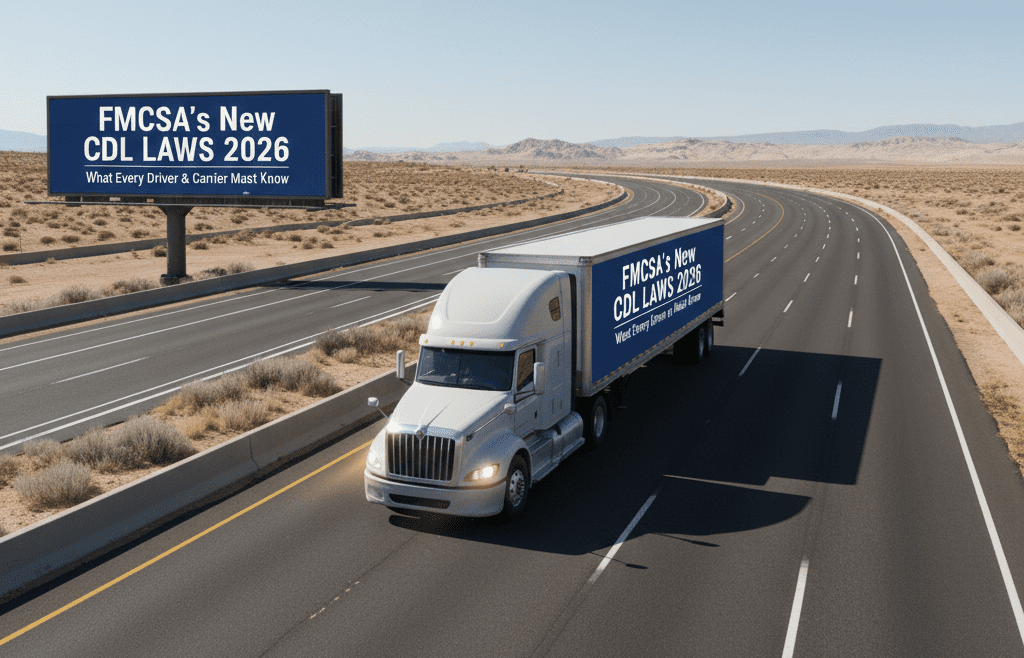
CDL compliance in 2026 shifts from periodic checks to continuous enforcement under the 2026 CDL laws.
Driver records are now cross-verified across inspections, medical certifications, and safety databases under the oversight of the Federal Motor Carrier Safety Administration. Issues that once appeared during audits can now trigger immediate roadside action.
For carriers, the 2026 CDL laws directly affect operating authority, insurance, safety scores, and driver availability. Even small record gaps can lead to penalties or out-of-service orders.
In 2026, CDL compliance is no longer paperwork. It is an operational risk that must be managed continuously.
Key Takeaways: FMCSA CDL Laws for 2026
- The 2026 CDL laws are enforcement-driven, not a complete rewrite of licensing requirements
- The Federal Motor Carrier Safety Administration is using stronger data sharing to monitor CDL, medical, inspection, and safety records
- CDL record accuracy is now as critical as holding a valid commercial driver license
- English proficiency and medical certification are enforced more consistently during roadside inspections
- Inconsistent or outdated CDL records can lead to immediate violations or out-of-service orders
- Owner-operators face higher downtime risk, while fleets face greater audit and insurance exposure
- The 2026 CDL laws directly impact DOT safety scores, insurance premiums, and operating authority
- Manual CDL tracking significantly increases compliance risk in 2026
- Centralized compliance platforms like Fast Forward TMS support real-time visibility into driver records and compliance status
- Early preparation and proactive compliance management are more cost-effective than corrective action after enforcement begins
Related Blog : Top Trucking Industry Trends in 2026 That Will Reshape Fleet Operations
Who Is Issuing These Changes?
Understanding the Role of the Federal Motor Carrier Safety Administration
The Federal Motor Carrier Safety Administration sets national CDL safety and compliance standards, while states handle CDL issuance and day-to-day enforcement.
Under the FMCSA CDL regulations 2026, the agency is not simply introducing new rules. It is strengthening enforcement through improved data sharing between federal and state systems. These FMCSA compliance updates allow faster detection of expired, inconsistent, or disqualified CDL records.
As a result, CDL compliance issues now surface sooner and with less warning for both drivers and carriers.
What Are the New CDL Laws and Updates Taking Effect in 2026?
The 2026 CDL laws focus on stricter enforcement rather than entirely new regulations. Most changes come from faster verification, stronger data alignment, and closer coordination between inspections and audits.
1. Stricter CDL Verification and Record Consistency
Under the 2026 CDL laws, CDL records must remain consistent across licensing, inspection, and safety systems. Even minor mismatches can now trigger violations.
2. Expanded English Proficiency Enforcement
English proficiency is enforced more consistently during roadside inspections. Drivers must clearly understand instructions and respond appropriately to officers.
3. Medical Certification and CDL Status Monitoring
Medical certifications are monitored more closely. Expired or missing records can immediately affect CDL status and lead to out-of-service orders.
4. CDL Downgrade and Disqualification Triggers
Repeat violations or unresolved compliance issues can result in faster CDL downgrades or disqualifications under the 2026 CDL laws.
5. Increased Audit and Roadside Inspection Alignment
Roadside inspection violations now escalate more quickly into audits and enforcement actions, leaving less time for post-audit corrections.
Related Blog: 2026 Trucking Regulations: What Carriers Need to Know Before January
What Has Changed From 2025 to 2026?
The most significant change under the 2026 CDL laws is the speed of enforcement.
- 2025: Periodic checks and reactive enforcement
- 2026: Continuous monitoring and proactive enforcement
In 2025, many carriers could identify issues during audits and correct them later. In 2026, CDL records are monitored more frequently, and violations surface sooner through inspections and system checks.
This shift means carriers no longer have time to “fix it later.” Compliance gaps now create immediate operational risk.
Who Is Most Affected by the 2026 CDL Law Changes?
Owner-Operators
Owner-operators are fully responsible for compliance under the 2026 CDL laws. Any issue can result in immediate downtime with no backup driver.
Small and Mid-Sized Fleets
Smaller fleets face higher risk during onboarding. Manual tracking increases the likelihood of missed updates, affecting overall trucking compliance 2026.
Large Fleets
Large fleets face volume-based exposure. Managing CDL rules for carriers becomes more complex without centralized visibility and carrier safety compliance systems.
Common CDL Compliance Mistakes Carriers Will Be Penalized for in 2026
Carriers are penalized more often under the 2026 CDL laws for preventable compliance gaps rather than major violations.
Common mistakes include:
- Relying on manual or outdated driver records
- Delayed CDL or medical certificate updates
- Incomplete onboarding verification
- No centralized CDL compliance tracking
These issues are easy to overlook but now lead to faster enforcement and penalties.
What Carriers Must Do Now to Stay CDL-Compliant in 2026
To reduce risk under the CDL compliance requirements 2026, carriers must take a proactive approach.
Key actions include:
- Verifying all active CDL and medical records
- Standardizing driver onboarding checks
- Tracking CDL status continuously, not periodically
- Keeping documentation audit-ready at all times
Early preparation helps carriers avoid downtime, penalties, and last-minute corrections.
How Technology Helps Carriers Manage CDL Compliance in 2026
Manual CDL tracking no longer scales in 2026.
Centralized systems support trucking regulatory changes 2026 by helping carriers:
- Maintain accurate driver records
- Receive alerts for expirations or status changes
- Stay audit-ready with organized documentation
Technology reduces human error and improves compliance visibility across fleets.
How CDL Compliance Impacts Insurance, Audits, and Authority
CDL compliance issues now carry direct financial and operational consequences.
Repeated or unresolved CDL violations can increase insurance premiums and trigger closer scrutiny during audits. Poor compliance records also raise the risk of administrative actions that limit or suspend operating authority.
In 2026, insurers and auditors rely more heavily on compliance data, making clean CDL records essential for stability and growth.
Final Note: 2026 Is a CDL Compliance Reset
In 2026, CDL compliance is no longer just a regulatory task. Under the 2026 CDL laws, it is a business risk that affects uptime, insurance, and operating authority.
Carriers that prepare early gain stability, audit readiness, and credibility. Those that rely on reactive fixes face faster penalties and higher costs.
The message is clear: proactive compliance beats corrective action.
Frequently Asked Questions (FAQs)
Are there new CDL requirements in 2026?
Most changes focus on stricter enforcement of existing commercial driver license regulations, not entirely new requirements.
Will CDL laws change for owner-operators in 2026?
The rules are the same, but enforcement impacts owner-operators more directly, increasing downtime risk.
What happens if a driver’s CDL record is inconsistent?
Inconsistent records can trigger roadside enforcement, audit findings, or out-of-service orders until corrected.
How does CDL compliance affect DOT audits?
CDL violations increase audit risk and can negatively affect safety scores and audit outcomes.
Can carriers be penalized for driver CDL issues?
Yes. Carriers are responsible for accurate CDL records, and failures can result in penalties or higher insurance costs.


1 thought on “FMCSA’s New CDL Laws for 2026: What Every Driver & Carrier Must Know”
A really good blog and me back again.
Comments are closed.