

Introduction: Why 2026 Is a Structural Reset for Carriers
The 2026 trucking regulations signal a structural reset for carriers across the U.S. This is not just another compliance update. Regulatory reform, stricter enforcement, and shifting market conditions are converging at the same time, raising the bar for how fleets operate, compete, and stay profitable.
FMCSA actions already underway reinforce this shift. The agency has scheduled a new broker transparency Notice of Proposed Rulemaking (NPRM) for May 2026, while also moving forward with a delayed side-underride guard rule, now expected to take effect in January 2026 or later. These timelines reflect a broader regulatory push toward tighter oversight, safety accountability, and data-driven compliance.
At the same time, FMCSA registration modernization, stronger roadside enforcement, rising insurance pressure, and evolving safety expectations are colliding with slow capacity recovery and cautious freight demand. Together, these forces are reshaping how the trucking industry operates.
For carriers, this means higher compliance expectations and rising operating costs. But it also creates opportunity. Fleets that prepare early can reduce risk, control costs, and gain a competitive edge, while others struggle to keep up.
Key Takeaways: 2026 Trucking Regulations
- 2026 is a structural reset, not a routine compliance year. Enforcement, regulation, and market pressure are converging.
- MC Numbers are being phased out gradually, with FMCSA moving toward USDOT-only identification. Data consistency matters more than ever.
- English proficiency enforcement is stricter nationwide. Inspection outcomes depend on communication ability and documentation.
- Broker transparency rules are advancing into 2026, increasing the need for electronic records and audit-ready systems.
- Safety technology expectations are rising. AEB planning and voluntary speed limiters improve compliance and insurance positioning.
- 2026 is a preparation year for EPA 2027 rules. Most carriers are replacing equipment, not expanding fleets.
- Audits are continuous and data-driven. ELD, dispatch, and billing records must align.
- Capacity is tightening while demand stabilizes, giving compliant carriers more pricing leverage.
- Early preparation reduces risk and protects margins. Automation is becoming essential, not optional.
Overview of 2026 Trucking Regulations
The 2026 trucking regulations introduce phased rule updates, stricter enforcement, and FMCSA modernization. These changes go beyond paperwork and directly affect daily operations, driver readiness, and audit exposure.
Why the 2026 Regulations Matter
What makes 2026 different is how multiple changes work together rather than in isolation. Key drivers include:
- FMCSA registration modernization with greater reliance on USDOT identification
- Stronger roadside inspections and audit enforcement
- Increased focus on driver qualification, safety data, and documentation
- Industry preparation for future environmental and equipment rules
What Carriers Should Expect
As the 2026 trucking regulations take effect, carriers should expect:
- More detailed inspections and compliance reviews
- Higher penalties for documentation and qualification gaps
- Rising costs tied to insurance, safety, and equipment planning
- Greater pressure on underprepared fleets
Early alignment helps carriers reduce disruption and protect operations.
What Makes 2026 Different From Past Regulatory Cycles
Past regulatory changes were enforced periodically. In 2026, compliance becomes continuous.
FMCSA’s data-driven systems allow year-round monitoring tied to daily operations. Even small administrative gaps can now create serious risk.
What sets 2026 apart:
- Enforcement shifts from periodic checks to continuous oversight
- Greater use of digital data for compliance tracking
- Lower tolerance for expired filings or inconsistent records
Proactive compliance management is no longer optional.
Major Regulatory Changes Carriers Must Prepare For in 2026
The 2026 trucking regulations focus less on surprise mandates and more on stricter enforcement, system modernization, and accountability.
Key changes include:
USDOT Number Consolidation
FMCSA is moving toward USDOT-based identification through a phased transition. MC Numbers are not eliminated overnight, but inconsistent records can trigger administrative out-of-service actions.
Stronger English Proficiency Enforcement
Drivers must communicate clearly during inspections and understand road signs. Enforcement is more uniform nationwide, increasing the importance of hiring checks and training.
Broker Transparency Rulemaking
FMCSA is expected to advance broker transparency rules in 2026, increasing expectations for electronic recordkeeping and audit readiness.
Safety Technology Direction
Automatic Emergency Braking and other safety technologies are advancing through phased rulemaking, giving carriers time to plan rather than react.
USDOT Number Consolidation and MC Number Transition
USDOT number consolidation is one of the most important trucking compliance changes heading into 2026. While MC Numbers remain active during the transition, enforcement is increasingly focused on data accuracy across systems.
Carriers should update:
- Fleet signage to ensure USDOT numbers are correct and visible
- Internal systems such as a Carrier TMS Software, dispatch, and accounting
- Contracts and agreements with brokers and shippers
- Insurance certificates and FMCSA filings
In 2026, paperwork gaps can outweigh strong safety performance.
Related Blog: FMCSA Eliminates MC Numbers by October 2025: What Carriers Need to Know
English Proficiency Enforcement and Driver Readiness
English proficiency enforcement is applied more consistently nationwide in 2026. Drivers must communicate with inspectors and understand road signs.
Carriers should focus on:
- Validating language skills during hiring
- Training drivers for common roadside scenarios
- Documenting evaluations and training
Stronger driver readiness reduces inspection delays and compliance risk.
Broker Transparency Rules Expected in 2026
Broker transparency is a key part of trucking regulations 2026. Carriers should expect higher expectations for digital records and faster audit response times.
This impacts:
- Back-office systems that rely on manual processes
- Rate confirmations and transaction records
- Carrier-broker dispute resolution
Organized electronic documentation is becoming essential.
Safety and Equipment Regulations Shaping the Future
Safety and equipment rules are becoming more data-driven under the Trucking Regulations 2026. Inspection outcomes, maintenance records, and safety trends play a larger role in enforcement and insurance exposure.
Safety now directly affects uptime, costs, and competitiveness.
Automatic Emergency Braking (AEB)
AEB requirements are expected to roll out in phases, mainly affecting new trucks. Planning during normal replacement cycles helps control costs and reduce liability exposure.
Fleets that adopt safety technology early may also benefit from better insurance positioning.
Speed Limiters and Safety Best Practices
There is no confirmed federal speed limiter mandate for 2026. However, voluntary adoption supports safety scores, lowers accident severity, and improves fuel efficiency.
Many carriers are adopting speed limiters as a best practice rather than waiting for mandates.
Equipment, Emissions, and 2027 Readiness
While EPA 2027 emissions rules are still evolving, 2026 is widely viewed as a preparation year. Many fleets are replacing older equipment rather than expanding capacity.
This replacement-over-expansion strategy helps manage emissions readiness, maintenance costs, and long-term compliance risk.
You May Also Like to Read : 2026 Trucking Rules: What Carriers Need to Know Before January
2026 Trucking Compliance Timeline: What to Prepare and When
Late 2025 is the planning window for AEB rules and fleet budgets. Early to mid-2026 brings stronger enforcement, broker transparency progress, and deeper audit scrutiny. Early preparation helps carriers stay compliant, reduce risk, and protect operations.
Late 2025: Early Signals and Planning Phase
- Expected AEB supplemental rulemaking updates
- Budget planning for safety technology and compliance investments
- Fleet replacement planning to reduce regulatory and maintenance risk
Early to Mid-2026: Enforcement and Oversight Intensifies
- Continued nationwide English proficiency enforcement during inspections
- Broker transparency rule movement toward implementation
Higher audit frequency with strong focus on digital records and documentation
Trucking Industry Outlook 2026: Market, Rates, and Capacity
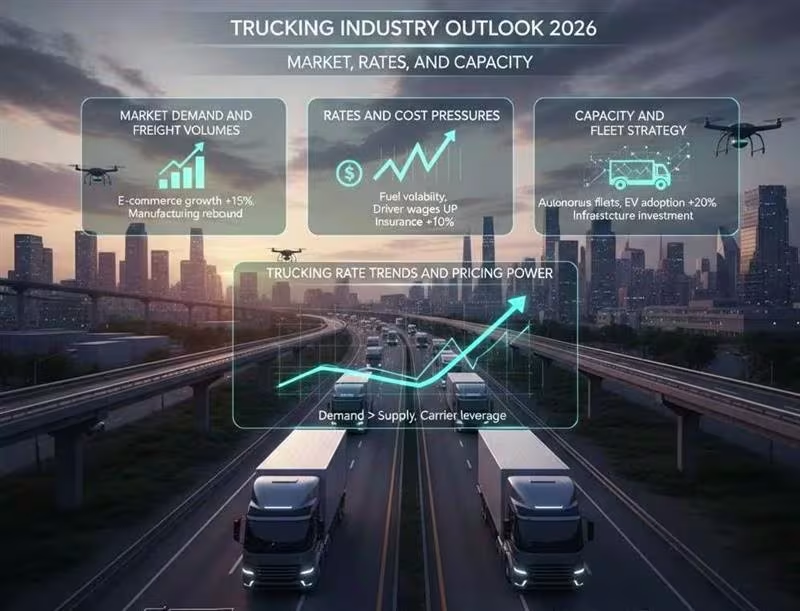
The trucking industry outlook 2026 points to a more disciplined market. After years of volatility, carriers are shifting from growth-at-all-costs to efficiency, compliance, and margin protection. Regulations, cost pressure, and technology adoption are reshaping how fleets plan capacity and pricing.
Market Demand and Freight Volumes
Freight demand is expected to stabilize rather than surge. Volumes will vary by lane and sector, with essential goods, dedicated contracts, and specialized freight showing stronger consistency than spot markets.
Rates and Cost Pressures
Rates may see modest improvement, but operating costs remain high. Insurance, equipment, labor, and compliance expenses will continue to squeeze margins. Carriers with strong contracts and clean safety records will be better positioned to negotiate rates.
Capacity and Fleet Strategy
Capacity growth is slowing. Many carriers are replacing older equipment instead of expanding fleets. This replacement-over-expansion approach helps manage emissions readiness, maintenance costs, and regulatory risk heading into 2026.
Trucking Rate Trends and Pricing Power
As capacity exits the market, pricing discipline is slowly returning. The gap between spot and contract rates is expected to narrow.
Reliable, compliant carriers gain leverage as shippers prioritize consistency over low rates.
Related Blog : Top Trucking Industry Trends in 2026 That Will Reshape Fleet Operations
Small vs. Large Fleets: How 2026 Regulations Impact Them Differently
The impact of 2026 trucking regulations varies widely based on fleet size, operational maturity, and access to resources. While large carriers often have scale advantages, smaller fleets can remain competitive with the right systems and discipline.
| Area | Small Fleets | Large Fleets |
| Compliance Readiness | Higher risk from limited staff | Dedicated compliance teams |
| Administrative Burden | Manual workflows increase exposure | Automation reduces audit risk |
| Technology Adoption | Budget constraints slow adoption | Easier investment |
| Cost Absorption | Higher per-truck impact | Costs spread across fleet |
| Equipment Upgrades | Often delayed | Phased planning easier |
Success in 2026 depends more on execution than fleet size.
Compliance Challenges for Small Fleets
Small fleets face higher per-truck costs, limited admin capacity, and manual workflows. Even small oversights can trigger audits under continuous enforcement.
Compliance Complexity for Mid-to-Large Fleets
Larger fleets face complexity at scale. System updates, broker audit exposure, and capital planning must stay aligned as regulations and market conditions evolve.
Across all fleet sizes, automation reduces risk and improves visibility.
HOS, ELD, and Audit Expectations in 2026
In 2026, HOS rules largely remain unchanged, but enforcement is becoming stricter. The FMCSA is increasingly cross-checking ELD logs with dispatch, billing, payroll, and fuel data. As a result, carriers need audit-ready systems to reduce risk, respond faster, and stay compliant under tighter scrutiny.
Rather than introducing major rule changes, regulators are focusing on how well carriers document and prove compliance. Desk audits are more frequent, and even small data gaps can trigger follow-up reviews or penalties. This shifts ELD and HOS compliance in 2026 from simple hour logging to full audit readiness. Carriers using integrated systems are better positioned to respond quickly and confidently than those relying on disconnected tools.
Why Some Carriers Will Struggle in 2026
For many fleets, 2026 will not be difficult because of one new rule, but because long-standing weaknesses will surface faster under tighter oversight. As 2026 trucking regulations and enforcement expand, small gaps that once went unnoticed are becoming costly problems.
Compliance gaps are exposed quickly. Missing filings, outdated registrations, or inconsistent records can now trigger administrative reviews or out-of-service actions. Continuous monitoring leaves little room for catch-up fixes.
Rising cost pressure meets weak visibility. Insurance, maintenance, and labor costs remain high. Carriers without clear per-load or per-truck cost visibility often continue hauling unprofitable freight longer than they should.
Manual operations are failing under scrutiny. Spreadsheets and disconnected tools cannot keep up with audits, broker transparency demands, or cross-checked ELD data. As enforcement becomes more data-driven, operational inefficiency directly increases compliance and financial risk.
How Carriers Should Prepare Now for 2026
Carriers preparing early for 2026 should centralize compliance data, digitize audits, plan fleet upgrades, manage insurance risk, and align operations with regulatory timelines to stay compliant and competitive.
- Centralizing compliance data
- Digitizing records and audit workflows
- Planning fleet upgrades in advance
- Monitoring insurance and liability exposure
- Aligning operations with regulatory timelines
Preparation reduces disruption and improves control.
Get Ready for 2026 With Confidence
The 2026 trucking regulations raise expectations for audits, documentation, and daily compliance. Carriers that prepare early reduce risk and stay ahead as enforcement tightens.
Fast Forward TMS helps carriers prepare by bringing key operations into one system, reducing last-minute compliance stress.
First User Free for Early 2026 Readiness
Get your first user free and prepare for the 2026 trucking regulations with real-time visibility and automated workflows.
Start preparing now and enter 2026 with clarity and control.
Final Thoughts: Preparing Early Is the Competitive Advantage
Yes. Small carriers often face higher per-truck compliance costs due to limited administrative staff and manual workflows. Automation, centralized documentation, and early planning help reduce the financial and operational impact of 2026 regulations.
Carriers that prepare early can reduce risk, control costs, and gain pricing stability as capacity tightens. Those that delay face audits, higher insurance pressure, and operational disruption.
In 2026, readiness, visibility, and disciplined operations will define success.
Frequently Asked Questions About 2026 Trucking Regulations
What are the most important 2026 trucking regulations?
The most important 2026 trucking regulations focus on registration modernization, stronger enforcement, and higher transparency. Key changes include the phased move toward USDOT-only identification, stricter oversight of driver qualifications, expanding broker transparency rules, and greater use of digital records during audits.
How strict is English proficiency enforcement?
English proficiency enforcement has increased nationwide. Drivers must be able to communicate with inspectors and understand road signs. Out-of-service decisions depend on the inspection context, but carriers are expected to validate language readiness during hiring and training.
Will small carriers face higher compliance costs?
The 2026 trucking regulations represent a real shift in how carriers are monitored, audited, and evaluated. This is not just another compliance year. It is a structural reset.
Will 2026 trucking regulations increase insurance costs?
Yes. Stricter enforcement, safety technology expectations, and audit transparency are contributing to higher insurance scrutiny. Carriers with poor safety data or weak documentation may see higher premiums, while fleets with clean records and proactive compliance may control or reduce insurance pressure.