

Introduction: TMS Software Helps Carriers Manage Holiday Season
The holiday shipping season places an enormous strain on carrier operations. According to FreightPOP, U.S. carriers are expected to handle approximately 2.3 billion packages during the holiday peak season—nearly a 5% increase compared to last year. This surge intensifies delivery timelines, increases operational complexity, and leaves little margin for error. A TMS software helps carriers manage holiday season delivery pressure by automating dispatch, optimizing routes, improving driver communication, digitizing paperwork, providing real-time tracking, reducing errors, and ensuring faster, more reliable deliveries. By streamlining end-to-end operations, TMS software for carriers enables fleets to handle more loads efficiently, even during the most demanding peak holiday periods.
Key Takeaways: How TMS Software Helps Carriers During the Holiday Season
- Holiday peak season puts extreme pressure on carriers, with higher freight volumes, tighter delivery windows, driver shortages, and increased compliance risks.
- TMS software acts as a centralized control system for holiday season delivery management by combining automation, real-time visibility, and operational flexibility.
- Carriers using TMS software consistently achieve 95% or higher on-time delivery (OTD), meeting the industry benchmark for reliable performance during peak shipping periods.
- Automated dispatch and carrier dispatch software capabilities help match the right driver and equipment to each load faster, even with limited resources.
- Real-time tracking reduce delays caused by traffic, weather, and congestion, ensuring smoother peak season logistics management.
- Digital documentation and paperless workflows minimize errors, speed up billing cycles, and keep carriers audit-ready during high-volume operations.
- Driver mobile apps improve communication, allowing instant load acceptance, document uploads, and real-time updates without constant phone calls.
- Automated billing, settlements, and compliance management improve cash flow, reduce administrative workload, and help carriers avoid penalties.
- Data-driven analytics and reporting enable smarter planning, cost control, and scalability during and beyond the holiday rush.
What are the Holiday Season Delivery Pressure in Trucking
The holiday season is the most demanding time of year for carriers. From November through early January, freight volumes surge while timelines shrink. Carriers must deliver more loads with fewer drivers, tighter schedules, and higher customer expectations.
Holiday delivery pressure increases due to:
- E-commerce peak sales
- Retail restocking and promotions
- Black Friday and Christmas shipping spikes
- Last-mile delivery demand
- Driver shortages and seasonal leave
- Weather disruptions and traffic congestion
Even small operational mistakes during this period can lead to delayed deliveries, lost revenue, customer complaints, and compliance risks. This is where TMS software becomes essential for carriers, regardless of fleet size.
1-What Are the Biggest Holiday Season Challenges Carriers Face?
Understanding the pain points is essential before exploring solutions. The holiday season exposes weaknesses in traditional, manual processes and amplifies operational inefficiencies.
1. Massive Increase in Shipment Volume
Holiday peak season can increase freight volumes by 40% to 100%, according to industry logistics reports. Manual dispatching struggles to keep up, leading to misallocated loads and idle trucks.
2. Tight Delivery Deadlines
Holiday customers expect fast, accurate deliveries. Missed ETAs often result in penalties, chargebacks, and lost contracts. Without automated dispatch and tracking, meeting these deadlines becomes difficult.
3. Driver Shortages
Many drivers take planned leave during the holidays. With fewer available drivers, carriers must allocate loads more intelligently to avoid burnout and missed deliveries.
4. Traffic and Weather Delays
Winter weather, road restrictions, and congestion slow down transit times. Manual rerouting takes time, while delays quickly compound across multiple shipments.
5. Increased Paperwork and Billing Load
Holiday operations multiply documentation requirements—PODs, BOLs, invoices, settlements, and IFTA reports. Manual paperwork increases errors and delays payments.
6. Communication Breakdowns
Dispatchers and drivers are overwhelmed with calls, messages, and updates. Poor communication slows decisions and increases mistakes.
Explore related content– Why December Is the Best Time to Switch to a Modern TMS Software
2- How Does TMS Software Help Carriers Manage Holiday Season Delivery Pressure?
A modern TMS software helps carriers manage holiday delivery pressure through automation, real-time visibility, and operational flexibility. During peak demand, it enables faster planning and better execution. Industry benchmarks show that carriers using TMS software consistently achieve 95% or higher on-time delivery (OTD). By automating dispatch, optimizing routes, digitizing documentation, and ensuring compliance, TMS reduces errors and keeps freight moving on schedule.
Smart, Automated Dispatching
Dispatch is one of the biggest bottlenecks during the holiday season, especially when shipment volumes spike and driver availability is limited. TMS software simplifies this process through automated dispatch that intelligently matches loads with the most suitable drivers based on their availability, Hours of Service (HOS), equipment type, current location, proximity to pickup and delivery points, and historical performance. This automation speeds up load assignments, reduces dispatcher workload, and helps carriers maintain consistent on-time delivery performance during peak season logistics management.
Real-Time Truck and Load Tracking
Holiday deliveries require constant visibility and precise coordination. TMS software provides real-time tracking through live GPS monitoring of trucks, drivers, shipment status, and accurate estimated arrival times (ETAs). With real-time tracking, dispatchers can quickly identify delays, adjust plans, and proactively communicate updates to customers. This visibility improves transparency, reduces uncertainty, and helps carriers maintain service reliability during the busiest shipping period of the year.
Route Optimization Software
Peak-season routes are often unpredictable due to traffic congestion, weather disruptions, and regulatory constraints. TMS software supports route optimization by analyzing live traffic conditions, weather alerts, highway restrictions, historical delivery performance, and fuel efficiency metrics. By selecting the most efficient routes in real time, carriers can reduce transit delays, lower fuel costs, and minimize delivery risks, ensuring smoother holiday season delivery management.
Digital Documentation and Paperless Workflows
The holiday season significantly increases the volume of paperwork carriers must manage. A carrier-focused TMS software digitizes invoices, bills of lading (BOLs), proof of delivery (PODs), IFTA reports, driver settlements, trip sheets, and compliance documents. Digital documentation eliminates manual data entry, reduces errors, speeds up billing cycles, and keeps records organized and audit-ready, even during periods of high operational pressure.
Driver Mobile App for Seamless Communication
Manual phone calls and text messages slow down communication during peak operations. A TMS driver mobile app enables drivers to accept load offers instantly, view schedules and real-time route updates, upload delivery documents on the go, and communicate directly with dispatch. This streamlined communication improves coordination between drivers and dispatch teams, reduces delays, and keeps operations running smoothly throughout the holiday rush.
Automated Billing and Faster Payments
High shipment volumes during the holidays increase billing complexity and administrative workload. TMS software automates customer invoicing, driver settlements, payroll processing, QuickPay options, detention and layover fee calculations, and IFTA fuel tax reporting. As a result, carriers experience faster payments, improved cash flow, fewer administrative errors, and the elimination of billing backlogs during peak season operations.
Compliance Management
Peak season operations increase the risk of regulatory mistakes. TMS software supports compliance management by automatically logging Hours of Service (HOS), enabling real-time DVIR submissions, accurately tracking mileage and inspections, and sending safety alerts and document reminders. This level of automation reduces compliance risks, helps avoid costly fines, and ensures carriers remain audit-ready during high-pressure holiday operations.
Analytics and Reporting
Data-driven insights are essential for managing peak demand efficiently. TMS analytics and reporting tools help carriers track cost per mile, fuel consumption, profitability per load, driver performance, revenue forecasts, and fleet utilization rates. These insights allow carriers to identify inefficiencies, make faster decisions, and plan more effectively during the holiday season and beyond.
Load Offer Negotiation
Fast Forward TMS includes automated load offer negotiation that allows drivers to choose and accept jobs instantly while enabling carriers to secure better freight rates. By reducing back-and-forth communication between dispatchers and drivers, this feature speeds up load movement, improves acceptance rates, and enhances overall efficiency during the holiday rush.
Explore related content– How to Negotiate Truck Freight Rates Effortlessly with TMS
3. How TMS Software Delivers Measurable ROI During the Holiday Season
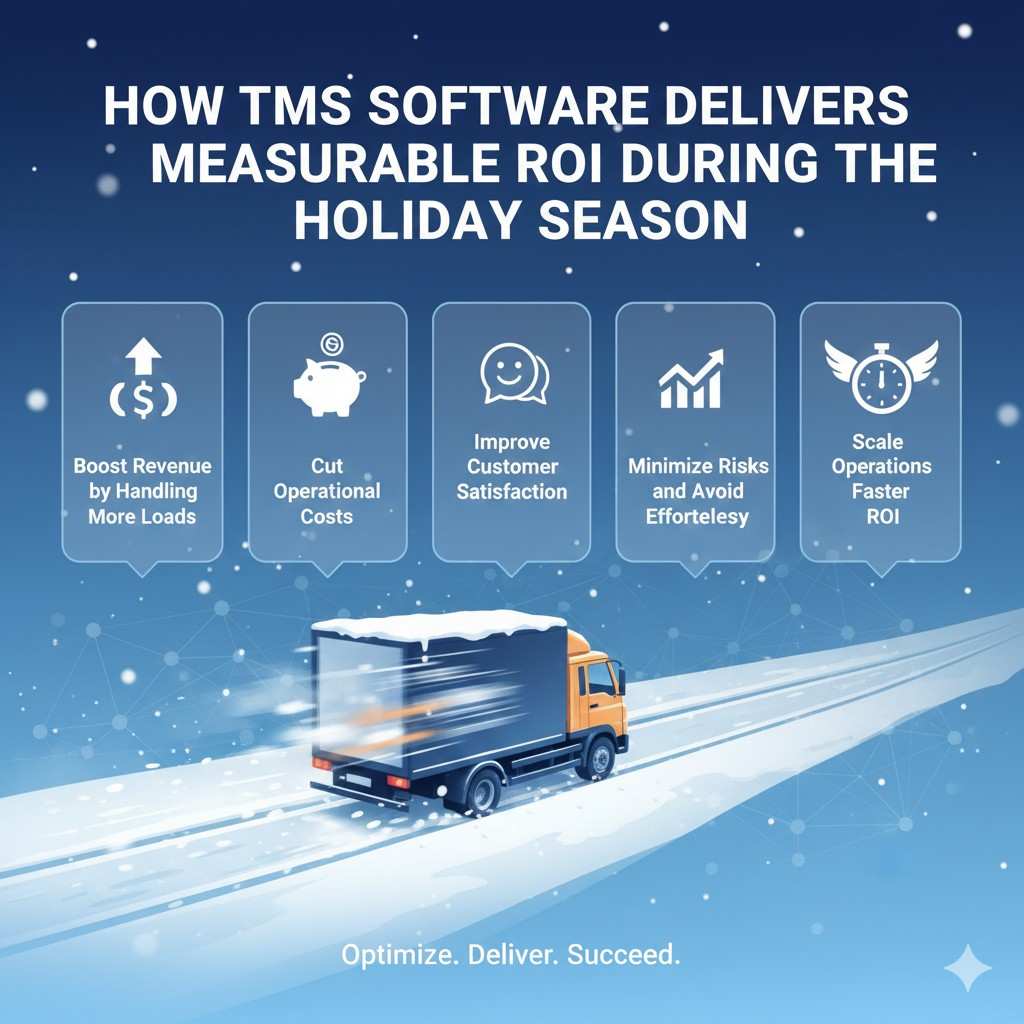
Investing in a TMS is not just about technology; it’s about real, measurable business impact. During the holiday season, when every shipment counts, a TMS helps carriers maximize efficiency and profitability:
1. Boost Revenue by Handling More Loads
Automated dispatch and optimized routing let fleets complete more deliveries each day without overworking drivers or adding extra trucks. This translates directly into higher revenue during peak periods.
2. Cut Operational Costs
From fuel savings due to smarter routes to reduced overtime and less paperwork, a TMS streamlines operations and lowers expenses. Fewer manual errors also mean fewer costly corrections or delays.
3. Improve Customer Satisfaction
Real-time tracking, accurate ETAs, and automated notifications ensure customers receive timely updates, enhancing trust and satisfaction during the busiest shipping months.
4. Minimize Risks and Avoid Penalties
By automating compliance, tracking driver hours, and reducing human errors, a TMS lowers the risk of fines, missed deadlines, and contractual penalties.
5. Scale Operations Effortlessly
A TMS enables fleets to manage seasonal demand without hiring additional staff or adding more trucks. Small and mid-sized carriers can compete with larger fleets, while large operations maintain efficiency across multiple departments.
6. Achieve Faster ROI
Every efficiency gained—from digital billing to optimized routes—contributes to a quicker return on investment, making a TMS an essential tool, not just a cost.
4.Top Tips to Maximize Holiday Season Efficiency Using TMS Software
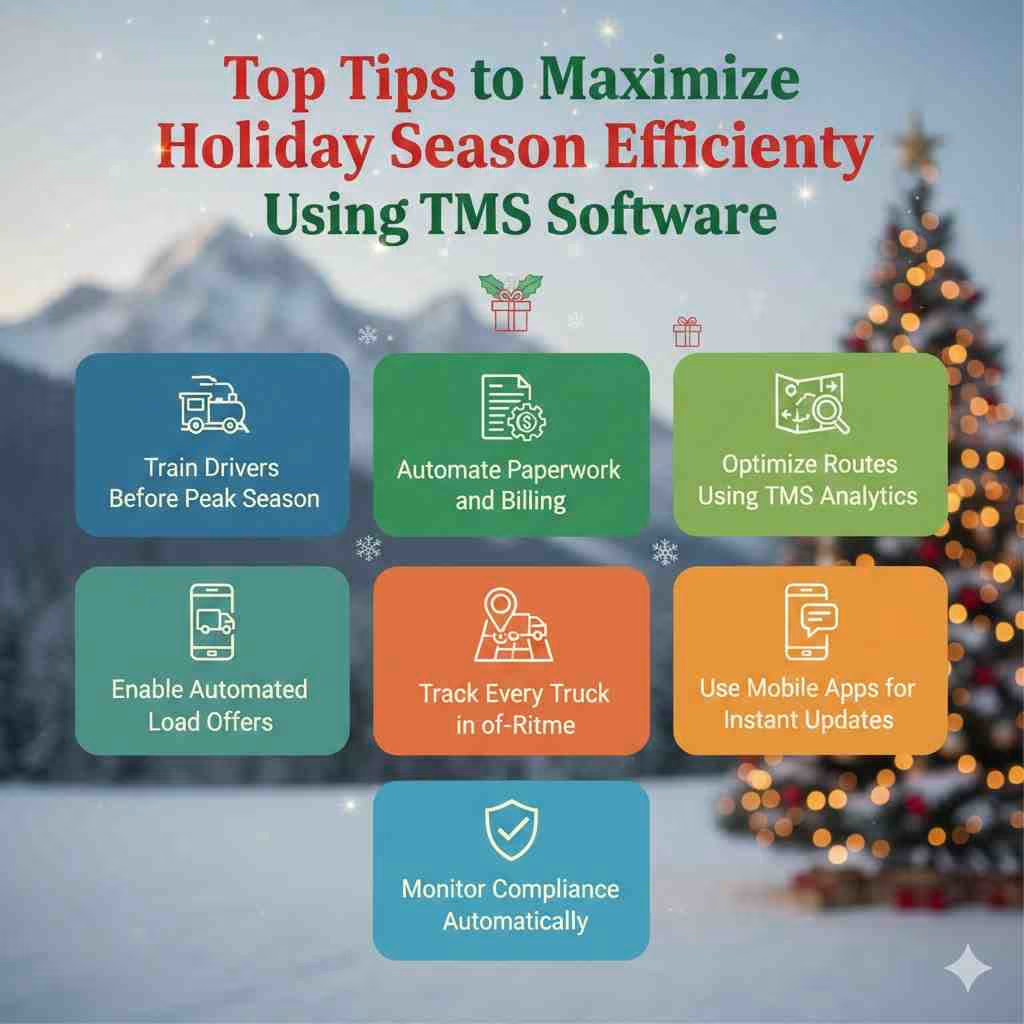
To stay ahead during the holiday rush, carriers can leverage TMS features strategically:
1. Train Drivers Before Peak Season
Ensure every driver understands the TMS platform and mobile app. Proper training reduces mistakes, saves time, and speeds up daily operations.
2. Automate Paperwork and Billing
Digital invoicing, POD uploads, and settlements eliminate manual errors and accelerate payment cycles.
3. Optimize Routes Using TMS Analytics
Leverage real-time traffic data, weather alerts, and historical delivery patterns to plan the fastest, most efficient routes.
4. Enable Automated Load Offers
Allow drivers to accept loads instantly through the mobile app, reducing back-and-forth communication and speeding up load assignments.
5. Track Every Truck in Real-Time
Live GPS tracking provides full visibility of all shipments, allowing dispatchers to react instantly to delays or route changes.
6. Use Mobile Apps for Instant Updates
Drivers receive real-time updates on schedules, loads, and customer instructions, reducing phone calls and improving workflow efficiency.
7. Monitor Compliance Automatically
TMS software tracks Hours of Service (HOS), DVIRs, IFTA reporting, and other compliance requirements to prevent penalties and ensure legal operations.
Conclusion: A TMS Is Essential for Holiday Success
Holiday delivery pressure is unavoidable, but operational breakdowns are not. TMS Software gives carriers the structure, automation, and visibility needed to perform consistently during peak season. By streamlining dispatch, optimizing routes, improving communication, digitizing paperwork, and maintaining compliance, a TMS enables carriers to move more freight with fewer errors and less stress. Platforms like Fast Forward TMS help carriers transform the holiday season from a period of constant firefighting into one of controlled growth, reliable service, and improved profitability—regardless of fleet size.
FAQ
How does TMS software help during the holiday season?
It automates dispatch, optimizes routes, digitizes paperwork, enables real-time tracking, improves communication, and accelerates billing, helping carriers handle more loads efficiently.
Can a TMS reduce holiday delivery delays?
Yes. Route optimization, live GPS tracking, and automated communication allow carriers to avoid delays and give accurate ETAs.
Is TMS useful for small carriers during peak season?
Absolutely. Small fleets can handle more shipments with fewer resources, reduce errors, and compete with larger carriers.
How does TMS improve driver communication?
Drivers receive instant updates, accept loads, upload documents, and chat with dispatchers through a mobile app, reducing phone calls and miscommunication.
Does TMS help with holiday billing and settlements?
Yes. Automated invoices, driver settlements, and POD submissions accelerate payments and reduce administrative errors.
How does Fast Forward TMS specifically help carriers during holidays?
It provides automated dispatch, driver mobile app, digital billing, load negotiation, fleet tracking, compliance monitoring, and SOC 2–secured data management—ideal for peak-season operations.
Can TMS reduce operational costs during the holidays?
Yes. It reduces fuel waste, administrative time, manual paperwork, and planning errors, increasing efficiency and profitability.



2 thoughts on “How TMS Software Helps Carriers Manage Holiday Season Delivery Pressure”
Great insights on holiday logistics—how does TMS handle last-minute route changes?
Thank you for your question
A modern TMS handles last-minute route changes using real-time visibility and dynamic routing. When traffic, weather, or unexpected delays occur, the system updates routes instantly using live data. Dispatchers can quickly reroute trucks, assign loads to the nearest available drivers, and send updates directly to driver apps.
This helps carriers minimize delays, reduce fuel waste, stay compliant, and keep customers informed even during peak holiday disruptions.
Comments are closed.