
Introduction
The trucking industry is preparing for major changes as the Federal Motor Carrier Safety Administration rolls out the new FMCSA Motus platform. The system is designed to replace older FMCSA registration and identity management systems with a more centralized digital environment.
For trucking companies, this transition is more than a routine software update. Changes to account access, identity verification, registration workflows, and compliance management could directly affect daily fleet operations if carriers are not prepared.
Legacy FMCSA systems often relied on disconnected workflows and manual administrative processes. Motus represents a shift toward more modern, secure, and technology-driven compliance management across the trucking industry.
Carriers that understand these changes early are more likely to avoid operational disruptions and adapt more smoothly as the rollout expands.
Key Takeaways
- FMCSA Motus is replacing several older FMCSA registration and identity management systems.
- The new platform focuses on stronger account security, centralized access management, and modern digital workflows.
- Legacy FMCSA systems often relied on disconnected platforms and manual administrative processes.
- Carriers may experience changes to account access, identity verification, and registration management workflows.
- Fleets using outdated or manual processes could face greater operational challenges during the transition.
- Carriers preparing early are more likely to avoid delays, workflow disruptions, and compliance-related confusion.
- Technology-driven fleet operations are becoming increasingly important as FMCSA modernization efforts continue.
What Are Legacy FMCSA Systems?
Before the Motus rollout, carriers relied on several older FMCSA systems to manage registrations, compliance activities, licensing, and account access. These platforms were developed separately over time and often operated independently from one another.
Many trucking companies used systems such as the FMCSA Portal, Unified Registration System (URS), and separate licensing or insurance platforms to complete different compliance-related tasks. While these systems supported carrier operations for years, they also created workflow challenges as trucking operations became more digital.
Because many of the older systems were disconnected, carriers often had to manage multiple logins, separate administrative processes, and manual coordination between platforms. Over time, these inefficiencies made compliance management more complicated for growing fleets and transportation companies.
What Is the FMCSA Motus System?
FMCSA Motus is the Federal Motor Carrier Safety Administration’s newer registration and identity management platform designed to modernize how carriers manage compliance-related activities and account access. The system is being introduced as part of FMCSA’s larger effort to create a more centralized and secure digital environment for the trucking industry.
Unlike older FMCSA systems that often operated separately, Motus is expected to improve how registration management, user access control, and identity verification are handled across FMCSA operations. The platform also reflects the trucking industry’s growing shift toward more connected and technology-driven compliance workflows.
For carriers, the transition may bring changes to account verification, login management, registration processes, and administrative coordination as FMCSA continues modernizing its digital infrastructure.
Why FMCSA Is Replacing Legacy Systems
FMCSA is replacing older systems to improve security, simplify registration management, and reduce operational inefficiencies caused by disconnected platforms. Many legacy systems were built years ago and were not designed for today’s increasingly digital trucking environment.
As carrier operations became more technology-driven, older workflows started creating challenges like multiple login systems, manual administrative work, fragmented account management, and limited visibility across compliance activities. These inefficiencies often increased operational complexity for carriers managing growing compliance responsibilities.
The Motus platform is part of FMCSA’s effort to create a more centralized and scalable system for identity verification, account access, and digital compliance management. The transition also reflects the trucking industry’s broader movement toward more secure and connected operational workflows.
Motus vs Legacy FMCSA Systems
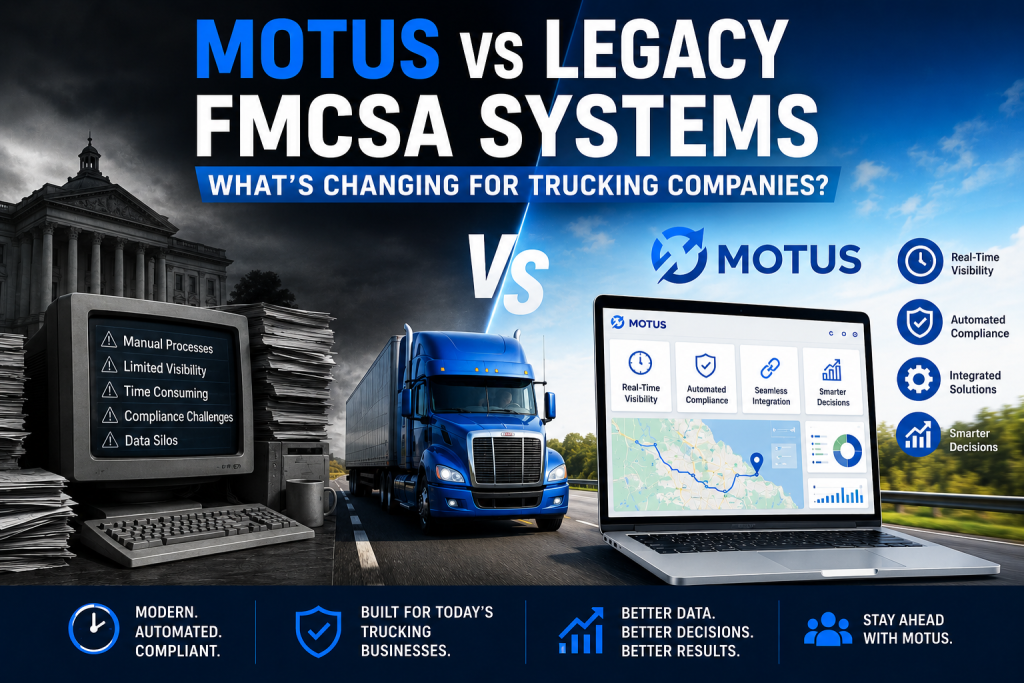
The transition from legacy FMCSA systems to the Motus platform is designed to improve how carriers manage registrations, account access, identity verification, and compliance workflows. Unlike older systems that often operated separately, Motus focuses on creating a more centralized and connected digital environment for trucking companies.
| Legacy FMCSA Systems | FMCSA Motus Platform |
| Multiple disconnected systems | More centralized platform management |
| Separate login environments | Unified identity and access management |
| Limited identity verification | Stronger account security and verification |
| More manual administrative work | More streamlined digital workflows |
| Fragmented user access control | Better account permission management |
| Older compliance infrastructure | More modern and scalable digital environment |
The biggest difference between Motus and older FMCSA systems is the shift toward centralized digital compliance management. For carriers, this could help reduce workflow confusion, improve operational visibility, and simplify administrative coordination as FMCSA modernization efforts continue.
Related Blog :Why Smart Carriers Are Preparing Early for the FMCSA Motus System Transition
What’s Changing for Trucking Companies?
The transition from legacy FMCSA systems to the Motus platform could change how carriers manage registrations, account access, compliance coordination, and administrative workflows across daily operations. While the changes are focused on modernization, many fleets may still need time to adjust internal systems and processes during the rollout.
| Operational Area | Legacy FMCSA Systems | Motus Transition Changes |
| Account Access | Multiple portals and separate logins | More centralized access management |
| Identity Verification | Limited verification controls | Stronger digital identity checks |
| Workflow Management | More manual coordination | More connected digital workflows |
| User Permissions | Fragmented access control | Improved permission management |
More Centralized Account Management
Older FMCSA systems often required carriers to work across separate portals and disconnected administrative workflows. Motus is expected to create a more centralized system for handling registrations, account access, and compliance-related activities.
Stronger Identity Verification
FMCSA is placing greater focus on account protection and digital identity verification under the Motus platform. Carriers may need to review user permissions, update account information, and manage administrative access more carefully than before.
How Could Motus Affect Daily Fleet Operations?
For many trucking companies, the FMCSA Motus transition could affect more than compliance management alone. Even small administrative issues can create larger operational disruptions across dispatch coordination, driver communication, and internal workflows if carriers are not prepared early.
Dispatch and Administrative Coordination
Account access issues, delayed registrations, or incomplete verification processes could slow communication between dispatch teams and administrative staff. Fleets managing active loads and multiple drivers may experience additional operational pressure if compliance-related tasks become delayed during the transition.
Driver and User Account Management
Carriers managing multiple dispatchers, compliance managers, and office users may need to review how employees access FMCSA-related systems. Changes to permissions and identity verification could require stronger coordination across teams.
Adjustments to Compliance Workflows
Many fleets still handle compliance processes through manual paperwork or disconnected systems. As FMCSA moves toward more centralized digital workflows, carriers may need to improve how registrations, operational records, and compliance documents are managed internally.
Increased Focus on Operational Visibility
The transition also highlights how important organized operational systems have become across the trucking industry. Fleets with stronger workflow visibility and centralized management systems are often better positioned to adapt during major FMCSA compliance changes.
Common Challenges During the Transition
Like any major system modernization effort, the FMCSA Motus transition may create temporary operational and administrative challenges for some carriers. Fleets that are unprepared or still relying heavily on manual workflows could experience more difficulties as the rollout expands.
Account Access Problems
Updated login systems and stronger identity verification requirements may create temporary account access issues for some users. Carriers with outdated account information or inactive portal access could face additional delays during verification processes.
Registration Delays
Missing records, incomplete documentation, or unorganized compliance information may slow down registration-related activities during the transition. Carriers that manage large amounts of paperwork manually may experience more administrative pressure.
Workflow Confusion
Many trucking companies currently operate across multiple disconnected systems. As workflows change under the Motus platform, some teams may need additional time to adjust to updated procedures and digital processes.
Increased Administrative Workload
Dispatch coordinators, compliance managers, and office staff may temporarily face additional workload while balancing daily operations alongside new compliance-related adjustments. Fleets that prepare early are usually better positioned to reduce operational disruptions later.
Who Could Face the Biggest Challenges During the Motus Transition?
Not every trucking company will experience the FMCSA Motus transition in the same way. Some carriers may face greater operational and administrative pressure depending on how their compliance workflows, internal systems, and daily operations are currently managed.
Small Fleets Managing Limited Administrative Resources
Smaller carriers often handle registrations, compliance tasks, and operational coordination with limited office support. Because of this, major system changes can create additional pressure on dispatchers, fleet managers, and administrative staff managing multiple responsibilities at once.
Carriers Still Relying on Manual Workflows
Fleets using spreadsheets, paperwork, or disconnected systems may find it harder to adapt to updated digital workflows and verification requirements under the Motus platform. Manual processes can also increase the risk of delays and workflow confusion during the transition.
Companies With Unorganized Compliance Records
Outdated account information, incomplete documentation, or poorly managed compliance records may create registration delays and account-related problems as FMCSA strengthens identity verification and account management processes.
Fleets Managing Multiple User Accounts
Larger carriers with multiple dispatchers, compliance managers, and office staff may need additional time to review user permissions, account access controls, and internal administrative workflows during the transition period.
Why Smart Carriers Are Preparing Before the Motus Rollout
Many trucking companies are already reviewing their compliance workflows and operational processes before the FMCSA Motus transition becomes more active. Carriers understand that waiting until the last minute can create unnecessary administrative pressure and operational disruptions.
Reducing the Risk of Operational Delays
Account access issues, incomplete registrations, or missing documentation can quickly affect dispatch coordination and internal administrative workflows. Carriers preparing early are usually better positioned to avoid delays once the transition expands further.
Improving Compliance Readiness
Many fleets are reviewing account information, organizing compliance records, and updating internal processes ahead of time. Early preparation can help reduce confusion as FMCSA introduces updated verification and access management procedures.
Helping Internal Teams Adjust More Smoothly
Dispatch coordinators, compliance managers, and office staff may need time to adapt to updated workflows and digital processes. Preparing early allows teams to adjust gradually without creating additional pressure on daily operations.
Building More Organized Operations for the Future
The Motus rollout reflects a larger shift toward technology-driven compliance management across the trucking industry. Carriers improving operational visibility and workflow organization today are often better prepared for future regulatory and digital changes.
What Should Carriers Do Before the Motus Transition Expands?
As FMCSA continues modernizing its systems, many carriers are taking proactive steps to reduce operational risks before the Motus rollout becomes more active. Early preparation can help fleets avoid unnecessary delays, workflow disruptions, and compliance-related confusion later.
Review FMCSA Account Information
Carriers should verify that company account details, administrative access information, and user credentials are accurate and properly updated. Reviewing account information early may help reduce future access-related problems.
Organize Compliance and Registration Documents
Keeping registration records, insurance documents, driver files, and compliance information organized can help carriers respond more efficiently during verification or registration-related processes.
Improve Internal Operational Workflows
Many trucking companies are using this transition as an opportunity to improve outdated manual workflows and disconnected operational systems. More organized processes can help reduce administrative pressure during major compliance changes.
Prepare Dispatch and Compliance Teams
Dispatchers, compliance managers, and office staff may need to adjust to updated workflows and verification procedures. Preparing teams early can help operations continue running more smoothly during the transition period.
Stay Updated on FMCSA Announcements
FMCSA modernization efforts are continuing to evolve. Carriers that regularly monitor FMCSA announcements and industry updates are often better prepared to respond early as new requirements and processes are introduced.
How Technology Can Help Carriers During the Transition
As compliance operations become more digital, many trucking companies are using technology to improve workflow visibility, reduce manual administrative work, and manage fleet operations more efficiently. The FMCSA Motus transition is another reminder that organized digital systems are becoming increasingly important across the transportation industry.
Improving Fleet Workflow Visibility
Managing registrations, compliance records, dispatch coordination, and operational data through disconnected systems can create delays and confusion during major transitions. Centralized technology platforms help carriers keep operational information more organized and accessible.
Reducing Manual Dispatch and Compliance Work
Many fleets still spend significant time handling repetitive paperwork, manual data entry, and disconnected compliance workflows. Modern transportation management systems help reduce administrative complexity and improve operational efficiency across daily fleet activities.
Improving Communication Across Teams
During industry-wide changes, communication between dispatch teams, compliance managers, and office staff becomes even more important. Connected operational systems can help reduce delays caused by missing information or disconnected workflows.
Supporting Long-Term Fleet Scalability
The trucking industry continues moving toward more centralized and technology-driven operations. Carriers investing in organized digital workflows today are often better prepared to adapt to future compliance changes and operational demands.
Final Thoughts
The FMCSA Motus transition is another sign that the trucking industry is moving toward more centralized and technology-driven compliance operations. Compared to legacy FMCSA systems, Motus is expected to improve account security, identity verification, and digital workflow management for carriers and transportation companies.
As the rollout expands, carriers that prepare early will be better positioned to avoid operational disruptions, registration delays, and administrative confusion. Organized workflows and stronger operational visibility will continue becoming more important as FMCSA modernization efforts evolve.
Fast Forward TMS helps carriers streamline dispatch operations, improve workflow visibility, reduce manual workload, and manage fleet operations more efficiently from one centralized platform. With 7+ years delivering TMS solutions, 95% of carriers reporting smoother dispatch workflows, and 1,500+ companies trusting the platform, Fast Forward TMS continues helping fleets build more scalable and organized transportation operations.
Frequently Asked Questions
What is the FMCSA Motus system?
FMCSA Motus is the Federal Motor Carrier Safety Administration’s newer registration and identity management platform designed to modernize compliance-related workflows, account access, and carrier registration systems.
Why is FMCSA replacing legacy systems?
FMCSA is modernizing older systems to improve account security, simplify digital workflows, strengthen identity verification, and reduce operational inefficiencies caused by disconnected platforms.
How is Motus different from legacy FMCSA systems?
Unlike older FMCSA systems that relied on separate portals and fragmented workflows, Motus focuses on centralized account management, stronger identity verification, and more connected digital operations.
Could the Motus transition affect daily fleet operations?
Yes. Account access issues, registration delays, or workflow adjustments during the transition could affect dispatch coordination, compliance management, and administrative operations for some carriers.
Which carriers could face the biggest challenges during the transition?
Smaller fleets, carriers using manual workflows, companies with unorganized compliance records, and fleets managing multiple user accounts may experience greater operational challenges during the rollout.
How can carriers prepare for the Motus transition?
Carriers can prepare by reviewing account information, organizing compliance documents, improving internal workflows, preparing administrative teams, and monitoring FMCSA updates regularly.