
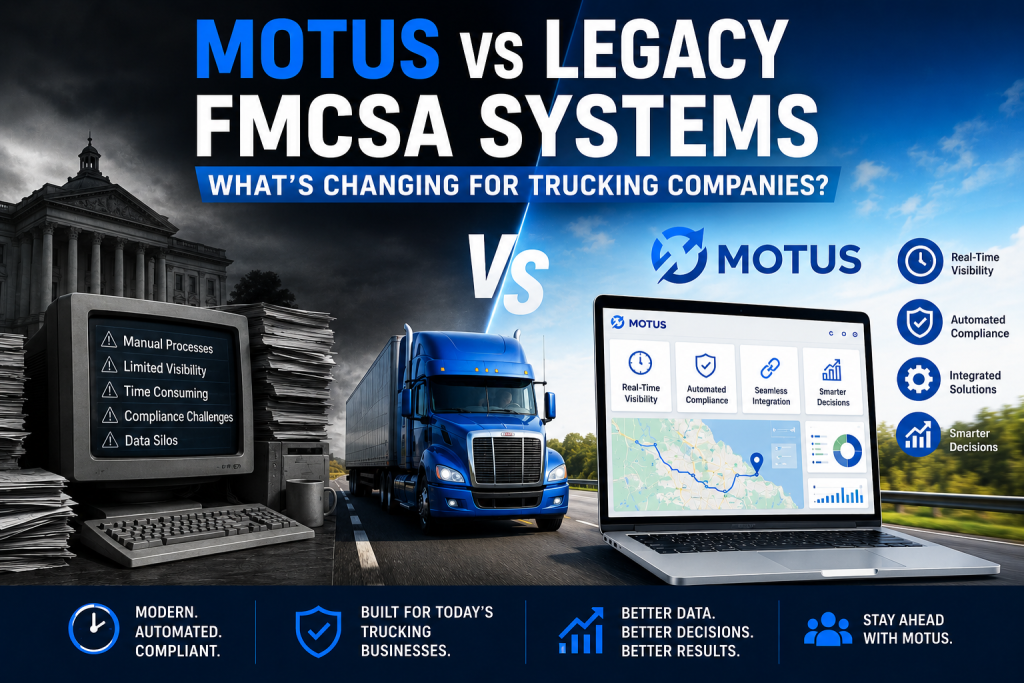
Motus vs Legacy FMCSA Systems: What’s Changing for Trucking Companies?
Introduction The trucking industry is preparing for major changes as the Federal Motor Carrier Safety Administration rolls out the new FMCSA Motus platform. The system is designed to replace older FMCSA registration and identity management systems with a more centralized digital environment. For trucking companies, this transition is more than a routine software update. Changes to account access, identity verification, registration workflows, and compliance management could directly affect daily fleet operations if carriers are not prepared. Legacy FMCSA systems often relied on disconnected workflows and manual administrative processes. Motus represents a shift toward more modern, secure, and technology-driven compliance management across the trucking industry. Carriers that understand these changes early are more likely to avoid operational disruptions and adapt more smoothly as the rollout expands. Key Takeaways What Are Legacy FMCSA Systems? Before the Motus rollout, carriers relied on several older FMCSA systems to manage registrations, compliance activities, licensing, and account access. These platforms were developed separately over time and often operated independently from one another. Many trucking companies used systems such as the FMCSA Portal, Unified Registration System (URS), and separate licensing or insurance platforms to complete different compliance-related tasks. While these systems supported carrier operations for years, they also created workflow challenges as trucking operations became more digital. Because many of the older systems were disconnected, carriers often had to manage multiple logins, separate administrative processes, and manual coordination between platforms. Over time, these inefficiencies made compliance management more complicated for growing fleets and transportation companies. What Is the FMCSA Motus System? FMCSA Motus is the Federal Motor Carrier Safety Administration’s newer registration and identity management platform designed to modernize how carriers manage compliance-related activities and account access. The system is being introduced as part of FMCSA’s larger effort to create a more centralized and secure digital environment for the trucking industry. Unlike older FMCSA systems that often operated separately, Motus is expected to improve how registration management, user access control, and identity verification are handled across FMCSA operations. The platform also reflects the trucking industry’s growing shift toward more connected and technology-driven compliance workflows. For carriers, the transition may bring changes to account verification, login management, registration processes, and administrative coordination as FMCSA continues modernizing its digital infrastructure. Why FMCSA Is Replacing Legacy Systems FMCSA is replacing older systems to improve security, simplify registration management, and reduce operational inefficiencies caused by disconnected platforms. Many legacy systems were built years ago and were not designed for today’s increasingly digital trucking environment. As carrier operations became more technology-driven, older workflows started creating challenges like multiple login systems, manual administrative work, fragmented account management, and limited visibility across compliance activities. These inefficiencies often increased operational complexity for carriers managing growing compliance responsibilities. The Motus platform is part of FMCSA’s effort to create a more centralized and scalable system for identity verification, account access, and digital compliance management. The transition also reflects the trucking industry’s broader movement toward more secure and connected operational workflows. Motus vs Legacy FMCSA Systems The transition from legacy FMCSA systems to the Motus platform is designed to improve how carriers manage registrations, account access, identity verification, and compliance workflows. Unlike older systems that often operated separately, Motus focuses on creating a more centralized and connected digital environment for trucking companies. Legacy FMCSA Systems FMCSA Motus Platform Multiple disconnected systems More centralized platform management Separate login environments Unified identity and access management Limited identity verification Stronger account security and verification More manual administrative work More streamlined digital workflows Fragmented user access control Better account permission management Older compliance infrastructure More modern and scalable digital environment The biggest difference between Motus and older FMCSA systems is the shift toward centralized digital compliance management. For carriers, this could help reduce workflow confusion, improve operational visibility, and simplify administrative coordination as FMCSA modernization efforts continue. Related Blog :Why Smart Carriers Are Preparing Early for the FMCSA Motus System Transition What’s Changing for Trucking Companies? The transition from legacy FMCSA systems to the Motus platform could change how carriers manage registrations, account access, compliance coordination, and administrative workflows across daily operations. While the changes are focused on modernization, many fleets may still need time to adjust internal systems and processes during the rollout. Operational Area Legacy FMCSA Systems Motus Transition Changes Account Access Multiple portals and separate logins More centralized access management Identity Verification Limited verification controls Stronger digital identity checks Workflow Management More manual coordination More connected digital workflows User Permissions Fragmented access control Improved permission management More Centralized Account Management Older FMCSA systems often required carriers to work across separate portals and disconnected administrative workflows. Motus is expected to create a more centralized system for handling registrations, account access, and compliance-related activities. Stronger Identity Verification FMCSA is placing greater focus on account protection and digital identity verification under the Motus platform. Carriers may need to review user permissions, update account information, and manage administrative access more carefully than before. How Could Motus Affect Daily Fleet Operations? For many trucking companies, the FMCSA Motus transition could affect more than compliance management alone. Even small administrative issues can create larger operational disruptions across dispatch coordination, driver communication, and internal workflows if carriers are not prepared early. Dispatch and Administrative Coordination Account access issues, delayed registrations, or incomplete verification processes could slow communication between dispatch teams and administrative staff. Fleets managing active loads and multiple drivers may experience additional operational pressure if compliance-related tasks become delayed during the transition. Driver and User Account Management Carriers managing multiple dispatchers, compliance managers, and office users may need to review how employees access FMCSA-related systems. Changes to permissions and identity verification could require stronger coordination across teams. Adjustments to Compliance Workflows Many fleets still handle compliance processes through manual paperwork or disconnected systems. As FMCSA moves toward more centralized digital workflows, carriers may need to improve how registrations, operational records, and compliance documents are managed internally. Increased Focus on Operational Visibility The transition also highlights how important organized operational systems have become across the trucking industry. Fleets with stronger
Motus vs Legacy FMCSA Systems: What’s Changing for Trucking Companies? Read More »