
Introduction: Why Choosing the Right Carrier TMS Software Matters in 2026
Running a trucking business today comes with rising costs, stricter compliance requirements, and growing demand for real-time visibility. Traditional tools and spreadsheets are no longer enough, but the best carrier TMS software can transform how fleets operate.
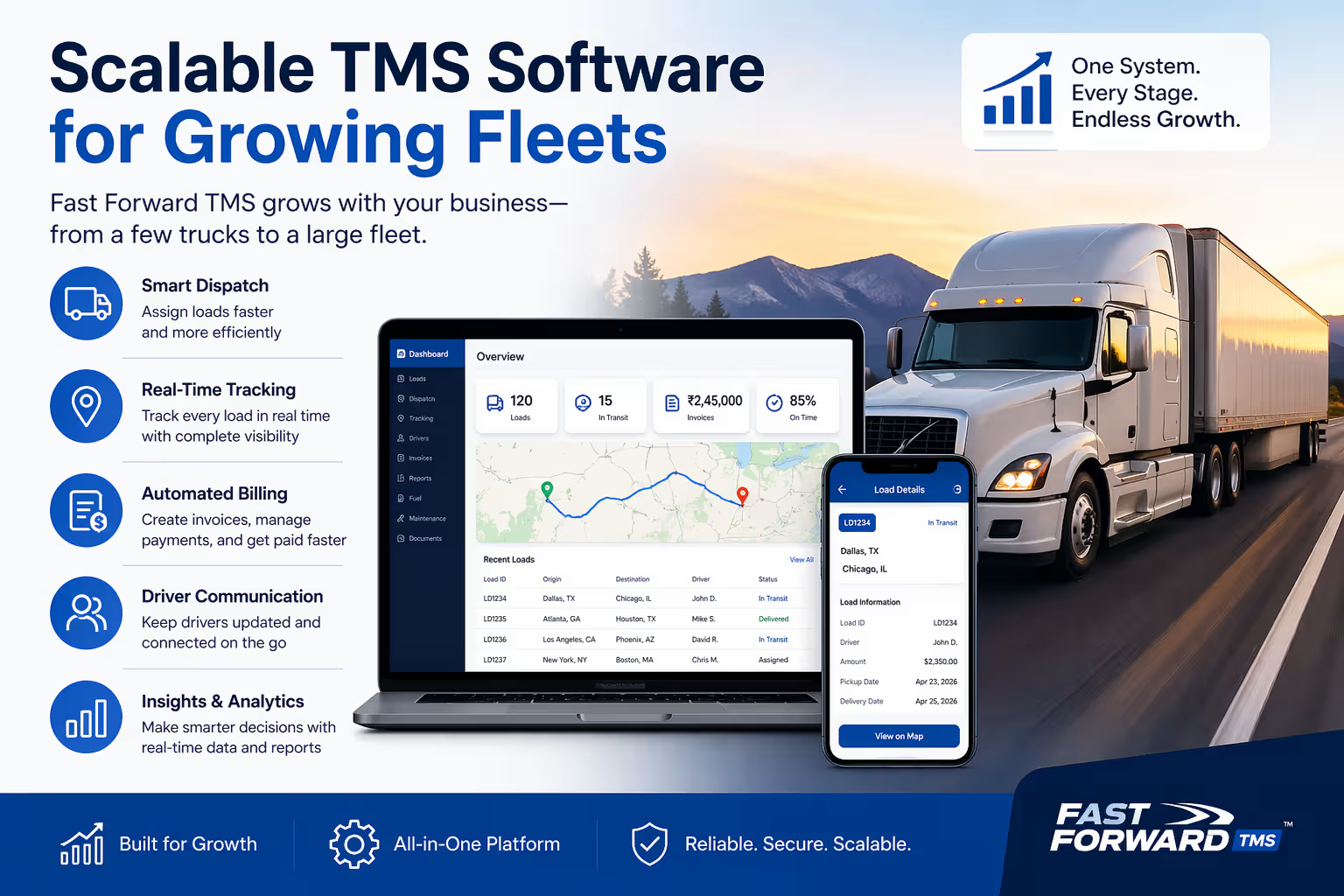
A modern TMS system for carriers brings dispatch, load tracking, driver payroll software, and compliance into one unified platform. The best TMS software for carriers helps reduce manual work, improve efficiency, and give complete control over operations, making it easier to scale in a competitive market.
As the industry moves into 2026, choosing the best TMS software is no longer optional. Carriers now need reliable trucking software for carriers that supports real-time tracking, automation, and compliance readiness. The challenge is that not every solution fits every fleet.
This article reflects practical insights from real trucking operations and logistics technology experience. It incorporates expertise from Dr. Nitin Shankar, Product Owner at Fast Forward TMS, who has over 18 years of experience in transportation management systems, carrier finance, and cloud-based SaaS platforms, helping carriers improve dispatch efficiency, automate workflows, and strengthen financial control.
That’s why this guide walks you through proven steps to evaluate and choose the right system, so you can avoid costly mistakes and select a platform that aligns with your operations and long-term growth.
Key Takeaways
- Choosing the best carrier TMS software starts with understanding your current operations and identifying where improvements are needed
- The best TMS software for carriers should align with your workflow, not force you to change how your business runs
- Focus on usability, scalability, and real-world performance rather than just feature lists
- Cloud-based systems are often the most practical choice for modern carriers due to flexibility and ease of implementation
- A structured TMS software comparison helps you evaluate options based on actual business needs, not assumptions
- Testing the system in real conditions is essential before making a final decision
- The right solution should simplify dispatch, improve visibility, and support long-term growth without adding complexity
8 Proven Steps to Choose the Best Carrier TMS Software for Your Trucking Company
Selecting the right system is not just about features. It’s about choosing a solution that fits your daily operations, improves visibility, and supports long-term growth. With many options available, finding the best carrier TMS software requires a structured approach.
These steps will help you evaluate the best TMS software for carriers and make a confident decision.
1. Assess Your Current Operations
Before choosing any system, you need a clear understanding of how your operations work today. Many carriers still depend on spreadsheets or disconnected tools, which often lead to delays, errors, and lack of visibility.
Take time to evaluate how dispatching software is handled, how loads are assigned, and whether real-time truck tracking software is available. Look at how billing, payroll, and fuel costs are managed. Identify where manual work is slowing down your team.
This step helps you clearly see where a modern TMS system for carriers can improve efficiency and reduce operational gaps.
2. Define Investment and ROI Goals
Cost is always important, but the right TMS should be seen as an investment, not just an expense. The best TMS software should help you reduce empty miles, improve dispatch efficiency, and automate repetitive tasks.
Set clear expectations for what you want to achieve. This could include faster invoicing, better load utilization, or reduced administrative workload. When you define ROI goals early, it becomes easier to measure whether a system is truly delivering value.
3. Choose the Right Platform Type
Carriers typically choose between homegrown, on-premise, and cloud-based systems. Each option has its pros and limitations.
cloud-based trucking management software have become the most popular choice because they are easier to implement, require lower upfront investment, and offer flexibility as your business grows. They also allow access from anywhere and receive regular updates.
Choosing the right platform type is important when evaluating the best TMS software for carriers, especially if scalability and ease of use are priorities.
4. Align the TMS with Your Business Goals
Every trucking company has different priorities. Some focus on reducing costs, while others prioritize growth, compliance, or operational visibility.
Your TMS should support your specific goals. For example, if reducing empty miles is critical, the system should offer better truck load management software. If compliance is a concern, it should simplify reporting and documentation.
The best trucking management software is the one that aligns closely with how your business operates and what you want to achieve.
5. Ask the Right Questions Before Choosing
Choosing a TMS is a long-term decision, so asking the right questions is essential. Don’t just focus on features—focus on usability and real-world performance.
Ask whether the system integrates with analytics software and tools like ELDs, fuel cards, and accounting software. Understand how it handles compliance requirements and what kind of support is available.
These questions help you compare different options more clearly and evaluate which carrier management systems truly fit your needs.
6. Plan for Scalability and Future Growth
Your business will grow, and your system should grow with it. A solution that works today may not be enough in a year if your fleet expands or operations become more complex.
Look for a platform that can handle more loads, more drivers using a driver mobile app, and multiple locations without creating bottlenecks. Systems that support expansion without major changes are more reliable in the long run.
This becomes especially important when evaluating solutions that function as multi carrier management software.
7. Test the System in Real Conditions
Before making a final decision, test the system in real scenarios. A demo may look good, but it doesn’t always reflect day-to-day performance.
Involve your team in the process. Let dispatchers, drivers, and back-office staff use the system and give feedback. Test real workflows like dispatching, tracking, and billing.
This ensures that the chosen TMS carrier solution actually works for your operations and is easy for your team to adopt.
8. Make a Confident and Practical Decision
After testing and evaluation, it’s time to finalize your decision. Don’t just choose based on price—consider overall value, ease of use, and long-term reliability.
Compare different options carefully, review support quality, and ensure your team is comfortable with the system. A well-informed decision helps you avoid future issues and ensures smooth implementation.
Choosing the right solution means selecting from the top transportation management software options that truly support your business growth.
How to Compare TMS Software for Carriers
Once you understand your requirements, the next step is to compare different options in a structured way. A practical comparison helps you avoid choosing a system based only on features or pricing.
Instead of looking at everything at once, focus on a few key areas that directly impact your operations.
1. Ease of Use
The system should be simple for dispatchers, drivers, and back-office teams. If your team struggles to use it, even powerful features will not deliver value.
2. Core Features
Compare how each system handles dispatch, tracking, billing, and compliance. The best TMS software for carriers should bring all these functions into one connected workflow.
3. Integration Capability
Check whether the system integrates with tools like ELDs, fuel cards, load boards, and accounting software. Smooth integration reduces duplicate work and improves data accuracy.
4. Scalability
Choose a system that can grow with your business. Whether you add more trucks or expand operations, the platform should support that growth without disruption.
5. Support and Onboarding
Good support makes a big difference, especially during implementation. Evaluate how quickly the vendor responds and whether they provide proper onboarding assistance.
6. Cost vs Value
Don’t focus only on pricing. Compare what you are getting in return—time savings, reduced errors, and better operational control.
A structured TMS software comparison like this helps you identify which solution actually fits your business, rather than choosing based on assumptions or marketing claims.
Conclusion: Choosing the Best Carrier TMS Software for 2026
Selecting the best carrier TMS software is a critical decision that directly impacts efficiency, compliance, and long-term profitability. With increasing operational complexity and rising industry demands, carriers need systems that simplify workflows, improve visibility, and support scalable growth.
The best TMS software for carriers is not necessarily the most feature-heavy solution, but the one that aligns with your daily operations, team capabilities, and business goals. From dispatch and tracking to billing and compliance, every function should work seamlessly to reduce manual effort and improve decision-making.
As you evaluate different options, focus on usability, real-world performance, and long-term value. A well-chosen system will not only streamline operations but also help you stay competitive in a rapidly evolving logistics environment.
Exploring the Right TMS for Your Operations
If you are evaluating different options, it can be helpful to see how a modern TMS system for carriers works in real scenarios.
Fast Forward TMS is one such platform designed specifically for carrier operations, focusing on simplicity, visibility, and day-to-day usability. Exploring a system in action can give you a clearer understanding of how it fits your workflow and operational needs.
Exploring the Right TMS for Your Operations
If you are evaluating different options, it can be helpful to see how a modern TMS system for carriers works in real scenarios.
Fast Forward TMS is one such platform designed specifically for carrier operations, focusing on simplicity, visibility, and day-to-day usability. Exploring a system in action can give you a clearer understanding of how it fits your workflow and operational needs.
Frequently Asked Questions
What is the best carrier TMS software in 2026?
The best carrier TMS software depends on your fleet size, operational complexity, and budget. A strong solution should combine dispatch, tracking, billing, and compliance in one platform. The best TMS software for carriers is the one that fits your daily operations and helps improve efficiency without adding complexity.
Which is the best TMS software for carriers?
There is no single answer, as different carriers have different needs. Some systems are built for small fleets, while others support large-scale operations. The best TMS software for carriers should offer real-time visibility, automation, and scalability to support long-term growth.
What is a TMS system for carriers?
A TMS system for carriers is software designed to manage trucking operations from one place. It helps with dispatch, load tracking, driver communication, billing, and compliance. Modern trucking software for carriers replaces manual processes and improves operational efficiency.
Which TMS is best for small carriers?
Small fleets typically need a simple and affordable solution that is easy to implement. The best TMS software for small business or tms for small carriers should offer essential features like dispatch, invoicing, and tracking without requiring complex setup or high costs.
How do I compare TMS software options?
A proper TMS software comparison should focus on usability, features, pricing, and scalability. Instead of just comparing features, evaluate how well each system fits your workflow. This approach helps you compare the best carrier performance software based on real operational needs.
What are carrier management systems?
Carrier management systems are tools that help manage drivers, loads, payments, and compliance in one platform. These systems improve coordination, reduce manual work, and provide better visibility across operations.
Which systems are best for carrier onboarding and tracking?
The best systems for carrier onboarding, tendering, and tracking in TMS are those that automate data entry, provide real-time updates, and reduce manual communication. Leading systems for carrier onboarding also improve speed and accuracy in daily operations.