
Introduction
In today’s fast-moving trucking industry, time and efficiency decide profitability. Empty miles, delayed updates, or outdated tools can reduce margins and limit growth. As fleets expand, many carriers discover that traditional systems no longer keep pace with modern logistics.
This is where a Transportation Management System (TMS) becomes essential. The question for most fleets isn’t whether to use a TMS—but which type of TMS is the right fit: a Cloud-Based Transportation Management System or an On-Premise Transportation Management System.
In this guide, backed by over a decade of industry expertise, we explore both options to give you a clear understanding of which TMS model can best support your operations. Our goal is to help fleet owners, dispatchers, and logistics managers choose the system that best matches their business needs and future growth plans.
What Is a TMS and Why Does Deployment Matter for Carriers?
A Transport Management System (TMS) serves as the central hub that keeps today’s trucking operations running efficiently. It brings dispatching, driver communication, load tracking, payroll, and compliance together in one platform, reducing errors and cutting wasted time. For carriers, deployment choice—whether a cloud-based TMS or an on-premise TMS—directly impacts long-term efficiency.
The deployment model of a TMS shapes operating costs, scalability, data security, and system accessibility. For example, a cloud-based TMS supports carrier management by allowing dispatchers and drivers to connect in real time from anywhere. By contrast, an on-premise TMS offers tighter internal control but requires larger upfront investment and in-house IT support. Choosing the right model helps carriers balance cost, performance, and future growth.
Also Read – What Is a Transport Management System (TMS) and How Does It Work?
What Is the Difference Between Cloud-Based TMS and On-Premise TMS?
A Cloud-Based Transportation Management System (TMS), also known as a cloud TMS, is a logistics platform hosted on secure vendor servers and delivered over the internet. Built on a SaaS model, it offers scalability, real-time access, automatic updates, and lower upfront costs. This makes it ideal for small to mid-sized fleets that need flexibility, faster deployment, and cost efficiency. With a user-friendly cloud TMS, drivers, dispatchers, and managers can log in remotely, keeping fleet operations running smoothly from any location.
An On-Premise TMS, by contrast, is installed on a company’s in-house servers and managed internally by its IT team. This model provides full data control, advanced customization, and compliance flexibility, but it also demands higher upfront investment, ongoing maintenance, dedicated IT staff, and longer implementation times. It is most often adopted by larger carriers or enterprises with strict IT infrastructure and on-premise TMS security requirements.
How Do Cloud-Based TMS Platforms Differ from On-Premise Solutions?

Cloud-based and on-premise TMS solutions differ mainly in deployment, cost, access, and IT requirements. A cloud-based TMS is hosted online, easy to scale, subscription-based, and accessible from anywhere with automatic updates. An on-premise TMS, on the other hand, runs on local servers, requires higher upfront costs, manual updates, and in-house IT support but offers greater data control.
The table below shows a side-by-side comparison to help carriers decide which model fits their needs best.
| Feature/Factor | Cloud-Based TMS | On-Premise TMS |
| Deployment | Hosted on the cloud, no local hardware needed | Installed on company servers, requires dedicated infrastructure |
| Setup Time | Fast implementation, minimal IT involvement | Longer setup time, requires in-house technical resources |
| Access | Accessible anywhere via web or mobile | Restricted to office network or connected devices |
| Scalability | Easily scales with growing fleets and operations | Limited by hardware capacity, requires costly upgrades |
| Security | Managed by the TMS provider with advanced security protocols | Managed internally, giving carriers full control but higher responsibility |
| Cost Model | Subscription-based (pay-as-you-go, lower upfront costs) | One-time license fee plus ongoing maintenance costs |
| Updates | Automatic, real-time software updates | Manual updates, slower rollout of new features |
| Support | 24/7 remote support included with subscription | Handled by in-house IT team or third-party vendors |
| Best For | Small to mid-sized fleets, carriers seeking flexibility and cost efficiency | Large fleets with strict IT policies and need for full control |
Why Do Carriers Prefer a Cloud-Based TMS? Key Benefits Explained
Many fleets worldwide are moving to a Cloud-Based TMS because it offers flexibility, quick deployment, and lower costs compared to traditional systems. With built-in scalability and real-time access, cloud platforms make it easier for carriers to manage growing operations and stay competitive.
Here are the main benefits of choosing a Cloud TMS:
Fast Setup with Easy Onboarding – No heavy IT infrastructure is required. Most cloud solutions are ready in days, helping teams start faster while avoiding high setup and maintenance costs.
Remote Access Anytime, Anywhere – Dispatchers, drivers, and managers can log in from any location with internet access. This supports carriers managing loads across regions and remote teams.
Real-Time Updates for Smarter Workflows – Integrated tools like Load Management Software and a Driver Mobile App keep operations synced. Dispatchers track loads in real time, while drivers share documents instantly, reducing phone calls and paperwork.
Scalability for Growth – Cloud systems expand as fleets grow. Adding trucks, drivers, or features like Fuel Management and Analytics Software requires no major upgrades. Subscription pricing also makes costs predictable for carriers.
A Cloud-Based TMS ensures global carriers can streamline workflows, cut inefficiencies, and adapt quickly to market changes
When to Choose an On-Premise TMS Over Cloud-Based Solutions
An On-Premise Transportation Management System (TMS) is best suited for carriers and logistics companies that need maximum control over data, security, and system customization. Unlike a cloud-based TMS, it is installed on local servers and managed internally by the company’s IT team. This makes it a stronger fit for large fleets with complex workflows, strict compliance needs, or advanced integration requirements.
Key scenarios where an on-premise TMS is the right choice include:
Full Data Control & Security – Carriers handling sensitive freight or operating under strict regulatory standards often prefer in-house deployment. On-premise TMS allows full customization of firewalls, user access, and security protocols.
Long-Term IT Investment – For large fleets with dedicated IT teams, the upfront cost of an on-premise TMS can balance out over time. Since both the software and infrastructure are owned by the company, it provides complete long-term control.
Custom Workflow Integration – Businesses with legacy systems, ERP platforms, or specialized tax/accounting workflows benefit from the deep customization that on-premise deployment allows. It enables seamless integration with existing internal systems.
How to Choose Between Cloud-Based TMS and On-Premise Solutions
Deciding between a cloud-based transportation management system (TMS) and an on-premise TMS depends on your fleet’s size, goals, and technical resources. Understanding the differences between cloud-based TMS platforms vs. on-premise solutions helps carriers make the right investment.
Understand Operational Goals
- Do your teams work remotely or need access from multiple locations?
- Is fast scaling or expansion a priority?
- Are real-time updates and live coordination important to cut delays?
If these factors apply, opting for a cloud-based TMS often provides the most efficient and flexible solution for fleet operations. With cloud-based carrier management, fleets gain automation, remote accessibility, and agility for day-to-day operations. A user-friendly cloud TMS also reduces training time and improves dispatcher-driver coordination.
On the other hand, an on-premise TMS works best for carriers that require strict data control, internal IT policies, or advanced infrastructure planning.
Evaluate Business Size and Resources
- Many small to mid-sized fleets lack an internal IT department. For them, a cloud-based TMS software is cost-effective since it eliminates the need for servers, hardware, and constant maintenance.
- An on-premise TMS demands higher upfront investment, continuous system maintenance, and specialized technical support. While it offers full control, it requires long-term IT commitment.
In short, if flexibility, scalability, and automation are your priorities, choose a cloud-based TMS platform. If long-term ownership, in-house security, and custom integrations matter more, an on-premise TMS may be the right fit.
Why Fast Forward TMS Stands Out for Cloud-Based Carrier Management
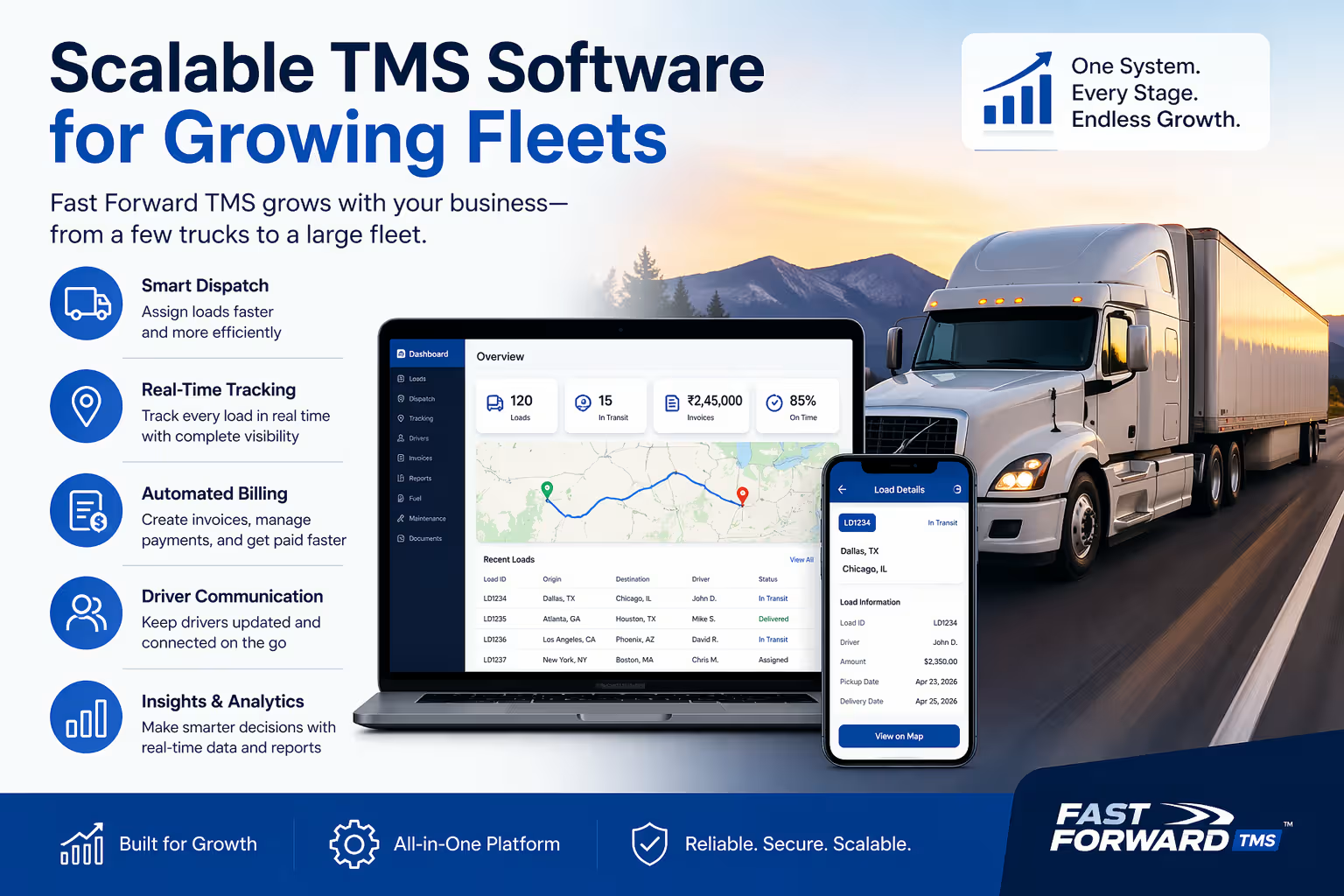
Fast Forward TMS is a cloud-based transportation management system (TMS) designed for carriers seeking speed, efficiency, and cost-effective solutions. With user-friendly cloud TMS features and cloud-based carrier management, it enables fleets to track loads, communicate in real-time, and scale operations without heavy IT investment. The platform’s first truck free offer allows small to mid-sized fleets to onboard quickly and evaluate the system before full deployment.
Backed by over 7 years of product development and 18+ years of industry expertise, Fast Forward TMS is trusted by 1,500+ carriers nationwide. SOC 2 Type 2 compliance ensures secure handling of sensitive data, making it a reliable and authoritative choice. Whether managing a handful of trucks or a large fleet, Fast Forward TMS delivers intuitive tools, fast deployment, and dedicated support—offering a scalable, secure, and efficient cloud-based TMS software solution for modern carriers.
Also Read –How Fast Forward TMS Stands Out as the Best Choice in Carrier TMS Software
Final Resolution: Choosing the Right TMS for Modern Carriers
The key difference between a cloud-based TMS and an on-premise TMS lies in deployment, flexibility, and long-term planning. While both solutions support trucking operations, the best choice depends on a carrier’s current workflows, IT capabilities, and future growth plans.
For fleets seeking real-time updates, remote access, and scalable operations, cloud-based TMS platforms often provide the most efficient and cost-effective solution. A cloud-based transportation management system like Fast Forward TMS, with its intuitive design, mobile tools, and automated workflows, ensures secure, flexible, and scalable operations—helping carriers stay ahead in 2025 and beyond.
Frequently Asked Questions
Why is a Cloud-Based TMS better than an On-Premise TMS?
A cloud-based TMS is faster to deploy, subscription-based, and accessible from anywhere. It requires less IT maintenance, scales easily, and updates automatically. On-premise TMS gives full control but needs higher upfront costs, dedicated IT support, and ongoing maintenance.
Why should carriers move from On-Premise TMS to Cloud-Based TMS?
Moving to a cloud-based TMS gives carriers faster deployment, flexible scalability, and reduced IT costs. It allows real-time access, better resilience, and a pay-as-you-go model, unlike traditional on-premise TMS that requires heavy upfront investment and ongoing maintenance.
Which TMS is best for small to mid-sized fleets?
A cloud-based TMS is ideal for small to mid-sized fleets. It offers flexibility, easy scalability, and user-friendly features, enabling growing carriers to manage operations efficiently without heavy upfront costs.
Does an On-Premise TMS provide more control?
Yes. An on-premise TMS gives carriers full control over data, security, and system customization, but it requires dedicated IT resources, ongoing maintenance, and longer setup times.
Is Cloud TMS secure for fleet data?
Yes, modern Cloud TMS platforms use encryption and strict access controls to protect sensitive data.