
Introduction
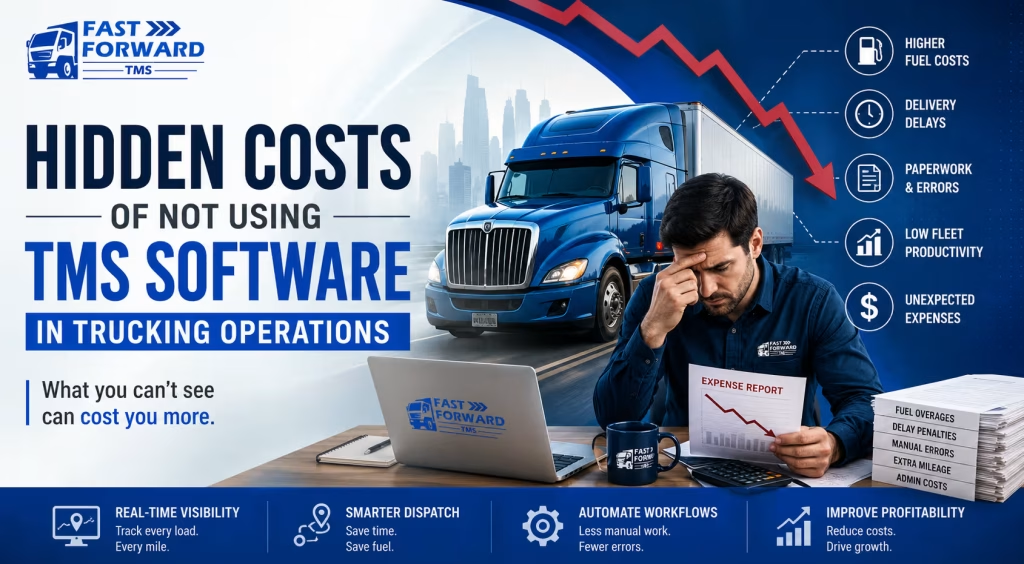
The trucking industry operates on tight margins, fast-moving schedules, and constant operational pressure. Carriers are expected to manage dispatching, driver communication, invoicing, compliance, tracking, and customer updates without delays or errors. However, many trucking companies still rely on spreadsheets, phone calls, paperwork, and disconnected systems to manage daily operations.
At first, manual processes may seem manageable. But as operations grow, inefficiencies begin creating hidden operational and financial costs that directly impact profitability. Delayed dispatching, billing errors, missed compliance requirements, poor fleet visibility, and communication gaps can slowly reduce efficiency across the business.
These challenges not only increase operational expenses but also limit a carrier’s ability to scale in a competitive transportation market.
This is why Transportation Management Software (TMS) has become essential for modern trucking operations. A carrier-focused platform like Fast Forward TMS helps trucking companies automate workflows, improve operational visibility, streamline dispatching, and reduce costly manual processes.
In this blog, we will explore the hidden costs of not using TMS software in trucking operations and why modern carriers are increasingly adopting digital transportation management solutions to improve efficiency and long-term growth.
Key Takeaways
- Manual trucking operations often create hidden costs that reduce profitability over time.
- Dispatch delays, billing errors, and poor communication can negatively impact operational efficiency.
- Lack of real-time visibility increases fuel expenses, empty miles, and route inefficiencies.
- Managing compliance manually increases the risk of penalties, audits, and operational disruptions.
- Administrative workload grows significantly when trucking companies rely on spreadsheets and paperwork.
- Limited operational data makes it difficult for carriers to improve productivity and scale efficiently.
- Transportation Management Software helps centralize operations, automate workflows, and improve business visibility.
- Modern trucking companies increasingly use TMS software to reduce inefficiencies and support long-term growth.
What Is TMS Software in Trucking?
Transportation Management Software (TMS) is a system that helps trucking companies manage dispatching, tracking, invoicing, driver communication, compliance, and daily fleet operations from one platform.
Many carriers still use spreadsheets, paperwork, calls, and disconnected tools to manage operations. As fleets grow, these manual processes often create delays, billing errors, communication gaps, and operational inefficiencies.
TMS software helps centralize these workflows and improve operational visibility. It allows carriers to automate repetitive tasks, monitor fleet activity in real time, manage documents more efficiently, and reduce administrative workload.
In modern trucking operations, TMS software has become important for improving dispatch efficiency, reducing operational costs, and maintaining better control over day-to-day transportation activities.
Manual Dispatching Creates Operational Delays
Many trucking companies still rely on phone calls, spreadsheets, emails, and manual coordination to assign loads and manage dispatch operations. While these processes may work for smaller operations initially, they often become difficult to manage efficiently as shipment volume and fleet activity increase.
Dispatch teams frequently spend significant time assigning loads manually, updating driver schedules, coordinating routes, and managing operational changes across multiple disconnected systems. This slows down dispatch workflows and increases the chances of missed updates, scheduling conflicts, and delayed load assignments.
Without centralized Transportation Management Software, dispatchers also struggle to maintain clear visibility into driver availability, active loads, and route coordination. Over time, manual dispatching inefficiencies can reduce fleet utilization, create operational delays, and impact overall productivity across trucking operations.
Driver Communication Becomes Inefficient
Clear communication between dispatchers and drivers is essential for maintaining smooth trucking operations. However, carriers operating without centralized TMS software often rely on phone calls, text messages, and scattered communication methods to share operational updates and delivery instructions.
As operations grow, managing communication through disconnected channels becomes increasingly difficult. Drivers may experience delayed updates related to routes, pickup schedules, delivery changes, or operational instructions, which can create confusion and slow operational coordination.
Dispatch teams also spend more time handling repetitive calls and manually tracking updates instead of focusing on operational efficiency and load management. Over time, inefficient communication workflows can affect delivery performance, operational coordination, and overall fleet productivity.
Administrative Work Increases Labor Costs
Manual trucking operations often create a significant administrative burden for back-office teams. Managing invoices, paperwork, proof of delivery documents, settlements, compliance records, and operational data manually requires continuous time and effort as shipment volume increases.
Without centralized transportation management workflows, administrative teams frequently spend hours handling repetitive data entry, document verification, invoice processing, and record management tasks. These manual processes not only slow down operational workflows but also increase the risk of human error and missing documentation.
As operational workload grows, many trucking companies eventually require additional administrative staff to manage increasing paperwork and back-office responsibilities. Over time, rising labor costs and administrative inefficiencies can reduce profitability and limit operational scalability.
Poor Visibility Increases Fuel and Route Costs
Limited operational visibility can create major cost challenges for trucking companies operating without TMS software. When dispatchers and fleet managers cannot monitor load movement, driver activity, and shipment progress efficiently, operational planning becomes slower and less accurate.
Many carriers without centralized transportation software experience inefficient route planning, unnecessary idle time, delayed shipment visibility, and increased empty miles. These issues directly contribute to higher fuel expenses and reduced fleet productivity over time.
Without real-time tracking and operational visibility, dispatch teams may also struggle to respond quickly to route changes, delays, or operational disruptions. As fuel and operational costs continue increasing across the transportation industry, limited visibility can significantly impact overall business profitability.
Lack of Data Makes Business Growth Difficult
Many trucking companies operating without Transportation Management Software have limited access to accurate operational data and performance insights. When information is spread across spreadsheets, paperwork, and disconnected systems, it becomes difficult to monitor operational performance effectively.
Carriers often struggle to track important business metrics such as fleet productivity, fuel efficiency, delivery performance, driver utilization, and operational profitability accurately. Without centralized reporting and operational analytics, business decisions become slower and less informed.
As trucking operations grow, reliable operational data becomes increasingly important for improving efficiency, reducing costs, and planning long-term business growth. However, manual systems often provide incomplete or outdated information that limits operational visibility and strategic decision-making.
Administrative Work Increases Labor Costs
Manual trucking operations require significant administrative effort to manage dispatching, invoicing, paperwork, compliance records, driver settlements, and operational updates. As shipment volume increases, these repetitive tasks consume more time and resources.
Without TMS software, back-office teams often spend hours handling data entry, document management, invoice verification, and communication workflows manually. This not only slows operational processes but also increases the chances of human error.
Many trucking companies eventually need additional administrative staff just to manage growing operational workloads. These rising labor costs can reduce profitability and create operational inefficiencies over time.
Manual workflows also make it harder for teams to focus on higher-value tasks such as improving customer service, optimizing operations, and supporting business growth.
Small Inefficiencies Become Major Costs Over Time
In trucking operations, small inefficiencies can quickly grow into major financial and operational problems. A few minutes lost during dispatching, delayed invoicing, route confusion, or manual paperwork may not seem significant individually, but the impact increases as shipment volume grows.
When these issues occur repeatedly across multiple drivers, loads, and dispatch teams, they begin affecting fuel costs, delivery performance, cash flow, customer satisfaction, and overall productivity.
Many carriers operating without TMS software do not immediately notice these hidden costs because the problems develop gradually through daily operations. However, over time, inefficient workflows can reduce profit margins and slow business growth.
As competition in the transportation industry increases, trucking companies need faster workflows, better operational visibility, and more efficient processes to remain profitable and scalable.
Why Carrier-Focused TMS Software Matters
Not all transportation management systems are designed specifically for carrier operations. Trucking companies require workflows that support dispatch management, driver communication, billing, compliance tracking, settlements, and real-time operational visibility.
Generic systems often fail to address the day-to-day operational challenges carriers face as fleets grow. This can create workflow gaps, slower processes, and limited operational control.
Carrier-focused TMS software helps centralize operations and improve coordination between dispatchers, drivers, accounting teams, and management. It also reduces dependency on manual processes that often create delays and operational inefficiencies.
For growing trucking companies, using the right transportation management software is important not only for operational efficiency but also for maintaining scalability, profitability, and long-term business stability.
Signs Your Trucking Business Needs a TMS
Many trucking companies continue using manual processes until operational challenges begin affecting productivity and profitability. As fleets grow, managing dispatching, invoicing, compliance, driver communication, and tracking through spreadsheets or paperwork becomes increasingly difficult.
Frequent dispatch delays, billing errors, missing documents, communication gaps, and rising administrative workload are often clear signs that operations are becoming harder to manage efficiently.
Carriers may also struggle with limited operational visibility, slower payment cycles, inefficient route planning, and difficulty tracking overall fleet performance.
When these issues start impacting daily operations consistently, it usually indicates the need for a centralized transportation management system that can improve workflow efficiency, operational control, and scalability.
How Fast Forward TMS Helps Reduce Hidden Operational Costs
With more than 18 years of logistics and transportation technology expertise, Fast Forward TMS helps carriers reduce the hidden operational costs that often come from manual dispatching, billing inefficiencies, communication gaps, paperwork dependency, and disconnected workflows. The platform was built specifically for trucking operations to help carriers manage dispatching, tracking, invoicing, driver communication, and operational workflows from one centralized cloud-based system.
Fast Forward TMS supports dispatch automation, real-time load visibility, billing workflow management, and carrier-focused operational coordination designed to improve efficiency and reduce administrative workload. The platform also includes load offer negotiation capabilities that help carriers manage freight discussions more efficiently within daily workflows.
Unlike many transportation software platforms that add extra costs for essential operational tools, Fast Forward TMS focuses on practical and transparent pricing without unnecessary hidden charges for core carrier workflows, making it easier for growing fleets to adopt modern transportation management technology with confidence.
Conclusion
The hidden costs of not using TMS software in trucking operations often extend far beyond manual paperwork and dispatching delays. Inefficient workflows, billing errors, compliance risks, communication gaps, limited operational visibility, and rising administrative costs can gradually reduce profitability and slow business growth.
As the transportation industry becomes more competitive, trucking companies need better operational control, faster workflows, and improved visibility to manage daily operations efficiently.
Transportation Management Software helps carriers reduce operational inefficiencies, improve coordination, streamline workflows, and support long-term scalability in a fast-moving trucking environment.
FAQ
What are the hidden costs of not using TMS software?
The hidden costs include dispatch delays, billing errors, compliance risks, fuel inefficiencies, communication gaps, and rising administrative expenses.
Why do trucking companies need TMS software?
Trucking companies need TMS software to improve operational efficiency, automate workflows, reduce manual errors, and gain real-time visibility into fleet operations.
How does TMS software reduce trucking operational costs?
TMS software helps reduce operational costs by improving dispatch efficiency, automating billing, optimizing routes, reducing paperwork, and improving communication.
What problems do manual trucking operations create?
Manual trucking operations often create dispatch delays, invoicing mistakes, compliance challenges, communication issues, and inefficient fleet management.
Is TMS software important for growing trucking companies?
Yes, TMS software helps growing trucking companies manage larger shipment volumes, improve operational control, and scale more efficiently.