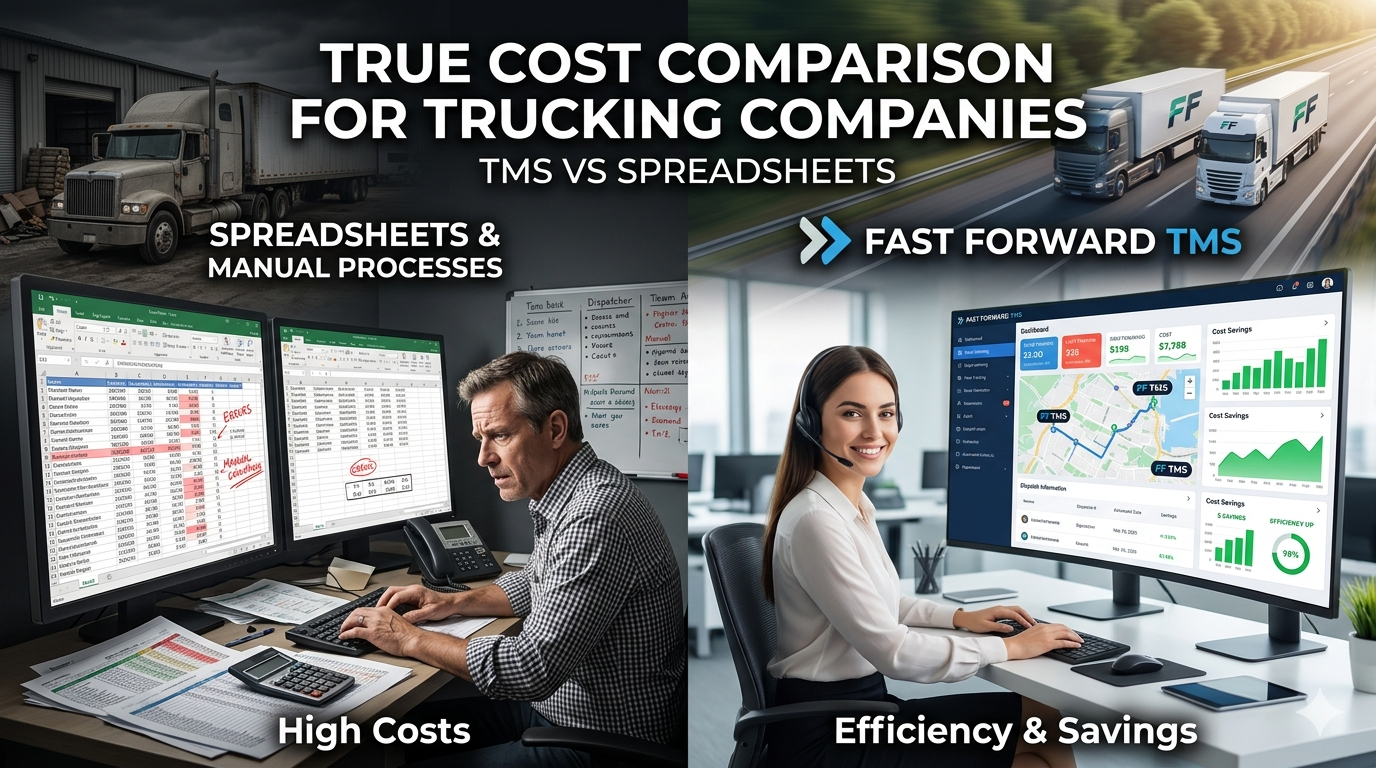

Introduction: Understanding Transportation Management Cost
TMS Software Cost is a critical factor for carriers and logistics companies evaluating new technology. Costs vary based on fleet size, feature requirements, deployment model, and pricing structure. TMS software pricing can range from affordable cloud-based plans for small carriers to advanced enterprise and custom solutions for complex operations.
As transportation networks grow more demanding, controlling transportation management costs becomes essential. According to Infios, companies using a Transportation Management System can reduce transport spend by 2–5% annually through better visibility, automation, and planning. By choosing the right TMS aligned with operational needs, carriers can improve efficiency, reduce manual work, and achieve faster, measurable ROI across daily logistics operations.
Key Takeaways: Transportation Management Cost
Transportation management cost depends on fleet size, pricing model, features, and integrations. The right TMS software helps carriers control expenses, improve visibility, and achieve faster ROI through automation and smarter planning.
What You Should Remember
- Transportation management cost is flexible.
Costs vary by fleet size, shipment volume, and deployment choice. Small carriers often start with SaaS plans, while enterprises choose advanced or custom TMS solutions. - Pricing models shape long-term spend.
Subscription, usage-based, license-based, and custom models impact cash flow differently. The best option aligns with how your fleet operates and grows. - Features directly affect TMS software pricing.
Advanced tools like route optimization, real-time tracking, analytics, and compliance increase cost but deliver higher efficiency and control. - Hidden costs influence true ROI.
Setup, data migration, integrations, training, and premium support should be reviewed early to avoid budget surprises. - ROI matters more than upfront price.
Many carriers recover TMS investments within months through faster billing, fewer errors, and better routing. - The right TMS is a growth tool.
A well-matched Transportation Management System reduces operational complexity, improves visibility, and supports long-term, cost-effective logistics operations.
What Is a Transportation Management System?
A Transportation Management System (TMS) is logistics software that helps businesses plan, execute, track, and optimize freight movement.
Used by carriers, shippers, and 3PLs, TMS software manages dispatching, route planning, load tracking, billing, compliance, and reporting.
It provides real-time visibility across transportation operations and automates manual tasks. By improving efficiency, accuracy, and decision-making, a Transportation Management System reduces transportation costs and helps logistics teams move freight faster and more reliably.
Explore More: What Is a Transport Management System (TMS) and How Does It Work?
TMS Software Pricing Models Explained: Transportation Management Cost for Carriers
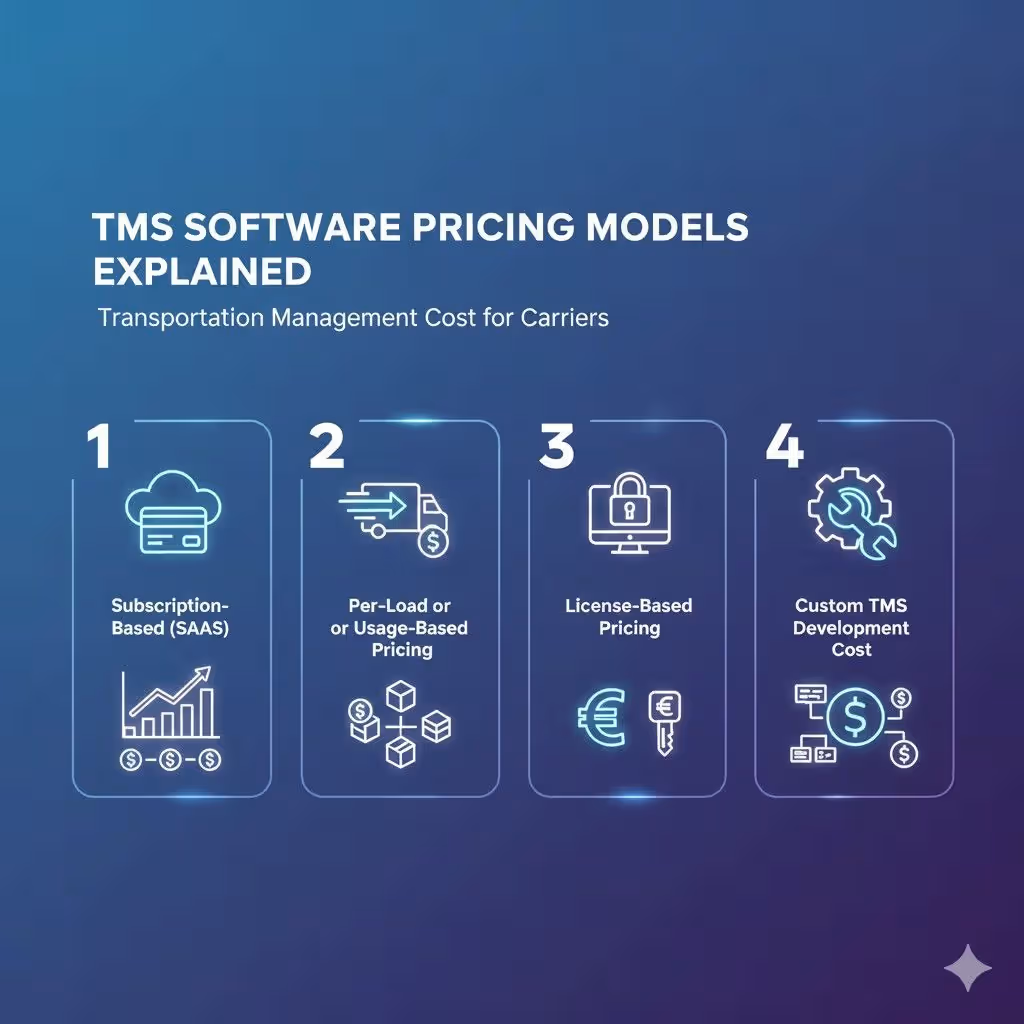
Transportation management cost varies widely based on fleet size, shipment volume, and operational complexity. Carrier TMS software cost can range from simple monthly plans to advanced enterprise pricing. Understanding TMS software for carrier cost helps logistics teams choose the right pricing model and avoid overpaying.
Choosing the right TMS software pricing model depends on how your fleet operates and scales. Below is a clear breakdown of the most common transportation management system pricing options, explained in practical, real-world terms for carriers.
Subscription-Based (SaaS) Pricing for Cloud-Based TMS Solutions
Subscription-based, cloud-hosted TMS software is the most common pricing model today. Transportation management cost under SaaS is typically charged monthly or annually, based on users, trucks, or shipment volume. This model keeps carrier TMS software cost predictable and affordable, making it ideal for small to mid-sized fleets. Carriers benefit from fast setup, automatic updates, and lower upfront spend, though TMS software for carrier cost remains an ongoing operational expense.
Per-Load or Usage-Based Pricing
Per-load or usage-based pricing charges carriers based on shipments, miles, or transactions processed. This model keeps Transportation Management Cost flexible and aligns TMS software for carrier cost with actual activity. It works well for seasonal fleets or variable volumes, since carriers only pay when loads move. However, during peak seasons, carrier TMS software cost can rise quickly, making forecasting more challenging for fast-growing operations.
License-Based Pricing
License-based pricing requires a one-time purchase of transportation management system software, often paired with annual maintenance fees. This model offers long-term ownership and greater control, making it suitable for large enterprises with dedicated IT teams. While the upfront Transportation Management Cost is higher, ongoing carrier TMS software cost may stabilize over time. However, maintenance, upgrades, and infrastructure expenses can increase total TMS software for carrier cost if not planned carefully.
Custom TMS Development Cost
Custom TMS development cost depends on the scope, features, and complexity of your transportation management system software. This option is best for enterprises with highly specific workflows that standard platforms cannot support. While the upfront Transportation Management Cost and overall TMS software for carrier cost are higher, custom solutions provide full control, scalability, and long-term flexibility. For some organizations, the tailored functionality offsets the higher carrier TMS software cost over time through efficiency gains and process optimization.
Quick Comparison of TMS Pricing Models
| TMS Pricing Model | Typical Cost Structure | Best Suited For |
| Subscription-Based (SaaS) | Monthly or annual fee | Small to mid-sized carriers |
| Usage-Based(Per-Load) | Per load or transaction | Seasonal operations |
| License-Based | One-time license + maintenance | Large enterprises |
| Custom TMS Development | One-time development cost | Complex logistics workflows |
Each pricing model impacts overall Transportation Management Cost differently. The right option depends on fleet size, shipment volume, scalability needs, and operational flexibility. Comparing models helps carriers balance upfront investment with long-term ROI and avoid overpaying for unused capabilities.
Key Factors That Affect Transportation Management Cost
Transportation management cost depends on fleet size, feature needs, deployment type, integrations, and support levels. These factors directly influence TMS software pricing for carriers and logistics companies.
1. Fleet Size and Shipment Volume Impact on TMS Software Cost
Larger fleets usually pay more for TMS software. More trucks, drivers, and loads increase system usage and data processing needs.
For example, a 10-truck carrier may pay a basic monthly fee. A 200-truck fleet often needs higher-tier pricing.
Cost impact includes:
- More user licenses
- Higher shipment volume
- Increased support requirements
2. Features and Modules That Increase TMS Software Pricing
The more advanced the features, the higher the transportation management system cost. Basic tools cost less than full-feature platforms.
Common cost-driving features include:
- Automated dispatch
- Route optimization
- Real-time load tracking
- Billing and carrier settlements
- Compliance and IFTA reporting
- Advanced reporting and analytics
Carriers should pay only for features they actively use.
3. Deployment Type: Cloud vs On-Premise TMS Software Cost
Deployment choice directly affects upfront and long-term costs.
Cloud-based transportation and logistics software:
- Lower upfront cost
- Faster setup
- No server management
On-premise systems:
- Higher initial investment
- Ongoing IT and server expenses
- More control over data
Most carriers choose cloud-based TMS software today.
Explore More:Cloud-Based vs. On-Premise TMS: How to Choose the Right One
4. Integrations and Their Effect on Transportation Management Cost
Integrations often raise implementation costs. However, they reduce manual work long term.
Common integrations include:
- ELD and telematics systems
- Accounting software
- ERP platforms
- Customer or shipper portals
For example, connecting ELDs may add setup fees but improves real-time visibility.
5. Support, Training, and Ongoing TMS Software Expenses
Support and training costs vary by vendor and service level.
Some TMS software includes:
- Basic onboarding
- Standard support
Others charge extra for:
- Dedicated account managers
- Custom training sessions
- 24/7 technical support
Clear support terms help avoid unexpected costs.
Understanding these factors helps carriers evaluate TMS software pricing realistically.
The right transportation management system balances cost, functionality, and long-term value.
Hidden Costs to Consider Before Buying TMS Software
Transportation management cost often goes beyond the advertised subscription price. While base TMS software pricing may appear affordable, some Transportation Management System providers apply additional fees that increase the true cost over time. Understanding these potential charges early helps carriers plan realistic budgets and avoid ROI gaps after implementation.
Many carriers focus on monthly pricing and discover extra expenses only after signing contracts. These hidden costs can significantly impact total transportation management cost if they are not clearly disclosed during the buying process.
Common Hidden Charges in TMS Software Pricing
Setup and Implementation Fees
Some TMS providers charge one-time setup or implementation fees. These may include system configuration, workflow customization, user setup, and security settings. Larger or more complex fleets often face higher implementation costs.
Integration and API Connection Costs
Connecting the TMS with ELDs, telematics systems, accounting software, ERP platforms, or customer portals may involve extra charges. API access, custom integrations, or third-party connectors often increase the overall transportation management cost.
Data Migration Fees
Migrating data from spreadsheets or legacy systems can require manual effort and validation. Providers may charge extra for importing historical shipment data, carrier records, or financial information.
Training and Onboarding Costs
Basic onboarding may be included, but in-depth training, role-based sessions, or ongoing user education often come at an additional cost—especially for larger teams.
Ongoing Support and Maintenance Fees
Some vendors charge separately for premium support, dedicated account managers, system upgrades, or 24/7 technical assistance. These recurring fees can raise long-term TMS software costs.
Per-Transaction or Usage-Based Fees
Even with subscription plans, some TMS platforms apply per-load, per-transaction, or data-usage fees. As shipment volume grows, these charges can significantly increase transportation management cost.
Customization and Add-On Feature Charges
Advanced reporting, custom dashboards, compliance modules, or specialized automation tools may be offered as paid add-ons rather than included features.
How to Avoid Budget Surprises
To control transportation management cost, carriers should request a complete pricing breakdown before committing. Ask vendors to clearly outline setup fees, integrations, training, support, usage limits, and add-on costs in writing. Transparent pricing discussions ensure accurate budgeting and protect long-term logistics investments.
TMS Software Value for Carriers and Logistics Operations
For most carriers and logistics companies, investing in a Transportation Management System (TMS) delivers strong operational value. Better route planning, faster billing, and fewer manual errors help streamline daily transportation workflows and control costs.
Real-world results support this investment. Over 40% of small fleets recover their TMS investment within 6–12 months, and another 25% achieve payback within 18 months. These gains come from improved visibility, automation, and smarter planning.
When carriers select a TMS aligned with their fleet size and operational needs, they achieve faster ROI, reduced complexity, and stronger control over transportation expenses.
Conclusion: Making the Right Decision on Transportation Management Cost
Transportation management cost is not a fixed number—it reflects your fleet size, operational complexity, pricing model, and long-term goals. As this guide shows, the right Transportation Management System helps carriers move beyond cost concerns to measurable value. By understanding TMS software pricing, hidden expenses, and ROI potential, carriers can make informed decisions that improve efficiency, visibility, and control. When chosen carefully, a TMS is not just a technology expense but a strategic investment that supports sustainable growth and smarter logistics operations.
FAQs: Transportation Management Cost
How much does Transportation Management Cost typically range?
Transportation management cost varies by fleet size and complexity. Small carriers may pay a low monthly SaaS fee, while mid-sized and enterprise fleets invest more for advanced features, integrations, and scalability.
What factors impact Transportation Management Cost the most?
Fleet size, shipment volume, pricing model, feature selection, integrations, and deployment type have the greatest impact on overall transportation management cost and long-term ROI.
Is TMS software affordable for small carriers?
Yes. Many TMS software providers offer cloud-based, subscription plans designed for small fleets. These plans keep transportation management cost predictable while providing essential dispatch, tracking, and billing tools.
How does fleet size affect TMS software pricing?
Larger fleets require more users, higher shipment capacity, and increased system usage. This raises transportation management cost compared to smaller fleets with simpler operational needs.
Which TMS pricing model is best for carriers?
The best model depends on operations. SaaS pricing suits most carriers, usage-based works for seasonal volumes, license-based fits large enterprises, and custom TMS suits complex workflows.
Are there hidden costs in TMS software pricing?
Yes. Transportation management cost may include setup, data migration, integrations, custom reporting, training, and premium support. Reviewing these early prevents budget surprises.
Does a Transportation Management System reduce operating costs?
Yes. A well-implemented Transportation Management System improves routing, automation, billing speed, and visibility, helping carriers lower operational costs and manual effort.
How long does it take to see ROI from TMS software?
Many carriers see ROI within 6–18 months. Faster billing, reduced errors, improved planning, and automation help recover transportation management cost quickly.
Is custom TMS development worth the higher cost?
Custom TMS development is worth it for enterprises with unique workflows. For most carriers, standard TMS software delivers strong value at a lower transportation management cost.
How can carriers control Transportation Management Cost?
Carriers should match features to actual needs, choose the right pricing model, avoid unused modules, plan integrations carefully, and focus on ROI rather than upfront price.