
Introduction
Fast Forward TMS Implementation is not just a technical upgrade. It directly impacts how efficiently your trucking business manages dispatch, tracking, driver operations, and billing.
According to Freight Waves, over 91% of trucking companies with more than 20 trucks already use a Transportation Management System, while only 33% of small fleets have adopted it. This gap highlights a major opportunity for growing carriers to improve efficiency and stay competitive.
For most carriers, the real challenge is not choosing the right system, but understanding how the implementation process works and how to execute it without disrupting daily operations.
With Fast Forward TMS, the implementation is designed around real carrier workflows, ensuring a faster, more practical transition from day one.
Carriers that define their workflows clearly before setup often experience a smoother and more efficient implementation process.
This guide walks you through each stage of implementation, helping you move forward with clarity, confidence, and minimal disruption.
You Make Also Like To Read : TMS Implementation Guide: 7 Proven Steps to Ensure Success
Key Takeaways
- Implementing Fast Forward TMS is a structured process, not just a software setup
- Proper preparation and workflow clarity significantly reduce implementation time and errors
- A focused step-by-step approach ensures smooth transition without disrupting operations
- Clean and organized data is critical for accurate system setup and performance
- Team training plays a key role in successful adoption and long-term efficiency
- A structured implementation approach improves system accuracy and long-term performance
- Clear planning and execution directly impact how quickly your team adopts the system
What to Expect During Implementation
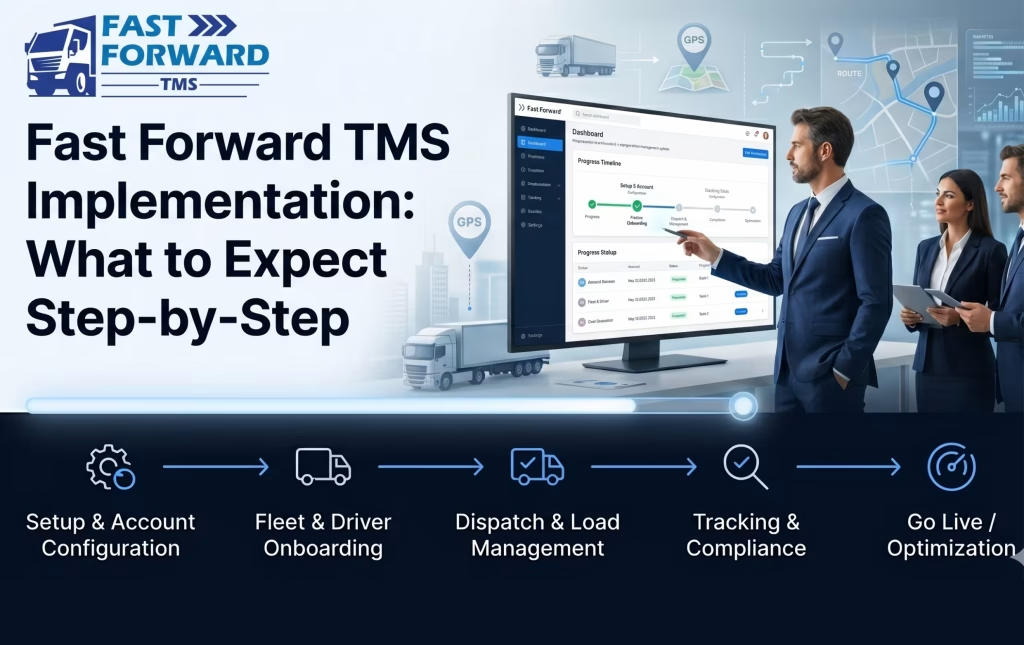
When implementing Fast Forward TMS, you can expect a structured process that moves from preparation to setup, data migration, training, and final deployment.
Each stage is focused on aligning the system with your actual business workflows, ensuring minimal disruption and faster adoption. Most businesses experience a smooth transition when workflows are clearly defined before setup and data is properly prepared.
Before You Start (Preparation)
Before implementation begins, a short preparation phase ensures everything runs smoothly.
You need to decide which modules you will use first, such as dispatch, billing, or tracking, so the setup remains focused. Your existing data including drivers, fleet, customers, and rates should be organized and cleaned to avoid errors later.
It is also important to assign one responsible person from your team who will coordinate the process and provide required inputs. Ensuring your team has system access and a structured easy onboarding process will help avoid delays.
This step ensures the implementation starts with clarity and avoids unnecessary rework.
Step 1: Workflow Assessment
The first step is to understand how your current operations work so the system can be configured correctly.
Your dispatch flow, billing process, and driver management are reviewed to identifyhow loads are assigned and optimized through load offer negotiation, how communication happens, and how invoices and settlements are handled.
The goal is to carry forward what works and eliminate inefficiencies such as manual tasks or delays. By the end of this step, your workflows are clearly defined, allowing accurate system setup.
Step 2: System Setup & Configuration
Once workflows are defined, the system is configured based on your business operations.
This includes setting up company details, drivers, fleet, rate structures, fuel management, and load management rules. Instead of using default settings, the system is aligned with your actual workflow to ensure smooth day-to-day operations.
A properly configured setup reduces errors and ensures your team can start using the system without confusion.
Step 3: Data Migration
After setup, your existing data is added to the system.
This includes driver records, fleet details, customer information, and financial data. Only relevant and cleaned data is migrated to maintain accuracy and avoid clutter.
The focus here is to ensure continuity, so your operations can continue without losing important historical or operational data.
Step 4: Training & Onboarding
Once data is in place, your team is trained on how to use the system.
Dispatchers learn how to assign and manage loads using dispatching software, drivers understand how to use the mobile app, and finance teams handle billing, settlements, and driver payroll software
Proper training ensures your team is confident using the system, which directly impacts adoption and efficiency.
Step 5: Testing & Go-Live
Before full deployment, the system is tested using real or sample operations.
This step verifies that dispatch, truck tracking software, and billing are working correctly. Any gaps or issues are identified and fixed before going live.
Once everything is validated, the system becomes your primary operational platform.
Common Fast Forward TMS Implementation Mistakes and How to Avoid Them
Many implementation issues come from avoidable mistakes.
Skipping workflow assessment often leads to incorrect system setup. Poor data quality creates operational errors, while lack of training results in low team adoption. Trying to implement everything at once without a clear plan can also slow down the process and create confusion.
In most cases, these issues are not system-related but process-related. Businesses that define workflows early, prepare clean data, and follow a structured approach experience a much smoother implementation.
Addressing these challenges during the preparation and planning stage helps prevent delays and ensures a faster, more efficient rollout.
How Long Does Fast Forward TMS Implementation Take?
The implementation timeline for Fast Forward TMS depends on your fleet size, data readiness, and workflow complexity.
Most implementations follow a predictable range. Small fleets typically complete setup within one to two weeks, while mid-sized operations may take two to four weeks. Larger businesses with more complex workflows or integrations may require additional time.
In most cases, delays are not caused by the system, but by unprepared data or unclear workflows. Businesses that prepare their data in advance and define workflows early often complete implementation faster and with fewer issues.
Conclusion
Implementing a TMS becomes much simpler when the process is structured and focused.
With Fast Forward TMS, businesses can transition from manual operations to a streamlined, automated system without unnecessary complexity.
By following a clear step-by-step approach, you can ensure a smooth implementation and start improving efficiency, visibility, and insights using analytics software from day one.
Ready to simplify your operations and implement a system built for real carrier workflows?
Start your Fast Forward TMS implementation today and reduce manual work, improve efficiency, and scale your trucking business with confidence.
Frequently Asked Questions (FAQs)
What is Fast Forward TMS implementation?
Fast Forward TMS implementation is the process of setting up and configuring Fast Forward TMS to manage dispatch, tracking, billing, and driver operations based on your business workflow.
How long does it take to implement Fast Forward TMS?
Implementation typically takes between 1 to 4 weeks depending on fleet size, data readiness, and workflow complexity. Well-prepared businesses usually complete the process faster.
What data is needed for TMS implementation?
You need essential operational data such as driver details, fleet information, customer and broker records, and rate structures. Clean and accurate data ensures smooth setup and fewer errors.
Do I need training to use Fast Forward TMS?
Yes, training is important to ensure your team can effectively use the system for dispatching, tracking, and billing. Proper onboarding improves adoption and reduces operational mistakes.
What are the common mistakes during TMS implementation?
Common mistakes include skipping workflow planning, using unclean data, lack of team involvement, and rushing the process. Avoiding these ensures a smoother and more successful implementation.