
INTRODUCTION

Running a trucking business today isn’t just about moving loads—it’s about managing complex operations efficiently.
As fleets grow, dispatching slows down, communication gaps increase, billing gets delayed, and visibility across trips becomes limited. These challenges don’t come from lack of demand, but from how operations are managed.
Based on real-world transportation workflows, Nitin Shankar highlights the most common operational problems carriers face—and how a structured system can solve them.
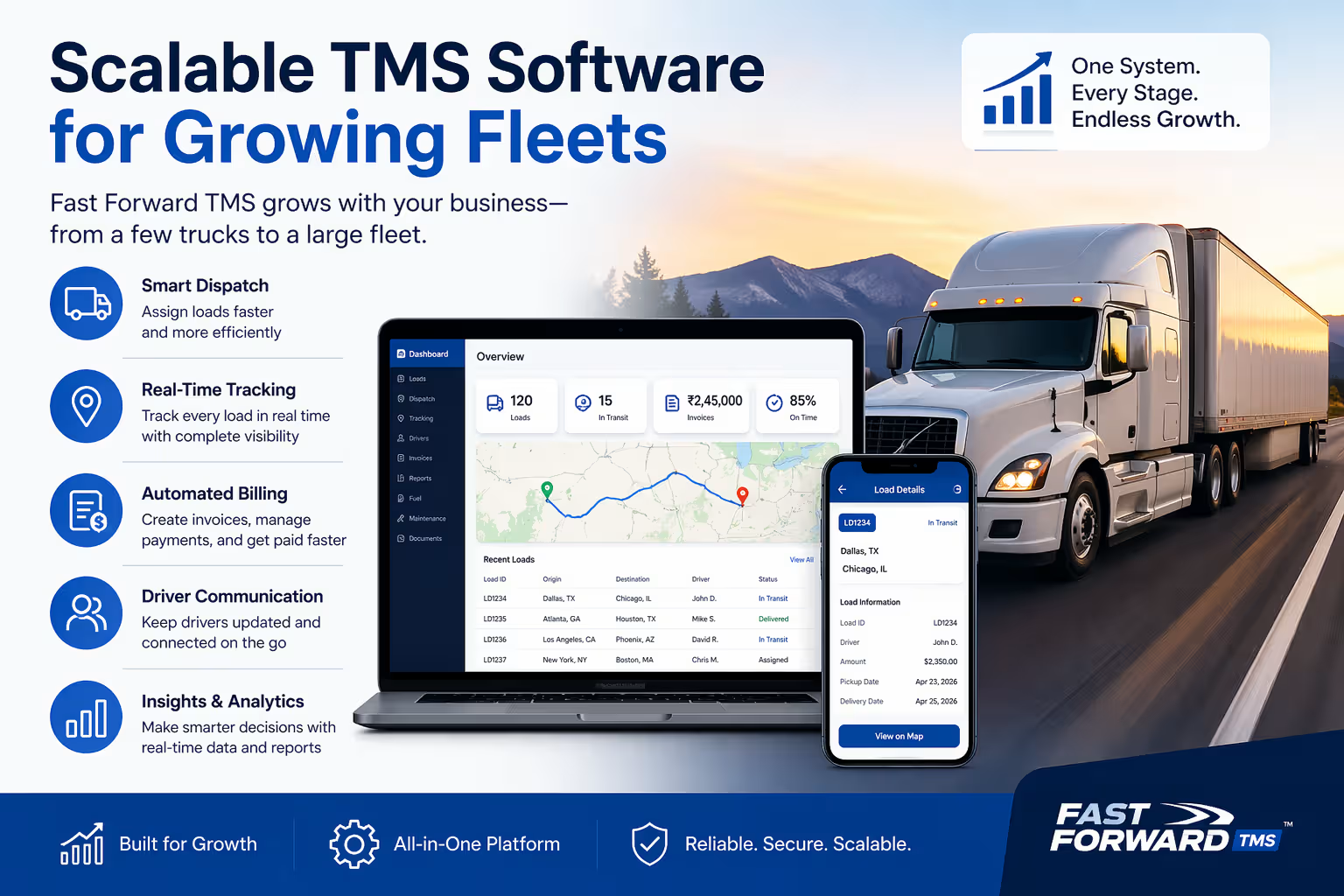
Carrier TMS software helps manage dispatch, tracking, billing, and driver coordination in one connected system—reducing delays, improving visibility, and making operations easier to control.
In this blog, we’ll break down the most common problems trucking companies face today—and how a structured system helps solve them in a practical, scalable way.
Key Takeaways
- Trucking businesses often struggle due to operational inefficiencies, not lack of demand
- Manual processes like calls, spreadsheets, and disconnected tools create delays and errors
- Poor communication between dispatchers, drivers, and teams leads to confusion and missed updates
- Slow and manual load assignment reduces efficiency and increases empty miles
- Billing delays and paperwork issues directly impact cash flow and driver satisfaction
- Lack of real-time visibility makes it difficult to track trips and respond quickly
- Fuel costs increase due to poor monitoring and inefficient routing
- As fleets grow, managing operations without a structured system becomes unscalable
- A connected system like carrier TMS software brings dispatch, tracking, billing, and communication into one place
- Better data visibility helps in making informed decisions instead of relying on guesswork
- Structured workflows improve efficiency, reduce errors, and support long-term growth
Common Problems in Trucking Operations Today
Most trucking businesses don’t struggle because of lack of loads—they struggle because of operational inefficiencies that grow silently over time.
At a smaller scale, calls, spreadsheets, and manual coordination seem manageable. But as the number of trucks, drivers, and loads increases, these same processes start creating delays, confusion, and costly mistakes.
Dispatch decisions slow down, communication gaps widen, and important data gets scattered across tools. What should be a smooth workflow turns into constant firefighting.
This is exactly where a structured system like carrier TMS software starts making a real difference—not by adding more tools, but by organizing how everything works together.
Top 10 Problems in Trucking (Solved by Carrier TMS Software)
1. Disconnected Communication Across Teams & Drivers
In many fleets, communication is still handled through phone calls, WhatsApp messages, or scattered updates. Dispatchers may inform drivers about a load, but accounting or customer teams often remain out of the loop.
This leads to confusion—missed updates, wrong delivery information, and repeated follow-ups. As operations grow, these gaps become more frequent and harder to manage.
A structured system like carrier TMS software connects all stakeholders on a single platform. Dispatch updates, driver status, load progress, and delivery confirmations are visible to everyone in real time. With a dedicated driver mobile app, drivers receive updates instantly, reducing communication gaps.
Instead of relying on fragmented communication, teams work with shared information—reducing confusion and improving coordination across the entire operation.
2. Manual & Slow Load Dispatching
Many fleets still assign loads manually using spreadsheets or phone calls. Dispatchers need to check driver availability, location, and load requirements before making decisions—often under time pressure.
This slows down operations and increases the risk of errors like double-booking, wrong assignments, or unnecessary empty miles.
With carrier TMS software, dispatch becomes structured and faster. Driver availability, location, and load details are visible in one place, making it easier to assign the right load to the right driver.
This not only speeds up dispatching but also improves resource utilization and reduces operational delays. A structured truck load management software further helps automate load assignment and reduce empty miles.
3. Inefficient Load Pricing & Negotiation
Load pricing is often handled manually, with fixed rates or back-and-forth calls between dispatchers and contract drivers. This slows down decision-making and may result in missed opportunities or poorly optimized rates.
In a competitive market, static pricing doesn’t always reflect real-time demand, distance, or driver availability.
A modern carrier TMS software allows more flexible and structured pricing workflows. Dispatchers can manage load offers, track responses, and make quicker decisions based on real-time inputs.
This leads to better rate optimization, faster deal closures, and improved relationships with drivers and partners.
Explore More: Load Offer Negotiation Software
4. Billing Delays & Settlement Errors
Billing in trucking often depends on multiple steps—trip completion, document collection, invoice generation, and driver settlements. When handled manually, this process is prone to delays and errors.
Missing documents, incorrect calculations, or late approvals can affect both cash flow and driver satisfaction.
By using carrier TMS software, billing and settlements become more streamlined. Trip data, documents, and calculations are connected, reducing manual work and improving accuracy.
As a result, invoices are generated faster, payments are more reliable, and financial operations become easier to manage. Integrating payroll software also helps streamline driver settlements and payout accuracy.
5. Lack of Real-Time Fleet Visibility
Without clear visibility, fleet operations become reactive. Dispatchers often rely on calls to check driver location or trip status, which slows down decision-making and creates uncertainty.
Delays, route deviations, or unexpected stops are harder to track, and customers frequently ask for updates that teams struggle to provide in real time.
With carrier TMS software, fleet visibility improves significantly. Live tracking, trip progress, and status updates are available in one place, allowing teams to monitor operations without constant follow-ups.
This helps in making faster decisions, improving customer communication, and reducing operational risks.
Explore more: Truck Tracking Software
6. Fuel Wastage & Cost Leakages
Fuel is one of the largest operational expenses in trucking, yet it’s often poorly monitored. Unplanned routes, inefficient driving patterns, and lack of tracking can lead to unnecessary fuel consumption.
In some cases, there’s also limited visibility into refueling behavior, making it difficult to identify irregularities or cost leakages.
A structured system like carrier TMS software brings better control over fuel usage by connecting trip data, distance, and consumption patterns. It becomes easier to identify inefficiencies and take corrective actions.
Over time, this leads to better fuel management and noticeable cost savings.
7. Complex Onboarding & System Adoption
Many fleets hesitate to adopt new systems because they expect complicated setup processes and long training cycles. This slows down digital adoption and keeps teams dependent on manual workflows.
Even when systems are implemented, poor usability can lead to low adoption among dispatchers and drivers.
Modern carrier TMS software focuses on simplified onboarding and intuitive workflows. Teams can start using the system without extensive training, and daily operations continue without disruption.
This makes it easier for growing fleets to transition from manual processes to a more structured system.
You may also like to read: TMS Implementation Guide
8. Paperwork & Compliance Risks
Trucking operations involve a large amount of documentation—trip records, invoices, permits, and compliance-related files. When handled manually, these documents can be misplaced, delayed, or difficult to retrieve.
This increases the risk during audits and adds unnecessary administrative workload.
With carrier TMS software, documents are stored digitally and linked to specific trips or loads. Teams can access required files quickly, and important records remain organized.
This reduces compliance risks and simplifies document management across operations.
9. Low Driver Engagement & Coordination Issues
Drivers often receive updates through calls or scattered messages, which can lead to confusion or missed information. Lack of clarity around assignments, earnings, or schedules can also impact motivation.
As fleets grow, maintaining consistent communication with drivers becomes more difficult.
A connected system like carrier TMS software improves coordination by providing a structured way to share updates, track trip status, and manage communication.
Drivers stay better informed, operations run more smoothly, and overall engagement improves.
10. Lack of Data & Business Insights
Many trucking businesses operate without clear visibility into performance metrics. Key insights like cost per trip, driver utilization, or route efficiency are often not tracked properly.
This makes it difficult to identify what’s working and where improvements are needed.
With carrier TMS software, operational data is captured and organized in a usable format. Teams can access reports, monitor performance, and make informed decisions.
Instead of relying on guesswork, businesses can plan growth based on actual data.
Manual Operations vs Carrier TMS Software
As trucking operations grow, the gap between manual processes and structured systems becomes very clear. What once worked with a small fleet starts creating delays, errors, and inefficiencies at scale.
Here’s how things typically change after adopting a carrier TMS software:
| Area | Manual Process | With Carrier TMS Software |
| Dispatch | Calls, spreadsheets, guesswork | Structured, faster assignments |
| Tracking | Driver calls for updates | Real-time visibility in one place |
| Billing | Delayed, error-prone | Connected and more accurate |
| Documentation | Paper-based, scattered | Digitally stored and organized |
| Communication | Multiple channels, confusion | Centralized and transparent |
| Decision Making | Based on assumptions | Based on actual data |
This shift is not just about convenience—it directly impacts speed, accuracy, and overall operational control.
What Changes After Using a Carrier TMS Software?
Once operations are structured within a single system, the improvements become visible across multiple areas of the business.
Teams spend less time coordinating and more time executing. Dispatch decisions become quicker, billing cycles shorten, and communication becomes clearer.
Some of the most noticeable changes include:
- Faster load assignment and reduced delays
- Better visibility across all active trips
- Fewer billing errors and smoother settlements
- Improved driver coordination and response time
- More control over fuel usage and operational costs
- Access to performance data for better planning
Instead of reacting to problems daily, teams start operating with more clarity and control.
How Fast Can You Start with a Carrier TMS Software?
One of the biggest concerns for trucking businesses is the time required to move away from manual operations.
Modern systems are designed for quick adoption, and platforms like Fast Forward TMS align closely with real-world carrier workflows.
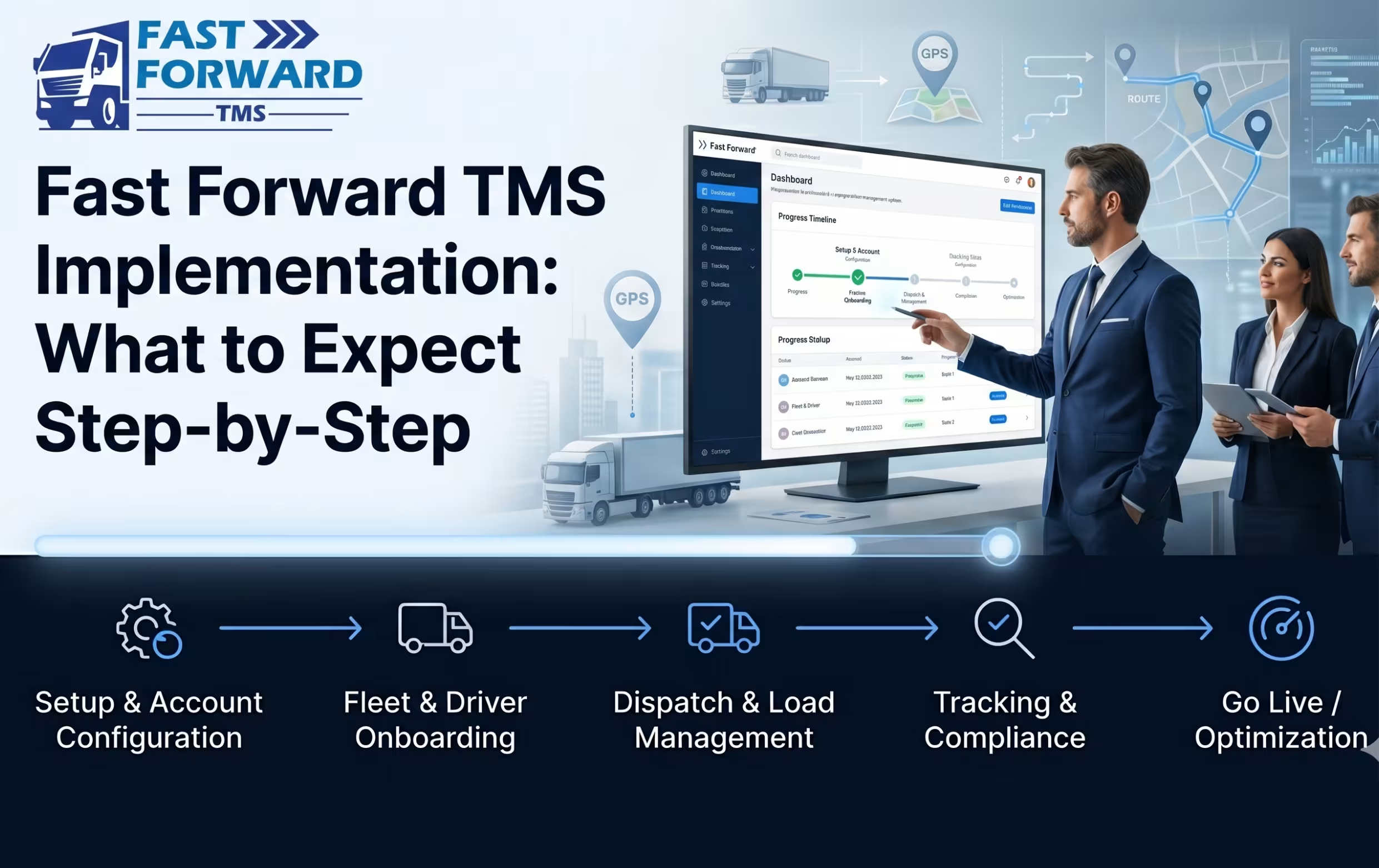
The setup is typically simple:
- Add company, fleet, and driver details
- Configure dispatch and billing workflows
- Onboard teams with minimal training
- Start live operations quickly
Solutions like Fast Forward TMS are trusted by 1,500+ companies and backed by 18+ years of transportation technology expertise, making the transition smoother and more practical.
For growing fleets, this means faster adoption with minimal disruption.
CONCLUSION
Managing a trucking business efficiently requires more than just handling loads—it requires control over how every part of the operation works together.
From dispatch delays to billing issues and lack of visibility, many common challenges come from disconnected and manual processes.
A structured system like carrier TMS software helps bring clarity to these operations by connecting workflows, improving coordination, and making data more accessible.
As fleets grow, having this level of control becomes essential—not optional.
Start Managing Your Fleet Smarter
If your operations still rely on manual processes, moving to a structured system can make a real difference.
Fast Forward TMS brings dispatch, tracking, and billing into one place—helping you run operations with better control and efficiency.
[Book a Free Demo]
Frequently Asked Questions
What is carrier TMS software?
Carrier TMS software is a system that helps trucking companies manage dispatch, tracking, billing, driver coordination, and documentation in one place.
How does carrier TMS software help trucking businesses?
It reduces manual work, improves visibility, speeds up dispatching, and helps manage operations more efficiently through a connected system.
Is carrier TMS software useful for small fleets?
Yes, even small fleets benefit by reducing manual coordination and preparing for future growth with structured workflows.
How long does it take to implement a carrier TMS software?
Most modern systems can be set up within a few days, depending on fleet size and operational complexity.
What features should I look for in a TMS?
Key features include dispatch management, real-time tracking, billing automation, driver communication tools, and reporting capabilities.