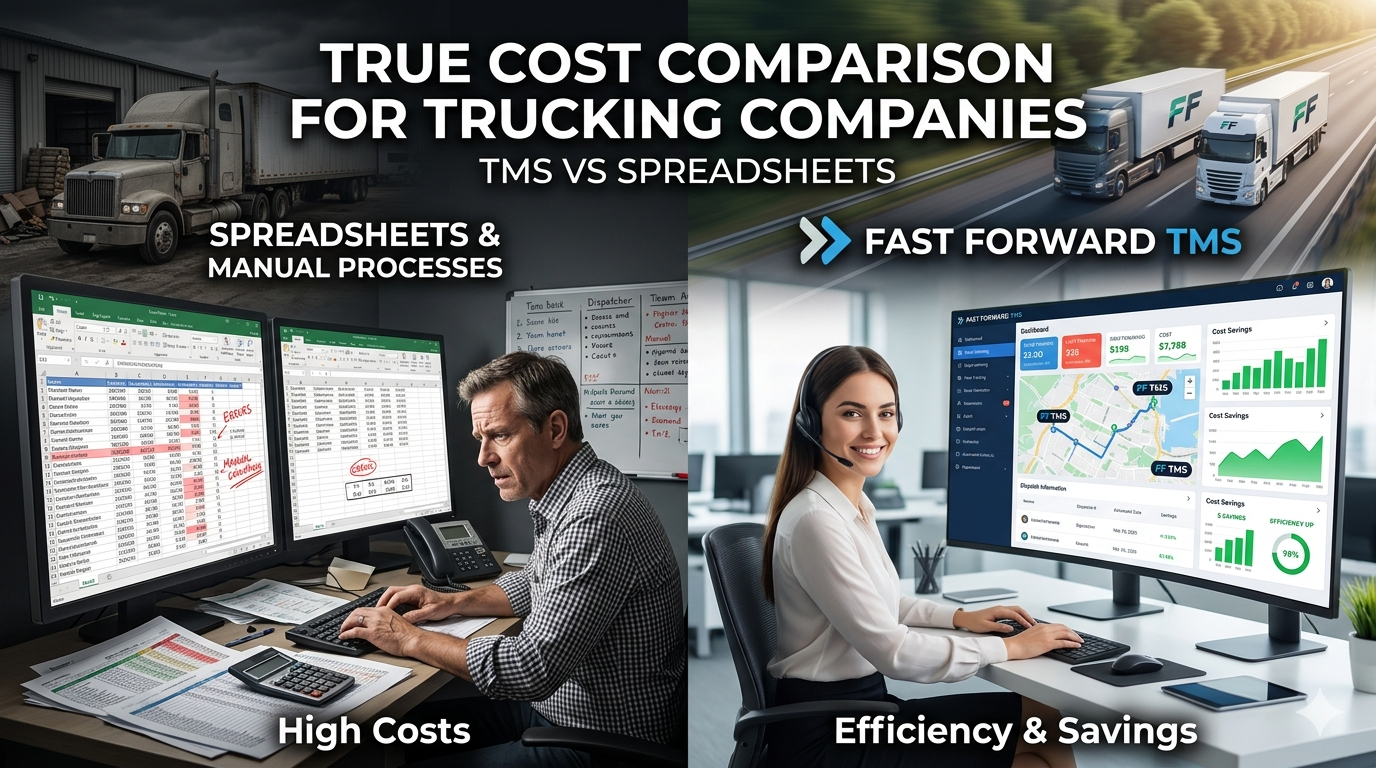

Introduction
Operating a trucking business today is akin to driving through a dynamic and challenging landscape—characterized by fluctuating fuel prices, stringent regulations, driver shortages, and the relentless demand for timely deliveries. To maintain competitiveness and efficiency, carriers are increasingly turning to advanced technologies, particularly Transportation Management Systems (TMS).
A recent industry survey by Inbound Logistics revealed that approximately 70% of shippers utilize a TMS, highlighting its significance in streamlining operations and enhancing service delivery .
This blog delves into the critical features of a TMS that empower carriers to optimize operations, reduce costs, and elevate service quality. Whether managing a fleet of five or fifty trucks, understanding these functionalities is pivotal to sustaining growth and maintaining a competitive edge in the logistics sector.
What Is a Trucking Management System and Why It Matters
A Trucking Management System (TMS) is advanced software designed to help trucking companies efficiently plan, execute, and monitor their logistics and freight operations. Managing loads, coordinating drivers, tracking vehicles, and ensuring compliance with industry regulations can be overwhelming—especially when handled manually or using outdated trucking software. A modern TMS consolidates these core functions into one platform, including load assignments, GPS truck tracking, fuel management, and driver payroll, minimizing errors and accelerating workflows.
In the rapidly evolving trucking industry, having a reliable and comprehensive transportation management system for trucking has become more critical than ever. Global supply chain disruptions, rising fuel costs, and increasing customer expectations make data-driven and automated solutions critical. A TMS not only helps carriers stay compliant with IFTA, HOS, and DOT regulations, but also empowers smarter decision-making with real-time insights into fleet operations, load performance, and driver productivity.
Ultimately, a TMS for trucking companies is more than just software—it acts as the operational backbone that keeps fleets efficient, profitable, and competitive in 2025 and beyond.
Also Read – What Is a Transport Management System (TMS) and How Does It Work?
Essential Trucking Management System Features Every Carrier Should Consider
A modern Trucking Management System (TMS) goes beyond simple dispatching—it centralizes operations, cuts operational costs, and empowers carriers to make smarter, data-driven decisions. For trucking businesses, understanding what technology features to look for in a modern carrier financial service solution for my trucking business is crucial to stay efficient, compliant, and competitive.
Here are the top 10 transport management software features every carrier should prioritize: from route optimization and fleet tracking to automated billing, compliance management, and real-time operational visibility. Focusing on these features to look for in a TMS helps trucking companies streamline workflows, enhance driver management, and maintain full control over daily operations, ensuring smoother, more profitable fleet management.
Load Offer Negotiation – Two-Way Rate Agreements That Work
Dynamic Freight Negotiation
Modern trucking businesses face fluctuating freight rates and tight delivery deadlines. Instead of static rate offers, dispatchers can propose flexible rates to external drivers, who can accept or counter the offer. This two-way negotiation ensures fair pricing for drivers, accelerates deal-making, and helps carriers respond dynamically to market changes. By reducing empty miles and improving load acceptance, carriers can save fuel costs, optimize fleet utilization, and maintain higher driver satisfaction worldwide.
Built-In Real-Time Messaging
Integrated messaging allows dispatchers and drivers to communicate instantly, reducing miscommunication and eliminating delays caused by missed calls or unclear instructions. Clear, documented messaging ensures that all team members are aligned, improving operational efficiency and enabling fast decision-making.
Higher Load Acceptance
By involving drivers in rate discussions, carriers see faster load acceptance and decreased downtime. This results in a smoother dispatch process, improved driver morale, and higher customer satisfaction due to timely deliveries.
Centralized Dispatch Management – One Dashboard for Everything
All-in-One Load Management
A modern TMS allows dispatchers to create, assign, and adjust loads from a single dashboard. Complete visibility over routes, delivery schedules, and truck availability ensures efficient allocation of resources and simplifies complex logistics planning for fleets of any size, whether local, regional, or global.
Smart Scheduling & Alerts
Automated alerts and scheduling features prevent missed pickups, optimize routes, and reduce bottlenecks. Dispatchers can make informed decisions based on real-time data instead of guesswork, improving overall operational reliability and timeliness.
User-Friendly Drag-and-Drop Tools
Intuitive drag-and-drop interfaces make it simple to assign, update, or reallocate loads, reducing manual errors and boosting productivity. This feature is especially useful for large fleets or carriers handling multiple shipments simultaneously.
Explore More – Trucking Dispatch Software
Real-Time GPS Tracking – Eyes on the Road, Always
Live Fleet Monitoring
Track every vehicle in real time to monitor performance, reduce idle time, and enhance route efficiency. GPS tracking also supports cross-border operations, ensuring compliance with international logistics standards.
Reliable Delivery ETAs
Share accurate, real-time shipment updates with clients. This builds transparency, trust, and enhances customer experience globally.
Driver Safety Monitoring
Receive instant notifications for route deviations, vehicle anomalies, or delays, allowing quick interventions to maintain safety and regulatory compliance.
Support & Usability Excellence – Smoother Adoption, Better Performance
24/7 Operational Support
Round-the-clock operational support ensures dispatchers, fleet managers, and drivers get immediate assistance. This reduces downtime, avoids disruptions, and ensures uninterrupted logistics operations for fleets of all sizes.
Intuitive Interface
The easy-to-navigate dashboard allows teams to manage complex logistics operations efficiently without extensive technical training, reducing onboarding time and minimizing human errors.
Rapid Onboarding
New users can start working within hours, enabling fleets to benefit from the TMS almost immediately. Fast implementation accelerates ROI and allows growing carriers to scale operations without technical bottlenecks.
Load and Capacity Planning – Smarter Asset Use
Smart Load Matching
Assign loads based on truck capacity, route compatibility, and driver availability to ensure optimal resource utilization, timely deliveries, and reduced operational costs.
Fleet Utilization Insights
Identify underused trucks, track idle times, and optimize fleet deployment to maximize efficiency and profitability.
Prevent Double Bookings
Automated checks prevent assigning multiple loads to the same truck, avoiding scheduling conflicts, missed deadlines, and revenue losses.
Explore More – Load Management System
Driver Mobile App Integration – Real-Time Tools for Drivers
Instant Load Updates
Drivers receive real-time updates on assignments, route changes, and delivery instructions directly on mobile devices. This ensures faster response times, better route adherence, and improved delivery performance.
Paperless Documentation
Drivers can upload proof-of-delivery, receipts, and signatures digitally, reducing administrative delays, preventing lost documents, and accelerating billing cycles.
Secure In-App Communication
Built-in chat keeps drivers and dispatchers connected within the platform without relying on external apps, maintaining secure communication and operational privacy.
Explore More – Truck Driver App
Billing and Invoicing Automation – Accurate and Fast Payments
Automated Invoice Generation
Invoices are automatically created based on completed deliveries and uploaded documents, reducing manual errors and saving accounting time.
Linked Proof-of-Delivery
Automatically match PODs with invoices to ensure accurate billing, minimize disputes, and simplify audit processes.
Track Additional Charges
Monitor detention fees, fuel surcharges, and accessorials to maintain complete cost visibility, enabling more informed pricing decisions and improved profitability.
Compliance Management – Always Ready for Audits
Regulatory Automation
Integrated tools for IFTA, HOS, and ELD compliance help fleets meet DOT, FMCSA, and international regulations efficiently, reducing risk and penalties.
Centralized Document Hub
Secure storage for all driver, truck, and load documents ensures instant access during audits or inspections, simplifying compliance management.
Smart Alerts
Receive notifications for document expirations, violations, or missing data, ensuring fleets remain audit-ready at all times.
Fuel & Toll Expense Tracking – Every Penny Accounted For
Fuel Card Integration
Link fuel cards to automatically log transactions, detect anomalies, and manage fuel budgets effectively.
Automatic Toll Capture
Record toll expenses directly in the TMS, providing accurate cost reporting for domestic and international routes.
Cost-Per-Mile Insights
Analyze trip costs to optimize pricing, routing, and fleet utilization, improving profitability for each shipment.
Analytics & Reporting – Insights That Drive Growth
Visual KPI Dashboards
Track fleet performance metrics such as on-time deliveries, driver efficiency, and vehicle utilization on a single visual interface for quick decision-making.
Historical Analysis & Forecasting
Use historical data to spot trends, forecast demand, and improve planning for future shipments, reducing inefficiencies and operational costs.
Driver Scorecards
Evaluate individual driver performance to support coaching, retention, and incentive programs, ensuring consistent improvement in fleet operations.
Explore More – TMS Analytics Software
How Key TMS Features Empower Trucking Businesses in 2025
Trucking companies face numerous challenges today, from tight delivery schedules and rising fuel costs to strict regulatory compliance. The right Trucking Management System (TMS) features transform these challenges into streamlined operations, making fleet management more efficient and profitable.
Features like smart dispatching, real-time load tracking, driver mobile apps, automated compliance tools, and analytics dashboards allow carriers to manage every shipment from a single platform. Real-time visibility ensures dispatchers know truck locations, monitor route performance, and communicate directly with drivers, reducing delays and operational errors.
Additionally, advanced TMS features help optimize routes, lower empty miles, and track fuel and toll expenses, reducing overall operating costs. For growing fleets, integration capabilities with payroll, accounting, and ELD systems provide a scalable foundation for expansion. By leveraging these critical features, trucking companies can increase delivery speed, maximize fleet utilization, improve driver management, and enhance customer satisfaction—demonstrating how the right TMS software features directly contribute to operational excellence and profitability in 2025.
Why Fast Forward TMS Is the Smarter Choice for Modern Carriers
Fast Forward TMS is designed to address the everyday challenges trucking companies face—from managing loads and optimizing dispatch to improving driver communication—ensuring seamless operations from start to finish. Built for growth, flexibility, and simplicity, it stands out as one of the most efficient and user-friendly Carrier TMS Software platforms in 2025.
From dispatching and real-time GPS tracking to compliance management and financial oversight, Fast Forward TMS consolidates all essential trucking tools into a single platform without complex setup or high costs. Whether managing five trucks or fifty, carriers benefit from a smooth onboarding process, an intuitive interface, and 24/7 customer support, keeping operations running without disruption.
What Makes Fast Forward TMS Stand Out:
- Ease of Use: A clean, modern dashboard makes every feature accessible with minimal training.
- Rapid Implementation: Get started quickly without IT teams or technical expertise.
- Cost-Effective & Scalable: First-user-free plan for small fleets and scalable solutions for growing carriers.
- Mobile-First Design: Driver mobile app enables real-time load updates, document uploads, and secure communication.
- Dedicated Support: Knowledgeable team provides quick, reliable assistance whenever needed.
- Secure & Compliant: SOC 2 Type 2 compliant platform ensures data security, privacy, and operational reliability.
- Proven Expertise: Backed by 18+ years of industry experience and 7 years of product development, trusted by 1,500+ carriers nationwide.
Trusted by the Industry:
- 95% of users report smoother dispatch workflows after adopting Fast Forward TMS.
- Powers fleets across the U.S. with reliable, scalable, and easy-to-use technology.
- Combines advanced features, expert support, and industry know-how to help carriers boost efficiency, profitability, and competitive advantage in 2025 and beyond.
Carriers aiming for greater efficiency and growth in 2025 rely on Fast Forward TMS—a solution that combines powerful tools, expert support, and industry know-how to keep fleets competitive.
Also Read – How Fast Forward TMS Stands Out as the Best Choice in Carrier TMS Software
Final Thoughts
Technology continues to reshape the future of trucking, and a smart TMS is at the center of this transformation. For carriers aiming to scale operations, reduce costs, and compete more effectively, choosing a TMS with the right features is crucial.
From real-time tracking to driver apps and automated dispatch, the right TMS empowers carriers to operate smarter, faster, and more efficiently—no matter the fleet size.
FAQ’s
How does a Transportation Management System (TMS) support logistics?
A Transportation Management System (TMS) streamlines logistics by planning, executing, and optimizing the movement of goods. It ensures shipments are efficient, compliant with regulations, and backed by proper documentation, helping businesses reduce costs and improve delivery reliability.
How does technology improve transportation management in supply chain logistics?
Technology enhances transportation management by providing real-time visibility into shipments, optimizing routes, reducing operational costs, and speeding up deliveries. It enables smarter decision-making, improves efficiency, and ensures a better customer experience across the supply chain.
What are the main capabilities of a Transportation Management System (TMS)?
A modern Transportation Management System (TMS) offers capabilities like route optimization, real-time shipment tracking, carrier management, load planning, automated billing, and analytics. These features help businesses streamline operations, reduce costs, and improve overall efficiency.
What is the primary goal of a Transportation Management System (TMS)?
The primary goal of a Transportation Management System (TMS) is to streamline logistics operations, optimize routes and carrier selection, reduce transportation costs, and improve delivery efficiency—enabling businesses to boost profitability and operational performance.
What key functions does a Transportation Management System (TMS) perform?
A Transportation Management System (TMS) helps businesses plan, execute, and optimize the movement of goods, manage inbound and outbound shipments, ensure regulatory compliance, and maintain accurate documentation—streamlining logistics for efficiency and cost savings.