
Introduction
Running a trucking business today depends on how efficiently dispatch, tracking, billing, and compliance are managed. Yet many carriers still rely on spreadsheets for these critical operations.
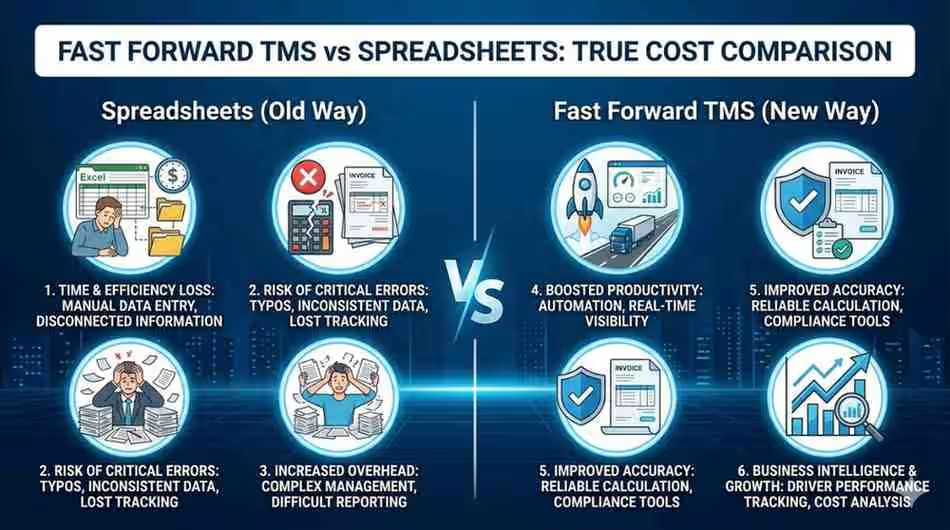
When comparing TMS vs spreadsheets, the difference is not just about cost—it’s about operational efficiency. Spreadsheets may seem affordable upfront, but as operations grow, manual workflows increase time, errors, and inefficiencies.
Manual data entry, disconnected files, and repeated updates slow down processes. This leads to higher workload, delayed invoicing, limited visibility, and inconsistent cash flow.
In contrast, carrier TMS software connects dispatch, tracking, billing, and compliance into one system. It reduces manual effort, improves accuracy, and provides real-time visibility across operations. In fact, at Fast Forward TMS, 95% of carriers report smoother dispatch workflows after adopting the platform, highlighting the real-world impact of automation and connected systems.
This guide is written by Nitin Shankar, a logistics technology expert with 18+ years of experience, ensuring practical insights based on real trucking operations and system implementation.
The real difference between a TMS and spreadsheets lies in scalability and efficiency. While spreadsheets create hidden operational costs, a TMS helps carriers improve cash flow, reduce errors, and scale operations without increasing workload.
Key Takeaways: TMS vs Spreadsheets
A TMS is more efficient and scalable than spreadsheets for trucking operations. While spreadsheets appear low-cost, they create hidden operational costs through manual work, errors, and delayed billing. A modern carrier TMS software reduces inefficiencies, improves cash flow, and supports business growth.
Quick Summary
Spreadsheets = low upfront cost, high hidden cost
Manual workflows increase time, errors, and operational complexity.
TMS = predictable cost, higher efficiency
Automates dispatch, tracking, billing, and compliance in one system.
Billing and cash flow improve with TMS
Faster invoicing reduces delays and improves revenue consistency.
Operational visibility is limited in spreadsheets
A TMS provides real-time tracking and centralized data.
Scalability is the biggest difference
Spreadsheets become harder to manage as operations grow, while a TMS supports growth without extra workload.
Error reduction directly impacts profitability
Automated workflows minimize manual mistakes and revenue leakage.
What Costs Are We Comparing in TMS vs Spreadsheets?
When comparing TMS vs spreadsheets, focusing only on software pricing gives a misleading view. In trucking operations, cost is not just what you pay upfront—it’s how your system affects efficiency, revenue, and scalability over time.
Spreadsheets appear inexpensive because they have little to no upfront cost. However, their real impact is operational. Manual processes introduce time delays, errors, and inefficiencies that gradually increase the total cost of running a trucking business.
A modern carrier TMS software, on the other hand, introduces a predictable subscription cost but reduces hidden operational expenses through automation and connected workflows.
Key Cost Factors in TMS vs Spreadsheets
- Software Cost
Spreadsheets are typically free, while a carrier TMS operates on a predictable subscription with built-in operational capabilities.
- Time Cost
Manual data entry,load tracking, and coordination across multiple files increase administrative workload and reduce efficiency.
- Error Cost
Manual systems increase the risk of incorrect entries, duplicate data, and billing mistakes, leading to financial loss and operational confusion.
- Revenue Impact
Delayed invoicing, missed charges, or incomplete billing directly affect cash flow and profitability.
- Scalability Cost
As load volume and team size grow, spreadsheets require more manual effort, making operations harder to manage.
- Compliance Risk
Tracking IFTA, driver records, and regulatory requirements manually increases the risk of penalties and audit issues.
You may also like to Read: TMS Software vs Traditional Methods – A Complete Comparison for Fleet Management in 2025
Where Spreadsheets Actually Cost You in Trucking Operations
At first glance, spreadsheets appear cost-effective because they require little to no upfront investment. However, in a TMS vs spreadsheets comparison, the real cost is not eliminated—it is distributed across daily operations through time loss, errors, and inefficiencies.
As trucking operations grow, these hidden costs become more visible and begin to impact productivity, accuracy, and cash flow.
Time Loss from Manual Workflows
Time is the first and most immediate cost. Managing loads through spreadsheets requires continuous manual effort—data is entered repeatedly, updated across multiple files, and coordinated outside the system.
As volume increases, this creates a growing administrative burden where teams spend more time managing data than executing operations.
Errors That Disrupt Operations
Spreadsheets rely entirely on manual input, making data accuracy difficult to maintain. Missing entries, duplicate records, broken formulas, and outdated information often lead to billing errors and operational confusion.
These errors directly impact efficiency and increase the risk of financial loss.
Revenue Leakage and Billing Delays
Without a connected system, ensuring accurate and timely billing becomes challenging. Missed invoices, delayed billing cycles, and incomplete charges reduce revenue visibility and slow down cash flow.
Over time, these gaps create significant financial impact.
Limited Visibility and Slow Decision-Making
Spreadsheets do not provide real-time tracking or centralized insights. Teams rely on manual updates and scattered information, making it harder to monitor performance or respond quickly to operational issues.
This lack of visibility slows decision-making and reduces overall control.
Compounding Inefficiencies as You Scale
As more loads, drivers, and transactions are added, spreadsheet-based workflows become increasingly complex. Instead of improving efficiency, growth leads to more coordination, more manual effort, and higher operational risk.
In a TMS vs spreadsheets scenario, this is where spreadsheets shift from a simple tool to a limitation on scalability.
You may also like to Read: Top 5 Ways a TMS Software Reduces Manual Work for Dispatchers
How Fast Forward TMS Reduces Operational Costs
In a TMS vs spreadsheets comparison, the biggest advantage of a modern system is automation. Unlike spreadsheets, carrier TMS software like Fast Forward TMS manages trucking operations through connected workflows, reducing the operational cost created by manual processes.
By bringing dispatch, tracking, billing, and compliance into one system, it eliminates the need for repetitive coordination and disconnected tools.
Faster Operations with Less Manual Work
Time efficiency improves immediately. Tasks like data entry, load updates, and coordination no longer require repeated manual effort.
Information is entered once and automatically flows across workflows, reducing duplication and administrative workload. This allows teams to focus on operations instead of managing data.
Improved Accuracy and Fewer Errors
Structured workflows and system-driven processes improve data accuracy.
Duplicate entries, missing records, and billing errors are significantly reduced, resulting in smoother operations and fewer disruptions.
Faster Billing and Stronger Cash Flow
Billing becomes faster and more reliable because it is directly connected to operational data.
Invoices can be generated immediately after load completion, while integrated driver payroll ensures timely payments. This reduces delays and improves overall cash flow consistency.
Scalable Operations Without Extra Workload
As operations grow, the system handles increased complexity without adding manual effort.
More loads, drivers, and transactions can be managed within the same workflow. Integrated truck tracking software provides real-time visibility, helping teams make faster and more informed decisions.
Simplified Compliance and Record Management
Compliance becomes easier with organized and accessible data.
Tracking IFTA, driver records, and regulatory requirements within one system reduces audit risks and simplifies documentation.
TMS vs Spreadsheets: Side-by-Side Cost Comparison
In a TMS vs spreadsheets comparison, the difference goes beyond upfront cost. The real impact is seen in efficiency, accuracy, billing speed, and long-term operational cost.
The table below highlights how spreadsheets compare with a modern carrier TMS software like Fast Forward TMS across key cost factors.
| Cost Factor | Spreadsheets | Fast Forward TMS (Carrier TMS Software) |
|---|---|---|
| Upfront Cost | Low or free | Subscription-based (predictable cost) |
| Time Efficiency | Manual, time-intensive workflows | Automated, streamlined workflows |
| Error Risk | High due to manual input | Low with system-driven accuracy |
| Billing Speed | Delayed and inconsistent | Fast and automated invoicing |
| Revenue Leakage | High due to missed/delayed invoices | Minimal with connected billing |
| Operational Visibility | Limited, no real-time insights | Real-time tracking and centralized data |
| Scalability | Becomes complex as operations grow | Designed for scalable growth |
| Compliance Management | Manual tracking increases risk | Structured data reduces audit risk |
| Overall Cost Impact | Low upfront, high hidden cost | Predictable cost with strong ROI |
A TMS is more cost-effective than spreadsheets in the long run because it reduces manual work, errors, and billing delays while improving efficiency and scalability.
What This Comparison Means for Carriers
- Spreadsheets reduce upfront cost but increase hidden operational cost
- A carrier TMS software introduces a predictable investment with measurable ROI
- Automation improves efficiency, reduces revenue leakage, and strengthens cash flow
- Real-time visibility enables faster and better decision-making
- In a TMS vs spreadsheets scenario, the decision is not about cost alone—it’s about operational performance and long-term growth.
What Are the Hidden Costs of Spreadsheets?
Spreadsheets increase operational cost through manual work, billing delays, errors, and limited visibility.
Time Loss from Repetitive Manual Work
Managing operations in spreadsheets requires continuous manual effort. Load details are re-entered, data is updated across multiple files, and coordination happens outside the system.
These repetitive tasks increase workload without improving productivity, slowing down operations as volume increases.
Billing Delays and Cash Flow Gaps
Billing depends on manual processes, which creates delays between load completion and invoice generation.
This slows down payment cycles and leads to inconsistent cash flow, especially for growing fleets.
Revenue Leakage and Missed Charges
Without a connected system, it becomes difficult to ensure every load is billed correctly.
Missed invoices, undercharged loads, and incomplete billing reduce revenue without clear visibility, creating hidden financial loss over time.
Limited Operational Visibility
Spreadsheets do not provide real-time tracking or centralized insights.
Teams rely on outdated or scattered data, making it harder to monitor performance, identify issues, and respond quickly to operational changes.
Increasing Complexity as You Scale
As the business grows, these inefficiencies compound. More loads, drivers, and transactions require more coordination and manual work.
What once seemed manageable becomes a system that slows down operations and increases overall cost.
Spreadsheets are not truly low-cost—they shift cost into daily inefficiencies that impact time, revenue, and scalability.
Why Fast Forward TMS Is an Investment, Not a Cost
In a TMS vs spreadsheets comparison, the difference is not just cost—it’s how effectively your system runs and scales your trucking operations.
- Spreadsheets may seem low-cost, but they rely on manual workflows that increase workload, errors, and delays as operations grow
- Manual processes lead to hidden operational costs through time loss, billing delays, and inconsistent data
In contrast, carrier TMS software like Fast Forward TMS is purpose-built for trucking operations, combining dispatch, tracking, billing, and compliance into one connected system.
- All-in-one operations platform
A TMS centralizes dispatch, tracking, billing, driver communication, and compliance into a single system. Instead of managing multiple tools or spreadsheets, carriers operate from one dashboard, which improves coordination, reduces confusion, and ensures all teams work with the same real-time data.
- Automated dispatch and load management
A TMS improves dispatch efficiency by automating load assignments and reducing manual coordination. Dispatchers can match loads with drivers faster, minimize delays, and keep trucks moving consistently, which directly improves fleet productivity and reduces idle time.
- Real-time truck tracking and visibility
Real-time tracking provides instant visibility into truck location, load status, and driver activity. This allows carriers to monitor operations proactively, respond to delays quickly, and make informed decisions based on live data rather than outdated information.
- Integrated billing and driver payroll
A TMS connects billing directly with operational data, allowing invoices to be generated quickly and accurately after load completion. Integrated driver payroll ensures timely and error-free payments, reducing disputes and improving financial consistency.
- Built-in compliance management
Compliance tools help carriers manage IFTA, HOS, and driver records within a structured system. This reduces the risk of missing data, simplifies audit preparation, and ensures regulatory requirements are handled consistently.
- Driver-friendly mobile app
A mobile app keeps drivers connected with dispatch in real time. Drivers receive load updates instantly, upload documents on the go, and communicate without constant calls, improving efficiency and reducing communication gaps.
- Load offer negotiation system
A built-in load negotiation feature allows dispatchers and drivers to manage load assignments more efficiently. This reduces back-and-forth communication, speeds up decision-making, and helps improve load acceptance rates and fleet utilization.
- Scalable system for growing fleets
A TMS is designed to handle increasing operational complexity without adding manual workload. As fleets grow, more loads, drivers, and transactions can be managed within the same system, ensuring consistent performance without operational bottlenecks.
- SOC 2 Type 2 security
Enterprise-grade security ensures that sensitive operational and financial data is protected through strict access controls and continuous monitoring. This gives carriers confidence in managing their business data securely.
- By replacing manual processes with automation, Fast Forward TMS reduces administrative workload, minimizes errors, and improves operational efficiency
- Faster billing cycles and connected workflows improve cash flow and reduce revenue leakage
- Real-time visibility and centralized data help carriers maintain control as operations grow
Fast Forward TMS is not just a software cost—it is a complete carrier TMS system that improves efficiency, reduces errors, and enables scalable, profitable trucking operations.
You may also like to Read: How Fast Forward TMS Stands Out as the Best Choice in Carrier TMS Software
Real-World Cost Scenario: Spreadsheets vs TMS
A trucking company managing 50 loads per week can lose significant time and revenue when using spreadsheets compared to a TMS.
With Spreadsheets:
- 8–12 hours/week spent on manual data entry and coordination
- Billing delays of 2–5 days after load completion
- Higher risk of missed or incorrect invoices
- Limited visibility into load status and driver activity
Impact:
- Slower cash flow
- Increased administrative workload
- Higher error rates
With Fast Forward TMS:
- 50–70% reduction in manual workload through automation
- Invoices generated within hours of load completion
- Real-time tracking improves coordination and decision-making
- Integrated workflows reduce billing errors and revenue leakage
Impact:
- Faster payments and improved cash flow
- Reduced operational effort
- More efficient and scalable operations
Signs It’s Time to Switch from Spreadsheets to a TMS
You should move from spreadsheets to a TMS when manual processes start affecting efficiency, accuracy, and cash flow.
Common signs include:
- Increasing load volume becoming difficult to manage
- More time spent on manual data entry and coordination
- Delayed invoicing and inconsistent cash flow
- Frequent errors in billing or data records
- Lack of real-time visibility across operations
- Growing administrative workload as the team expands
If your operations require more time to manage than to execute, it’s a clear signal that spreadsheets are limiting your growth.
At this stage, switching to a carrier TMS software helps automate workflows, improve accuracy, and support scalable operations without increasing complexity.
You may also like to Read: Top 10 Problems Solved by a Carrier TMS Software (AI-Optimized Listicle)
Conclusion: TMS vs Spreadsheets — What Should Carriers Choose?
In a TMS vs spreadsheets comparison, the difference is not just about upfront cost—it’s about how efficiently a trucking business operates and scales over time.
Spreadsheets may work in the early stages, but they rely on manual processes that increase workload, introduce errors, and delay critical tasks like billing. As operations grow, these inefficiencies turn into measurable costs through lost time, reduced visibility, and inconsistent cash flow.
In contrast, carrier TMS software provides a structured and automated approach to managing operations. By connecting dispatch, tracking, billing, and compliance into one system, it improves accuracy, reduces manual effort, and ensures consistent performance across the business.
A TMS is a better long-term solution than spreadsheets because it reduces operational inefficiencies, improves cash flow, and supports scalable growth for trucking companies.
You may also like to Read: Best Carrier TMS Software for Trucking in 2026: How to Choose the Right Solution
Final Takeaways for Decision-Making
- ·Spreadsheets = low upfront cost but high hidden operational cost
- ·TMS = predictable investment with automation, visibility, and ROI
- ·Manual systems slow growth, while connected systems enable it
- ·Efficiency, not just cost, determines long-term profitability
For carriers looking to reduce hidden costs, improve operational control, and scale efficiently, moving from spreadsheets to a modern carrier TMS software becomes a practical and strategic decision
FAQ: Fast Forward TMS vs Spreadsheets
What is the difference between a TMS and spreadsheets?
Spreadsheets rely on manual processes to manage operations, while a TMS connects dispatch, tracking, and billing into a single system, improving efficiency and accuracy.
Are spreadsheets cheaper than a TMS?
Spreadsheets have little to no upfront cost, but they create hidden expenses through manual work, delays, and errors, which increase total operational cost over time.
How does a TMS reduce operational cost?
A TMS reduces cost by automating repetitive tasks, minimizing errors, and enabling faster billing, which improves efficiency and cash flow.
When should a trucking company switch from spreadsheets to a TMS?
A switch becomes necessary when load volume increases, manual work slows operations, billing delays occur, or errors begin affecting revenue.
Can small trucking companies continue using spreadsheets?
Yes, for very small operations with limited complexity. However, spreadsheets become inefficient as the business grows.