
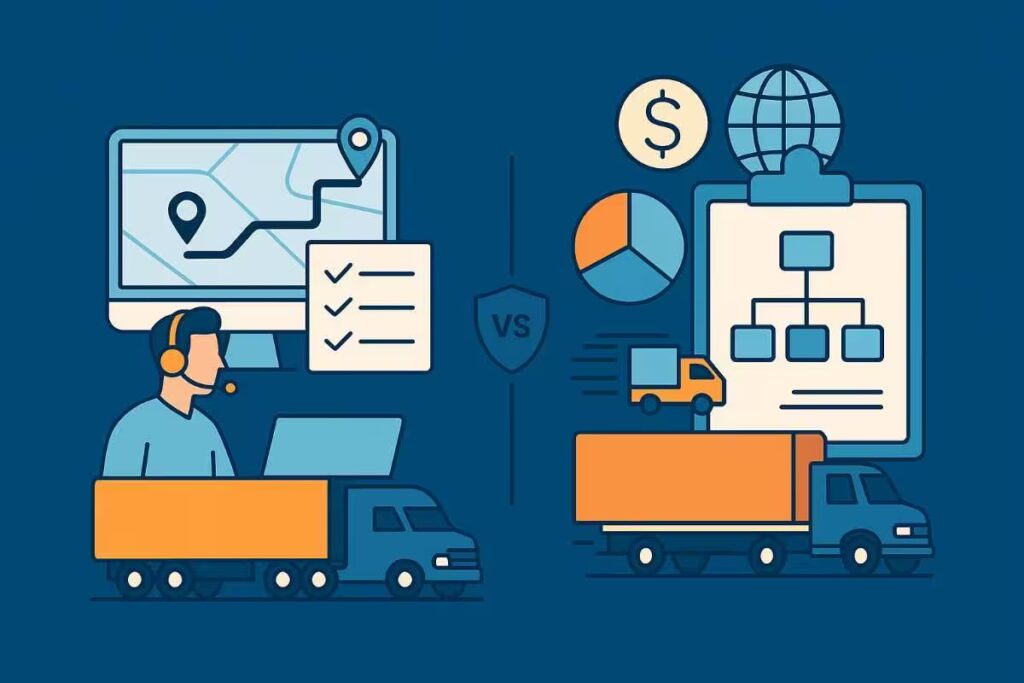
Trucking Dispatch Software vs. TMS Software: Key Differences Explained
The trucking and logistics industry is undergoing rapid digital transformation. Global adoption of fleet technology is rising, with the Transportation Management System (TMS) market expected to grow from USD 16.69 billion in 2025 to USD 43.82 billion by 2034 (Precedence Research). This growth shows how carriers, freight brokers, and logistics providers worldwide are investing in smarter systems to cut costs, improve efficiency, and stay competitive. Within this shift, two types of solutions stand out: Trucking Dispatch Software and TMS Software. Both improve transportation efficiency, but they serve very different purposes. Dispatch software focuses on daily fleet operations like load assignments, routing, and driver communication. A TMS, on the other hand, manages the entire transportation lifecycle—from planning and carrier management to billing, compliance, and analytics. In this blog, we’ll break down the key differences between trucking dispatch software and TMS software, so that carriers, small fleets, and freight brokers can make the right software decision in 2025. Key Takeaways: Trucking Dispatch Software vs. TMS Software What is Trucking Dispatch Software? Daily Operations Made Simple for Carriers Trucking Dispatch Software is designed to simplify the day-to-day operations of small and mid-sized carriers. It serves as a central hub where dispatchers can manage drivers, assign loads, track routes, and maintain real-time communication. For many fleets, it is considered the best trucking dispatch software because it provides essential tools without the complexity or cost of a full TMS system. By automating routine tasks and offering clear visibility, dispatch software helps carriers cut delays, reduce errors, and ensure on-time deliveries. Core Features of Trucking Dispatch Software: For carriers operating in competitive markets globally, trucking dispatch software offers a cost-effective way to manage daily dispatch, optimize driver workflows, and maintain efficiency—without the heavy investment of enterprise-level systems.Also Read – How Trucking Dispatch Software Optimizes Load Planning & Delivery What is TMS Software? Complete Transportation Management for Carriers A Transportation Management System (TMS) is more than dispatch software—it’s an all-in-one platform that manages every part of carrier operations. From load planning and route optimization to compliance, payroll, and fuel management, TMS software helps fleets run smarter and scale with confidence. Unlike basic dispatch tools, TMS software covers end-to-end logistics workflows, making it essential for carriers looking to grow regionally or globally. Key Benefits of TMS Software for Carriers: For fleets of all sizes, many consider it the best TMS software for trucking companies because it reduces costs, improves visibility, and delivers a fast return on investment. With cloud-based access and real-time data, carriers gain the control they need to compete in local and international markets.Also Read – What Is a Transport Management System (TMS) and How Does It Work? Key Differences Between Trucking Dispatch Software and TMS Software for Carriers Selecting the right software depends on fleet size, operational complexity, and business goals. Trucking dispatch software focuses on managing daily operations, including load assignments, driver tracking, route planning, and communication, making it ideal for small to mid-sized carriers. TMS software, on the other hand, delivers a full transportation management system, offering advanced load planning, management, billing, analytics software, compliance, and integration with GPS, ePOD, and truck tracking software. This makes it the preferred solution for large carriers, freight brokers, 3PLs, and logistics providers needing scalable, data-driven tools. Detailed Comparison of Trucking Dispatch Software vs. TMS Software Factor Trucking Dispatch Software TMS Software Primary Purpose Streamlines daily dispatch operations Manages the full transportation lifecycle Best For Small to mid-sized trucking companies Large carriers, freight brokers, 3PLs, logistics providers Core Features Load assignments, route tracking, driver communication Dispatch, load planning, carrier management, billing, analytics Ease of Use Simple interface, minimal training Advanced functions, structured onboarding required Integration Options Limited or basic integrations Extensive integrations with GPS, ERP, ePOD, compliance Cost Level Lower upfront cost, subscription-based Higher investment, scalable pricing for enterprise needs Scalability Suitable for small fleets Built for large, multi-carrier operations Decision Support Basic reporting and visibility Predictive analytics, ROI insights, decision-making tools Example Use Cases Daily load dispatching, route optimization Freight broker TMS, multi-carrier load assignment, compliance automation In essence, trucking dispatch software is best suited for carriers seeking affordable, efficient, and simple daily operations management, while TMS software serves as a comprehensive transportation management platform for larger fleets and freight brokers. Key Advantages of Trucking Dispatch Software for Fleet Operations Trucking Dispatch Software is specifically designed for small to mid-sized carriers aiming to enhance efficiency in daily fleet operations. It acts as a central hub for managing essential tasks, ensuring that dispatchers can allocate loads, communicate with drivers, and monitor routes in real time. By automating and streamlining these core activities, carriers can reduce manual errors, minimize delays, and improve overall operational control. This type of software is highly cost-effective and user-friendly, providing an accessible solution for fleets that require reliable performance without the complexity of larger enterprise systems. Core Benefits: Also Read – Top 5 Ways a TMS Software Reduces Manual Work for Dispatchers Key Advantages of TMS Software for Fleet Operations TMS Software (Transportation Management System) delivers a comprehensive, end-to-end solution for larger fleets, freight brokers, and logistics providers. Unlike trucking dispatch software, TMS covers the entire transportation lifecycle, offering advanced capabilities such as load planning, multi-carrier management, invoicing, compliance, and performance analytics. This software supports scalability and enables data-driven decision-making, making it ideal for operations that handle complex workflows and require long-term strategic growth. Core Benefits: Also Read – Top 10 Benefits of Using TMS for Carriers in 2025 Factors to Consider When Choosing Between Trucking Dispatch Software and TMS Software Selecting the appropriate solution for fleet operations depends on fleet size, operational complexity, and long-term growth objectives. Key considerations include: Careful evaluation of these factors ensures the selected software aligns with operational goals, supports growth, and maximizes efficiency across the fleet. Fast Forward TMS: The All-in-One Carrier TMS Software for Smarter Dispatch and Growth Carriers often struggle to find a solution that is simple, affordable, and scalable. Fast Forward TMS solves this by combining the power of a dispatch-focused platform with
Trucking Dispatch Software vs. TMS Software: Key Differences Explained Read More »