Nitin Shankar

Fast Forward TMS Implementation: What to Expect Step-by-Step 

Fast Forward TMS Implementation: What to Expect Step-by-Step 

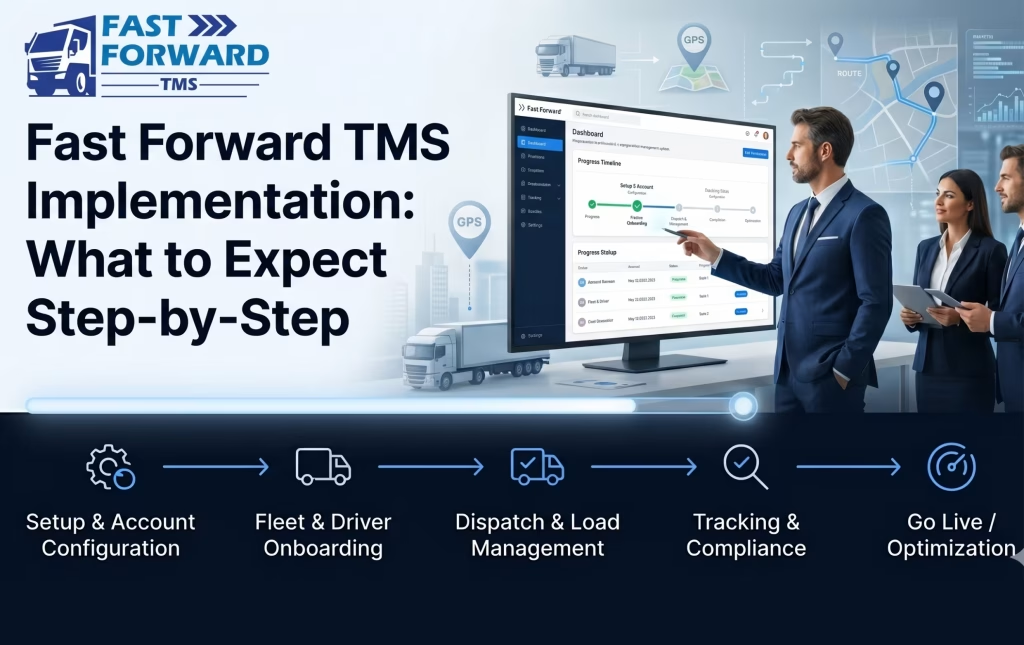
Introduction  Fast Forward TMS Implementation is not just a technical upgrade. It directly impacts how efficiently your trucking business manages dispatch, tracking, driver operations, and billing. According to Freight Waves, over 91% of trucking companies with more than 20 trucks already use a Transportation Management System, while only 33% of small fleets have adopted it. This gap highlights a major opportunity for growing carriers to improve efficiency and stay competitive. For most carriers, the real challenge is not choosing the right system, but understanding how the implementation process works and how to execute it without disrupting daily operations. With Fast Forward TMS, the implementation is designed around real carrier workflows, ensuring a faster, more practical transition from day one. Carriers that define their workflows clearly before setup often experience a smoother and more efficient implementation process. This guide walks you through each stage of implementation, helping you move forward with clarity, confidence, and minimal disruption. You Make Also Like To Read : TMS Implementation Guide: 7 Proven Steps to Ensure Success Key Takeaways  What to Expect During Implementation  When implementing Fast Forward TMS, you can expect a structured process that moves from preparation to setup, data migration, training, and final deployment.  Each stage is focused on aligning the system with your actual business workflows, ensuring minimal disruption and faster adoption. Most businesses experience a smooth transition when workflows are clearly defined before setup and data is properly prepared.  Before You Start (Preparation)  Before implementation begins, a short preparation phase ensures everything runs smoothly.  You need to decide which modules you will use first, such as dispatch, billing, or tracking, so the setup remains focused. Your existing data including drivers, fleet, customers, and rates should be organized and cleaned to avoid errors later.  It is also important to assign one responsible person from your team who will coordinate the process and provide required inputs. Ensuring your team has system access and a structured easy onboarding process will help avoid delays. This step ensures the implementation starts with clarity and avoids unnecessary rework.  Step 1: Workflow Assessment  The first step is to understand how your current operations work so the system can be configured correctly.  Your dispatch flow, billing process, and driver management are reviewed to identifyhow loads are assigned and optimized through load offer negotiation, how communication happens, and how invoices and settlements are handled.  The goal is to carry forward what works and eliminate inefficiencies such as manual tasks or delays. By the end of this step, your workflows are clearly defined, allowing accurate system setup.  Step 2: System Setup & Configuration  Once workflows are defined, the system is configured based on your business operations.  This includes setting up company details, drivers, fleet, rate structures, fuel management, and load management rules. Instead of using default settings, the system is aligned with your actual workflow to ensure smooth day-to-day operations.  A properly configured setup reduces errors and ensures your team can start using the system without confusion.  Step 3: Data Migration  After setup, your existing data is added to the system.  This includes driver records, fleet details, customer information, and financial data. Only relevant and cleaned data is migrated to maintain accuracy and avoid clutter.  The focus here is to ensure continuity, so your operations can continue without losing important historical or operational data.  Step 4: Training & Onboarding  Once data is in place, your team is trained on how to use the system.  Dispatchers learn how to assign and manage loads using dispatching software, drivers understand how to use the mobile app, and finance teams handle billing, settlements, and driver payroll software Proper training ensures your team is confident using the system, which directly impacts adoption and efficiency.  Step 5: Testing & Go-Live  Before full deployment, the system is tested using real or sample operations.  This step verifies that dispatch, truck tracking software, and billing are working correctly. Any gaps or issues are identified and fixed before going live.  Once everything is validated, the system becomes your primary operational platform.  Common Fast Forward TMS Implementation Mistakes and How to Avoid Them  Many implementation issues come from avoidable mistakes.  Skipping workflow assessment often leads to incorrect system setup. Poor data quality creates operational errors, while lack of training results in low team adoption. Trying to implement everything at once without a clear plan can also slow down the process and create confusion.  In most cases, these issues are not system-related but process-related. Businesses that define workflows early, prepare clean data, and follow a structured approach experience a much smoother implementation.  Addressing these challenges during the preparation and planning stage helps prevent delays and ensures a faster, more efficient rollout.  How Long Does Fast Forward TMS Implementation Take?  The implementation timeline for Fast Forward TMS depends on your fleet size, data readiness, and workflow complexity.  Most implementations follow a predictable range. Small fleets typically complete setup within one to two weeks, while mid-sized operations may take two to four weeks. Larger businesses with more complex workflows or integrations may require additional time.  In most cases, delays are not caused by the system, but by unprepared data or unclear workflows. Businesses that prepare their data in advance and define workflows early often complete implementation faster and with fewer issues.  Conclusion  Implementing a TMS becomes much simpler when the process is structured and focused.  With Fast Forward TMS, businesses can transition from manual operations to a streamlined, automated system without unnecessary complexity.  By following a clear step-by-step approach, you can ensure a smooth implementation and start improving efficiency, visibility, and insights using analytics software from day one.  Ready to simplify your operations and implement a system built for real carrier workflows?  Start your Fast Forward TMS implementation today and reduce manual work, improve efficiency, and scale your trucking business with confidence.  Frequently Asked Questions (FAQs)

Fast Forward TMS Implementation: What to Expect Step-by-Step  Read More »

How to Get Started With Fast Forward TMS in Less Than 48 Hours 

How to Get Started With Fast Forward TMS in Less Than 48 Hours 

Fast Forward TMS can be fully set up in less than 48 hours, allowing carriers to onboard drivers, configure dispatch, enable tracking, and start billing without complex technical processes.  This makes it one of the fastest ways to implement a carrier TMS or trucking management software without long onboarding cycles.  Traditional transportation management systems often take weeks to implement, creating delays, increasing manual work, and slowing down operations. Fast Forward TMS eliminates this complexity with a structured onboarding approach designed specifically for small and mid-sized carriers.  Backed by 7+ years of TMS delivery experience and 18+ years of transportation technology expertise, Fast Forward TMS is trusted by 1,500+ companies, with 95% of carriers reporting smoother dispatch workflows after adoption.  Key Takeaways  How Fast Forward TMS Reduces Setup Time Compared to Traditional TMS  Traditional transportation management systems often take 2 to 6 weeks to implement due to complex configurations, multiple integrations, and dependency on technical teams.  These delays typically occur because carriers need to manually set up dispatch workflows, onboard drivers, connect different tools, and manage scattered operational data during onboarding.  As a result, many carriers experience slower implementation, increased manual effort, and delayed transition to a fully digital system.  Fast Forward TMS is designed to eliminate these challenges by simplifying the entire onboarding process and focusing only on what carriers actually need to get started quickly.  What Makes Fast Forward TMS Faster to Set Up  What You Need Before Setting Up Fast Forward TMS  To set up Fast Forward TMS within 48 hours, having the right operational information prepared in advance is essential. This helps avoid onboarding delays and ensures a smooth transition from setup to live operations.  Before you begin, make sure you have the following details ready:  Preparing this information in advance allows you to quickly configure dispatch, enable tracking, and set up billing without interruptions.  How to Set Up Fast Forward TMS in Less Than 48 Hours (Step-by-Step)  Fast Forward TMS follows a structured onboarding process designed specifically for carrier operations. By completing the steps below in sequence, you can configure your system and start dispatching, tracking, and billing within 48 hours.  Step 1: Create Your Account and Access the Dashboard Start by creating your account and logging into the platform. Review the dashboard to understand key modules such as dispatch, drivers, loads, and billing.  This step ensures you understand the system layout before entering operational data.  Step 2: Add Company, Drivers, and Fleet Information Enter your company details, onboard drivers, and add fleet information including trucks and capacity.  This step builds the operational foundation required for dispatch and tracking.  Step 3: Set Up Dispatch Workflow and Load Management Create loads, define routes, and assign drivers to shipments.  This is the core operational setup where your dispatch process becomes structured and system-driven instead of manual.  Step 4: Enable Driver Connectivity and Real-Time Tracking Connect drivers through the mobile app or system interface and enable real-time tracking.  This allows you to monitor truck movement, improve communication, and gain full visibility into operations.  Step 5: Configure Rates, Billing, and Invoicing Set up rate confirmations, pricing structures, and payment terms.  This ensures that completed loads are automatically converted into invoices, reducing manual billing work and improving cash flow.  Step 6: Test Workflows and Go Live Review all configurations, test dispatch, tracking, and billing workflows, and make final adjustments.  Once verified, your system is fully operational and ready for daily use.  What You Can Achieve Within 48 Hours of Using Fast Forward TMS  Within just 48 hours of setting up Fast Forward TMS, your operations shift from manual and fragmented processes to a fully structured, system-driven workflow.  Instead of relying on calls, spreadsheets, and disconnected tools, you gain complete control over dispatch, tracking, and billing from a single platform.  Start Dispatching Without Delays  Assign loads, manage routes, and coordinate drivers directly within the system without manual follow-ups or back-and-forth communication.  Get Real-Time Visibility Across Your Fleet  Track truck movement, monitor driver activity, and stay updated on operations without needing constant calls or status checks.  Generate Invoices Immediately After Load Completion  Convert completed loads into invoices instantly, reducing billing delays and improving cash flow consistency.  Centralize Driver and Fleet Management  Manage all driver and vehicle information in one place, making it easier to handle assignments, updates, and operations at scale.  Reduce Manual Work and Operational Errors  Replace scattered workflows with a structured system that minimizes coordination effort, reduces errors, and improves overall efficiency.  Conclusion:   Setting up a transportation management system no longer needs to be a time-consuming or complex process.  Fast Forward TMS simplifies onboarding with a structured approach that allows carriers to go live in less than 48 hours. From adding drivers and managing dispatch to enabling tracking and automating billing, everything is designed to work together in a single, easy-to-use platform.  For carriers still relying on manual processes or disconnected tools, this shift can significantly improve operational efficiency, reduce delays, and create a more controlled workflow.  If you are looking to streamline your operations, improve visibility, and accelerate your billing cycle, Fast Forward TMS provides a practical and scalable solution built specifically for modern carrier needs.  Frequently Asked Questions  

How to Get Started With Fast Forward TMS in Less Than 48 Hours  Read More »

Fast Forward TMS Rolls Out Easter Special Offer for Trucking Companies 

Fast Forward TMS Rolls Out Easter Special Offer for Trucking Companies 

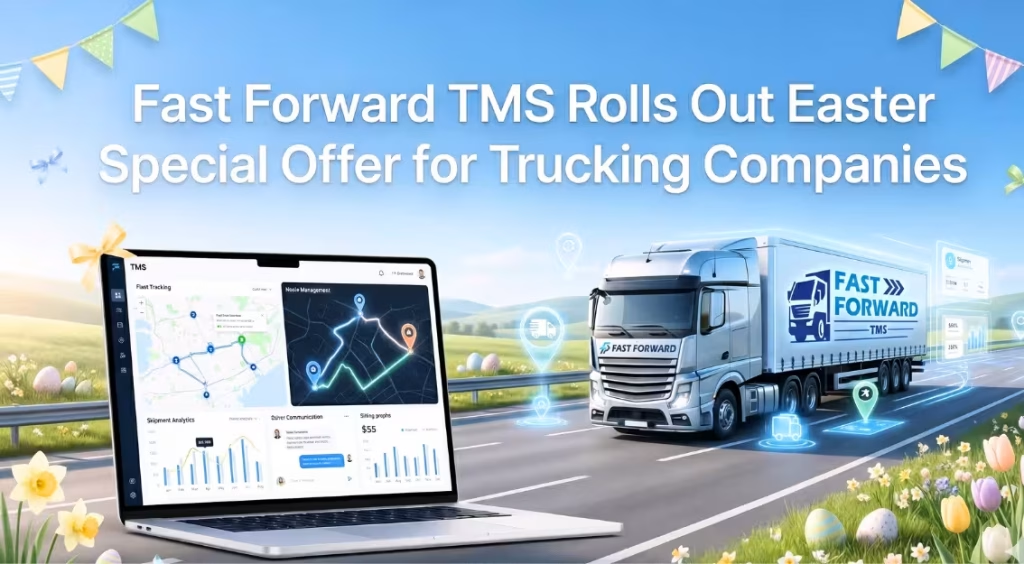
 A new Easter initiative from Fast Forward TMS is highlighting how trucking companies can adopt more efficient and technology-driven approaches to fleet management amid increasing operational challenges.  The transportation industry continues to face rising operational costs, fragmented workflows, delayed dispatch coordination, and limited real-time visibility. These challenges have led many carriers to explore centralized and automated systems that can improve efficiency and decision-making.  Fast Forward TMS, a cloud-based transportation management system designed for carriers, provides tools for dispatch management, real-time fleet tracking, driver communication, and automated billing and settlements. By consolidating these functions into a single platform, the system helps reduce manual coordination and improve operational control.  As part of its Easter campaign, the company has introduced a limited-time special offer, reducing the platform price from $99 to just $19 per month. Customers who sign up during this offer period can continue to access the platform at the discounted price.  Industry observations suggest that adopting modern transportation management systems can help carriers improve dispatch efficiency, enhance visibility, and accelerate billing cycles. As logistics operations grow more complex, the role of automation and real-time data continues to expand.  A spokesperson associated with Fast Forward TMS noted that initiatives like this provide carriers with a timely opportunity to evaluate their existing processes and explore more efficient, technology-driven alternatives.  The platform includes features such as dispatch and load management, real-time fleet tracking, driver communication tools, automated billing and settlements, compliance support, and performance analytics.  Fast Forward TMS is supported by more than 18 years of transportation technology expertise and has been delivering TMS solutions for over 7 years. The platform is currently used by more than 1,500 companies, with 95% of carriers reporting smoother dispatch workflows.  As the logistics sector continues to evolve, solutions that support automation and data-driven decision-making are expected to play a key role in helping carriers improve efficiency and remain competitive.  The Easter special offer is available for a limited time, providing carriers with an opportunity to explore modern fleet management solutions at a reduced cost.  Take Advantage of the Easter Offer Start using Fast Forward TMS at a reduced price for a limited time  Get demo now  

Fast Forward TMS Rolls Out Easter Special Offer for Trucking Companies  Read More »

Top 10 Reasons Carriers Switch to Fast Forward TMS 

Top 10 Reasons Carriers Switch to Fast Forward TMS 

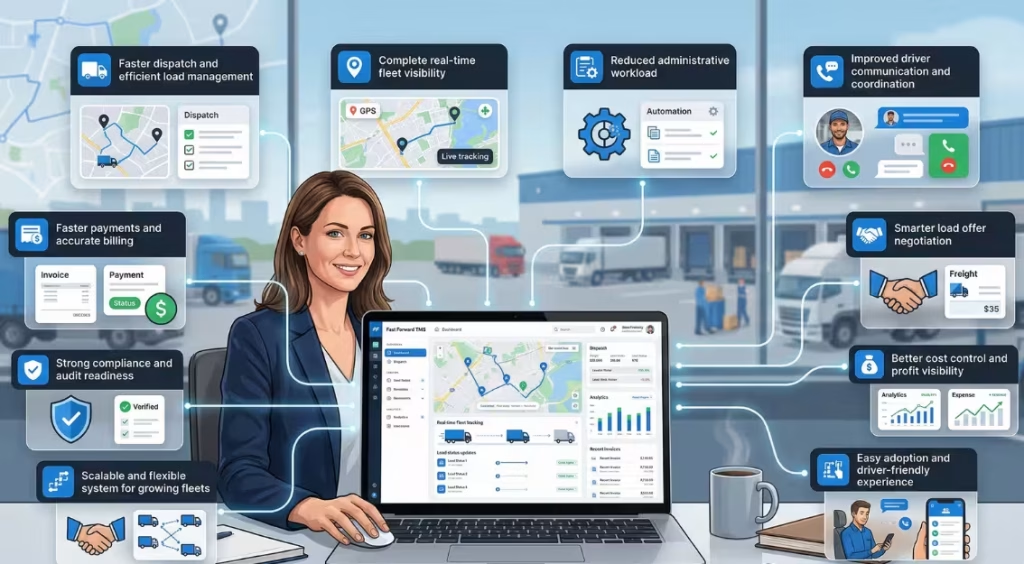
INTRODUCTION  Running a trucking business today is no longer just about moving freight from point A to point B. Carriers face ongoing challenges such as delayed dispatch, rising fuel costs, communication gaps, compliance pressure, and slow payment cycles.  Many fleets still rely on spreadsheets and disconnected tools, which create inefficiencies, increase errors, and limit visibility. Without a centralized system, tracking trucks, managing drivers, and making timely decisions becomes difficult—often leading to higher empty miles and reduced efficiency.  Industry reports show that digital systems can improve operational efficiency by 20–30% while reducing manual workload. As competition grows, carriers are actively looking for smarter and more reliable ways to manage operations.  Understanding the carrier TMS software benefits is now essential. A modern transportation management system helps streamline workflows, improve visibility, and automate key processes within a single platform.  Fast Forward TMS is built to solve these challenges, backed by 18+ years of transportation technology expertise and trusted by 1,500+ companies worldwide. It helps carriers reduce inefficiencies, control costs, and gain complete operational visibility.  Key Takeaways  You may also like to Read: How Fast Forward TMS Stands Out as the Best Choice in Carrier TMS Software  What is Carrier TMS Software?  A Carrier TMS (Transportation Management System) is a cloud-based software that helps trucking companies manage dispatch, tracking, billing, driver communication, and compliance from a single platform.  Instead of relying on spreadsheets or disconnected tools, it centralizes operations, improves visibility, and streamlines daily workflows. This allows carriers to reduce manual work, minimize errors, and make faster, data-driven decisions.  For modern fleets, a TMS is not just a tool—it is essential for running efficient and scalable operations.  Who Should Use Carrier TMS Software?  Carrier TMS software is designed for trucking businesses that want to improve efficiency, reduce manual work, and gain better control over daily operations.  It is especially useful for small fleets managing dispatch manually, growing carriers facing delays and coordination issues, and mid-sized fleets handling multiple trucks, routes, and compliance requirements.  As operations expand, relying on spreadsheets and phone calls becomes difficult and error-prone. A carrier TMS helps streamline workflows, improve visibility, and simplify day-to-day management.  For any fleet looking to scale, reduce inefficiencies, and operate more efficiently, adopting a TMS becomes a practical necessity.   10 Key Reasons Carriers Are Switching to Fast Forward TMS  In today’s trucking industry, operational efficiency plays a critical role in profitability. Carriers that continue to rely on manual processes and disconnected tools often face delays, errors, and limited visibility across their operations.  Fast Forward TMS is built to address these challenges by simplifying workflows, improving coordination, and providing better control over daily operations. It helps carriers operate more efficiently and make faster, data-driven decisions.  Trusted by 1,500+ carriers, Fast Forward TMS has helped improve dispatch workflows, with 95% of users reporting smoother operations. It stands out by solving real-world challenges while delivering measurable improvements in efficiency, visibility, and profitability.  Here are the 10 key reasons carriers are making the switch:  Faster Dispatch and Efficient Load Management  One of the biggest challenges in trucking operations is delayed or inefficient dispatch. When dispatchers rely on phone calls, spreadsheets, or manual coordination, assigning loads becomes slow and error-prone.  Fast Forward TMS simplifies this process by enabling real-time load assignment and driver availability tracking. Dispatchers can instantly identify which driver is available, assign loads quickly, and manage multiple shipments from a centralized dashboard.  This leads to faster turnaround times, better load utilization, and increased daily productivity. As a result, fleets can handle more loads without increasing operational complexity.  Complete Real-Time Fleet Visibility  Lack of visibility is one of the most common operational problems for carriers. Without real-time data, it becomes difficult to track shipments, monitor driver activity, or respond quickly to delays.  Fast Forward TMS provides live GPS tracking and centralized dashboards that give carriers full visibility into their fleet. Dispatchers can see where every truck is, track delivery progress, and make informed decisions instantly.  This level of visibility reduces uncertainty, improves customer communication, and helps prevent costly delays or missed deliveries.  Reduced Administrative Workload  Manual processes such as paperwork, data entry, and reporting consume a significant amount of time and increase the risk of errors.  Fast Forward TMS automates routine operational tasks, including documentation, reporting, and workflow management. This reduces the administrative burden on teams and minimizes human errors.  By eliminating repetitive tasks, carriers can focus more on core operations like load planning and fleet optimization, ultimately improving overall efficiency.  Improved Driver Communication and Coordination  Effective communication between dispatchers and drivers is essential for smooth operations. However, relying on constant phone calls often leads to miscommunication, delays, and inefficiencies.  Fast Forward TMS includes a built-in driver mobile app that enables real-time communication, instant updates, and document sharing. Drivers can receive load details, upload documents, and stay connected without unnecessary back-and-forth calls.  This improves coordination, reduces confusion, and enhances the overall driver experience.  Faster Payments and Accurate Billing  Delayed payments and billing errors are common challenges in trucking, especially when invoicing is handled manually.  Fast Forward TMS automates invoicing and settlement processes, ensuring that invoices are generated quickly and accurately. This reduces disputes, eliminates errors, and speeds up payment cycles.  With faster and more reliable billing, carriers can improve cash flow and maintain financial stability.  Smarter Load Offer Negotiation  Negotiating load rates has traditionally been a time-consuming process involving multiple phone calls and back-and-forth communication.  Fast Forward TMS introduces a built-in load offer negotiation system that allows dispatchers and drivers to share offers, counteroffers, and finalize rates instantly.  This reduces delays, improves transparency, and ensures faster decision-making. It also builds better trust between drivers and dispatchers, leading to stronger working relationships.  Strong Compliance and Audit Readiness  Compliance requirements such as IFTA reporting, HOS tracking, and documentation management are becoming increasingly complex.  Managing these processes manually not only increases workload but also raises the risk of errors and penalties.  Fast Forward TMS automates compliance-related tasks, ensuring accurate reporting and proper documentation. This helps carriers stay audit-ready while reducing the risk of costly fines.  Better Cost Control and Profit Visibility  Without proper data, many carriers struggle to understand their true operating costs and profitability.  Fast Forward TMS provides real-time insights into key metrics such as cost per mile, fuel expenses, and

Top 10 Reasons Carriers Switch to Fast Forward TMS  Read More »

Fast Forward TMS vs Spreadsheets: True Cost Comparison for Trucking Companies 

Fast Forward TMS vs Spreadsheets: True Cost Comparison for Trucking Companies 

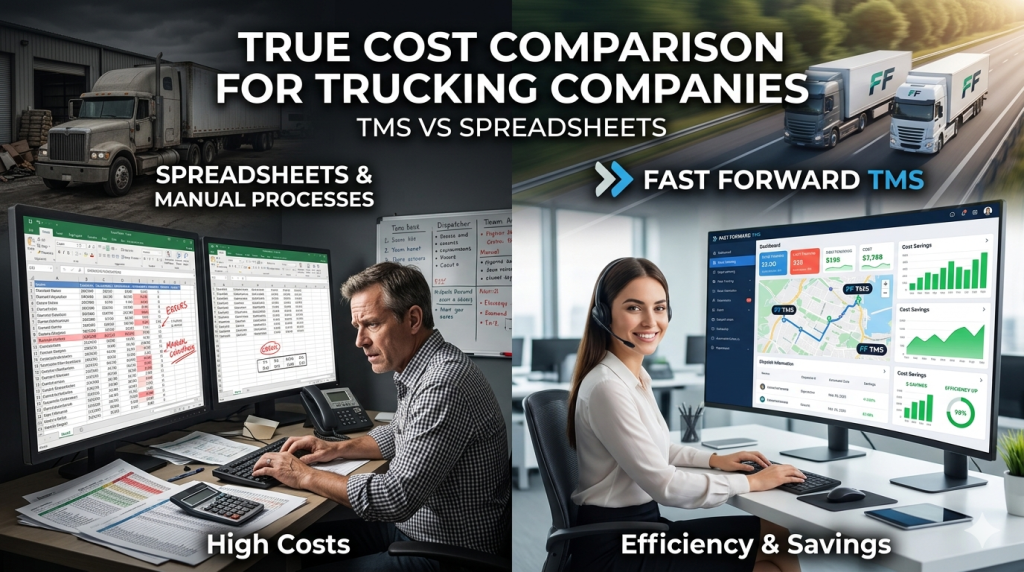
Introduction Running a trucking business today depends on how efficiently dispatch, tracking, billing, and compliance are managed. Yet many carriers still rely on spreadsheets for these critical operations. When comparing TMS vs spreadsheets, the difference is not just about cost—it’s about operational efficiency. Spreadsheets may seem affordable upfront, but as operations grow, manual workflows increase time, errors, and inefficiencies. Manual data entry, disconnected files, and repeated updates slow down processes. This leads to higher workload, delayed invoicing, limited visibility, and inconsistent cash flow. In contrast, carrier TMS software connects dispatch, tracking, billing, and compliance into one system. It reduces manual effort, improves accuracy, and provides real-time visibility across operations. In fact, at Fast Forward TMS, 95% of carriers report smoother dispatch workflows after adopting the platform, highlighting the real-world impact of automation and connected systems. This guide is written by Nitin Shankar, a logistics technology expert with 18+ years of experience, ensuring practical insights based on real trucking operations and system implementation. The real difference between a TMS and spreadsheets lies in scalability and efficiency. While spreadsheets create hidden operational costs, a TMS helps carriers improve cash flow, reduce errors, and scale operations without increasing workload. Key Takeaways: TMS vs Spreadsheets A TMS is more efficient and scalable than spreadsheets for trucking operations. While spreadsheets appear low-cost, they create hidden operational costs through manual work, errors, and delayed billing. A modern carrier TMS software reduces inefficiencies, improves cash flow, and supports business growth. Quick Summary Spreadsheets = low upfront cost, high hidden costManual workflows increase time, errors, and operational complexity.TMS = predictable cost, higher efficiencyAutomates dispatch, tracking, billing, and compliance in one system.Billing and cash flow improve with TMSFaster invoicing reduces delays and improves revenue consistency.Operational visibility is limited in spreadsheetsA TMS provides real-time tracking and centralized data.Scalability is the biggest differenceSpreadsheets become harder to manage as operations grow, while a TMS supports growth without extra workload.Error reduction directly impacts profitabilityAutomated workflows minimize manual mistakes and revenue leakage. What Costs Are We Comparing in TMS vs Spreadsheets? When comparing TMS vs spreadsheets, focusing only on software pricing gives a misleading view. In trucking operations, cost is not just what you pay upfront—it’s how your system affects efficiency, revenue, and scalability over time.Spreadsheets appear inexpensive because they have little to no upfront cost. However, their real impact is operational. Manual processes introduce time delays, errors, and inefficiencies that gradually increase the total cost of running a trucking business.A modern carrier TMS software, on the other hand, introduces a predictable subscription cost but reduces hidden operational expenses through automation and connected workflows. Key Cost Factors in TMS vs Spreadsheets You may also like to Read: TMS Software vs Traditional Methods – A Complete Comparison for Fleet Management in 2025 Where Spreadsheets Actually Cost You in Trucking Operations At first glance, spreadsheets appear cost-effective because they require little to no upfront investment. However, in a TMS vs spreadsheets comparison, the real cost is not eliminated—it is distributed across daily operations through time loss, errors, and inefficiencies.As trucking operations grow, these hidden costs become more visible and begin to impact productivity, accuracy, and cash flow. Time Loss from Manual Workflows Time is the first and most immediate cost. Managing loads through spreadsheets requires continuous manual effort—data is entered repeatedly, updated across multiple files, and coordinated outside the system.As volume increases, this creates a growing administrative burden where teams spend more time managing data than executing operations. Errors That Disrupt Operations Spreadsheets rely entirely on manual input, making data accuracy difficult to maintain. Missing entries, duplicate records, broken formulas, and outdated information often lead to billing errors and operational confusion.These errors directly impact efficiency and increase the risk of financial loss. Revenue Leakage and Billing Delays Without a connected system, ensuring accurate and timely billing becomes challenging. Missed invoices, delayed billing cycles, and incomplete charges reduce revenue visibility and slow down cash flow.Over time, these gaps create significant financial impact. Limited Visibility and Slow Decision-Making Spreadsheets do not provide real-time tracking or centralized insights. Teams rely on manual updates and scattered information, making it harder to monitor performance or respond quickly to operational issues.This lack of visibility slows decision-making and reduces overall control. Compounding Inefficiencies as You Scale As more loads, drivers, and transactions are added, spreadsheet-based workflows become increasingly complex. Instead of improving efficiency, growth leads to more coordination, more manual effort, and higher operational risk.In a TMS vs spreadsheets scenario, this is where spreadsheets shift from a simple tool to a limitation on scalability. You may also like to Read: Top 5 Ways a TMS Software Reduces Manual Work for Dispatchers  How Fast Forward TMS Reduces Operational Costs In a TMS vs spreadsheets comparison, the biggest advantage of a modern system is automation. Unlike spreadsheets, carrier TMS software like Fast Forward TMS manages trucking operations through connected workflows, reducing the operational cost created by manual processes.By bringing dispatch, tracking, billing, and compliance into one system, it eliminates the need for repetitive coordination and disconnected tools. Faster Operations with Less Manual Work Time efficiency improves immediately. Tasks like data entry, load updates, and coordination no longer require repeated manual effort.Information is entered once and automatically flows across workflows, reducing duplication and administrative workload. This allows teams to focus on operations instead of managing data. Improved Accuracy and Fewer Errors Structured workflows and system-driven processes improve data accuracy.Duplicate entries, missing records, and billing errors are significantly reduced, resulting in smoother operations and fewer disruptions. Faster Billing and Stronger Cash Flow Billing becomes faster and more reliable because it is directly connected to operational data.Invoices can be generated immediately after load completion, while integrated driver payroll ensures timely payments. This reduces delays and improves overall cash flow consistency. Scalable Operations Without Extra Workload As operations grow, the system handles increased complexity without adding manual effort.More loads, drivers, and transactions can be managed within the same workflow. Integrated truck tracking software provides real-time visibility, helping teams make faster and more informed decisions. Simplified Compliance and Record

Fast Forward TMS vs Spreadsheets: True Cost Comparison for Trucking Companies  Read More »

Top Reasons Fleet Owners Struggle With Driver Retention in Trucking (And How to Improve It) 

Top Reasons Fleet Owners Struggle With Driver Retention in Trucking (And How to Improve It) 

Driver retention in trucking has become one of the biggest challenges for fleet owners today. While many trucking companies invest heavily in recruiting new drivers, retaining experienced drivers for the long term remains difficult. Operational stress, poor communication, unpredictable schedules, and administrative burdens often lead drivers to seek better opportunities with other carriers.  High driver turnover creates both financial and operational pressure for fleets. Companies must repeatedly invest in recruiting, onboarding, and training new drivers, while trucks may sit idle and delivery schedules can be disrupted when experienced drivers leave.  Industry reports indicate that driver turnover rates in large trucking fleets can exceed 90% annually, making retention a major priority for fleet managers. Improving driver retention in trucking requires better communication, organized dispatch operations, and more driver-friendly workflows.  By addressing the operational challenges drivers face daily, fleets can build a more stable workforce, improve driver satisfaction, and maintain consistent fleet performance.  Key Takeaways  Why Driver Retention in Trucking Is a Growing Challenge  Driver retention in trucking has become increasingly difficult across the transportation industry. Many fleets face driver shortages, rising operational pressure, and strong competition among carriers. Because experienced drivers often have multiple job opportunities, they are more likely to switch companies when working conditions are not ideal.  Long driving hours, tight delivery schedules, and extended time away from home can also affect driver satisfaction. When drivers feel overworked or unsupported, they may look for fleets that offer better communication, predictable schedules, and more organized operations.  Operational efficiency also plays an important role in retention. Drivers prefer companies where dispatch instructions are clear, schedules are stable, and administrative tasks are minimized. Improving these operational systems helps fleets strengthen driver retention and maintain a more stable driver workforce.  The Real Cost of Poor Driver Retention for Fleet Owners  Poor driver retention in trucking creates significant financial and operational challenges for fleet owners. When drivers frequently leave, companies must continuously invest in recruiting, background checks, onboarding, and training programs. These repeated hiring cycles increase operating costs and consume valuable management time.  High turnover also affects productivity. When a driver leaves, trucks may remain idle until a replacement is hired and trained. This downtime directly impacts revenue and can disrupt delivery schedules, making it harder for fleets to maintain consistent operations.  Customer relationships can also suffer when turnover rates are high. New drivers often need time to learn routes, procedures, and company expectations, which can lead to service delays or inconsistencies.  By improving communication, streamlining workflows, and supporting drivers more effectively, fleets can reduce turnover and strengthen driver retention while maintaining stable and reliable operations.  Top Reasons Fleet Owners Struggle With Driver Retention  Many fleet owners understand the importance of driver retention in trucking, yet keeping experienced drivers for the long term remains challenging. In most cases, the issue is not caused by a single problem but by multiple operational factors that affect a driver’s daily work experience.  Drivers expect clear communication, organized dispatching, predictable schedules, and transparent payment processes. When these expectations are not met, frustration can quickly build. Over time, this dissatisfaction encourages drivers to search for fleets that offer better support and smoother operations.  Operational inefficiencies are often a hidden cause of poor driver retention. Confusing dispatch instructions, slow paperwork processing, inconsistent settlements, and lack of transparency can make a driver’s job unnecessarily difficult.  To improve driver retention in trucking, fleet owners must identify and address the everyday challenges drivers face. The following sections highlight the most common reasons drivers leave fleets and how companies can solve these problems.  Poor Communication Between Drivers and Dispatch  One of the most common reasons fleets struggle with driver retention in trucking is poor communication between drivers and dispatch teams. Drivers rely on dispatchers for load details, route updates, delivery schedules, and operational guidance. When communication is unclear or delayed, it creates confusion and unnecessary stress during daily operations.  Drivers often experience issues such as last-minute load changes, unclear instructions, or difficulty reaching dispatch when problems occur on the road. These communication gaps can make drivers feel unsupported and frustrated.  Clear and timely communication helps drivers perform their jobs with confidence. When fleets provide organized dispatch coordination, quick responses, and transparent updates, drivers feel more informed and respected. Improving communication between drivers and dispatch teams is therefore a key step toward strengthening driver retention in trucking.  Inefficient Dispatch and Scheduling  Inefficient dispatch processes are another major factor affecting driver retention in trucking. When load assignments are poorly organized or schedules frequently change, drivers experience delays and unnecessary frustration. These disruptions make it difficult for drivers to plan routes, manage rest periods, and maintain a predictable work routine.  Many fleets still rely on manual scheduling methods such as spreadsheets or phone-based coordination. This approach often leads to missed updates, overlapping assignments, and last-minute route adjustments. As a result, drivers may spend more time waiting for instructions instead of moving freight efficiently.  Organized dispatch planning and consistent scheduling help drivers work more efficiently and with less stress. When fleets improve dispatch coordination and reduce operational confusion, they can significantly strengthen driver retention and maintain a more reliable driver workforce.  Lack of Driver Support Technology  A lack of modern technology can also negatively impact driver retention in trucking. Many drivers still deal with manual paperwork, phone-based updates, and slow administrative processes during daily operations. These outdated systems make routine tasks more complicated and time-consuming.  Today’s drivers expect tools that simplify their work on the road. Mobile apps, digital document uploads, and real-time load updates can help drivers manage tasks more efficiently. When fleets fail to provide these tools, drivers may feel that the company is not keeping up with industry standards.  Modern technology also improves transparency and reduces errors. When drivers receive timely updates and can submit documents digitally, their daily workflow becomes smoother. Fleets that invest in driver-support technology often experience stronger driver retention because drivers can focus more on driving and less on administrative work.   Unpredictable Pay and Slow Settlements  Compensation plays an important role in driver retention in trucking. While pay levels matter, consistency and transparency in payments are equally important for drivers. When settlements are delayed or payment calculations are unclear, drivers may quickly lose trust in fleet operations.  Many drivers rely on regular settlements to manage their personal finances while working on the road. If payroll processing takes

Top Reasons Fleet Owners Struggle With Driver Retention in Trucking (And How to Improve It)  Read More »

What Is DVIR? A Complete Trucking Guide to Daily Vehicle Inspection Reports

What Is DVIR? A Complete Trucking Guide to Daily Vehicle Inspection Reports

Introduction: What Is DVIR and Why It Matters in 2026  What is DVIR?  A DVIR (Daily Vehicle Inspection Report) is a federally required safety document that commercial drivers must complete to record vehicle defects before and after operating a truck. In DVIR trucking compliance, this report ensures that safety issues are identified, documented, and repaired before a commercial motor vehicle returns to the road.  Under FMCSA DVIR requirements, drivers must perform inspections as part of broader CDL inspection requirements and DOT vehicle inspection standards. These inspections directly impact fleet safety, audit exposure, and regulatory compliance.  In 2026, enforcement is tighter. Regulators increasingly expect structured documentation, faster defect resolution, and verifiable inspection records. Missing or incomplete driver vehicle inspection reports can now escalate quickly into DVIR violations, out-of-service violations, or audit triggers.  For trucking companies, DVIR compliance is no longer routine paperwork—it is a measurable compliance control that reduces risk, protects CSA scores, and supports operational reliability.  A Daily Vehicle Inspection Report (DVIR) is a federally mandated inspection record required by FMCSA regulations. It documents vehicle safety defects identified during pre-trip and post-trip inspections to ensure commercial trucks operate safely and remain compliant with DOT standards.  FMCSA DVIR Requirements Explained  The FMCSA DVIR requirements are outlined under 49 CFR §396.11 and §396.13, requiring commercial drivers and carriers to inspect vehicles and document safety defects through a Daily Vehicle Inspection Report (DVIR).  These rules form the foundation of DVIR trucking compliance and broader DOT vehicle inspection standards.  Core DVIR Requirements  Under federal law:  This process supports overall CDL inspection requirements and ensures unsafe vehicles are not placed back in service.  Record Retention & Documentation  To maintain full DVIR compliance, carriers must:  Missing or incomplete documentation is a common cause of DVIR violations.  Inspection & Enforcement Risk  During roadside inspections, officers look for:  Serious issues may result in out-of-service violations, immediately removing the vehicle from operation.  Why This Matters in 2026  In 2026, enforcement emphasizes documentation accuracy and defect tracking—not just mechanical condition. Carriers must treat DVIR as a structured compliance system, not routine paperwork.  Proper DVIR management protects against audits, penalties, and operational downtime.  Also Read: FMCSA’s New CDL Laws for 2026 What Must Be Included in a DVIR? (Truck Safety Inspection Checklist)  A Daily Vehicle Inspection Report (DVIR) must document the condition of critical safety components that affect the safe operation of a commercial motor vehicle.  Under FMCSA DVIR requirements (49 CFR §396.11), drivers must report any defect that could impact safety or result in a breakdown.  Below is the standard truck safety inspection checklist commonly included in a driver vehicle inspection report.  Required Inspection Items in a DVIR  During a pre-trip inspection report and post-trip inspection report, drivers must inspect and document:  If any of these components show defects that affect safe operation, the issue must be recorded in the Daily Vehicle Inspection Report, and repairs must be certified before the vehicle returns to service.  What Qualifies as a Reportable Defect?  A defect must be documented if it:  Minor cosmetic issues are not required, but any safety-related problem must be included for full DVIR compliance.  Pre-Trip vs Post-Trip DVIR: What’s the Difference?  Understanding the difference between a pre-trip inspection report and a post-trip inspection report is essential for full DVIR compliance.  Both inspections are part of the Daily Vehicle Inspection Report (DVIR) process, but they serve different regulatory purposes under FMCSA DVIR requirements (49 CFR §396.11 and §396.13).  Pre-Trip Inspection Report  The pre-trip inspection occurs before the driver begins operating the vehicle.  Purpose:  Key Requirement:  Under §396.13, drivers must verify that the vehicle is in safe operating condition before driving.  Failing to review the prior DVIR can result in DVIR violations during roadside inspections.  Post-Trip Inspection Report  The post-trip inspection occurs at the end of the workday.  Purpose:  Key Requirement:  Under §396.11, drivers must document defects that could affect safe operation or lead to mechanical breakdown.  Carriers must certify repairs before the vehicle returns to service.  Quick Comparison Table  Requirement  Pre-Trip Inspection  Post-Trip Inspection  When completed  Before driving  After completing trip  Regulation  49 CFR §396.13  49 CFR §396.11  Main purpose  Verify vehicle safety  Document new defects  Repair documentation  Review prior repairs  Report and trigger repair certification  Compliance risk  Driving without verification  Failing to report defects  Paper DVIR vs Electronic DVIR: Which Is Better for DVIR Compliance in 2026?  Paper DVIR vs Electronic DVIR  Traditionally, drivers completed a Daily Vehicle Inspection Report (DVIR) using paper forms. Today, many fleets use Electronic DVIR systems or a Digital DVIR app to improve documentation accuracy and compliance visibility.  Both methods meet basic FMCSA DVIR requirements, but the operational and compliance impact is very different.  Paper DVIR (Manual Process)  Paper-based DVIR trucking processes rely on handwritten forms stored in physical files.  Limitations:  During FMCSA audits, missing paper records often result in DVIR violations.  Electronic DVIR (Digital Process)  An Electronic DVIR system allows drivers to complete the driver vehicle inspection report through a mobile device or integrated fleet system.  Advantages:  Electronic systems strengthen DVIR compliance by improving documentation accuracy and audit readiness.  Quick Comparison  Feature  Paper DVIR  Electronic DVIR  Record Storage  Physical files  Cloud-based  Defect Reporting  Manual & delayed  Real-time  Audit Access  Time-consuming  Instant retrieval  Error Risk  High  Reduced  Compliance Visibility  Limited  Centralized  Why Electronic DVIR Matters in 2026  In 2026, enforcement emphasizes:  For DVIR for trucking companies, electronic systems reduce compliance risk and improve operational control. While paper DVIR may meet minimum legal requirements, digital documentation provides stronger protection against FMCSA audits and inspection penalties.  How Digital DVIR Improves Compliance for Carriers  A Digital DVIR system does more than replace paper forms—it strengthens overall DVIR compliance, reduces audit exposure, and improves operational visibility.  As enforcement tightens in 2026, carriers are expected to maintain accurate, verifiable, and easily retrievable Daily Vehicle Inspection Report (DVIR) records. Electronic documentation helps meet these expectations.  1. Real-Time Defect Reporting  With an Electronic DVIR, drivers submit inspection results instantly from the field.  This reduces delays between identifying a defect and initiating repairs—helping prevent out-of-service violations during roadside inspections.  2. Photo & Evidence Documentation  A Digital DVIR app allows drivers to upload photos of mechanical issues.  This creates clear documentation for:  Stronger documentation reduces disputes and strengthens DVIR trucking compliance records.  3. Automated Repair Certification  Under FMCSA DVIR requirements, carriers must certify that reported defects are repaired before a vehicle returns to service.  Electronic systems:  This creates a defensible compliance trail during DOT vehicle inspections.  4. Centralized Record Retention  Digital DVIR platforms store inspection reports in the cloud, eliminating the risk of missing paperwork.  For DVIR for trucking companies, centralized storage means:  Proper record retention is critical for avoiding DVIR violations.  5.

What Is DVIR? A Complete Trucking Guide to Daily Vehicle Inspection Reports Read More »

FMCSA’s New CDL Laws for 2026: What Every Driver & Carrier Must Know

FMCSA’s New CDL Laws for 2026: What Every Driver & Carrier Must Know

Introduction: Why CDL Compliance Changes Matter More in 2026  CDL compliance in 2026 shifts from periodic checks to continuous enforcement under the 2026 CDL laws.  Driver records are now cross-verified across inspections, medical certifications, and safety databases under the oversight of the Federal Motor Carrier Safety Administration. Issues that once appeared during audits can now trigger immediate roadside action.  For carriers, the 2026 CDL laws directly affect operating authority, insurance, safety scores, and driver availability. Even small record gaps can lead to penalties or out-of-service orders.  In 2026, CDL compliance is no longer paperwork. It is an operational risk that must be managed continuously.  Key Takeaways: FMCSA CDL Laws for 2026  Related Blog : Top Trucking Industry Trends in 2026 That Will Reshape Fleet Operations Who Is Issuing These Changes?  Understanding the Role of the Federal Motor Carrier Safety Administration  The Federal Motor Carrier Safety Administration sets national CDL safety and compliance standards, while states handle CDL issuance and day-to-day enforcement.  Under the FMCSA CDL regulations 2026, the agency is not simply introducing new rules. It is strengthening enforcement through improved data sharing between federal and state systems. These FMCSA compliance updates allow faster detection of expired, inconsistent, or disqualified CDL records.  As a result, CDL compliance issues now surface sooner and with less warning for both drivers and carriers.  What Are the New CDL Laws and Updates Taking Effect in 2026?  The 2026 CDL laws focus on stricter enforcement rather than entirely new regulations. Most changes come from faster verification, stronger data alignment, and closer coordination between inspections and audits.  1. Stricter CDL Verification and Record Consistency  Under the 2026 CDL laws, CDL records must remain consistent across licensing, inspection, and safety systems. Even minor mismatches can now trigger violations.  2. Expanded English Proficiency Enforcement  English proficiency is enforced more consistently during roadside inspections. Drivers must clearly understand instructions and respond appropriately to officers.  3. Medical Certification and CDL Status Monitoring  Medical certifications are monitored more closely. Expired or missing records can immediately affect CDL status and lead to out-of-service orders.  4. CDL Downgrade and Disqualification Triggers  Repeat violations or unresolved compliance issues can result in faster CDL downgrades or disqualifications under the 2026 CDL laws.  5. Increased Audit and Roadside Inspection Alignment  Roadside inspection violations now escalate more quickly into audits and enforcement actions, leaving less time for post-audit corrections.  Related Blog: 2026 Trucking Regulations: What Carriers Need to Know Before January What Has Changed From 2025 to 2026?  The most significant change under the 2026 CDL laws is the speed of enforcement.  In 2025, many carriers could identify issues during audits and correct them later. In 2026, CDL records are monitored more frequently, and violations surface sooner through inspections and system checks.  This shift means carriers no longer have time to “fix it later.” Compliance gaps now create immediate operational risk.  Who Is Most Affected by the 2026 CDL Law Changes?  Owner-Operators  Owner-operators are fully responsible for compliance under the 2026 CDL laws. Any issue can result in immediate downtime with no backup driver.  Small and Mid-Sized Fleets  Smaller fleets face higher risk during onboarding. Manual tracking increases the likelihood of missed updates, affecting overall trucking compliance 2026.  Large Fleets  Large fleets face volume-based exposure. Managing CDL rules for carriers becomes more complex without centralized visibility and carrier safety compliance systems.  Common CDL Compliance Mistakes Carriers Will Be Penalized for in 2026  Carriers are penalized more often under the 2026 CDL laws for preventable compliance gaps rather than major violations.  Common mistakes include:  These issues are easy to overlook but now lead to faster enforcement and penalties.  What Carriers Must Do Now to Stay CDL-Compliant in 2026  To reduce risk under the CDL compliance requirements 2026, carriers must take a proactive approach.  Key actions include:  Early preparation helps carriers avoid downtime, penalties, and last-minute corrections.  How Technology Helps Carriers Manage CDL Compliance in 2026  Manual CDL tracking no longer scales in 2026.  Centralized systems support trucking regulatory changes 2026 by helping carriers:  Technology reduces human error and improves compliance visibility across fleets.  How CDL Compliance Impacts Insurance, Audits, and Authority  CDL compliance issues now carry direct financial and operational consequences.  Repeated or unresolved CDL violations can increase insurance premiums and trigger closer scrutiny during audits. Poor compliance records also raise the risk of administrative actions that limit or suspend operating authority.  In 2026, insurers and auditors rely more heavily on compliance data, making clean CDL records essential for stability and growth.  Final Note: 2026 Is a CDL Compliance Reset  In 2026, CDL compliance is no longer just a regulatory task. Under the 2026 CDL laws, it is a business risk that affects uptime, insurance, and operating authority.  Carriers that prepare early gain stability, audit readiness, and credibility. Those that rely on reactive fixes face faster penalties and higher costs.  The message is clear: proactive compliance beats corrective action.  Frequently Asked Questions (FAQs) 

FMCSA’s New CDL Laws for 2026: What Every Driver & Carrier Must Know Read More »

Top Trucking Industry Trends in 2026 That Will Reshape Fleet Operations

Top Trucking Industry Trends in 2026 That Will Reshape Fleet Operations

Introduction: Why 2026 Is a Defining Year for the Trucking Industry One of the most important trucking industry trends in 2026 is the shift from survival mode to data-driven, margin-focused operations. Freight industry trends show that freight demand is uneven, capacity is more regional, and technology is no longer optional. Insights from the Trucking Trends Report confirm that fleets must rely on real-time data, automation, and smarter planning. As trucking industry trends continue to evolve, fleet owners, carriers, and dispatch teams must prepare for better visibility, faster decisions, and more flexible operations in 2026. Key Takeaways: Trucking Industry Trends in 2026 Related Blog : 2026 Trucking Regulations: What Carriers Need to Know Before January 1. Freight Demand Forecast and Market Rebalancing in 2026 A major trucking industry trend shaping 2026 is uneven freight demand. The freight demand forecast shows soft national volumes, but tighter capacity in specific regions. Long-haul freight demand remains weak, while regional and short-haul freight continues to grow. Because of these freight industry trends, many fleets are stepping back from growth plans. ACT Research reports that fleets in 2026 are focused almost exclusively on essential replacement, driven by weak margins, high financing costs, and limited appetite for expansion. Instead of adding trucks, carriers are replacing aging equipment and protecting cash flow. This shift pushes fleets to prioritize smarter load allocation, stronger regional planning, and more flexible dispatching to stay profitable in a mixed-demand market. 2. Freight Rates, Pricing Volatility, and Contract vs Spot Strategy Flat Contract Rates vs Volatile Spot Markets Another key trucking industry trend in 2026 is unstable freight pricing. Freight rates and pricing remain uneven, with contract rates staying mostly flat due to soft demand. At the same time, spot market rates rise quickly in regions where capacity tightens. Carrier exits and regional shifts make spot pricing unpredictable. Because of this, fleets can no longer depend only on contract rates and must closely track regional pricing to avoid higher costs and service failures. 3. Trucking Technology Innovations Driving Data-First Fleets AI and Predictive Intelligence in Fleet Operations One of the fastest-growing trucking industry trends is the use of advanced technology. Trucking technology innovations like AI copilots now help with dispatch, routing, and load matching. These tools support predictive ETAs, early weather disruption alerts, and fraud detection. This allows fleets to reduce guesswork and make better decisions using real-time data. Advanced Analytics and Visibility Modern fleet management solutions focus on visibility. Real-time tracking, exception alerts, and performance benchmarking help fleets respond faster to problems. In 2026, visibility is a competitive requirement because trucking industry trends show that fleets with better data control costs, improve service reliability, and manage disruptions more effectively. 4. Digital Freight Platforms and Automated Load Management The growth of digital freight platforms is another major trucking industry trend. These platforms improve freight matching and support faster load negotiation using real-time market data. Automated load offers and carrier selection reduce manual work and speed up dispatching. This improves margin control and service reliability. In 2026, platform integration matters more than standalone tools because connected systems allow fleets to manage loads, pricing, and visibility in one place. 5. Fleet Management Solutions Focused on Uptime and Cost Control Predictive and Remote Maintenance Keeping trucks moving is a core trucking industry trend in 2026. Modern fleet management solutions use IoT sensors and condition-based maintenance to detect issues early. Remote diagnostics help reduce breakdowns and limit downtime, which lowers repair costs and protects fleet uptime. Asset Lifecycle Optimization Fleets are also changing how they manage assets. Instead of replacing trucks based only on mileage, data now guides replacement timing based on total cost of ownership. Rising equipment prices have increased reliance on the used-truck market, helping fleets control costs while maintaining reliable operations. 6. Driver Shortage in Trucking and the Evolution of Driver Experience The driver shortage in trucking remains one of the most serious trucking industry trends in 2026. Industry projections show the shortage could reach nearly 174,000 drivers. Higher pay alone is no longer enough to retain drivers, especially when most driver turnover occurs in the first 0–180 days on the job. To address this, fleets are focusing more on the overall driver experience. Many are investing in technology such as driver mobile apps, reduced paperwork, and more predictable schedules. Safety technology and in-cab monitoring are also becoming standard, helping create safer, less stressful driving environments that support long-term retention. 7. Sustainable Transportation and Zero-Emission Fleet Planning Sustainable transportation is an increasingly important trucking industry trend. Many fleets are scaling electric and alternative-fuel trucks for urban and short-haul routes. Most carriers now operate mixed fleets, using different vehicle types based on route needs. Growing state and federal regulations are pushing fleets to improve fuel management and emissions reporting, making sustainability planning a standard part of fleet operations. 8. Supply Chain Logistics, Nearshoring, and Regional Freight Growth One of the most impactful trucking industry trends is the shift toward regional supply chain logistics. Nearshoring and regional manufacturing growth are increasing demand for short-haul and regional carriers. Micro-fulfillment centers and urban hubs are becoming more common, which changes routing, dispatch, and capacity planning. Fleets must now manage more frequent trips and tighter delivery windows to stay competitive. 9. Last-Mile Delivery Trends Reshaping Fleet Operations One of the fastest-growing trucking industry trends in 2026 is the rise of last-mile delivery trends. Both B2B and B2C customers now expect faster and more reliable deliveries, even for smaller shipments. This shift is increasing the number of smaller loads and creating tighter delivery windows for fleets. To meet these expectations, fleets must focus on accurate tracking, precise dispatching, and better route optimization. Real-time visibility helps teams adjust quickly when delays happen. As a result, regional fleets are playing a larger role in last-mile execution, making short-haul efficiency a key factor in successful fleet operations. 10. Autonomous Trucks and Automation: What’s Real in 2026 One of the most discussed trucking industry trends is the rise of autonomous trucks and automation, but

Top Trucking Industry Trends in 2026 That Will Reshape Fleet Operations Read More »

2026 Trucking Regulations: What Carriers Need to Know Before January

2026 Trucking Regulations: What Carriers Need to Know Before January

Introduction: Why January 2026 Is a Turning Point for Trucking January 2026 marks a major shift in trucking industry rules. This is not just a routine update—it is a structural change that affects carriers, owner-operators, brokers, and truck drivers nationwide. New regulations focus on digitization of records, fraud reduction, financial accountability, and real-time oversight. Federal agencies like FMCSA, DOT, and EPA, along with state regulators, are tightening enforcement, making compliance more important than ever. For carriers, understanding these changes and preparing ahead is critical. Failing to comply could lead to fines, delays, or operational disruptions. This guide shows exactly what trucking companies need to do before January 2026. 2026 Trucking Regulations – Quick Key Takeaways Prepare now. Early audits, system updates, and proactive monitoring reduce fines, prevent delays, and keep fleets fully compliant under 2026 trucking regulations. Related Blog : 2026 Trucking Regulations & Industry Outlook: What Carriers Must Prepare for Now 1. MC Number Elimination: USDOT Becomes the Only Carrier Identifier Starting January 2026, the MC number will be fully retired, and carriers must use only their USDOT number for all operations. This change helps the FMCSA prevent fraud, stop duplicate identities, and eliminate “chameleon carriers.” Key operational updates for carriers: Practical steps carriers should take now: Non-compliance risks include delays, regulatory confusion, and potential fines. Preparing early ensures smooth operations and full compliance with 2026 trucking industry rules. Related Blog : FMCSA Eliminates MC Numbers by October 2025: What Carriers Need to Know 2. Broker Financial Responsibility Rule: What Carriers Should Watch Closely Starting January 16, 2026, new broker and freight forwarder financial responsibility rules take effect. Carriers and brokers must maintain a $75,000 bond or trust fund in liquid assets to stay compliant. If financial security falls below this amount, the broker or freight forwarder’s operating authority can be suspended, and electronic notifications will trigger enforcement actions targeting sureties and trustees. Key points for carriers: Compliance deadline: January 16, 2026 Asset requirements: Only certain liquid assets are allowed; non-compliant assets are no longer acceptable Why it matters: Reduced risk of non-payment and fewer broker defaults 30-day compliance window: Authorities can suspend operating authority if rules are not followed Action steps carriers should take now: Audit broker partners to ensure financial responsibility compliance Avoid non-compliant brokers to reduce operational and financial risks Following these rules ensures carriers stay compliant with 2026 trucking industry rules and protect their business from financial and operational disruptions. 3. CDL & Medical Certification Go Fully Digital The FMCSA issued a temporary waiver allowing paper medical certificates through January 10, 2026 due to state system readiness issues. After this date, all CDL and medical certifications must be submitted electronically to State Driver Licensing Agencies. This is a key part of 2026 trucking industry rules focused on digitization and accurate compliance tracking. Key risks for carriers and drivers: Best practices to stay compliant: Early preparation during Q1 2026 is essential to avoid delays, penalties, and operational issues. 4. Drug & Alcohol Clearinghouse: Stricter Enforcement in 2026 Starting in 2026, the Drug & Alcohol Clearinghouse will see stricter enforcement for trucking compliance. All violations must be reported within 24 hours, and state agencies will have real-time access to the Clearinghouse. Drivers who fail or refuse tests will face immediate CDL downgrades. Impacts for carriers include: Carrier responsibilities to stay compliant: Following these rules is essential under the 2026 trucking industry rules to avoid penalties, maintain fleet efficiency, and ensure driver safety. 5. ELD, CSA, and DVIR Updates Coming in 2026 In 2026, several important updates will affect electronic logging and safety compliance: Carriers should plan before January 2026, not after, to ensure systems, drivers, and fleet operations are ready for these changes. Early preparation helps avoid compliance risks and operational delays under the 2026 trucking industry rules. 6. Hours-of-Service Pilot Programs: What’s Testing vs. What’s Law In 2026, the FMCSA is running Hours-of-Service (HOS) pilot programs to test new rules before making them enforceable. These pilots include: Participation in these programs is limited, and timelines are set by the FMCSA. Carriers should monitor these pilot programs carefully but not assume they are law. Tracking the results helps plan fleet operations and driver schedules without risking compliance violations under the 2026 trucking industry rules. Related Blog: FMCSA’s New CDL Laws for 2026: What Every Driver & Carrier Must Know 7. Equipment & Safety Mandates: What’s Delayed, What’s Still Coming In 2026, several equipment and safety mandates are changing, but not all take effect immediately: Carriers should know what does not apply in January 2026 to avoid confusion and unnecessary compliance actions. Understanding these updates helps plan fleet purchases and maintenance while staying compliant under the 2026 trucking industry rules. 8. Environmental & Emissions Rules Carriers Should Prepare For In 2026, carriers need to prepare for EPA and state environmental updates: Early fleet planning helps carriers stay compliant, avoid fines, and prepare for smooth operations under the 2026 trucking industry rules. 9. State-Level Changes Carriers Can’t Ignore In 2026, carriers must stay aware of state-level trucking rules that impact operations nationwide: Being proactive helps carriers avoid legal issues, fines, and operational disruptions while staying compliant with federal and state trucking regulations. What’s Delayed or Not Taking Effect in January 2026 Not all new rules start in January 2026. Carriers should know what is delayed or withdrawn to avoid confusion: This clarity helps carriers avoid misinformation, unnecessary compliance actions, and operational panic while staying on track with the 2026 trucking industry rules. Compliance Checklist: What Carriers Must Do Before January 2026 Carriers should take these key steps before January 2026 to stay compliant under the 2026 trucking industry rules: Completing this checklist early reduces compliance risks, operational delays, and potential fines. How Technology Helps Carriers Stay Compliant in 2026 In 2026, technology will be essential for carriers to stay compliant with trucking industry rules. Digital systems provide: Using digital tools, like a carrier TMS Software  helps carriers stay ahead as regulatory oversight becomes continuous, ensuring smooth operations and full

2026 Trucking Regulations: What Carriers Need to Know Before January Read More »

Scroll to Top