TMS Features

Fast Forward TMS Implementation: What to Expect Step-by-Step 

Fast Forward TMS Implementation: What to Expect Step-by-Step 

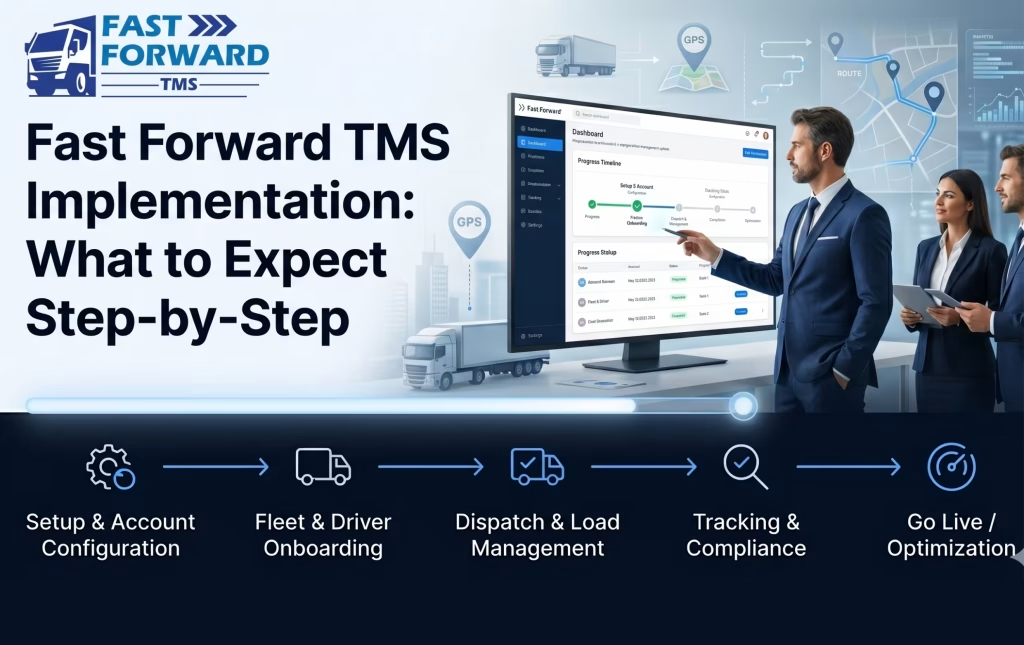
Introduction  Fast Forward TMS Implementation is not just a technical upgrade. It directly impacts how efficiently your trucking business manages dispatch, tracking, driver operations, and billing. According to Freight Waves, over 91% of trucking companies with more than 20 trucks already use a Transportation Management System, while only 33% of small fleets have adopted it. This gap highlights a major opportunity for growing carriers to improve efficiency and stay competitive. For most carriers, the real challenge is not choosing the right system, but understanding how the implementation process works and how to execute it without disrupting daily operations. With Fast Forward TMS, the implementation is designed around real carrier workflows, ensuring a faster, more practical transition from day one. Carriers that define their workflows clearly before setup often experience a smoother and more efficient implementation process. This guide walks you through each stage of implementation, helping you move forward with clarity, confidence, and minimal disruption. You Make Also Like To Read : TMS Implementation Guide: 7 Proven Steps to Ensure Success Key Takeaways  What to Expect During Implementation  When implementing Fast Forward TMS, you can expect a structured process that moves from preparation to setup, data migration, training, and final deployment.  Each stage is focused on aligning the system with your actual business workflows, ensuring minimal disruption and faster adoption. Most businesses experience a smooth transition when workflows are clearly defined before setup and data is properly prepared.  Before You Start (Preparation)  Before implementation begins, a short preparation phase ensures everything runs smoothly.  You need to decide which modules you will use first, such as dispatch, billing, or tracking, so the setup remains focused. Your existing data including drivers, fleet, customers, and rates should be organized and cleaned to avoid errors later.  It is also important to assign one responsible person from your team who will coordinate the process and provide required inputs. Ensuring your team has system access and a structured easy onboarding process will help avoid delays. This step ensures the implementation starts with clarity and avoids unnecessary rework.  Step 1: Workflow Assessment  The first step is to understand how your current operations work so the system can be configured correctly.  Your dispatch flow, billing process, and driver management are reviewed to identifyhow loads are assigned and optimized through load offer negotiation, how communication happens, and how invoices and settlements are handled.  The goal is to carry forward what works and eliminate inefficiencies such as manual tasks or delays. By the end of this step, your workflows are clearly defined, allowing accurate system setup.  Step 2: System Setup & Configuration  Once workflows are defined, the system is configured based on your business operations.  This includes setting up company details, drivers, fleet, rate structures, fuel management, and load management rules. Instead of using default settings, the system is aligned with your actual workflow to ensure smooth day-to-day operations.  A properly configured setup reduces errors and ensures your team can start using the system without confusion.  Step 3: Data Migration  After setup, your existing data is added to the system.  This includes driver records, fleet details, customer information, and financial data. Only relevant and cleaned data is migrated to maintain accuracy and avoid clutter.  The focus here is to ensure continuity, so your operations can continue without losing important historical or operational data.  Step 4: Training & Onboarding  Once data is in place, your team is trained on how to use the system.  Dispatchers learn how to assign and manage loads using dispatching software, drivers understand how to use the mobile app, and finance teams handle billing, settlements, and driver payroll software Proper training ensures your team is confident using the system, which directly impacts adoption and efficiency.  Step 5: Testing & Go-Live  Before full deployment, the system is tested using real or sample operations.  This step verifies that dispatch, truck tracking software, and billing are working correctly. Any gaps or issues are identified and fixed before going live.  Once everything is validated, the system becomes your primary operational platform.  Common Fast Forward TMS Implementation Mistakes and How to Avoid Them  Many implementation issues come from avoidable mistakes.  Skipping workflow assessment often leads to incorrect system setup. Poor data quality creates operational errors, while lack of training results in low team adoption. Trying to implement everything at once without a clear plan can also slow down the process and create confusion.  In most cases, these issues are not system-related but process-related. Businesses that define workflows early, prepare clean data, and follow a structured approach experience a much smoother implementation.  Addressing these challenges during the preparation and planning stage helps prevent delays and ensures a faster, more efficient rollout.  How Long Does Fast Forward TMS Implementation Take?  The implementation timeline for Fast Forward TMS depends on your fleet size, data readiness, and workflow complexity.  Most implementations follow a predictable range. Small fleets typically complete setup within one to two weeks, while mid-sized operations may take two to four weeks. Larger businesses with more complex workflows or integrations may require additional time.  In most cases, delays are not caused by the system, but by unprepared data or unclear workflows. Businesses that prepare their data in advance and define workflows early often complete implementation faster and with fewer issues.  Conclusion  Implementing a TMS becomes much simpler when the process is structured and focused.  With Fast Forward TMS, businesses can transition from manual operations to a streamlined, automated system without unnecessary complexity.  By following a clear step-by-step approach, you can ensure a smooth implementation and start improving efficiency, visibility, and insights using analytics software from day one.  Ready to simplify your operations and implement a system built for real carrier workflows?  Start your Fast Forward TMS implementation today and reduce manual work, improve efficiency, and scale your trucking business with confidence.  Frequently Asked Questions (FAQs)

Fast Forward TMS Implementation: What to Expect Step-by-Step  Read More »

How to Get Started With Fast Forward TMS in Less Than 48 Hours 

How to Get Started With Fast Forward TMS in Less Than 48 Hours 

Fast Forward TMS can be fully set up in less than 48 hours, allowing carriers to onboard drivers, configure dispatch, enable tracking, and start billing without complex technical processes.  This makes it one of the fastest ways to implement a carrier TMS or trucking management software without long onboarding cycles.  Traditional transportation management systems often take weeks to implement, creating delays, increasing manual work, and slowing down operations. Fast Forward TMS eliminates this complexity with a structured onboarding approach designed specifically for small and mid-sized carriers.  Backed by 7+ years of TMS delivery experience and 18+ years of transportation technology expertise, Fast Forward TMS is trusted by 1,500+ companies, with 95% of carriers reporting smoother dispatch workflows after adoption.  Key Takeaways  How Fast Forward TMS Reduces Setup Time Compared to Traditional TMS  Traditional transportation management systems often take 2 to 6 weeks to implement due to complex configurations, multiple integrations, and dependency on technical teams.  These delays typically occur because carriers need to manually set up dispatch workflows, onboard drivers, connect different tools, and manage scattered operational data during onboarding.  As a result, many carriers experience slower implementation, increased manual effort, and delayed transition to a fully digital system.  Fast Forward TMS is designed to eliminate these challenges by simplifying the entire onboarding process and focusing only on what carriers actually need to get started quickly.  What Makes Fast Forward TMS Faster to Set Up  What You Need Before Setting Up Fast Forward TMS  To set up Fast Forward TMS within 48 hours, having the right operational information prepared in advance is essential. This helps avoid onboarding delays and ensures a smooth transition from setup to live operations.  Before you begin, make sure you have the following details ready:  Preparing this information in advance allows you to quickly configure dispatch, enable tracking, and set up billing without interruptions.  How to Set Up Fast Forward TMS in Less Than 48 Hours (Step-by-Step)  Fast Forward TMS follows a structured onboarding process designed specifically for carrier operations. By completing the steps below in sequence, you can configure your system and start dispatching, tracking, and billing within 48 hours.  Step 1: Create Your Account and Access the Dashboard Start by creating your account and logging into the platform. Review the dashboard to understand key modules such as dispatch, drivers, loads, and billing.  This step ensures you understand the system layout before entering operational data.  Step 2: Add Company, Drivers, and Fleet Information Enter your company details, onboard drivers, and add fleet information including trucks and capacity.  This step builds the operational foundation required for dispatch and tracking.  Step 3: Set Up Dispatch Workflow and Load Management Create loads, define routes, and assign drivers to shipments.  This is the core operational setup where your dispatch process becomes structured and system-driven instead of manual.  Step 4: Enable Driver Connectivity and Real-Time Tracking Connect drivers through the mobile app or system interface and enable real-time tracking.  This allows you to monitor truck movement, improve communication, and gain full visibility into operations.  Step 5: Configure Rates, Billing, and Invoicing Set up rate confirmations, pricing structures, and payment terms.  This ensures that completed loads are automatically converted into invoices, reducing manual billing work and improving cash flow.  Step 6: Test Workflows and Go Live Review all configurations, test dispatch, tracking, and billing workflows, and make final adjustments.  Once verified, your system is fully operational and ready for daily use.  What You Can Achieve Within 48 Hours of Using Fast Forward TMS  Within just 48 hours of setting up Fast Forward TMS, your operations shift from manual and fragmented processes to a fully structured, system-driven workflow.  Instead of relying on calls, spreadsheets, and disconnected tools, you gain complete control over dispatch, tracking, and billing from a single platform.  Start Dispatching Without Delays  Assign loads, manage routes, and coordinate drivers directly within the system without manual follow-ups or back-and-forth communication.  Get Real-Time Visibility Across Your Fleet  Track truck movement, monitor driver activity, and stay updated on operations without needing constant calls or status checks.  Generate Invoices Immediately After Load Completion  Convert completed loads into invoices instantly, reducing billing delays and improving cash flow consistency.  Centralize Driver and Fleet Management  Manage all driver and vehicle information in one place, making it easier to handle assignments, updates, and operations at scale.  Reduce Manual Work and Operational Errors  Replace scattered workflows with a structured system that minimizes coordination effort, reduces errors, and improves overall efficiency.  Conclusion:   Setting up a transportation management system no longer needs to be a time-consuming or complex process.  Fast Forward TMS simplifies onboarding with a structured approach that allows carriers to go live in less than 48 hours. From adding drivers and managing dispatch to enabling tracking and automating billing, everything is designed to work together in a single, easy-to-use platform.  For carriers still relying on manual processes or disconnected tools, this shift can significantly improve operational efficiency, reduce delays, and create a more controlled workflow.  If you are looking to streamline your operations, improve visibility, and accelerate your billing cycle, Fast Forward TMS provides a practical and scalable solution built specifically for modern carrier needs.  Frequently Asked Questions  

How to Get Started With Fast Forward TMS in Less Than 48 Hours  Read More »

Top 10 Reasons Carriers Switch to Fast Forward TMS 

Top 10 Reasons Carriers Switch to Fast Forward TMS 

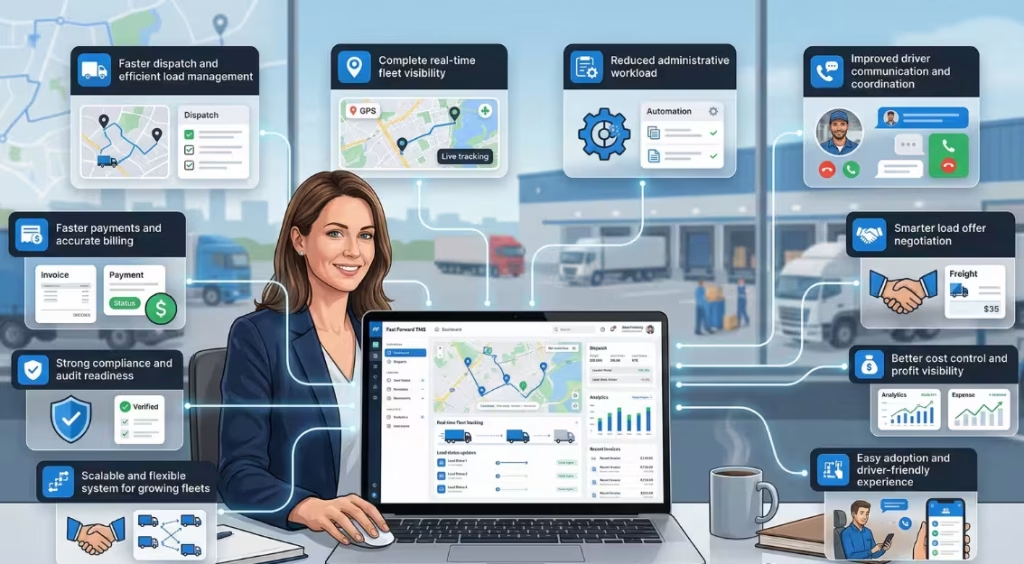
INTRODUCTION  Running a trucking business today is no longer just about moving freight from point A to point B. Carriers face ongoing challenges such as delayed dispatch, rising fuel costs, communication gaps, compliance pressure, and slow payment cycles.  Many fleets still rely on spreadsheets and disconnected tools, which create inefficiencies, increase errors, and limit visibility. Without a centralized system, tracking trucks, managing drivers, and making timely decisions becomes difficult—often leading to higher empty miles and reduced efficiency.  Industry reports show that digital systems can improve operational efficiency by 20–30% while reducing manual workload. As competition grows, carriers are actively looking for smarter and more reliable ways to manage operations.  Understanding the carrier TMS software benefits is now essential. A modern transportation management system helps streamline workflows, improve visibility, and automate key processes within a single platform.  Fast Forward TMS is built to solve these challenges, backed by 18+ years of transportation technology expertise and trusted by 1,500+ companies worldwide. It helps carriers reduce inefficiencies, control costs, and gain complete operational visibility.  Key Takeaways  You may also like to Read: How Fast Forward TMS Stands Out as the Best Choice in Carrier TMS Software  What is Carrier TMS Software?  A Carrier TMS (Transportation Management System) is a cloud-based software that helps trucking companies manage dispatch, tracking, billing, driver communication, and compliance from a single platform.  Instead of relying on spreadsheets or disconnected tools, it centralizes operations, improves visibility, and streamlines daily workflows. This allows carriers to reduce manual work, minimize errors, and make faster, data-driven decisions.  For modern fleets, a TMS is not just a tool—it is essential for running efficient and scalable operations.  Who Should Use Carrier TMS Software?  Carrier TMS software is designed for trucking businesses that want to improve efficiency, reduce manual work, and gain better control over daily operations.  It is especially useful for small fleets managing dispatch manually, growing carriers facing delays and coordination issues, and mid-sized fleets handling multiple trucks, routes, and compliance requirements.  As operations expand, relying on spreadsheets and phone calls becomes difficult and error-prone. A carrier TMS helps streamline workflows, improve visibility, and simplify day-to-day management.  For any fleet looking to scale, reduce inefficiencies, and operate more efficiently, adopting a TMS becomes a practical necessity.   10 Key Reasons Carriers Are Switching to Fast Forward TMS  In today’s trucking industry, operational efficiency plays a critical role in profitability. Carriers that continue to rely on manual processes and disconnected tools often face delays, errors, and limited visibility across their operations.  Fast Forward TMS is built to address these challenges by simplifying workflows, improving coordination, and providing better control over daily operations. It helps carriers operate more efficiently and make faster, data-driven decisions.  Trusted by 1,500+ carriers, Fast Forward TMS has helped improve dispatch workflows, with 95% of users reporting smoother operations. It stands out by solving real-world challenges while delivering measurable improvements in efficiency, visibility, and profitability.  Here are the 10 key reasons carriers are making the switch:  Faster Dispatch and Efficient Load Management  One of the biggest challenges in trucking operations is delayed or inefficient dispatch. When dispatchers rely on phone calls, spreadsheets, or manual coordination, assigning loads becomes slow and error-prone.  Fast Forward TMS simplifies this process by enabling real-time load assignment and driver availability tracking. Dispatchers can instantly identify which driver is available, assign loads quickly, and manage multiple shipments from a centralized dashboard.  This leads to faster turnaround times, better load utilization, and increased daily productivity. As a result, fleets can handle more loads without increasing operational complexity.  Complete Real-Time Fleet Visibility  Lack of visibility is one of the most common operational problems for carriers. Without real-time data, it becomes difficult to track shipments, monitor driver activity, or respond quickly to delays.  Fast Forward TMS provides live GPS tracking and centralized dashboards that give carriers full visibility into their fleet. Dispatchers can see where every truck is, track delivery progress, and make informed decisions instantly.  This level of visibility reduces uncertainty, improves customer communication, and helps prevent costly delays or missed deliveries.  Reduced Administrative Workload  Manual processes such as paperwork, data entry, and reporting consume a significant amount of time and increase the risk of errors.  Fast Forward TMS automates routine operational tasks, including documentation, reporting, and workflow management. This reduces the administrative burden on teams and minimizes human errors.  By eliminating repetitive tasks, carriers can focus more on core operations like load planning and fleet optimization, ultimately improving overall efficiency.  Improved Driver Communication and Coordination  Effective communication between dispatchers and drivers is essential for smooth operations. However, relying on constant phone calls often leads to miscommunication, delays, and inefficiencies.  Fast Forward TMS includes a built-in driver mobile app that enables real-time communication, instant updates, and document sharing. Drivers can receive load details, upload documents, and stay connected without unnecessary back-and-forth calls.  This improves coordination, reduces confusion, and enhances the overall driver experience.  Faster Payments and Accurate Billing  Delayed payments and billing errors are common challenges in trucking, especially when invoicing is handled manually.  Fast Forward TMS automates invoicing and settlement processes, ensuring that invoices are generated quickly and accurately. This reduces disputes, eliminates errors, and speeds up payment cycles.  With faster and more reliable billing, carriers can improve cash flow and maintain financial stability.  Smarter Load Offer Negotiation  Negotiating load rates has traditionally been a time-consuming process involving multiple phone calls and back-and-forth communication.  Fast Forward TMS introduces a built-in load offer negotiation system that allows dispatchers and drivers to share offers, counteroffers, and finalize rates instantly.  This reduces delays, improves transparency, and ensures faster decision-making. It also builds better trust between drivers and dispatchers, leading to stronger working relationships.  Strong Compliance and Audit Readiness  Compliance requirements such as IFTA reporting, HOS tracking, and documentation management are becoming increasingly complex.  Managing these processes manually not only increases workload but also raises the risk of errors and penalties.  Fast Forward TMS automates compliance-related tasks, ensuring accurate reporting and proper documentation. This helps carriers stay audit-ready while reducing the risk of costly fines.  Better Cost Control and Profit Visibility  Without proper data, many carriers struggle to understand their true operating costs and profitability.  Fast Forward TMS provides real-time insights into key metrics such as cost per mile, fuel expenses, and

Top 10 Reasons Carriers Switch to Fast Forward TMS  Read More »

Top Reasons Fleet Owners Struggle With Driver Retention in Trucking (And How to Improve It) 

Top Reasons Fleet Owners Struggle With Driver Retention in Trucking (And How to Improve It) 

Driver retention in trucking has become one of the biggest challenges for fleet owners today. While many trucking companies invest heavily in recruiting new drivers, retaining experienced drivers for the long term remains difficult. Operational stress, poor communication, unpredictable schedules, and administrative burdens often lead drivers to seek better opportunities with other carriers.  High driver turnover creates both financial and operational pressure for fleets. Companies must repeatedly invest in recruiting, onboarding, and training new drivers, while trucks may sit idle and delivery schedules can be disrupted when experienced drivers leave.  Industry reports indicate that driver turnover rates in large trucking fleets can exceed 90% annually, making retention a major priority for fleet managers. Improving driver retention in trucking requires better communication, organized dispatch operations, and more driver-friendly workflows.  By addressing the operational challenges drivers face daily, fleets can build a more stable workforce, improve driver satisfaction, and maintain consistent fleet performance.  Key Takeaways  Why Driver Retention in Trucking Is a Growing Challenge  Driver retention in trucking has become increasingly difficult across the transportation industry. Many fleets face driver shortages, rising operational pressure, and strong competition among carriers. Because experienced drivers often have multiple job opportunities, they are more likely to switch companies when working conditions are not ideal.  Long driving hours, tight delivery schedules, and extended time away from home can also affect driver satisfaction. When drivers feel overworked or unsupported, they may look for fleets that offer better communication, predictable schedules, and more organized operations.  Operational efficiency also plays an important role in retention. Drivers prefer companies where dispatch instructions are clear, schedules are stable, and administrative tasks are minimized. Improving these operational systems helps fleets strengthen driver retention and maintain a more stable driver workforce.  The Real Cost of Poor Driver Retention for Fleet Owners  Poor driver retention in trucking creates significant financial and operational challenges for fleet owners. When drivers frequently leave, companies must continuously invest in recruiting, background checks, onboarding, and training programs. These repeated hiring cycles increase operating costs and consume valuable management time.  High turnover also affects productivity. When a driver leaves, trucks may remain idle until a replacement is hired and trained. This downtime directly impacts revenue and can disrupt delivery schedules, making it harder for fleets to maintain consistent operations.  Customer relationships can also suffer when turnover rates are high. New drivers often need time to learn routes, procedures, and company expectations, which can lead to service delays or inconsistencies.  By improving communication, streamlining workflows, and supporting drivers more effectively, fleets can reduce turnover and strengthen driver retention while maintaining stable and reliable operations.  Top Reasons Fleet Owners Struggle With Driver Retention  Many fleet owners understand the importance of driver retention in trucking, yet keeping experienced drivers for the long term remains challenging. In most cases, the issue is not caused by a single problem but by multiple operational factors that affect a driver’s daily work experience.  Drivers expect clear communication, organized dispatching, predictable schedules, and transparent payment processes. When these expectations are not met, frustration can quickly build. Over time, this dissatisfaction encourages drivers to search for fleets that offer better support and smoother operations.  Operational inefficiencies are often a hidden cause of poor driver retention. Confusing dispatch instructions, slow paperwork processing, inconsistent settlements, and lack of transparency can make a driver’s job unnecessarily difficult.  To improve driver retention in trucking, fleet owners must identify and address the everyday challenges drivers face. The following sections highlight the most common reasons drivers leave fleets and how companies can solve these problems.  Poor Communication Between Drivers and Dispatch  One of the most common reasons fleets struggle with driver retention in trucking is poor communication between drivers and dispatch teams. Drivers rely on dispatchers for load details, route updates, delivery schedules, and operational guidance. When communication is unclear or delayed, it creates confusion and unnecessary stress during daily operations.  Drivers often experience issues such as last-minute load changes, unclear instructions, or difficulty reaching dispatch when problems occur on the road. These communication gaps can make drivers feel unsupported and frustrated.  Clear and timely communication helps drivers perform their jobs with confidence. When fleets provide organized dispatch coordination, quick responses, and transparent updates, drivers feel more informed and respected. Improving communication between drivers and dispatch teams is therefore a key step toward strengthening driver retention in trucking.  Inefficient Dispatch and Scheduling  Inefficient dispatch processes are another major factor affecting driver retention in trucking. When load assignments are poorly organized or schedules frequently change, drivers experience delays and unnecessary frustration. These disruptions make it difficult for drivers to plan routes, manage rest periods, and maintain a predictable work routine.  Many fleets still rely on manual scheduling methods such as spreadsheets or phone-based coordination. This approach often leads to missed updates, overlapping assignments, and last-minute route adjustments. As a result, drivers may spend more time waiting for instructions instead of moving freight efficiently.  Organized dispatch planning and consistent scheduling help drivers work more efficiently and with less stress. When fleets improve dispatch coordination and reduce operational confusion, they can significantly strengthen driver retention and maintain a more reliable driver workforce.  Lack of Driver Support Technology  A lack of modern technology can also negatively impact driver retention in trucking. Many drivers still deal with manual paperwork, phone-based updates, and slow administrative processes during daily operations. These outdated systems make routine tasks more complicated and time-consuming.  Today’s drivers expect tools that simplify their work on the road. Mobile apps, digital document uploads, and real-time load updates can help drivers manage tasks more efficiently. When fleets fail to provide these tools, drivers may feel that the company is not keeping up with industry standards.  Modern technology also improves transparency and reduces errors. When drivers receive timely updates and can submit documents digitally, their daily workflow becomes smoother. Fleets that invest in driver-support technology often experience stronger driver retention because drivers can focus more on driving and less on administrative work.   Unpredictable Pay and Slow Settlements  Compensation plays an important role in driver retention in trucking. While pay levels matter, consistency and transparency in payments are equally important for drivers. When settlements are delayed or payment calculations are unclear, drivers may quickly lose trust in fleet operations.  Many drivers rely on regular settlements to manage their personal finances while working on the road. If payroll processing takes

Top Reasons Fleet Owners Struggle With Driver Retention in Trucking (And How to Improve It)  Read More »

FMCSA’s New CDL Laws for 2026: What Every Driver & Carrier Must Know

FMCSA’s New CDL Laws for 2026: What Every Driver & Carrier Must Know

Introduction: Why CDL Compliance Changes Matter More in 2026  CDL compliance in 2026 shifts from periodic checks to continuous enforcement under the 2026 CDL laws.  Driver records are now cross-verified across inspections, medical certifications, and safety databases under the oversight of the Federal Motor Carrier Safety Administration. Issues that once appeared during audits can now trigger immediate roadside action.  For carriers, the 2026 CDL laws directly affect operating authority, insurance, safety scores, and driver availability. Even small record gaps can lead to penalties or out-of-service orders.  In 2026, CDL compliance is no longer paperwork. It is an operational risk that must be managed continuously.  Key Takeaways: FMCSA CDL Laws for 2026  Related Blog : Top Trucking Industry Trends in 2026 That Will Reshape Fleet Operations Who Is Issuing These Changes?  Understanding the Role of the Federal Motor Carrier Safety Administration  The Federal Motor Carrier Safety Administration sets national CDL safety and compliance standards, while states handle CDL issuance and day-to-day enforcement.  Under the FMCSA CDL regulations 2026, the agency is not simply introducing new rules. It is strengthening enforcement through improved data sharing between federal and state systems. These FMCSA compliance updates allow faster detection of expired, inconsistent, or disqualified CDL records.  As a result, CDL compliance issues now surface sooner and with less warning for both drivers and carriers.  What Are the New CDL Laws and Updates Taking Effect in 2026?  The 2026 CDL laws focus on stricter enforcement rather than entirely new regulations. Most changes come from faster verification, stronger data alignment, and closer coordination between inspections and audits.  1. Stricter CDL Verification and Record Consistency  Under the 2026 CDL laws, CDL records must remain consistent across licensing, inspection, and safety systems. Even minor mismatches can now trigger violations.  2. Expanded English Proficiency Enforcement  English proficiency is enforced more consistently during roadside inspections. Drivers must clearly understand instructions and respond appropriately to officers.  3. Medical Certification and CDL Status Monitoring  Medical certifications are monitored more closely. Expired or missing records can immediately affect CDL status and lead to out-of-service orders.  4. CDL Downgrade and Disqualification Triggers  Repeat violations or unresolved compliance issues can result in faster CDL downgrades or disqualifications under the 2026 CDL laws.  5. Increased Audit and Roadside Inspection Alignment  Roadside inspection violations now escalate more quickly into audits and enforcement actions, leaving less time for post-audit corrections.  Related Blog: 2026 Trucking Regulations: What Carriers Need to Know Before January What Has Changed From 2025 to 2026?  The most significant change under the 2026 CDL laws is the speed of enforcement.  In 2025, many carriers could identify issues during audits and correct them later. In 2026, CDL records are monitored more frequently, and violations surface sooner through inspections and system checks.  This shift means carriers no longer have time to “fix it later.” Compliance gaps now create immediate operational risk.  Who Is Most Affected by the 2026 CDL Law Changes?  Owner-Operators  Owner-operators are fully responsible for compliance under the 2026 CDL laws. Any issue can result in immediate downtime with no backup driver.  Small and Mid-Sized Fleets  Smaller fleets face higher risk during onboarding. Manual tracking increases the likelihood of missed updates, affecting overall trucking compliance 2026.  Large Fleets  Large fleets face volume-based exposure. Managing CDL rules for carriers becomes more complex without centralized visibility and carrier safety compliance systems.  Common CDL Compliance Mistakes Carriers Will Be Penalized for in 2026  Carriers are penalized more often under the 2026 CDL laws for preventable compliance gaps rather than major violations.  Common mistakes include:  These issues are easy to overlook but now lead to faster enforcement and penalties.  What Carriers Must Do Now to Stay CDL-Compliant in 2026  To reduce risk under the CDL compliance requirements 2026, carriers must take a proactive approach.  Key actions include:  Early preparation helps carriers avoid downtime, penalties, and last-minute corrections.  How Technology Helps Carriers Manage CDL Compliance in 2026  Manual CDL tracking no longer scales in 2026.  Centralized systems support trucking regulatory changes 2026 by helping carriers:  Technology reduces human error and improves compliance visibility across fleets.  How CDL Compliance Impacts Insurance, Audits, and Authority  CDL compliance issues now carry direct financial and operational consequences.  Repeated or unresolved CDL violations can increase insurance premiums and trigger closer scrutiny during audits. Poor compliance records also raise the risk of administrative actions that limit or suspend operating authority.  In 2026, insurers and auditors rely more heavily on compliance data, making clean CDL records essential for stability and growth.  Final Note: 2026 Is a CDL Compliance Reset  In 2026, CDL compliance is no longer just a regulatory task. Under the 2026 CDL laws, it is a business risk that affects uptime, insurance, and operating authority.  Carriers that prepare early gain stability, audit readiness, and credibility. Those that rely on reactive fixes face faster penalties and higher costs.  The message is clear: proactive compliance beats corrective action.  Frequently Asked Questions (FAQs) 

FMCSA’s New CDL Laws for 2026: What Every Driver & Carrier Must Know Read More »

2026 Trucking Regulations: What Carriers Need to Know Before January

2026 Trucking Regulations: What Carriers Need to Know Before January

Introduction: Why January 2026 Is a Turning Point for Trucking January 2026 marks a major shift in trucking industry rules. This is not just a routine update—it is a structural change that affects carriers, owner-operators, brokers, and truck drivers nationwide. New regulations focus on digitization of records, fraud reduction, financial accountability, and real-time oversight. Federal agencies like FMCSA, DOT, and EPA, along with state regulators, are tightening enforcement, making compliance more important than ever. For carriers, understanding these changes and preparing ahead is critical. Failing to comply could lead to fines, delays, or operational disruptions. This guide shows exactly what trucking companies need to do before January 2026. 2026 Trucking Regulations – Quick Key Takeaways Prepare now. Early audits, system updates, and proactive monitoring reduce fines, prevent delays, and keep fleets fully compliant under 2026 trucking regulations. Related Blog : 2026 Trucking Regulations & Industry Outlook: What Carriers Must Prepare for Now 1. MC Number Elimination: USDOT Becomes the Only Carrier Identifier Starting January 2026, the MC number will be fully retired, and carriers must use only their USDOT number for all operations. This change helps the FMCSA prevent fraud, stop duplicate identities, and eliminate “chameleon carriers.” Key operational updates for carriers: Practical steps carriers should take now: Non-compliance risks include delays, regulatory confusion, and potential fines. Preparing early ensures smooth operations and full compliance with 2026 trucking industry rules. Related Blog : FMCSA Eliminates MC Numbers by October 2025: What Carriers Need to Know 2. Broker Financial Responsibility Rule: What Carriers Should Watch Closely Starting January 16, 2026, new broker and freight forwarder financial responsibility rules take effect. Carriers and brokers must maintain a $75,000 bond or trust fund in liquid assets to stay compliant. If financial security falls below this amount, the broker or freight forwarder’s operating authority can be suspended, and electronic notifications will trigger enforcement actions targeting sureties and trustees. Key points for carriers: Compliance deadline: January 16, 2026 Asset requirements: Only certain liquid assets are allowed; non-compliant assets are no longer acceptable Why it matters: Reduced risk of non-payment and fewer broker defaults 30-day compliance window: Authorities can suspend operating authority if rules are not followed Action steps carriers should take now: Audit broker partners to ensure financial responsibility compliance Avoid non-compliant brokers to reduce operational and financial risks Following these rules ensures carriers stay compliant with 2026 trucking industry rules and protect their business from financial and operational disruptions. 3. CDL & Medical Certification Go Fully Digital The FMCSA issued a temporary waiver allowing paper medical certificates through January 10, 2026 due to state system readiness issues. After this date, all CDL and medical certifications must be submitted electronically to State Driver Licensing Agencies. This is a key part of 2026 trucking industry rules focused on digitization and accurate compliance tracking. Key risks for carriers and drivers: Best practices to stay compliant: Early preparation during Q1 2026 is essential to avoid delays, penalties, and operational issues. 4. Drug & Alcohol Clearinghouse: Stricter Enforcement in 2026 Starting in 2026, the Drug & Alcohol Clearinghouse will see stricter enforcement for trucking compliance. All violations must be reported within 24 hours, and state agencies will have real-time access to the Clearinghouse. Drivers who fail or refuse tests will face immediate CDL downgrades. Impacts for carriers include: Carrier responsibilities to stay compliant: Following these rules is essential under the 2026 trucking industry rules to avoid penalties, maintain fleet efficiency, and ensure driver safety. 5. ELD, CSA, and DVIR Updates Coming in 2026 In 2026, several important updates will affect electronic logging and safety compliance: Carriers should plan before January 2026, not after, to ensure systems, drivers, and fleet operations are ready for these changes. Early preparation helps avoid compliance risks and operational delays under the 2026 trucking industry rules. 6. Hours-of-Service Pilot Programs: What’s Testing vs. What’s Law In 2026, the FMCSA is running Hours-of-Service (HOS) pilot programs to test new rules before making them enforceable. These pilots include: Participation in these programs is limited, and timelines are set by the FMCSA. Carriers should monitor these pilot programs carefully but not assume they are law. Tracking the results helps plan fleet operations and driver schedules without risking compliance violations under the 2026 trucking industry rules. Related Blog: FMCSA’s New CDL Laws for 2026: What Every Driver & Carrier Must Know 7. Equipment & Safety Mandates: What’s Delayed, What’s Still Coming In 2026, several equipment and safety mandates are changing, but not all take effect immediately: Carriers should know what does not apply in January 2026 to avoid confusion and unnecessary compliance actions. Understanding these updates helps plan fleet purchases and maintenance while staying compliant under the 2026 trucking industry rules. 8. Environmental & Emissions Rules Carriers Should Prepare For In 2026, carriers need to prepare for EPA and state environmental updates: Early fleet planning helps carriers stay compliant, avoid fines, and prepare for smooth operations under the 2026 trucking industry rules. 9. State-Level Changes Carriers Can’t Ignore In 2026, carriers must stay aware of state-level trucking rules that impact operations nationwide: Being proactive helps carriers avoid legal issues, fines, and operational disruptions while staying compliant with federal and state trucking regulations. What’s Delayed or Not Taking Effect in January 2026 Not all new rules start in January 2026. Carriers should know what is delayed or withdrawn to avoid confusion: This clarity helps carriers avoid misinformation, unnecessary compliance actions, and operational panic while staying on track with the 2026 trucking industry rules. Compliance Checklist: What Carriers Must Do Before January 2026 Carriers should take these key steps before January 2026 to stay compliant under the 2026 trucking industry rules: Completing this checklist early reduces compliance risks, operational delays, and potential fines. How Technology Helps Carriers Stay Compliant in 2026 In 2026, technology will be essential for carriers to stay compliant with trucking industry rules. Digital systems provide: Using digital tools, like a carrier TMS Software  helps carriers stay ahead as regulatory oversight becomes continuous, ensuring smooth operations and full

2026 Trucking Regulations: What Carriers Need to Know Before January Read More »

How TMS Software Helps Carriers Manage Holiday Season Delivery Pressure

How TMS Software Helps Carriers Manage Holiday Season Delivery Pressure

Introduction: TMS Software Helps Carriers Manage Holiday Season The holiday shipping season places an enormous strain on carrier operations. According to FreightPOP, U.S. carriers are expected to handle approximately 2.3 billion packages during the holiday peak season—nearly a 5% increase compared to last year. This surge intensifies delivery timelines, increases operational complexity, and leaves little margin for error. A TMS software helps carriers manage holiday season delivery pressure by automating dispatch, optimizing routes, improving driver communication, digitizing paperwork, providing real-time tracking, reducing errors, and ensuring faster, more reliable deliveries. By streamlining end-to-end operations, TMS software for carriers enables fleets to handle more loads efficiently, even during the most demanding peak holiday periods. Key Takeaways: How TMS Software Helps Carriers During the Holiday Season What are the Holiday Season Delivery Pressure in Trucking The holiday season is the most demanding time of year for carriers. From November through early January, freight volumes surge while timelines shrink. Carriers must deliver more loads with fewer drivers, tighter schedules, and higher customer expectations. Holiday delivery pressure increases due to: Even small operational mistakes during this period can lead to delayed deliveries, lost revenue, customer complaints, and compliance risks. This is where TMS software becomes essential for carriers, regardless of fleet size. 1-What Are the Biggest Holiday Season Challenges Carriers Face? Understanding the pain points is essential before exploring solutions. The holiday season exposes weaknesses in traditional, manual processes and amplifies operational inefficiencies. 1. Massive Increase in Shipment Volume Holiday peak season can increase freight volumes by 40% to 100%, according to industry logistics reports. Manual dispatching struggles to keep up, leading to misallocated loads and idle trucks. 2. Tight Delivery Deadlines Holiday customers expect fast, accurate deliveries. Missed ETAs often result in penalties, chargebacks, and lost contracts. Without automated dispatch and tracking, meeting these deadlines becomes difficult. 3. Driver Shortages Many drivers take planned leave during the holidays. With fewer available drivers, carriers must allocate loads more intelligently to avoid burnout and missed deliveries. 4. Traffic and Weather Delays Winter weather, road restrictions, and congestion slow down transit times. Manual rerouting takes time, while delays quickly compound across multiple shipments. 5. Increased Paperwork and Billing Load Holiday operations multiply documentation requirements—PODs, BOLs, invoices, settlements, and IFTA reports. Manual paperwork increases errors and delays payments. 6. Communication Breakdowns Dispatchers and drivers are overwhelmed with calls, messages, and updates. Poor communication slows decisions and increases mistakes. Explore related content– Why December Is the Best Time to Switch to a Modern TMS Software 2- How Does TMS Software Help Carriers Manage Holiday Season Delivery Pressure? A modern TMS software helps carriers manage holiday delivery pressure through automation, real-time visibility, and operational flexibility. During peak demand, it enables faster planning and better execution. Industry benchmarks show that carriers using TMS software consistently achieve 95% or higher on-time delivery (OTD). By automating dispatch, optimizing routes, digitizing documentation, and ensuring compliance, TMS reduces errors and keeps freight moving on schedule. Smart, Automated Dispatching Dispatch is one of the biggest bottlenecks during the holiday season, especially when shipment volumes spike and driver availability is limited. TMS software simplifies this process through automated dispatch that intelligently matches loads with the most suitable drivers based on their availability, Hours of Service (HOS), equipment type, current location, proximity to pickup and delivery points, and historical performance. This automation speeds up load assignments, reduces dispatcher workload, and helps carriers maintain consistent on-time delivery performance during peak season logistics management. Real-Time Truck and Load Tracking Holiday deliveries require constant visibility and precise coordination. TMS software provides real-time tracking through live GPS monitoring of trucks, drivers, shipment status, and accurate estimated arrival times (ETAs). With real-time tracking, dispatchers can quickly identify delays, adjust plans, and proactively communicate updates to customers. This visibility improves transparency, reduces uncertainty, and helps carriers maintain service reliability during the busiest shipping period of the year. Route Optimization Software Peak-season routes are often unpredictable due to traffic congestion, weather disruptions, and regulatory constraints. TMS software supports route optimization by analyzing live traffic conditions, weather alerts, highway restrictions, historical delivery performance, and fuel efficiency metrics. By selecting the most efficient routes in real time, carriers can reduce transit delays, lower fuel costs, and minimize delivery risks, ensuring smoother holiday season delivery management. Digital Documentation and Paperless Workflows The holiday season significantly increases the volume of paperwork carriers must manage. A carrier-focused TMS software digitizes invoices, bills of lading (BOLs), proof of delivery (PODs), IFTA reports, driver settlements, trip sheets, and compliance documents. Digital documentation eliminates manual data entry, reduces errors, speeds up billing cycles, and keeps records organized and audit-ready, even during periods of high operational pressure. Driver Mobile App for Seamless Communication Manual phone calls and text messages slow down communication during peak operations. A TMS driver mobile app enables drivers to accept load offers instantly, view schedules and real-time route updates, upload delivery documents on the go, and communicate directly with dispatch. This streamlined communication improves coordination between drivers and dispatch teams, reduces delays, and keeps operations running smoothly throughout the holiday rush. Automated Billing and Faster Payments High shipment volumes during the holidays increase billing complexity and administrative workload. TMS software automates customer invoicing, driver settlements, payroll processing, QuickPay options, detention and layover fee calculations, and IFTA fuel tax reporting. As a result, carriers experience faster payments, improved cash flow, fewer administrative errors, and the elimination of billing backlogs during peak season operations. Compliance Management Peak season operations increase the risk of regulatory mistakes. TMS software supports compliance management by automatically logging Hours of Service (HOS), enabling real-time DVIR submissions, accurately tracking mileage and inspections, and sending safety alerts and document reminders. This level of automation reduces compliance risks, helps avoid costly fines, and ensures carriers remain audit-ready during high-pressure holiday operations. Analytics and Reporting Data-driven insights are essential for managing peak demand efficiently. TMS analytics and reporting tools help carriers track cost per mile, fuel consumption, profitability per load, driver performance, revenue forecasts, and fleet utilization rates. These insights allow

How TMS Software Helps Carriers Manage Holiday Season Delivery Pressure Read More »

Why Fast Forward TMS is the Most Affordable Carrier Rate Negotiation Tool

Why Fast Forward TMS is the Most Affordable Carrier Rate Negotiation Tool

Introduction: The Future of Freight Rate Negotiation Let’s be honest—negotiating freight rates is one of the most frustrating parts of running a trucking business. You call drivers, send texts, negotiate back and forth, and yet somehow still end up losing money or wasting valuable time. It’s stressful, slow, and expensive. But what if you could negotiate smarter, faster, and at a cost that’s fair?That’s exactly what Fast Forward TMS delivers. We’re not like the other carrier TMS platforms that charge extra for basic TMS features. We’re the only provider offering real-time load offer negotiation at a price nobody else offers in the market. It’s precise, automated, and built for carriers who want to save time and boost revenue without breaking the bank. This blog is written by a transportation technology expert with 18+ years of hands-on experience in trucking and TMS development, so you’re getting real insights—not generic advice. Ready to see how affordable negotiation can change your business for good?Let’s talk about what’s really holding carriers back and how this one feature is changing the game. What Is Freight Rate Negotiation and Why Does It Matter in Trucking? Freight rate negotiation is simply the process of agreeing on how much a driver gets paid to move a load. It sounds simple, but in trucking, it’s a big deal. Every rate you negotiate directly affects your profits, driver satisfaction, and how fast you move freight. Here’s the reality: When negotiation takes too long, loads get delayed, drivers lose interest, and costs go up. If it’s done right and done fast, your business moves smoother, your drivers stay happy, and you make more money. In today’s fast-moving market, manual rate negotiation just can’t keep up. That’s why tools like Fast Forward TMS are bringing automation to the table—making negotiation quicker, clearer, and more profitable. In trucking, every second counts—and smarter negotiation helps you stay ahead. Explore more: The Best Load Offer Negotiation Software | Fast Forward TMS The Real Problem: Why Manual Negotiation Is Costing Carriers Money Let’s be real—manual freight negotiation may feel familiar, but it’s also holding your business back. Every time your dispatcher calls or texts a driver to negotiate rates, valuable time slips away. You wait for callbacks, deal with missed messages, or lose the rate entirely. It’s slow, messy, and unpredictable. And here’s the hidden cost of manual negotiation—even if it’s not obvious at first: These delays don’t just slow operations—they directly reduce revenue, lower driver satisfaction, and hurt fleet efficiency. Every minute spent on back-and-forth negotiation is money left on the table. Even small delays can turn into big losses. A single rejected offer could mean an empty truck, missed revenue, and higher fuel costs. Multiply that by dozens of loads per month, and the cost becomes massive. Manual negotiation didn’t break trucking—but it’s no longer enough. Carriers need faster, cleaner, and more reliable ways to close deals. That’s why automation matters. With real-time load offer negotiation, you skip the back-and-forth and go straight to confirmed contracts—saving time, reducing losses, and keeping trucks moving. Introducing Fast Forward TMS: Load Offer Negotiation—At a Price Nobody Else Offers Now imagine negotiating freight rates without the waiting, guessing, or back-and-forth. That’s exactly what Fast Forward TMS delivers. We’re the only carrier TMS that includes real-time load offer negotiation at a cost no one else in the market can match. With our built-in load offer negotiation tool, you can do everything in one place: Best of all, there are no extra plugins or hidden fees. You don’t need a separate system. The entire negotiation process happens right inside the Fast Forward TMS dashboard. It’s simple, fast, and designed to help you negotiate rates smarter and close deals faster—without spending more. And here’s the best part: this feature, which others charge extra for, is part of our core platform. That means you get the power to automate rate negotiation, slash delays, and close more deals—without paying premium pricing. Fast Forward TMS gives you the negotiating edge that increases the profitability of every load more quickly, regardless of the size of your fleet. Why settle for outdated methods when you can negotiate smarter, cheaper, and faster—with a tool built for modern trucking? Read more: How Fast Forward TMS Stands Out as the Best Choice in Carrier TMS Software How Fast Forward TMS Automates & Simplifies Negotiating Freight Rates Negotiating freight rates is often a time-consuming, manual task—but it doesn’t need to be. Fast Forward TMS transforms this process by automating every step and giving you full control in less time. Here’s how our platform makes rate negotiation smarter, faster, and more profitable: 1. Real-Time Load Offer & Response System With Fast Forward TMS, you can send load offers directly from your dashboard to multiple drivers at once. Drivers receive the offer instantly and respond with accept, decline, or a counter-offer in real time. This means no delays, no missed calls, and no long back-and-forths. You get immediate updates, making negotiation faster and more efficient. 2. Automated Rate Confirmation & Load Assignment Once an offer is accepted or countered, the system handles the next steps automatically. It confirms the rate, assigns the load, and updates everything in your system — without you having to lift a finger. This automation eliminates human error, reduces paperwork, and ensures every load is assigned correctly and on time. 3. Smart Driver Matching for Faster Acceptance Fast Forward TMS doesn’t just send offers — it also helps you find the right driver for each load. The system shows which drivers are available, nearby, and best suited for the job based on location and past activity. This increases the chance of your offer being accepted quickly and helps reduce empty miles, saving time and fuel. 4. Built-In Chat & Negotiation Tools Say goodbye to switching between apps. Every negotiation happens within the system using our built-in chat tool. You can talk through rates, send updates, and confirm offers — all inside the TMS dashboard. Everything stays in one place, making it easy

Why Fast Forward TMS is the Most Affordable Carrier Rate Negotiation Tool Read More »

Load Offer Negotiation in Carrier TMS: 5 Ways to Save Time and Reduce Costs 

Load Offer Negotiation in Carrier TMS: 5 Ways to Save Time and Reduce Costs 

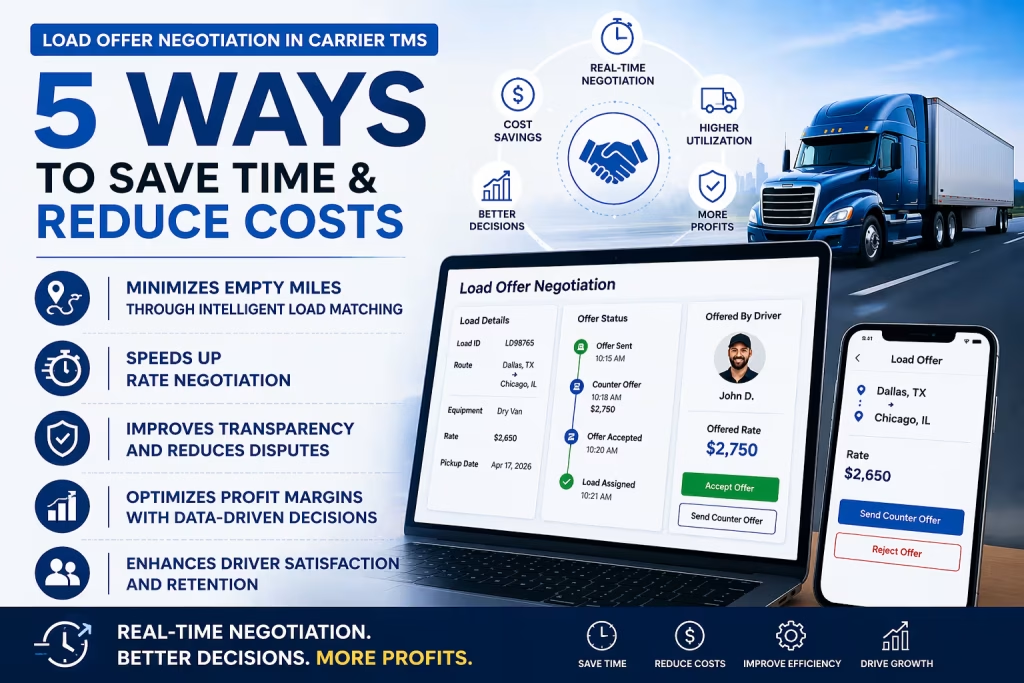
Introduction  Load offer negotiation in carrier TMS is a real-time digital process that enables carriers to manage freight rate negotiation efficiently through instant offers, counteroffers, and approvals within a centralized system.  Freight rate negotiation has traditionally relied on manual communication such as calls and emails, often leading to delays, missed opportunities, and higher operational costs.  Many carriers are now adopting advanced TMS platforms to manage rate discussions more efficiently and improve overall operational control.  With real-time load negotiation systems, carriers can streamline communication, improve decision-making speed, and reduce inefficiencies across dispatch operations.  Supported by insights from Dr. Nitin Shankar, who brings over 18 years of experience in transportation management systems and carrier operations, this structured approach helps carriers make more consistent and data-driven decisions.  In this blog, you’ll learn how this process improves rate negotiation, reduces costs, and enhances overall fleet performance.  You May Also Read: Smarter Load Assignments with Real-Time Rate Negotiation Key Takeaways  What Is Load Offer Negotiation in Carrier TMS  Load negotiation systems in modern TMS platforms enable dispatchers and drivers to manage freight rate discussions in real time through a centralized workflow.  Instead of relying on manual communication such as phone calls or emails, dispatchers can create structured load offers that include rate details, routes, and schedules. Drivers can instantly accept, reject, or submit counteroffers based on their availability and preferences.  This creates a transparent and centralized workflow where every step of the negotiation process is recorded and easily accessible. It reduces miscommunication, speeds up approvals, and ensures both dispatchers and drivers operate with the same information.  As a result, carriers can handle rate negotiations more efficiently, improve load assignment decisions, and maintain better control over operations.  Related Blog:Introducing Load Offer Negotiation: A Game-Changer in Carrier TMS Software How Load Offer Negotiation in Carrier TMS Works  Load negotiation within a TMS follows a structured, real-time workflow designed to eliminate delays and manual coordination.  1. Dispatchers Create and Send Load Offers  Dispatchers create load offers by adding key details such as route, rate, pickup and delivery points, and schedules. This ensures all necessary information is shared clearly from the start using modern dispatching tools.  2. Drivers Receive and Review Offers Instantly  Drivers receive load offers through mobile apps or driver interfaces. They can quickly evaluate the load based on availability, route preferences, and expected earnings.  3. Real-Time Counteroffers and Negotiation  If the proposed rate does not match expectations, drivers can submit counteroffers instantly. Dispatchers can accept or respond in real time, reducing negotiation time from minutes to seconds in many cases.  4. Final Approval and Load Assignment  Once both parties agree on the terms, the system confirms the offer and assigns the load automatically. This reduces delays and manual coordination.  5. Automated Tracking and Record Keeping  Every step of the negotiation process is recorded within the system. This ensures transparency, reduces disputes, and helps carriers analyze past decisions.  5 Ways Load Negotiation Helps Carriers Save Time and Reduce Costs  Load negotiation systems improve operational efficiency by reducing delays, lowering costs, and enabling faster decision-making. Here’s where the real operational impact becomes visible:  1. Minimizes Empty Miles Through Intelligent Load Matching  Load negotiation helps dispatchers assign nearby and relevant loads based on driver availability and location. Real-time visibility improves load matching and reduces empty miles, directly lowering fuel costs with better fuel management and increasing utilization.  2. Speeds Up Rate Negotiation  Traditional negotiation often involves calls and delays. With a real-time system, dispatchers and drivers can exchange offers and counteroffers instantly, reducing turnaround time significantly and improving fleet productivity.  3. Improves Transparency and Reduces Disputes  All offers, counteroffers, and final agreements are recorded within the system. This creates a transparent workflow, minimizes misunderstandings, and builds trust between dispatchers and drivers.  4. Optimizes Profit Margins with Data-Driven Decisions  TMS platforms use historical data, route performance, and cost insights to support better pricing decisions. This ensures decisions are not just fast, but financially optimized.  5. Enhances Driver Satisfaction and Retention  Drivers can review and negotiate load offers directly, giving them more control and visibility. This improves satisfaction, simplifies earnings visibility through driver payroll software, and supports long-term retention. How AI Improves Load Offer Negotiation in Carrier TMS  AI does not replace decision-making but strengthens it with real-time intelligence.  AI enhances load negotiation systems by improving rate decisions through faster analysis, smarter recommendations, and automated workflows.  1. AI-Powered Rate Analysis  AI analyzes historical rates, lane performance, fuel costs, and market trends to recommend optimal pricing. This helps carriers stay competitive while maintaining profitability.  2. Smart Load Recommendations  AI matches drivers with the most suitable loads based on location, availability, and past performance. This improves load distribution and reduces idle time.  3. Automated Approvals and Escalations  Routine load offers can be automatically approved based on predefined rules, while exceptions are flagged for manual review. This helps accelerate workflows while minimizing operational bottlenecks.  4. Predictive Decision-Making  AI forecasts demand patterns, pricing trends, and operational risks, allowing carriers to plan and negotiate more strategically.  Real-World Example of Load Offer Negotiation in Carrier TMS  A mid-sized carrier with 100+ trucks experienced delays in rate negotiation due to manual coordination, leading to higher idle time and slower dispatch operations.  In many cases, negotiation took around 15–20 minutes per load, limiting daily productivity.  After adopting a real-time load negotiation system, the process became structured and significantly faster.  Key Improvements  This highlights how structured negotiation systems directly impact both operational speed and profitability.   Why Carriers Use Fast Forward TMS for Load Offer Negotiation  Fast Forward TMS helps carriers improve freight rate negotiation by providing a structured and real-time system for managing load offers more efficiently and accurately.  Simplified Operational Workflows  Reduces dependency on spreadsheets, frequent check calls, and manual coordination across daily fleet operations.  Real-Time Negotiation Communication  Enables instant exchange of load offers, counteroffers, and approvals between dispatchers and drivers in real time.  Centralized Visibility and Control  Provides clear insights into load performance, operational costs, and overall fleet efficiency through a single system.  Proven Experience and Industry Trust  Backed by 7+ years of TMS delivery, 18+ years of expertise, and trusted by over 1,500 companies globally.  Scalable Setup and Easy Adoption  Supports quick onboarding, easy team training, and seamless scaling

Load Offer Negotiation in Carrier TMS: 5 Ways to Save Time and Reduce Costs  Read More »

How to Negotiate Truck Freight Rates Effortlessly with TMS

How to Negotiate Truck Freight Rates Effortlessly with TMS

Introduction Imagine a busy freight dispatcher juggling endless phone calls and messages, trying to agree on freight rates with drivers and shippers—all while racing against the clock to keep loads moving. Trying to negotiate truck freight rates the old-fashioned way is often slow, confusing, and prone to errors. But what if there was a smarter way—a way to negotiate rates clearly, quickly, and in real time? This is where modern Transportation Management Systems (TMS) with powerful tools come into play to help carriers negotiate truck freight rates more efficiently. Picture dispatchers and drivers seamlessly exchanging rate offers and counter-offers within one platform, with instant visibility into who’s available and where. This technology transforms chaotic negotiations into smooth conversations, making it easier to close deals, reduce empty miles, and boost profits. In this blog, discover step-by-step how carriers can use these smart tools to automate rate negotiation, lower transportation costs, and revolutionize their freight business. Welcome to the future of truck freight rate negotiation. Key Takeaways: Effortless Truck Freight Rate Negotiation What is Truck Freight Rate Negotiation and Why Effective Negotiating Shipping Rates Matter Truck freight rate negotiation means agreeing on the price carriers charge to haul loads. This includes contract rates, spot market rates, or single shipments. In 2025, factors like fuel costs, driver availability, and regulations affect how to negotiate trucking rates. According to ACT Research’s September 2025 update, the average US dry van spot rate is about $1.62 per mile, while contract rates average approximately $2.14 per mile, reflecting the latest market trends in freight pricing. Carriers skilled in how to negotiate truck freight rates can reduce empty miles, improve truck use, and increase profits. Effective negotiation also builds strong shipper and driver relationships, leading to smoother and faster deliveries.Also Read – Introducing Load Offer Negotiation: A Game-Changer in Carrier TMS Software How Load Offer Negotiation Software Revolutionizes Freight Rate Negotiation Load offer negotiation software fundamentally changes how carriers manage freight rate discussions by enabling instant, real-time, two-way communication between dispatchers and contract drivers. Unlike traditional static rate postings that rely on delayed phone calls or emails, this solution allows drivers to accept, decline, or counter-load rate offers seamlessly within the Transportation Management System (TMS) platform. Benefits of freight rate negotiation Software By transforming freight rate negotiation into a streamlined, digital process, load offer negotiation software saves valuable time, minimizes errors, and enhances operational efficiency, helping carriers stay competitive in a dynamic freight market.Also Read – How Load Offer Negotiation Is Transforming Carrier TMS Software in 2025 Step-by-Step Guide: How to Negotiate Trucking Rates Efficiently Using TMS Learning how to negotiate truck freight rates can be complicated, but using a modern Transportation Management System (TMS) makes the process smoother and faster. Here’s how carriers can negotiate truck freight rates step-by-step using TMS automation features. Step 1: Centralize Rate Offers and Acceptances with Your TMS Start by using your TMS platform to send load rate offers directly to your contracted or partner drivers. Instead of juggling calls, texts, or emails, the TMS keeps all negotiations in one place. Drivers can quickly accept the offered rate or reply with counter-offers inside the system. This centralization, powered by dispatching software and truck load management software, reduces confusion, prevents lost messages, and keeps negotiation history organized efficiently. It also helps dispatchers manage multiple load offers simultaneously without missing responses, improving workflow efficiency and communication transparency. Step 2: Match Loads Smarter Using Driver Availability and Geo-Location A key feature in advanced TMS platforms is driver availability control combined with geo-location tracking—enabled only with driver consent to protect privacy. With driver mobile app integration, drivers mark themselves as available or unavailable, giving dispatchers real-time insight into who is ready to take loads. Geo-location data lets dispatchers assign freight to the drivers closest to the pickup point, cutting down on empty miles and reducing fuel waste. This smart matching accelerates load assignments, cuts unnecessary travel, and improves driver satisfaction by respecting their preferences and schedules. Step 3: Use Market Data and Analytics to Guide Your Rate Negotiations Leverage the carrier TMS software’s powerful analytics software to access real-time market data on freight rates, fuel prices, and operational costs for smarter negotiations. These insights help carriers understand current industry trends and price their services competitively without sacrificing profit margins. By analyzing your costs and tracking KPI performance regularly, you can make informed decisions on which rates to offer, when to negotiate higher rates, and where to optimize resources. Data-driven negotiations minimize guesswork and strengthen your position in the freight market. Step 4: Automate Agreements and Dispatch to Speed Up Operations Once both parties agree on a freight rate, the TMS automatically finalizes the deal. It schedules the load, updates driver and dispatcher dashboards, and sends notifications confirming the assignment. This automation integrates easy onboarding and fuel management features, eliminating manual paperwork, reducing human errors, and avoiding communication delays. It also allows dispatchers to focus on managing operations rather than chasing down approvals or clarifications. In summary, automating the negotiation and dispatch process with TMS ensures a seamless, fast, and transparent workflow—helping carriers close deals quicker and keep freight moving efficiently.Watch how real-time rate negotiation works in action with Load Offer Negotiation. Comparing Traditional Freight Rate Negotiation with Load Offer Negotiation Software Carriers face challenges using traditional freight rate negotiation methods, such as lengthy back-and-forth communications, fixed-rate offers, and minimal visibility into driver availability. These issues often lead to delays, errors, and missed opportunities. Modern load offer negotiation software changes the game by enabling real-time, two-way communication, flexible rate discussions, and insights into driver availability and location. This helps carriers speed up negotiations, reduce empty miles, and improve load acceptance rates. The table below compares these approaches to highlight how negotiation software benefits freight operations and decision-making. Feature / Benefit Traditional Freight Rate Negotiation Load Offer Negotiation Software Negotiation Speed Slow, often involves multiple calls and emails Up to 3× faster with real-time offers and counter-bids Communication Method Phone calls, texts, or emails Built-in chat for

How to Negotiate Truck Freight Rates Effortlessly with TMS Read More »

Scroll to Top