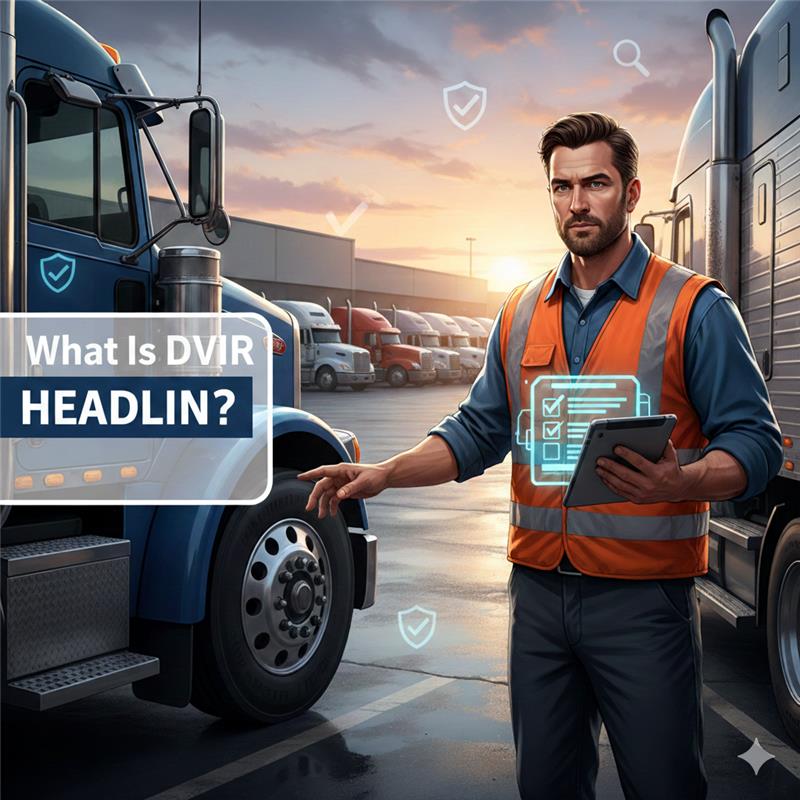
What Is DVIR? A Complete Trucking Guide to Daily Vehicle Inspection Reports
Introduction A Daily Vehicle Inspection Report (DVIR) is one of the most critical compliance requirements in trucking—and also one of the most overlooked. Most roadside inspection issues don’t start with a breakdown.They start with incomplete or unclear DVIR records. In real operations, a truck can be mechanically fine and still get flagged during a DOT inspection—because the report doesn’t clearly show what was inspected, what was found, and what was fixed. Under enforcement by the Federal Motor Carrier Safety Administration, a poorly documented driver vehicle inspection report is treated as a compliance failure, not just paperwork. That’s why DVIR isn’t just a form. It’s your proof of compliance before the truck moves. Key Takeaways What is DVIR? A Daily Vehicle Inspection Report (DVIR) is a required record that commercial drivers use to document the condition of a vehicle before and after a trip. Its purpose is straightforward: Under regulations set by the Federal Motor Carrier Safety Administration, this report serves as documented proof that a vehicle was inspected and safe to operate. In day-to-day operations, DVIR is not just a checklist. It’s the record that connects: DVIR is the documentation inspectors rely on to confirm that safety checks were actually performed—not just assumed. FMCSA DVIR Requirements Explained DVIR requirements are defined under federal regulations and must be followed by both drivers and carriers as part of daily compliance. Key Requirements: Why This Matters During roadside inspections, officers don’t just check the vehicle—they check whether your records show that defects were reported, repaired, and verified. If documentation is missing or incomplete, it can lead to: DVIR is not just a requirement—it’s the record used to validate whether your process is actually being followed. What Must Be Included in a DVIR? A Daily Vehicle Inspection Report (DVIR) is expected to capture the condition of all safety-critical components that can affect whether a truck is allowed to operate. In practice, drivers are expected to inspect and document: These are not random checklist items.They are the same components inspectors focus on during a roadside inspection. What qualifies as a reportable defect? A defect must be recorded when it affects safety, compliance, or inspection outcome. This typically includes: In real operations, the question is simple:If an inspector notices it, it should already be in your DVIR. Why this matters in real inspections During a roadside inspection, officers don’t just look at the truck—they compare the vehicle condition with the DVIR record. Common failure scenario: Result: This is why DVIR is treated as a verification record, not just an inspection form. Pre-Trip vs Post-Trip Inspection Both inspections are part of the DVIR process, but they serve two different compliance purposes in daily operations. Pre-Trip Inspection (Before Driving) The pre-trip inspection is performed before the vehicle is operated. Its purpose is not just checking the truck—it is verifying that: In practice:Drivers are expected to confirm condition, not discover new issues. Post-Trip Inspection (After Driving) The post-trip inspection is performed at the end of the trip. Its role is to: This is where most compliance issues originate—because defects are either missed, unclear, or not documented properly. Key Difference (What Actually Matters) Both are connected: Why This Matters in Inspections During a roadside inspection, officers may check: If this cycle is broken: It creates a compliance gap, even if the truck is safe. Paper DVIR vs Electronic DVIR: Which Is Better? Both paper and electronic DVIR methods meet basic compliance requirements, but they differ significantly in how reliably they support inspections, audits, and day-to-day operations. Paper DVIR (Manual Process) Paper-based DVIR relies on handwritten reports that are stored physically. In real operations, this often leads to: Paper DVIR may meet minimum requirements, but it creates high documentation risk during audits. Electronic DVIR (Digital Process) Electronic DVIR allows drivers to complete inspections using mobile devices or integrated systems. This enables: Digital DVIR strengthens compliance by making records consistent, accessible, and verifiable. Key Difference (What Actually Impacts Compliance) Why This Matters in Real Inspections During audits or roadside inspections, the biggest challenge is not whether inspections were done—it’s whether they can be proven clearly and quickly. Common scenario: Result: Electronic DVIR reduces this risk by ensuring that every inspection and repair is logged, tracked, and easy to retrieve. Common DVIR Mistakes Most DVIR compliance issues are not caused by skipped inspections.They happen when the driver vehicle inspection report is incomplete, unclear, or not properly verified. 1. Incomplete or Unclear Defect Reporting Defects must be described clearly and specifically. Vague entries make it difficult to verify repairs and can lead to inspection issues. 2. Missing Review of Previous DVIR Drivers are required to review the previous report before operating the vehicle. Skipping this step creates a gap in the inspection process. 3. No Repair Verification If a defect is reported but not certified as repaired, it is treated as unresolved during inspections. 4. Weak Record Retention Inspection records must be complete and easy to retrieve. Missing or disorganized records increase audit risk. 5. Treating DVIR as Routine Rushed or checklist-based inspections often miss critical details. This leads to inconsistent documentation and compliance gaps. How to Stay DVIR Compliant Maintaining strong DVIR compliance requires consistency and proper systems. Fleets should focus on accurate inspections, proper documentation, timely repairs, and organized record-keeping. Using electronic DVIR systems can further improve visibility and reduce manual errors. Training drivers and regularly reviewing inspection records also helps ensure alignment with FMCSA DVIR requirements. Real-World Insight It’s not unusual to see a truck get held during an inspection just because the DVIR wasn’t filled out properly. Everything on the vehicle checks out—but the report is incomplete, or a defect wasn’t clearly written down. At that point, it’s no longer about the condition of the truck. It comes down to what’s on record. Conclusion Most DVIR issues don’t come from major defects—they come from missed or unclear documentation. That’s why it’s not just about completing inspections, but doing them properly and keeping records consistent. If your process still relies on paper or scattered reports, it may be time to simplify it. Many fleets now use systems like Fast Forward TMS, trusted by 1,500+
What Is DVIR? A Complete Trucking Guide to Daily Vehicle Inspection Reports Read More »