
Trucking Dispatch Software vs. TMS Software: Key Differences Explained
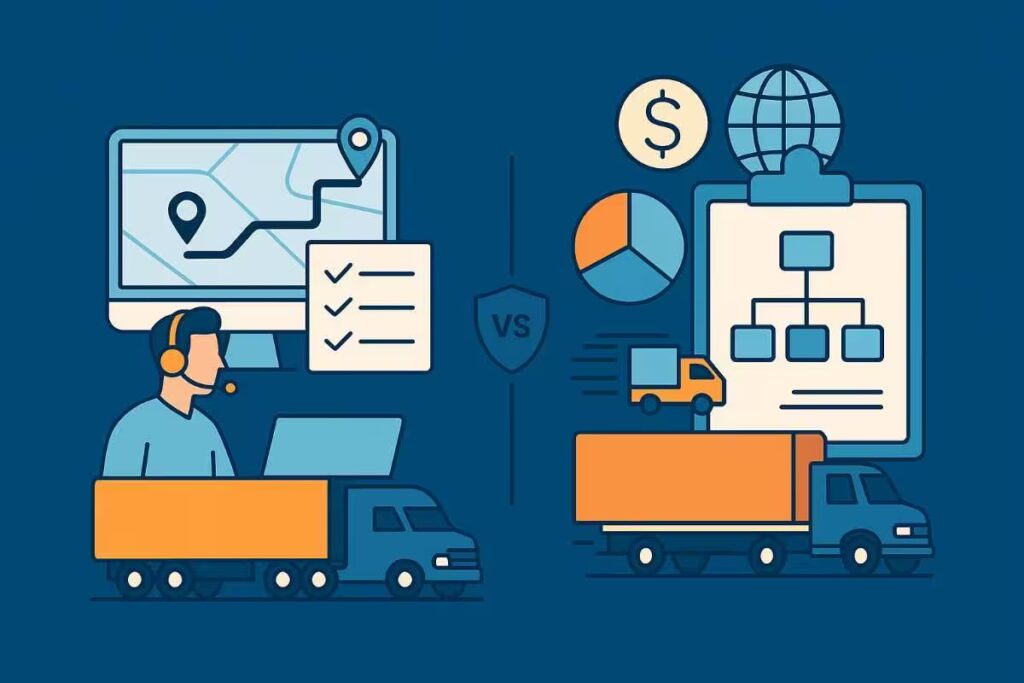
The trucking and logistics industry is undergoing rapid digital transformation. Global adoption of fleet technology is rising, with the Transportation Management System (TMS) market expected to grow from USD 16.69 billion in 2025 to USD 43.82 billion by 2034 (Precedence Research). This growth shows how carriers, freight brokers, and logistics providers worldwide are investing in smarter systems to cut costs, improve efficiency, and stay competitive. Within this shift, two types of solutions stand out: Trucking Dispatch Software and TMS Software. Both improve transportation efficiency, but they serve very different purposes. Dispatch software focuses on daily fleet operations like load assignments, routing, and driver communication. A TMS, on the other hand, manages the entire transportation lifecycle—from planning and carrier management to billing, compliance, and analytics. This guide explains the key differences, use cases, and practical considerations to help you choose the right system for your trucking business. Key Takeaways: Trucking Dispatch Software vs. TMS Software What is Trucking Dispatch Software? Trucking dispatch software is a solution designed to manage the day-to-day operations of a trucking business. It acts as a central system where dispatchers can assign loads, track drivers, plan routes, and maintain real-time communication. For many small to mid-sized fleets, this type of software provides a simple and efficient way to handle operations without the complexity of a full transportation management system. It helps reduce manual work, improve coordination, and keep deliveries on schedule. Core Functions In simple terms, trucking dispatch software focuses on execution. It ensures that daily operations run smoothly, making it a practical choice for fleets that need control and efficiency without advanced system complexity. Also Read – How Trucking Dispatch Software Optimizes Load Planning & Delivery What is TMS Software? A Transportation Management System (TMS) is a comprehensive platform that manages the entire transportation lifecycle of a trucking business. Unlike dispatch software, which focuses on daily execution, a TMS connects planning, operations, finance, and analytics into one system. It is commonly used by growing fleets, freight brokers, and logistics providers that need better visibility, automation, and control across multiple operations. Key Capabilities In simple terms, a TMS goes beyond dispatch. It helps carriers not just manage operations, but also optimize performance, control costs, and scale their business with better visibility. Also Read – What Is a Transport Management System (TMS) and How Does It Work? Key Differences Between Trucking Dispatch Software and TMS Software Choosing between trucking dispatch software and a transportation management system (TMS) depends on how complex your operations are and how much control you need across your business. The core difference lies in scope. Dispatch software is built to handle daily execution such as assigning loads and coordinating drivers, while a TMS manages the entire transportation process from planning to financial tracking. Comparison Overview Factor Trucking Dispatch Software TMS Software Primary Focus Day-to-day operations and dispatch End-to-end transportation management Best For Small to mid-sized fleets Growing fleets, brokers, logistics providers Core Functions Load assignment, tracking, communication Planning, billing, compliance, analytics Ease of Use Simple and quick to adopt More advanced with structured onboarding Integration Limited integrations Supports GPS, financial systems, and more Scalability Suitable for smaller operations Built for scaling and complex workflows Decision Support Basic reporting Advanced analytics and insights What This Means If your priority is to simplify dispatch and manage daily operations efficiently, dispatch software is usually enough. But if you need deeper control over planning, finances, and performance, a TMS provides a more complete solution.Key Advantages of Trucking Dispatch Software Trucking dispatch software is built for speed and simplicity in daily operations. It helps teams stay organized and responsive without adding system complexity. Best suited for fleets focused on smooth day-to-day execution. Also Read – Top 5 Ways a TMS Software Reduces Manual Work for Dispatchers Key Advantages of TMS Software for Fleet Operations TMS Software (Transportation Management System) delivers a comprehensive, end-to-end solution for larger fleets, freight brokers, and logistics providers. Unlike trucking dispatch software, TMS covers the entire transportation lifecycle, offering advanced capabilities such as load planning, multi-carrier management, invoicing, compliance, and performance analytics. This software supports scalability and enables data-driven decision-making, making it ideal for operations that handle complex workflows and require long-term strategic growth. Core Benefits: Also Read – Top 10 Benefits of Using TMS for Carriers in 2025 Key Advantages of TMS Software TMS software is designed to bring structure and control to larger or growing operations. It helps businesses move beyond basic dispatch and manage operations more strategically. Best suited for businesses looking to optimize and scale operations. Factors to Consider When Choosing Between Dispatch Software and TMS Choosing the right solution depends on how your business operates today and how you plan to grow. Instead of focusing only on features, it’s important to evaluate your operational needs and long-term goals. Key Factors Selecting the right solution is not just about current needs—it’s about choosing a system that supports both efficiency today and growth in the future. Fast Forward TMS: A Practical Solution for Dispatch and Growth Many carriers need a system that is simple to use but still powerful enough to support growth. Fast Forward TMS is built to deliver both. It combines dispatch efficiency with broader management capabilities, allowing fleets to handle operations, billing, and tracking in one place. Key Highlights It offers a balanced solution for carriers looking to simplify operations while preparing for long-term growth. Also Read- How Fast Forward TMS Stands Out as the Best Choice in Carrier TMS Software Conclusion Choosing between trucking dispatch software and a transportation management system comes down to how your operations are structured and where you want to go next. Dispatch software is a practical choice for managing daily operations with simplicity and speed. A TMS, on the other hand, provides deeper control, better visibility, and the ability to scale as your business grows. The right decision depends on your fleet size, operational needs, and long-term goals. By understanding the strengths of each approach, carriers can select a solution that improves efficiency today while supporting future growth. FAQs
Trucking Dispatch Software vs. TMS Software: Key Differences Explained Read More »