April 2026

How Fast Forward TMS Scales With You as Your Fleet Grows 

How Fast Forward TMS Scales With You as Your Fleet Grows 

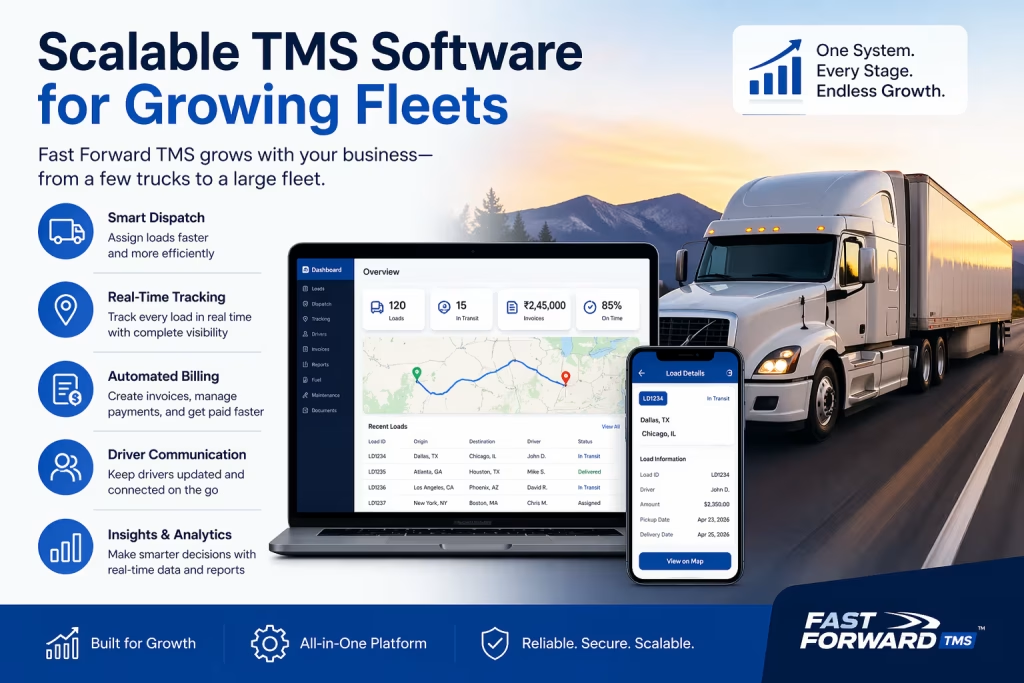
Introduction Scalable TMS software becomes essential the moment your trucking business starts expanding.  What works with 5 trucks rarely works at 20. Dispatch starts getting harder to manage without the right dispatching software, driver communication becomes inconsistent, and billing delays begin affecting cash flow. Growth brings opportunity, but without the right trucking management software, it also creates operational pressure.  A platform like Fast Forward TMS is designed to handle this shift. As a reliable carrier TMS software, instead of forcing you to change systems as you grow, it evolves with your operations, keeping everything structured from day one.  This perspective comes from Dr. Nitin Shankar, Product Owner at Fast Forward TMS, who brings over 18 years of experience in transportation technology, carrier finance, and SaaS platforms. His work focuses on building systems that solve real operational challenges for carriers and dispatch teams.  Key Takeaway  What Happens When Your Fleet Starts Growing  Fleet growth sounds good on paper, but operationally, this is where things start slipping.  At 5 to 10 trucks, dispatch is manageable. Once you cross that, small inefficiencies start showing up. Load assignments take longer without proper truck load management software, drivers call more frequently for updates, and coordination starts depending on constant follow-ups instead of structured dispatch software for trucking.  As the fleet grows further, these small issues compound. Dispatch becomes reactive instead of planned. Drivers miss updates. Billing starts lagging behind operations. You are moving more loads, but with less control.  This is not a capacity problem, it is a system problem.  That is exactly where Fast Forward TMS changes the equation. Instead of letting growth create pressure, it keeps dispatch, communication, and financial workflows structured as your fleet expands with a connected fleet management software.  How Fast Forward TMS Scales With You at Every Stage  Growth in trucking is not one jump, it happens in stages. The real advantage of Fast Forward TMS is that you do not need to change systems at each stage. It evolves with your operations as a scalable carrier TMS software designed for TMS for small to large fleets.  Stage 1: Small Fleet (1–10 Trucks)  At this stage, most operations are manual. Dispatch happens through calls, updates are scattered, and tracking is limited.  Fast Forward TMS helps you:  Bring dispatch into one structured system Track loads and drivers in one place Reduce dependency on calls and manual coordination  You move from managing chaos to building a clear operational foundation with modern trucking management software.  Stage 2: Growing Fleet (10–50 Trucks)  This is where things usually start breaking.  Fast Forward TMS helps you:  Centralize dispatch and remove confusion Keep drivers updated with real-time visibility Automate invoicing and reduce payment delays Keep dispatch, drivers, and billing connected  Instead of reacting to problems, you start controlling operations using a reliable fleet management software.  Stage 3: Scaling Fleet (50+ Trucks)  At this level, complexity increases fast and mistakes become expensive.  Fast Forward TMS supports you by:  Automating workflows across dispatch, tracking, and billing Managing multiple drivers, routes, and loads efficiently Providing real-time operational visibility Giving insights to improve decisions and performance  Here, the system is no longer just a tool, it becomes part of your growth engine powered by carrier TMS software.  In simple terms, you are not changing how you work every time you grow. The system grows with you, keeping everything structured at every stage.  Key Capabilities That Make Scaling Easy  What makes Fast Forward TMS effective is not just features, but how those features support growth without adding complexity. It works as a connected fleet management software built for scaling operations.  Smart Dispatch Management  As load volume increases, dispatch can become difficult to manage. The system keeps assignments structured so you can handle more loads efficiently with reliable dispatch software for trucking.  Real-Time Tracking and Visibility  You always have clear visibility into your trucks and shipments with truck tracking software.This reduces constant follow-ups and helps you make faster, better decisions.  Automated Billing and Settlements  As operations grow, manual invoicing leads to delays and errors. Automation ensures billing stays accurate and improves cash flow.  Driver Communication System  Drivers receive updates directly within the system through a driver mobile app instead of relying on calls. This keeps communication consistent and reduces gaps.  Compliance and Documentation Management  Managing documents manually becomes risky at scale. The system keeps records organized and helps maintain compliance as your fleet expands.  Analytics and Performance Insights  With better data visibility through analytics software, you can track performance, identify inefficiencies, and make smarter business decisions.  Each capability works together to ensure that growth remains structured and manageable.  Real Impact on Growing Trucking Businesses  When your system scales with your fleet, growth becomes easier to manage instead of harder to control.  With Fast Forward TMS, operations become more stable as your fleet expands:  As your fleet grows, these improvements make a clear difference. You are not just handling more loads, you are managing them with better control and less operational stress.  Signs Your Current System Is Not Built to Scale  Growth should make operations smoother, not more stressful. If the opposite is happening, your current system may be the problem.  Here are clear signs your setup is not built for scaling:  You still rely heavily on spreadsheets or manual tracking instead of proper dispatch software for trucking Dispatch depends on one or two people to manage everything Drivers keep calling for updates instead of getting real-time visibility Billing delays are increasing as load volume grows Errors are becoming more frequent with expansion  These issues do not appear suddenly. They grow with your fleet and slowly start affecting efficiency, cash flow, and overall control.  This is the point where many carriers either struggle to keep up or switch to a reliable carrier TMS software that can handle growth.  With Fast Forward TMS, these gaps are addressed early, so scaling does not turn into operational pressure.  Why a Carrier-Focused TMS Makes the Difference  Not every TMS is built for carriers, and this difference becomes clear as your fleet grows.  Many tools in the market are generic trucking management software designed for brokers, not for managing trucks, drivers, and daily operations. This creates gaps in execution.  Fast Forward TMS is built specifically for carriers, which makes a practical difference:  As your fleet grows, this becomes important. A system designed as a proper fleet management software helps

How Fast Forward TMS Scales With You as Your Fleet Grows  Read More »
Fast Forward TMS Implementation: What to Expect Step-by-Step 

Fast Forward TMS Implementation: What to Expect Step-by-Step 

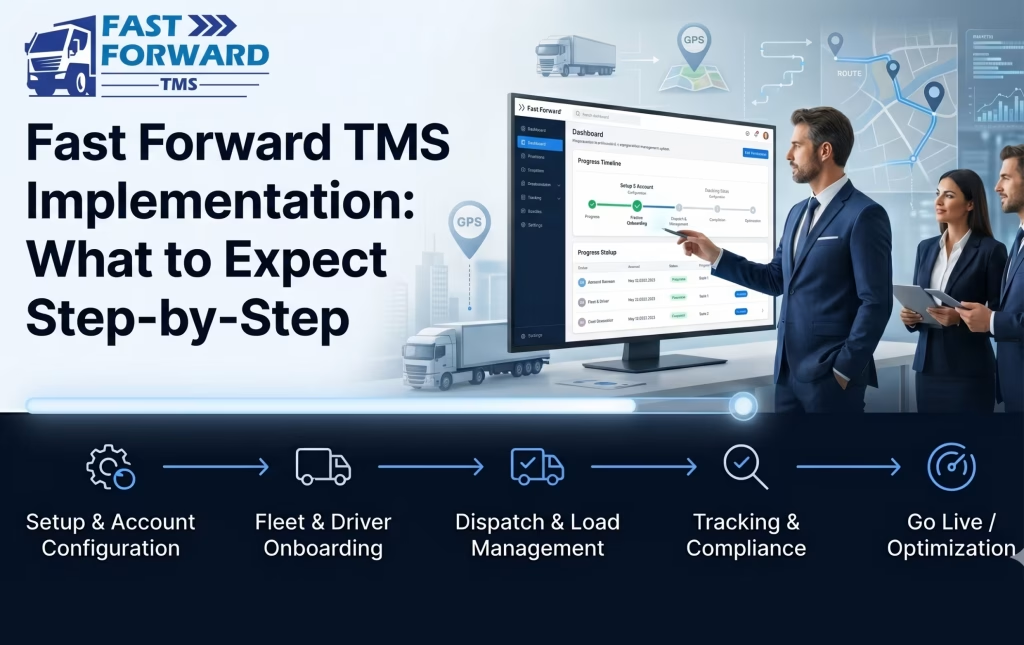
Introduction  Fast Forward TMS Implementation is not just a technical upgrade. It directly impacts how efficiently your trucking business manages dispatch, tracking, driver operations, and billing. According to Freight Waves, over 91% of trucking companies with more than 20 trucks already use a Transportation Management System, while only 33% of small fleets have adopted it. This gap highlights a major opportunity for growing carriers to improve efficiency and stay competitive. For most carriers, the real challenge is not choosing the right system, but understanding how the implementation process works and how to execute it without disrupting daily operations. With Fast Forward TMS, the implementation is designed around real carrier workflows, ensuring a faster, more practical transition from day one. Carriers that define their workflows clearly before setup often experience a smoother and more efficient implementation process. This guide walks you through each stage of implementation, helping you move forward with clarity, confidence, and minimal disruption. You Make Also Like To Read : TMS Implementation Guide: 7 Proven Steps to Ensure Success Key Takeaways  What to Expect During Implementation  When implementing Fast Forward TMS, you can expect a structured process that moves from preparation to setup, data migration, training, and final deployment.  Each stage is focused on aligning the system with your actual business workflows, ensuring minimal disruption and faster adoption. Most businesses experience a smooth transition when workflows are clearly defined before setup and data is properly prepared.  Before You Start (Preparation)  Before implementation begins, a short preparation phase ensures everything runs smoothly.  You need to decide which modules you will use first, such as dispatch, billing, or tracking, so the setup remains focused. Your existing data including drivers, fleet, customers, and rates should be organized and cleaned to avoid errors later.  It is also important to assign one responsible person from your team who will coordinate the process and provide required inputs. Ensuring your team has system access and a structured easy onboarding process will help avoid delays. This step ensures the implementation starts with clarity and avoids unnecessary rework.  Step 1: Workflow Assessment  The first step is to understand how your current operations work so the system can be configured correctly.  Your dispatch flow, billing process, and driver management are reviewed to identifyhow loads are assigned and optimized through load offer negotiation, how communication happens, and how invoices and settlements are handled.  The goal is to carry forward what works and eliminate inefficiencies such as manual tasks or delays. By the end of this step, your workflows are clearly defined, allowing accurate system setup.  Step 2: System Setup & Configuration  Once workflows are defined, the system is configured based on your business operations.  This includes setting up company details, drivers, fleet, rate structures, fuel management, and load management rules. Instead of using default settings, the system is aligned with your actual workflow to ensure smooth day-to-day operations.  A properly configured setup reduces errors and ensures your team can start using the system without confusion.  Step 3: Data Migration  After setup, your existing data is added to the system.  This includes driver records, fleet details, customer information, and financial data. Only relevant and cleaned data is migrated to maintain accuracy and avoid clutter.  The focus here is to ensure continuity, so your operations can continue without losing important historical or operational data.  Step 4: Training & Onboarding  Once data is in place, your team is trained on how to use the system.  Dispatchers learn how to assign and manage loads using dispatching software, drivers understand how to use the mobile app, and finance teams handle billing, settlements, and driver payroll software Proper training ensures your team is confident using the system, which directly impacts adoption and efficiency.  Step 5: Testing & Go-Live  Before full deployment, the system is tested using real or sample operations.  This step verifies that dispatch, truck tracking software, and billing are working correctly. Any gaps or issues are identified and fixed before going live.  Once everything is validated, the system becomes your primary operational platform.  Common Fast Forward TMS Implementation Mistakes and How to Avoid Them  Many implementation issues come from avoidable mistakes.  Skipping workflow assessment often leads to incorrect system setup. Poor data quality creates operational errors, while lack of training results in low team adoption. Trying to implement everything at once without a clear plan can also slow down the process and create confusion.  In most cases, these issues are not system-related but process-related. Businesses that define workflows early, prepare clean data, and follow a structured approach experience a much smoother implementation.  Addressing these challenges during the preparation and planning stage helps prevent delays and ensures a faster, more efficient rollout.  How Long Does Fast Forward TMS Implementation Take?  The implementation timeline for Fast Forward TMS depends on your fleet size, data readiness, and workflow complexity.  Most implementations follow a predictable range. Small fleets typically complete setup within one to two weeks, while mid-sized operations may take two to four weeks. Larger businesses with more complex workflows or integrations may require additional time.  In most cases, delays are not caused by the system, but by unprepared data or unclear workflows. Businesses that prepare their data in advance and define workflows early often complete implementation faster and with fewer issues.  Conclusion  Implementing a TMS becomes much simpler when the process is structured and focused.  With Fast Forward TMS, businesses can transition from manual operations to a streamlined, automated system without unnecessary complexity.  By following a clear step-by-step approach, you can ensure a smooth implementation and start improving efficiency, visibility, and insights using analytics software from day one.  Ready to simplify your operations and implement a system built for real carrier workflows?  Start your Fast Forward TMS implementation today and reduce manual work, improve efficiency, and scale your trucking business with confidence.  Frequently Asked Questions (FAQs)

Fast Forward TMS Implementation: What to Expect Step-by-Step  Read More »

How to Get Started With Fast Forward TMS in Less Than 48 Hours 

How to Get Started With Fast Forward TMS in Less Than 48 Hours 

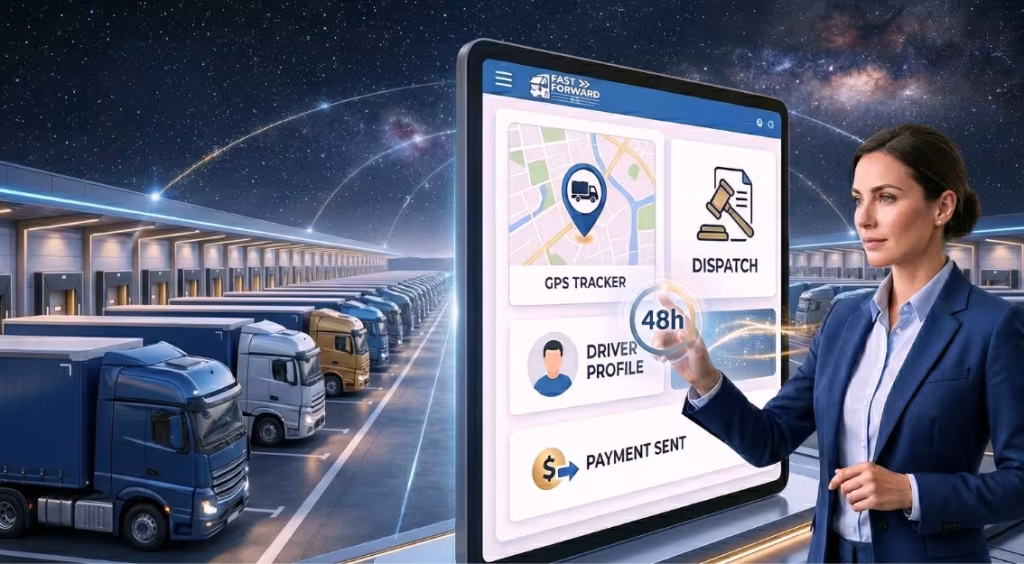
Fast Forward TMS can be fully set up in less than 48 hours, allowing carriers to onboard drivers, configure dispatch, enable tracking, and start billing without complex technical processes.  This makes it one of the fastest ways to implement a carrier TMS or trucking management software without long onboarding cycles.  Traditional transportation management systems often take weeks to implement, creating delays, increasing manual work, and slowing down operations. Fast Forward TMS eliminates this complexity with a structured onboarding approach designed specifically for small and mid-sized carriers.  Backed by 7+ years of TMS delivery experience and 18+ years of transportation technology expertise, Fast Forward TMS is trusted by 1,500+ companies, with 95% of carriers reporting smoother dispatch workflows after adoption.  Key Takeaways  How Fast Forward TMS Reduces Setup Time Compared to Traditional TMS  Traditional transportation management systems often take 2 to 6 weeks to implement due to complex configurations, multiple integrations, and dependency on technical teams.  These delays typically occur because carriers need to manually set up dispatch workflows, onboard drivers, connect different tools, and manage scattered operational data during onboarding.  As a result, many carriers experience slower implementation, increased manual effort, and delayed transition to a fully digital system.  Fast Forward TMS is designed to eliminate these challenges by simplifying the entire onboarding process and focusing only on what carriers actually need to get started quickly.  What Makes Fast Forward TMS Faster to Set Up  What You Need Before Setting Up Fast Forward TMS  To set up Fast Forward TMS within 48 hours, having the right operational information prepared in advance is essential. This helps avoid onboarding delays and ensures a smooth transition from setup to live operations.  Before you begin, make sure you have the following details ready:  Preparing this information in advance allows you to quickly configure dispatch, enable tracking, and set up billing without interruptions.  How to Set Up Fast Forward TMS in Less Than 48 Hours (Step-by-Step)  Fast Forward TMS follows a structured onboarding process designed specifically for carrier operations. By completing the steps below in sequence, you can configure your system and start dispatching, tracking, and billing within 48 hours.  Step 1: Create Your Account and Access the Dashboard Start by creating your account and logging into the platform. Review the dashboard to understand key modules such as dispatch, drivers, loads, and billing.  This step ensures you understand the system layout before entering operational data.  Step 2: Add Company, Drivers, and Fleet Information Enter your company details, onboard drivers, and add fleet information including trucks and capacity.  This step builds the operational foundation required for dispatch and tracking.  Step 3: Set Up Dispatch Workflow and Load Management Create loads, define routes, and assign drivers to shipments.  This is the core operational setup where your dispatch process becomes structured and system-driven instead of manual.  Step 4: Enable Driver Connectivity and Real-Time Tracking Connect drivers through the mobile app or system interface and enable real-time tracking.  This allows you to monitor truck movement, improve communication, and gain full visibility into operations.  Step 5: Configure Rates, Billing, and Invoicing Set up rate confirmations, pricing structures, and payment terms.  This ensures that completed loads are automatically converted into invoices, reducing manual billing work and improving cash flow.  Step 6: Test Workflows and Go Live Review all configurations, test dispatch, tracking, and billing workflows, and make final adjustments.  Once verified, your system is fully operational and ready for daily use.  What You Can Achieve Within 48 Hours of Using Fast Forward TMS  Within just 48 hours of setting up Fast Forward TMS, your operations shift from manual and fragmented processes to a fully structured, system-driven workflow.  Instead of relying on calls, spreadsheets, and disconnected tools, you gain complete control over dispatch, tracking, and billing from a single platform.  Start Dispatching Without Delays  Assign loads, manage routes, and coordinate drivers directly within the system without manual follow-ups or back-and-forth communication.  Get Real-Time Visibility Across Your Fleet  Track truck movement, monitor driver activity, and stay updated on operations without needing constant calls or status checks.  Generate Invoices Immediately After Load Completion  Convert completed loads into invoices instantly, reducing billing delays and improving cash flow consistency.  Centralize Driver and Fleet Management  Manage all driver and vehicle information in one place, making it easier to handle assignments, updates, and operations at scale.  Reduce Manual Work and Operational Errors  Replace scattered workflows with a structured system that minimizes coordination effort, reduces errors, and improves overall efficiency.  Conclusion:   Setting up a transportation management system no longer needs to be a time-consuming or complex process.  Fast Forward TMS simplifies onboarding with a structured approach that allows carriers to go live in less than 48 hours. From adding drivers and managing dispatch to enabling tracking and automating billing, everything is designed to work together in a single, easy-to-use platform.  For carriers still relying on manual processes or disconnected tools, this shift can significantly improve operational efficiency, reduce delays, and create a more controlled workflow.  If you are looking to streamline your operations, improve visibility, and accelerate your billing cycle, Fast Forward TMS provides a practical and scalable solution built specifically for modern carrier needs.  Frequently Asked Questions  

How to Get Started With Fast Forward TMS in Less Than 48 Hours  Read More »

Scroll to Top