Guide

Top Trucking Industry Trends in 2026 That Will Reshape Fleet Operations

Top Trucking Industry Trends in 2026 That Will Reshape Fleet Operations

Introduction: Why 2026 Is a Defining Year for the Trucking Industry One of the most important trucking industry trends in 2026 is the shift from survival mode to data-driven, margin-focused operations. Freight industry trends show that freight demand is uneven, capacity is more regional, and technology is no longer optional. Insights from the Trucking Trends Report confirm that fleets must rely on real-time data, automation, and smarter planning. As trucking industry trends continue to evolve, fleet owners, carriers, and dispatch teams must prepare for better visibility, faster decisions, and more flexible operations in 2026. Key Takeaways: Trucking Industry Trends in 2026 Related Blog : 2026 Trucking Regulations: What Carriers Need to Know Before January 1. Freight Demand Forecast and Market Rebalancing in 2026 A major trucking industry trend shaping 2026 is uneven freight demand. The freight demand forecast shows soft national volumes, but tighter capacity in specific regions. Long-haul freight demand remains weak, while regional and short-haul freight continues to grow. Because of these freight industry trends, many fleets are stepping back from growth plans. ACT Research reports that fleets in 2026 are focused almost exclusively on essential replacement, driven by weak margins, high financing costs, and limited appetite for expansion. Instead of adding trucks, carriers are replacing aging equipment and protecting cash flow. This shift pushes fleets to prioritize smarter load allocation, stronger regional planning, and more flexible dispatching to stay profitable in a mixed-demand market. 2. Freight Rates, Pricing Volatility, and Contract vs Spot Strategy Flat Contract Rates vs Volatile Spot Markets Another key trucking industry trend in 2026 is unstable freight pricing. Freight rates and pricing remain uneven, with contract rates staying mostly flat due to soft demand. At the same time, spot market rates rise quickly in regions where capacity tightens. Carrier exits and regional shifts make spot pricing unpredictable. Because of this, fleets can no longer depend only on contract rates and must closely track regional pricing to avoid higher costs and service failures. 3. Trucking Technology Innovations Driving Data-First Fleets AI and Predictive Intelligence in Fleet Operations One of the fastest-growing trucking industry trends is the use of advanced technology. Trucking technology innovations like AI copilots now help with dispatch, routing, and load matching. These tools support predictive ETAs, early weather disruption alerts, and fraud detection. This allows fleets to reduce guesswork and make better decisions using real-time data. Advanced Analytics and Visibility Modern fleet management solutions focus on visibility. Real-time tracking, exception alerts, and performance benchmarking help fleets respond faster to problems. In 2026, visibility is a competitive requirement because trucking industry trends show that fleets with better data control costs, improve service reliability, and manage disruptions more effectively. 4. Digital Freight Platforms and Automated Load Management The growth of digital freight platforms is another major trucking industry trend. These platforms improve freight matching and support faster load negotiation using real-time market data. Automated load offers and carrier selection reduce manual work and speed up dispatching. This improves margin control and service reliability. In 2026, platform integration matters more than standalone tools because connected systems allow fleets to manage loads, pricing, and visibility in one place. 5. Fleet Management Solutions Focused on Uptime and Cost Control Predictive and Remote Maintenance Keeping trucks moving is a core trucking industry trend in 2026. Modern fleet management solutions use IoT sensors and condition-based maintenance to detect issues early. Remote diagnostics help reduce breakdowns and limit downtime, which lowers repair costs and protects fleet uptime. Asset Lifecycle Optimization Fleets are also changing how they manage assets. Instead of replacing trucks based only on mileage, data now guides replacement timing based on total cost of ownership. Rising equipment prices have increased reliance on the used-truck market, helping fleets control costs while maintaining reliable operations. 6. Driver Shortage in Trucking and the Evolution of Driver Experience The driver shortage in trucking remains one of the most serious trucking industry trends in 2026. Industry projections show the shortage could reach nearly 174,000 drivers. Higher pay alone is no longer enough to retain drivers, especially when most driver turnover occurs in the first 0–180 days on the job. To address this, fleets are focusing more on the overall driver experience. Many are investing in technology such as driver mobile apps, reduced paperwork, and more predictable schedules. Safety technology and in-cab monitoring are also becoming standard, helping create safer, less stressful driving environments that support long-term retention. 7. Sustainable Transportation and Zero-Emission Fleet Planning Sustainable transportation is an increasingly important trucking industry trend. Many fleets are scaling electric and alternative-fuel trucks for urban and short-haul routes. Most carriers now operate mixed fleets, using different vehicle types based on route needs. Growing state and federal regulations are pushing fleets to improve fuel management and emissions reporting, making sustainability planning a standard part of fleet operations. 8. Supply Chain Logistics, Nearshoring, and Regional Freight Growth One of the most impactful trucking industry trends is the shift toward regional supply chain logistics. Nearshoring and regional manufacturing growth are increasing demand for short-haul and regional carriers. Micro-fulfillment centers and urban hubs are becoming more common, which changes routing, dispatch, and capacity planning. Fleets must now manage more frequent trips and tighter delivery windows to stay competitive. 9. Last-Mile Delivery Trends Reshaping Fleet Operations One of the fastest-growing trucking industry trends in 2026 is the rise of last-mile delivery trends. Both B2B and B2C customers now expect faster and more reliable deliveries, even for smaller shipments. This shift is increasing the number of smaller loads and creating tighter delivery windows for fleets. To meet these expectations, fleets must focus on accurate tracking, precise dispatching, and better route optimization. Real-time visibility helps teams adjust quickly when delays happen. As a result, regional fleets are playing a larger role in last-mile execution, making short-haul efficiency a key factor in successful fleet operations. 10. Autonomous Trucks and Automation: What’s Real in 2026 One of the most discussed trucking industry trends is the rise of autonomous trucks and automation, but

Top Trucking Industry Trends in 2026 That Will Reshape Fleet Operations Read More »

2026 Trucking Regulations & Industry Outlook: What Carriers Must Prepare for Now

2026 Trucking Regulations & Industry Outlook: What Carriers Must Prepare for Now

Introduction: Why 2026 Is a Structural Reset for Carriers The 2026 trucking regulations signal a structural reset for carriers across the U.S. This is not just another compliance update. Regulatory reform, stricter enforcement, and shifting market conditions are converging at the same time, raising the bar for how fleets operate, compete, and stay profitable. FMCSA actions already underway reinforce this shift. The agency has scheduled a new broker transparency Notice of Proposed Rulemaking (NPRM) for May 2026, while also moving forward with a delayed side-underride guard rule, now expected to take effect in January 2026 or later. These timelines reflect a broader regulatory push toward tighter oversight, safety accountability, and data-driven compliance. At the same time, FMCSA registration modernization, stronger roadside enforcement, rising insurance pressure, and evolving safety expectations are colliding with slow capacity recovery and cautious freight demand. Together, these forces are reshaping how the trucking industry operates. For carriers, this means higher compliance expectations and rising operating costs. But it also creates opportunity. Fleets that prepare early can reduce risk, control costs, and gain a competitive edge, while others struggle to keep up. Key Takeaways: 2026 Trucking Regulations  Overview of 2026 Trucking Regulations The 2026 trucking regulations introduce phased rule updates, stricter enforcement, and FMCSA modernization. These changes go beyond paperwork and directly affect daily operations, driver readiness, and audit exposure. Why the 2026 Regulations Matter What makes 2026 different is how multiple changes work together rather than in isolation. Key drivers include: What Carriers Should Expect As the 2026 trucking regulations take effect, carriers should expect: Early alignment helps carriers reduce disruption and protect operations. What Makes 2026 Different From Past Regulatory Cycles Past regulatory changes were enforced periodically. In 2026, compliance becomes continuous. FMCSA’s data-driven systems allow year-round monitoring tied to daily operations. Even small administrative gaps can now create serious risk. What sets 2026 apart: Proactive compliance management is no longer optional. Major Regulatory Changes Carriers Must Prepare For in 2026 The 2026 trucking regulations focus less on surprise mandates and more on stricter enforcement, system modernization, and accountability. Key changes include: USDOT Number Consolidation FMCSA is moving toward USDOT-based identification through a phased transition. MC Numbers are not eliminated overnight, but inconsistent records can trigger administrative out-of-service actions. Stronger English Proficiency Enforcement Drivers must communicate clearly during inspections and understand road signs. Enforcement is more uniform nationwide, increasing the importance of hiring checks and training. Broker Transparency Rulemaking FMCSA is expected to advance broker transparency rules in 2026, increasing expectations for electronic recordkeeping and audit readiness. Safety Technology Direction Automatic Emergency Braking and other safety technologies are advancing through phased rulemaking, giving carriers time to plan rather than react. USDOT Number Consolidation and MC Number Transition USDOT number consolidation is one of the most important trucking compliance changes heading into 2026. While MC Numbers remain active during the transition, enforcement is increasingly focused on data accuracy across systems. Carriers should update: In 2026, paperwork gaps can outweigh strong safety performance. Related Blog: FMCSA Eliminates MC Numbers by October 2025: What Carriers Need to Know English Proficiency Enforcement and Driver Readiness English proficiency enforcement is applied more consistently nationwide in 2026. Drivers must communicate with inspectors and understand road signs. Carriers should focus on: Stronger driver readiness reduces inspection delays and compliance risk. Broker Transparency Rules Expected in 2026 Broker transparency is a key part of trucking regulations 2026. Carriers should expect higher expectations for digital records and faster audit response times. This impacts: Organized electronic documentation is becoming essential. Safety and Equipment Regulations Shaping the Future Safety and equipment rules are becoming more data-driven under the Trucking Regulations 2026. Inspection outcomes, maintenance records, and safety trends play a larger role in enforcement and insurance exposure. Safety now directly affects uptime, costs, and competitiveness. Automatic Emergency Braking (AEB) AEB requirements are expected to roll out in phases, mainly affecting new trucks. Planning during normal replacement cycles helps control costs and reduce liability exposure. Fleets that adopt safety technology early may also benefit from better insurance positioning. Speed Limiters and Safety Best Practices There is no confirmed federal speed limiter mandate for 2026. However, voluntary adoption supports safety scores, lowers accident severity, and improves fuel efficiency. Many carriers are adopting speed limiters as a best practice rather than waiting for mandates. Equipment, Emissions, and 2027 Readiness While EPA 2027 emissions rules are still evolving, 2026 is widely viewed as a preparation year. Many fleets are replacing older equipment rather than expanding capacity. This replacement-over-expansion strategy helps manage emissions readiness, maintenance costs, and long-term compliance risk. You May Also Like to Read : 2026 Trucking Rules: What Carriers Need to Know Before January 2026 Trucking Compliance Timeline: What to Prepare and When Late 2025 is the planning window for AEB rules and fleet budgets. Early to mid-2026 brings stronger enforcement, broker transparency progress, and deeper audit scrutiny. Early preparation helps carriers stay compliant, reduce risk, and protect operations. Late 2025: Early Signals and Planning Phase Early to Mid-2026: Enforcement and Oversight Intensifies Higher audit frequency with strong focus on digital records and documentation Trucking Industry Outlook 2026: Market, Rates, and Capacity The trucking industry outlook 2026 points to a more disciplined market. After years of volatility, carriers are shifting from growth-at-all-costs to efficiency, compliance, and margin protection. Regulations, cost pressure, and technology adoption are reshaping how fleets plan capacity and pricing. Market Demand and Freight Volumes Freight demand is expected to stabilize rather than surge. Volumes will vary by lane and sector, with essential goods, dedicated contracts, and specialized freight showing stronger consistency than spot markets. Rates and Cost Pressures Rates may see modest improvement, but operating costs remain high. Insurance, equipment, labor, and compliance expenses will continue to squeeze margins. Carriers with strong contracts and clean safety records will be better positioned to negotiate rates. Capacity and Fleet Strategy Capacity growth is slowing. Many carriers are replacing older equipment instead of expanding fleets. This replacement-over-expansion approach helps manage emissions readiness, maintenance costs, and regulatory risk

2026 Trucking Regulations & Industry Outlook: What Carriers Must Prepare for Now Read More »

How Much Does TMS Software Cost? In-Depth Pricing Guide

How Much Does TMS Software Cost? In-Depth Pricing Guide

Introduction: Understanding Transportation Management Cost TMS Software Cost is a critical factor for carriers and logistics companies evaluating new technology. Costs vary based on fleet size, feature requirements, deployment model, and pricing structure. TMS software pricing can range from affordable cloud-based plans for small carriers to advanced enterprise and custom solutions for complex operations. As transportation networks grow more demanding, controlling transportation management costs becomes essential. According to Infios, companies using a Transportation Management System can reduce transport spend by 2–5% annually through better visibility, automation, and planning. By choosing the right TMS aligned with operational needs, carriers can improve efficiency, reduce manual work, and achieve faster, measurable ROI across daily logistics operations. Key Takeaways: Transportation Management Cost Transportation management cost depends on fleet size, pricing model, features, and integrations. The right TMS software helps carriers control expenses, improve visibility, and achieve faster ROI through automation and smarter planning. What You Should Remember What Is a Transportation Management System? A Transportation Management System (TMS) is logistics software that helps businesses plan, execute, track, and optimize freight movement.  Used by carriers, shippers, and 3PLs, TMS software manages dispatching, route planning, load tracking, billing, compliance, and reporting.  It provides real-time visibility across transportation operations and automates manual tasks. By improving efficiency, accuracy, and decision-making, a Transportation Management System reduces transportation costs and helps logistics teams move freight faster and more reliably. Explore More: What Is a Transport Management System (TMS) and How Does It Work? TMS Software Pricing Models Explained: Transportation Management Cost for Carriers Transportation management cost varies widely based on fleet size, shipment volume, and operational complexity. Carrier TMS software cost can range from simple monthly plans to advanced enterprise pricing. Understanding TMS software for carrier cost helps logistics teams choose the right pricing model and avoid overpaying. Choosing the right TMS software pricing model depends on how your fleet operates and scales. Below is a clear breakdown of the most common transportation management system pricing options, explained in practical, real-world terms for carriers. Subscription-Based (SaaS) Pricing for Cloud-Based TMS Solutions Subscription-based, cloud-hosted TMS software is the most common pricing model today. Transportation management cost under SaaS is typically charged monthly or annually, based on users, trucks, or shipment volume. This model keeps carrier TMS software cost predictable and affordable, making it ideal for small to mid-sized fleets. Carriers benefit from fast setup, automatic updates, and lower upfront spend, though TMS software for carrier cost remains an ongoing operational expense. Per-Load or Usage-Based Pricing Per-load or usage-based pricing charges carriers based on shipments, miles, or transactions processed. This model keeps Transportation Management Cost flexible and aligns TMS software for carrier cost with actual activity. It works well for seasonal fleets or variable volumes, since carriers only pay when loads move. However, during peak seasons, carrier TMS software cost can rise quickly, making forecasting more challenging for fast-growing operations. License-Based Pricing License-based pricing requires a one-time purchase of transportation management system software, often paired with annual maintenance fees. This model offers long-term ownership and greater control, making it suitable for large enterprises with dedicated IT teams. While the upfront Transportation Management Cost is higher, ongoing carrier TMS software cost may stabilize over time. However, maintenance, upgrades, and infrastructure expenses can increase total TMS software for carrier cost if not planned carefully. Custom TMS Development Cost Custom TMS development cost depends on the scope, features, and complexity of your transportation management system software. This option is best for enterprises with highly specific workflows that standard platforms cannot support. While the upfront Transportation Management Cost and overall TMS software for carrier cost are higher, custom solutions provide full control, scalability, and long-term flexibility. For some organizations, the tailored functionality offsets the higher carrier TMS software cost over time through efficiency gains and process optimization. Quick Comparison of TMS Pricing Models TMS Pricing Model Typical Cost Structure Best Suited For Subscription-Based (SaaS) Monthly or annual fee Small to mid-sized carriers Usage-Based(Per-Load) Per load or transaction Seasonal operations License-Based One-time license + maintenance Large enterprises Custom TMS Development One-time development cost Complex logistics workflows Each pricing model impacts overall Transportation Management Cost differently. The right option depends on fleet size, shipment volume, scalability needs, and operational flexibility. Comparing models helps carriers balance upfront investment with long-term ROI and avoid overpaying for unused capabilities. Key Factors That Affect Transportation Management Cost Transportation management cost depends on fleet size, feature needs, deployment type, integrations, and support levels. These factors directly influence TMS software pricing for carriers and logistics companies. 1. Fleet Size and Shipment Volume Impact on TMS Software Cost Larger fleets usually pay more for TMS software. More trucks, drivers, and loads increase system usage and data processing needs. For example, a 10-truck carrier may pay a basic monthly fee. A 200-truck fleet often needs higher-tier pricing. Cost impact includes: 2. Features and Modules That Increase TMS Software Pricing The more advanced the features, the higher the transportation management system cost. Basic tools cost less than full-feature platforms. Common cost-driving features include: Carriers should pay only for features they actively use. 3. Deployment Type: Cloud vs On-Premise TMS Software Cost Deployment choice directly affects upfront and long-term costs. Cloud-based transportation and logistics software: On-premise systems: Most carriers choose cloud-based TMS software today. Explore More:Cloud-Based vs. On-Premise TMS: How to Choose the Right One 4. Integrations and Their Effect on Transportation Management Cost Integrations often raise implementation costs. However, they reduce manual work long term. Common integrations include: For example, connecting ELDs may add setup fees but improves real-time visibility. 5. Support, Training, and Ongoing TMS Software Expenses Support and training costs vary by vendor and service level. Some TMS software includes: Others charge extra for: Clear support terms help avoid unexpected costs. Understanding these factors helps carriers evaluate TMS software pricing realistically.The right transportation management system balances cost, functionality, and long-term value. Hidden Costs to Consider Before Buying TMS Software Transportation management cost often goes beyond the advertised subscription price. While base TMS software pricing

How Much Does TMS Software Cost? In-Depth Pricing Guide Read More »

How December Holidays Really Affect Freight Rates (What Carriers Must Know) 

How December Holidays Really Affect Freight Rates (What Carriers Must Know) 

Introduction: Why December Freight Rates Shift Every Year  December always changes the freight market. Holiday demand rises, capacity drops, winter weather slows movement, and shippers push for faster delivery. These pressures make December freight rates, holiday season freight rates, and overall freight rate fluctuations more unpredictable than any other month.  Retail surges, e-commerce growth, and urgent shipments create sharp spikes in shipping rates in December. At the same time, many drivers take time off, causing freight capacity shortages and pushing more loads into the spot market—where prices jump quickly.  Understanding these seasonal patterns helps carriers price loads smarter, reduce delays, and protect profit margins during the busiest part of the year.  This guide is built using insights from logistics experts and real December data, giving carriers a clear view of how the holiday season impacts freight—and how to stay ahead.  Key Takeaways: How December Holidays Affect Freight Rates  Why December Holidays Disrupt Freight Rates  December disrupts freight rates because demand rises sharply while capacity drops—two trends consistently confirmed by industry data from DAT, FreightWaves, and retail logistics reports.  Holiday shopping spikes shipment volume, especially in retail and e-commerce. At the same time, many drivers take time off, reducing available trucks. This supply–demand gap pushes December freight rates higher across many lanes.  Delivery windows also get tighter in December. Retailers and shippers pay more for on-time deliveries, which increases holiday season freight rates and spot-market activity. Winter weather delays add another layer of pressure, causing more re-routing and last-minute rate changes.  These combined factors—higher demand, reduced capacity, shorter timelines, and weather risks—are the primary reasons shipping rates in December shift more than any other month.  Key Factors Driving Rate Changes in December  Several consistent, data-backed forces shape December freight rates every year. These factors directly influence pricing, capacity, and how carriers operate during the holiday season.  1. Holiday Demand Surge  Retailers, distributors, and e-commerce companies push out significantly more freight in December. This surge increases load boards, raises shipment volume, and naturally drives up holiday season freight rates. More freight + limited trucks = higher prices.  2. Reduced Driver Availability  Many drivers take scheduled time off for the holidays. With fewer drivers available, the trucking capacity drops. This capacity shortage makes trucks harder to secure, which increases both contract and spot prices. This pattern consistently appears in December market reports.  3. Winter Weather Delays  Snow, ice, and storms slow down transit times across northern and central states. When weather disrupts deliveries, carriers build extra time and risk into their pricing. This causes shipping rates in December to rise, especially on longer hauls and high-risk lanes.  4. Lane Imbalances  December creates heavy outbound freight flows from retail hubs, ports, and distribution centers. But inbound demand doesn’t always match. When outbound lanes surge and return lanes soften, spot prices jump on busy corridors while backhaul challenges increase. This imbalance fuels freight rate fluctuations.  5. Spot Market Volatility  Urgent loads, last-minute shipments, and holiday cutoffs push more freight onto the spot market. Historically, spot rates climb in the final weeks of December because shippers compete for limited capacity and faster delivery windows.  These factors combine to create the sharp, predictable volatility seen in December freight rates every year. Carriers that understand them can price smarter and plan routes with fewer surprises.  How Capacity Tightening Impacts Pricing  Capacity tightening is one of the strongest drivers behind rising December freight rates. When fewer trucks and fewer drivers are available, the market shifts instantly—and pricing follows.  During December, many drivers take time off, weather slows movement, and demand rises faster than trucks can circulate. This creates a supply–demand imbalance: more loads, fewer trucks. When capacity drops, shippers must pay more to secure the equipment they need, which pushes both spot and contracted rates higher.  Tight capacity also forces shippers to move planned loads into the spot market. December is one of the months where this shift becomes most visible. As more shippers compete for limited trucks, holiday season freight rates spike and lane volatility increases.  Simply put: Lower capacity = higher prices. This pattern repeats every December across retail, e-commerce, manufacturing, and general freight.  Carriers who recognize early signs of tightening capacity can price more accurately, select better lanes, and protect margins during peak holiday pressure.  The Hidden Costs Carriers Face During Holiday Shipping  During the December holiday surge, carriers face several hidden costs that often go unnoticed but directly impact profitability and operational efficiency. These added expenses come from real seasonal challenges such as delays, weather issues, and lane imbalances.  1. Rising Detention and Layover Charges  Holiday congestion slows loading and unloading at warehouses and distribution centers. Longer wait times translate into higher detention and layover fees, which quickly reduce margins.  2. Delivery Delays From Traffic and Seasonal Congestion  Retail hubs, ports, and major metros experience heavy traffic in December. These delays increase total transit time, limit daily load capacity, and reduce overall fleet productivity.  3. Higher Driver Pay and Holiday Overtime  Many fleets pay drivers premium rates for holiday schedules. Urgent loads and extended hours push labor costs higher than usual.  4. Limited Backhaul Availability and More Empty Miles  Demand surges in outbound lanes but not always on the return route. When backhauls are scarce, carriers run more empty miles, lowering revenue per trip.  5. Increased Fuel Consumption in Winter Conditions  Cold temperatures, idling during long queues, and winter rerouting naturally increase fuel usage, one of the costliest operational expenses for fleets.  6. Greater Wear and Tear From Harsh Weather  Snow, ice, and rough winter roads accelerate equipment wear. Tires, brakes, and engines need more maintenance, adding to end-of-year expenses.  These hidden costs are a major reason December freight rates rise every year. Understanding them helps carriers price loads accurately, avoid losses, and stay profitable during holiday shipping pressure.  Carrier Strategies to Win December  December freight pressure is real—but carriers who plan ahead can turn peak-season challenges into profitable opportunities. The key is staying proactive, avoiding last-minute decisions, and using data to guide every move. Here are the strategies carriers rely on to stay competitive during the holiday surge:  1. Plan Loads Earlier to Avoid Last-Minute Rate Spikes  Early scheduling helps carriers secure better rates and avoid costly holiday spot-market volatility. Shippers also prefer carriers who commit early during peak weeks.  2. Use Route Optimization to Reduce Weather

How December Holidays Really Affect Freight Rates (What Carriers Must Know)  Read More »

Why December Is the Best Time to Switch to a Modern TMS Software

Why December Is the Best Time to Switch to a Modern TMS Software

Introduction  December gives carriers a rare advantage. Operations slow down, planning takes priority, and teams finally get the space to focus on improvements. That’s why December is the best time for carriers to upgrade to a modern TMS.  A modern TMS Software is easier to adopt when the workload is lighter. Training becomes smoother. Data cleanup takes less time. Setup doesn’t disrupt daily operations. And when January arrives, fleets start the year with better visibility, faster workflows, and stronger control over every load.  This guide is prepared with insights from industry experts who have worked with carriers for years and have seen firsthand why December upgrades deliver faster adoption and better results.  In short, switching to a modern TMS in December sets carriers up to start the new year ahead—not catching up.  Key Takeaways: Why December Is the Best Time to Switch to a Modern TMS  Why Timing Matters When Switching to a Modern TMS in December  Choosing the best time to switch to a modern TMS software can make a big difference in how smooth the transition feels for your team. December stands out because operations usually slow down for many carriers. Fewer loads, lighter schedules, and more predictable workflows create the ideal environment for a stress-free TMS upgrade.  With less operational pressure, your team gets the breathing room needed to learn the new system step by step. Drivers have more time to explore the app. Dispatchers can test workflows without rushing. Office teams can focus on setup, instead of juggling onboarding and daily tasks at the same time.  Industry experts agree: carriers who complete their TMS transition in December finish onboarding faster, avoid workflow disruptions, and enter January fully prepared. They don’t deal with the typical challenges that come with mid-year migrations or peak-season upgrades.  Simply put, December is the most efficient and practical month for a modern TMS switch. It reduces risk, shortens the learning curve, and gives your entire team a clear head start before the new year begins.  1. December Makes TMS Training and Onboarding Easier for Carriers  December is widely seen as the best time to switch to a modern TMS software because training and onboarding become much easier. Workloads slow down. Teams are less overwhelmed. And everyone has more time to focus on learning the new system without feeling rushed.  Dispatchers can practice real load assignments in a calmer environment. Drivers can explore the mobile app with fewer trips on their schedule. Billing and compliance teams can test workflows and double-check data before going live.  This smoother training experience matters. When teams learn a modern TMS at a comfortable pace, adoption improves, mistakes drop, and confidence rises. Industry experts who guide TMS onboarding say December upgrades are completed almost 30–40% faster than mid-year migrations. That’s because teams are more focused, trainers have more availability, and there’s less daily chaos pulling everyone away.  A modern TMS works best when users feel confident using it. December gives your team that confidence. It’s the one month when training is smoother, onboarding is cleaner, and the full transition happens with minimal disruption.  Explore More: TMS Effortless and Easy Onboarding 2. Year-End Budgets Make December the Most Cost-Effective Time to Upgrade  December is often the best time to upgrade to a modern TMS software because carriers can use remaining year-end budgets to invest in smarter tools instead of letting funds go unused. Fleet owners also have clearer visibility into what went wrong during the year—delays, manual work, billing issues, or fuel waste—making it easier to justify a TMS upgrade.  Many TMS providers offer year-end discounts, free add-ons, or onboarding deals in December, reducing upfront costs even more. This helps carriers lock in savings now and start the new year with a modern TMS already in place.  For most fleets, December becomes the most affordable moment to upgrade—and the benefits begin immediately in January.  3. December Is the Best Time for Data Migration, Cleanup, and System Setup  In December, data migration and system setup is much easier. With fewer loads moving and less daily pressure, teams finally get the time to review and clean old records, fix duplicates, and organize billing, driver, and load data before it moves into the new system.  This slower month also gives your TMS provider more room to assist with setup, integrations, and testing. The result is a smoother launch with cleaner data and fewer errors.  By switching to a transport management software in December, carriers start January with a fully prepared, accurate, and ready-to-go modern TMS—saving time and avoiding the messy rush of the new year.  4. Start the New Year Strong: How a Modern TMS Helps Carriers Win in January   Upgrading in December sets carriers up for a stronger start in January, which is why many see it as the best time to switch to a modern Transportation Management software. A new TMS goes live right as freight demand picks up again, giving fleets better visibility, faster dispatching, and smoother workflows from day one.  With cleaner data, trained teams, and automated processes in place, fleets avoid the operational bottlenecks that usually slow down the first quarter. Dispatchers move loads faster, billing cycles shorten, and drivers receive updates without delays.  A modern TMS also helps carriers capture more profitable loads early in the year with better planning and real-time tracking. This head start often leads to higher revenue and fewer errors throughout Q1.  When carriers upgrade in December, they don’t spend January catching up—they start ahead.  5. Get Ahead of 2026 Regulations by Upgrading Your TMS in December  With major industry regulations coming in 2026, carriers get a head start on compliance before new rules tighten around safety, emissions, reporting, and digital workflows.  A modern Trucking Management Software helps fleets stay prepared by automating compliance tasks, improving documentation accuracy, and tracking key metrics regulators look for—like Hours of Service, load data, fuel usage, and maintenance records. December becomes the best time to switch to a modern TMS software because your team has enough time to learn the system and adjust workflows before new requirements kick in.  This early switch prevents regulatory pressure in 2025 and avoids costly mistakes once the changes go live in 2026. Instead of scrambling later, carriers enter the new year confident, compliant, and ready.  6.

Why December Is the Best Time to Switch to a Modern TMS Software Read More »

TMS Implementation Guide: 7 Proven Steps to Ensure Success in 2025 

TMS Implementation Guide: 7 Proven Steps to Ensure Success in 2025 

Introduction  Implementing a Transportation Management System (TMS) is no longer optional for carriers and logistics businesses in 2025—it’s essential for staying competitive. A well-implemented TMS can reduce operating costs, automate routine tasks, improve compliance, and give carriers real-time visibility into every mile, load, and driver. But success doesn’t come just from buying software—it comes from implementing it the right way.  At Fast Forward TMS, we bring 18+ years of industry expertise and experience from 1,500+ successful TMS implementations to help carriers avoid the most common pitfalls. Over the years, we’ve seen what works and what doesn’t—and we’ve refined a process that ensures smooth adoption and measurable ROI.  In this step-by-step TMS implementation guide, we’ll walk you through 7 proven steps built on real-world practices trusted by leading carriers. Each step is designed to align your business goals, simplify adoption, and unlock long-term efficiency. By the end, you’ll know exactly how to plan, implement, and optimize a TMS that drives growth for your trucking business. Key Takeaways: TMS Implementation in 2025  Step 1: Define Your Business Goals & Success Metrics  If you want your TMS implementation to succeed, you first need to be clear about your business goals. Without a plan, you may end up with a system that looks powerful but doesn’t solve your real challenges.  Start by asking yourself: “What do I want my TMS to achieve for my trucking business?” Maybe you want to cut fuel costs, streamline dispatching, or reduce billing errors. When you define these goals upfront, your TMS will work the way you need it to.  Some of the goals that you can set:  Once you’ve set your goals, connect them with measurable success metrics. This way, you’ll always know if your TMS is delivering real results.  Key metrics you should track:  By linking your goals to clear metrics, you’ll have a roadmap that guides every step of your TMS implementation. More importantly, you’ll be able to prove ROI and show that your investment is driving growth for your trucking business.  Step 2: Choose the Right TMS Vendor  Not every TMS will be the right fit for your business. The key is to pick one that matches your specific operational needs and can grow with your company. Here’s what you should keep in mind:  Always request a live demo and involve your dispatchers or drivers in testing. They’ll help you see if the system really works in day-to-day operations.  You may also like to read: Best Carrier TMS Software for Trucking in 2025: How to Choose the Right Solution Step 3: Build an Implementation Team  Even the best TMS won’t deliver results if the right people aren’t involved in the rollout. That’s why building a strong TMS implementation team is one of the most important steps in ensuring success.  Who should be on your team? By forming a cross-functional team, you ensure smooth adoption and set your TMS up for long-term success.  Step 4: Data Migration & System Integration  Once you’ve chosen the right TMS, the next challenge is getting your data into the new system and making sure it works with your existing tools. This step is critical—because bad data or poor integration can slow down your entire operation.  Why Data Migration Matters  Your TMS is only as good as the data inside it. If your old spreadsheets or legacy systems contain errors, those mistakes will carry over. That’s why you need to audit and clean your data before migrating.  Think about:  Start with a phased migration. Move a small set of data first, test it, and then scale up. This way, you catch errors early without disrupting your business.  Step 5: Configure & Customize the TMS  Now that your data is in place and integrations are running, it’s time to make the TMS truly yours. Every trucking business operates differently, so configuration and customization ensure the system fits your unique workflows.  Tailor Workflows to Your Business  Your TMS should match the way you work—not force you into rigid processes. You can:  This way, your system reflects the real-world flow of your operations.  Customize Dashboards for Each Role  Not everyone in your team needs to see the same information.  By customizing dashboards, you give each role what they need—without clutter or confusion.  Unlock Automation Features  Modern TMS platforms include powerful automation you shouldn’t ignore:  Automation doesn’t just save time—it improves accuracy and keeps your business competitive.  Step 6: Training & Easy Onboarding Even the most powerful TMS won’t deliver results if your team doesn’t know how to use it. That’s why training and onboarding are critical parts of a successful rollout.You should focus on making adoption as simple as possible. If drivers, dispatchers, and back-office staff find the system confusing, they’ll resist using it. But with the right approach, you can ensure fast adoption and long-term efficiency. Here’s how to do it right: Step 7: Test, Monitor & Optimize  Once your TMS is configured and your team is trained, you’re ready to go live—but don’t just flip the switch and hope for the best. A successful rollout comes from careful testing, monitoring, and ongoing optimization.  Start with Pilot Testing  Monitor Key Performance Metrics  Common Challenges in TMS Implementation (and How to Overcome Them)  Even with a solid plan, TMS implementation can come with hurdles. The good news? Most of these challenges are predictable—and with the right approach, you can overcome them smoothly. Let’s break down the most common roadblocks and how you can handle them:  1. Resistance to Change  Your drivers, dispatchers, or office staff may hesitate to move away from old processes. How to overcome it: Involve your team early. Explain how the TMS will make their daily work easier—fewer manual tasks, less paperwork, faster dispatching. Provide hands-on training so they feel confident instead of overwhelmed.  2. Data Migration Errors  Moving years of load history, customer records, and billing details can get messy. How to overcome it: Clean your data before migration. Test small batches first to ensure accuracy. Work with your TMS vendor’s

TMS Implementation Guide: 7 Proven Steps to Ensure Success in 2025  Read More »

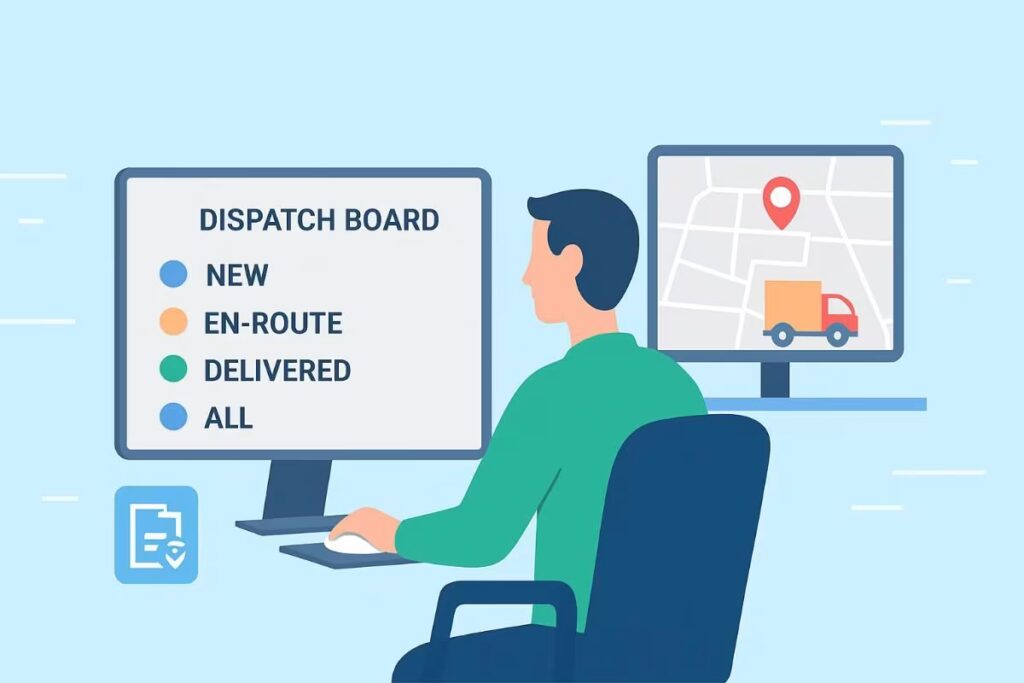
Top 5 Ways a TMS Software Reduces Manual Work for Dispatchers 

Top 5 Ways a TMS Software Reduces Manual Work for Dispatchers 

Introduction Dispatchers play a pivotal role in keeping trucking operations running smoothly every day. They assign loads, track drivers, manage paperwork, and ensure compliance with industry rules. When these tasks are handled manually through spreadsheets, phone calls, and paper records, operations slow down, mistakes multiply, and growth becomes harder to achieve.  A modern TMS Software Dispatch system changes the game. By automating load assignments, providing real-time fleet visibility, and digitizing paperwork, it reduces dispatcher workload and improves accuracy. According to Gartner (2024), fleets using TMS platforms have cut dispatcher admin time by up to 40%, proving how automation reshapes the trucking industry.  In this guide, we’ll explore the top 5 ways a TMS reduces manual work for dispatchers, highlight the key challenges of manual processes, and explain how carriers can successfully adopt dispatch automation.  What is TMS Dispatch in Trucking?  TMS Dispatch in trucking refers to using a TMS Software to automate daily dispatch operations. These include scheduling, assigning loads, tracking drivers, and managing communication between dispatchers and drivers.  A TMS Software platform brings all dispatch operations together on a single platform, eliminating the need for spreadsheets, phone calls, and manual logs. This streamlines workflows, eliminates repetitive work, and offers dispatchers and drivers instant operational visibility.  Carriers that adopt TMS dispatch systems experience fewer errors, faster deliveries, and improved fleet productivity, whether managing 5 trucks or 500. Also Read – How Trucking Dispatch Software Optimizes Load Planning & Delivery What Are the Primary Functions of a TMS Dispatch Software?  Modern TMS Software for dispatch is built to simplify trucking operations, reduce manual work, and boost overall fleet efficiency. By centralizing dispatch tasks on a single digital platform, dispatchers can save time, minimize errors, and make informed decisions quickly. The key functions of TMS dispatch software include:  Automated Load Assignment TMS dispatch software automatically matches loads with the most suitable drivers based on factors like real-time location, availability, truck capacity, and Hours of Service (HOS) compliance. This automation eliminates guesswork, reduces scheduling conflicts, prevents empty miles, and ensures each shipment is assigned to the right driver efficiently. Real-Time Fleet Visibility With integrated GPS tracking, dispatchers can monitor truck locations, estimated arrival times (ETAs), and potential delays instantly. This real-time visibility allows for proactive route adjustments, faster decision-making, and improved communication with customers, ensuring that shipments are delivered on time. Digital Document Management Paperwork such as proof of delivery (PODs), receipts, and invoices can slow down dispatch workflows and create errors. A TMS dispatch system replaces paper-based processes with secure digital storage. Dispatchers and drivers can upload, access, and share documents instantly, simplifying billing, compliance, and record-keeping while eliminating manual errors. Seamless Driver Communication Communication between dispatchers and drivers is centralized through in-app messaging, reducing the need for phone calls or texts. Dispatchers can quickly relay updates, handle route changes, or share load details in real time. This streamlined communication ensures fewer miscommunications and faster response times across the fleet. These core functions form the foundation of a TMS dispatch system, enabling carriers to reduce manual work, improve operational efficiency, and maintain a competitive edge in the fast-paced trucking industry. By leveraging these features, fleets can optimize routes, enhance productivity, and scale operations with ease.  What Major Challenges Do Dispatchers Face with Manual Truck Operations? Many carriers still depend on spreadsheets, whiteboards, and phone calls to assign drivers and manage routes, but TMS software can replace these manual processes efficiently. While these methods may work for very small fleets, they create significant challenges as operations expand. Manual truck dispatching can lead to inefficiencies, increased errors, delayed deliveries, and higher administrative workloads. Key challenges include:  These challenges highlight why a TMS Dispatch system is critical for carriers seeking efficiency, accuracy, and scalable operations.  Top 5 Ways TMS Dispatch Cuts Down Manual Work for Dispatchers  Manual dispatching can overload teams with constant phone calls, spreadsheets, and paperwork, which TMS software can automate.. A modern TMS Dispatch system automates these repetitive tasks, helping dispatchers save time, reduce errors, and focus on smarter decision-making. Key ways TMS dispatch reduces manual work include:  Automated Load Assignment Rather than relying on manual assignment, the system automatically identifies the ideal driver using live location data, availability status, truck capacity, and compliance criteria. Features like Driver Availability & Smart Geo-Location Matching ensure the closest and most suitable driver is assigned instantly, reducing empty miles and eliminating scheduling conflicts. Real-Time Communication & Rate Negotiation Endless calls and texts slow operations. Load Offer Negotiation allows dispatchers to send load offers digitally to drivers, enabling instant acceptance or counter-offers for real-time rate negotiation. All communication is stored in the system, saving hours of follow-up and providing transparency. Centralized Scheduling & Smart Alerts Managing multiple loads manually leads to errors and overlaps. A TMS dashboard consolidates schedules, offers drag-and-drop rescheduling, and sends automatic alerts for conflicts or delays. This ensures smoother operations at scale. Paperless Documentation & Billing Paper-based PODs, receipts, and invoices slow billing. With TMS, drivers upload documents via a TMS mobile app, which links directly to billing. Invoices are automatically created, missing documents are flagged, and dispatchers can focus on operations instead of administrative tasks. Real-Time Tracking & Analytics Instead of calling drivers for updates, dispatchers monitor locations, ETAs, and traffic conditions on a live dashboard. Built-in analytics generate reports on performance, fuel usage, and driver efficiency—enabling faster, data-driven decisions.Also Read – Top 10 Features of Trucking Management System Software: TMS Features Explained TMS Dispatch Automation vs. Manual Dispatch: Key Differences  Feature  Manual Dispatch  Automated TMS Dispatch  Speed  Hours spent on calls, texts, and spreadsheets  Instant assignments with real-time optimization  Accuracy  Higher risk of errors, missed HOS compliance  Algorithmic matching reduces mistakes  Scalability  Requires more staff for more loads  Handles thousands of loads without extra staff  Customer Visibility  Limited or no updates  Live tracking, ETAs, proactive notifications  Cost Efficiency  Empty miles, idle time, slow billing  Optimized routes, paperless billing, faster cash flow  Compliance  Manual HOS/IFTA checks  Automated alerts and audit-ready records  How to Implement TMS Dispatch Software: Step-by-Step  Implementing a TMS

Top 5 Ways a TMS Software Reduces Manual Work for Dispatchers  Read More »

How Trucking Dispatch Software Optimizes Load Planning & Delivery 

How Trucking Dispatch Software Optimizes Load Planning & Delivery 

Introduction Every delayed load costs carriers time, money, and customer trust—making efficient dispatch more important than ever. The logistics sector continually faces challenges as demand grows for quicker and more dependable delivery services. In fact, Sendcloud studies show that 23% of customers may not return after a late delivery, underscoring how critical on-time performance has become.  To keep supply chains moving, transportation must be efficient, transparent, and well-coordinated. Carrier TMS software, especially trucking dispatch software, has become a key enabler of this efficiency. By automating dispatch tasks, streamlining communication, and providing real-time visibility, it helps carriers and fleet operators manage daily operations with greater accuracy. Modern dispatch systems are now essential for scaling operations and minimizing costly inefficiencies.  As freight volumes continue to grow worldwide, businesses that adopt smarter carrier TMS software solutions gain a clear competitive edge. This blog—built on over 18 years of industry experience—explores how trucking dispatch software enhances performance, highlights must-have features, and explains the benefits it brings to carriers, dispatchers, and drivers alike.  What is Trucking Dispatch Software?  Trucking dispatch software is a digital platform that simplifies and automates day-to-day trucking operations. It allows dispatchers to assign loads, track drivers, and manage fleet activities through a single interface. By reducing manual processes and enabling real-time communication, it ensures faster, more accurate, and well-coordinated deliveries.  The system works for both individual truckers and large fleets, offering visibility into driver availability, location updates, and load status. With synchronized data and streamlined workflows, trucking companies can reduce errors, cut downtime, and improve overall delivery performance.  Explore More: The Best Trucking Dispatch Software What Are the Challenges of Operating Without Trucking Dispatch Software?  Dispatching forms the backbone of every fleet operation. Yet, without a modern trucking dispatch solution or a carrier TMS software, many carriers face delays, inefficiencies, and higher operating costs. Relying on manual methods like spreadsheets, calls, or paper logs may work for very small fleets, but as operations scale, these processes quickly become unsustainable. Below are the most common challenges fleets encounter when dispatch is not supported by smart technology.  Disconnected Communication  Dispatchers, drivers, and logistics partners often work in silos when communication isn’t centralized. This leads to missed updates, slow responses, and confusion across the supply chain. A connected platform ensures everyone stays aligned, reducing errors and delays.  Delivery Pressures and Delays  Manual dispatch makes it harder to assign loads quickly or adapt to changing schedules. With rising demand for faster deliveries, carriers without automated tools often struggle to meet customer expectations, which can hurt trust and profitability.  Limited Customer Visibility  In traditional systems, customers rarely get real-time order updates. This lack of transparency creates frustration and more service calls. Digital dispatch solutions solve this by offering live status updates and accurate delivery windows, leading to stronger customer relationships.  Dependence on Manual Work  Assigning drivers by hand, frequent phone communications, and handling paperwork consume valuable time and often lead to mistakes. A smart dispatch system automates repetitive tasks, helping teams save time and focus on more strategic operations.  Empty Miles and Wasted Resources  One of the biggest cost drivers in trucking is “empty miles,” when trucks return without freight. Modern dispatch software reduces this by helping fleets match loads more effectively and cut waste, improving both efficiency and margins.  Key Features of Trucking Dispatch Software for Smarter Fleet Management  Modern trucking dispatch software does more than just assign loads—it acts as the digital backbone of logistics operations. By combining automation, real-time visibility, and data-driven decision-making, it helps fleets of every size improve efficiency and reduce costly delays. Below are the most critical features that logistics experts and fleet managers rely on to keep operations running smoothly.  Centralized Dispatching  Relying on spreadsheets and phone calls often causes errors and delays. A centralized dispatch dashboard allows managers to assign loads, set schedules, and issue instructions in just a few clicks. This streamlined approach ensures consistent delivery performance and supports collaboration across in-house fleets and external partners.  Seamless Communication  Clear communication is often the difference between on-time and delayed deliveries. With in-app messaging, push notifications, and real-time alerts, dispatch software eliminates gaps between drivers, dispatchers, and customers. A lack of teamwork is a major cause of operational setbacks, emphasizing that seamless communication is essential for efficient logistics management.  Digital Documentation & E-Ticketing  Depending on paper-based records and manual filing often leads to mistakes and reduces operational efficiency. Digital ticketing allows drivers to upload load details, proof of delivery, and timestamps directly into the system. This creates a verified single source of truth, accelerates invoicing, and saves back-office teams hours of manual work—something industry experts highlight as a key driver of profitability.  Real-Time Monitoring & Visibility  Knowing truck locations in real time is now a baseline expectation in logistics. GPS-enabled Truck tracking helps dispatchers monitor vehicle status, update ETAs, and reroute when disruptions occur. This visibility not only builds trust with shippers but also reduces unnecessary service calls and improves driver accountability.  Automated Billing & Invoicing  Financial workflows can slow down if handled manually. Dispatch platforms automate billing by capturing trip and load data instantly, reducing payment delays and human errors. When integrated with accounting systems, this feature ensures faster cash flow and supports compliance with financial best practices.  Scalability for Growing Fleets  Logistics operations rarely stay static. A cloud-based dispatch system scales easily by adding vehicles, drivers, and service regions without downtime. This flexibility makes it a long-term solution for carriers aiming to expand into new markets while maintaining operational consistency.  Data Analytics & Insights  Data is now a competitive advantage in logistics. Dispatch systems with advanced analytics provide reports on delivery times, driver performance, and fuel usage. Managers can spot inefficiencies and make evidence-based decisions.   Top Benefits of Trucking Dispatch Software for Carriers  Trucking dispatch software goes beyond simple load assignments. It connects dispatchers, drivers, and customers in real time, creating efficiency across the entire logistics chain. The impact is seen in reduced costs, faster deliveries, and improved customer satisfaction. Below are the key benefits: 

How Trucking Dispatch Software Optimizes Load Planning & Delivery  Read More »

Truck Tracking Software: Features, Benefits, ROI & Compliance Guide (2025) 

Truck Tracking Software: Features, Benefits, ROI & Compliance Guide (2025) 

Introduction Truck tracking software helps carriers and fleet owners track truck locations, monitor driver behavior, manage fuel usage, and stay compliant with trucking regulations in real time. In 2025, it is essential for fleets dealing with rising fuel costs, stricter compliance rules, and growing demand for real-time shipment visibility.  Using GPS and telematics, truck tracking software improves route planning, driver safety, and daily fleet operations. This guide covers how truck tracking software works, its key benefits, ROI, and how to choose the right solution for your fleet.  Key Takeaways :Truck Tracking Software What is truck tracking software? Truck tracking software is a digital system that helps carriers and fleet owners track truck locations, monitor driver behavior, and manage fleet operations in real time. It uses GPS, sensors, and mobile apps to replace manual tracking methods like phone calls and paper logs. With truck tracking software, fleets can improve route planning, follow safety rules, and maintain compliance records more easily. Its growing adoption is reflected in market data. According to Cubix, the global trucking software market was valued at $12.5 billion in 2024 and is expected to reach $24 billion by 2033, growing at a CAGR of 8.7%. It also provides clear performance data that helps reduce delays, save fuel, and make better fleet management decisions. Explore More – Best TMS Truck Tracking Software Features of Truck Tracking Software Truck tracking software offers more than basic GPS tracking. It provides real-time fleet visibility, improves driver safety, and supports regulatory compliance using GPS, sensors, analytics, and automation tools. In 2025, these features help carriers reduce costs, streamline operations, and manage fleets more efficiently.  Below are the key features every carrier should look for in truck tracking software.  Real-Time GPS Tracking Real-time GPS tracking allows carriers and fleet managers to see the exact location of each truck at any moment. It helps dispatchers track routes, monitor progress, and share accurate delivery times using live location data.  With real-time GPS tracking, fleets can:  This feature improves fleet efficiency and builds trust with shippers and customers through reliable, real-time tracking.  Advanced Sensor Integration Advanced sensor integration uses built-in sensors to collect real-time telematics data from each truck. These sensors track driving activity, vehicle movement, and cargo conditions to give fleets better operational control.  With sensor-based tracking, fleets can monitor:  This data helps protect perishable or fragile shipments, reduce operational risk, and improve driver and cargo monitoring, especially for long-haul and refrigerated fleets.  Driver Behavior Monitoring Driver behavior monitoring helps carriers and fleet managers track how drivers operate their vehicles in real time. It identifies driving patterns that affect safety, fuel use, and vehicle health.  With driver behavior monitoring, fleets can track:  These insights help improve driver safety, lower accident risk, reduce insurance costs, and cut fuel waste. Over time, fleets see safer driving habits, less vehicle wear, and better overall performance.  Route Optimization Route optimization uses real-time traffic, weather updates, road closures, and past trip data to choose the most efficient routes for each load. It helps carriers and fleet managers reduce delays and improve daily operations.  With route optimization, fleets can:  By adjusting routes in real time, truck tracking software ensures each truck follows the safest and most cost-effective path, which is especially important for time-sensitive freight.  Compliance Automation (HOS & ELD) Compliance automation helps carriers and fleet managers meet Hours of Service (HOS) and Electronic Logging Device (ELD) requirements using digital records. Truck tracking software automatically tracks driving time and rest breaks to support regulatory compliance.  With HOS and ELD automation, fleets can:  By replacing paper logs with automated records, fleets can reduce violations, lower audit risk, and simplify DOT inspections.  Maintenance Alerts and Predictive Diagnostics Maintenance alerts and predictive diagnostics help carriers and fleet managers monitor vehicle health in real time. Truck tracking software collects engine data, mileage, and fault codes to prevent unexpected breakdowns.  With predictive maintenance, fleets can:  This approach reduces downtime, lowers repair costs, and extends vehicle lifespan, especially for high-mileage and long-haul fleets.  Customizable Analytics Dashboards Customizable analytics dashboards give carriers and fleet managers a clear view of fleet performance in real time. Truck tracking software displays key metrics and trends in one place to support better decision-making.  With analytics dashboards, fleets can track:  These dashboards help identify problems, improve efficiency, and optimize operations, whether managing a small fleet or a large carrier network. How does truck tracking software work? Truck tracking software combines GPS devices, sensors, and cloud-based software to track fleet activity in real time. Drivers use mobile apps to share updates and documents, while dispatchers view live data through a central dashboard.  Each truck sends location data regularly. The system analyzes this data along with traffic, weather, and driver activity to optimize routes, monitor driving behavior, and automatically record Hours of Service (HOS). This gives fleets a clear, real-time view of daily operations.  How Data Is Processed  Real-World Example A carrier with 50 trucks uses truck tracking software to view live locations, reroute drivers around delays, and confirm deliveries in real time. Dispatchers manage the fleet from one dashboard instead of calling drivers.  Why is truck tracking software better than traditional methods? Traditional fleet management relies on phone calls, paper logs, and basic GPS tools. These methods are slow, error-prone, and do not provide real-time visibility. Truck tracking software replaces manual work with automated data and live insights, helping fleets operate more efficiently.  Traditional vs. Truck Tracking Software Task Traditional Methods Truck Tracking Software Tracking Trucks Phone check-ins Live GPS tracking Routing Paper maps or basic GPS Optimized, fuel-efficient routes  Driver Monitoring Manual driver reports  Real-time driving data  Compliance Paper logs with errors  Automated HOS and ELD records Reporting Manual reports Instant performance analytics By using real-time data instead of manual updates, truck tracking software improves accuracy, saves time, and supports safer, more compliant fleet operations.  Why Do Fleets Need Truck Tracking Software in 2025? In 2025, trucking fleets face rising fuel costs, stricter safety regulations, and higher customer expectations for real-time delivery updates. Manual tracking methods and basic GPS tools no longer provide the visibility or control fleets need to operate efficiently.  Truck tracking software helps fleets monitor trucks in real time, automate compliance tasks, and optimize routes. This reduces delays, lowers fuel waste, improves driver safety,

Truck Tracking Software: Features, Benefits, ROI & Compliance Guide (2025)  Read More »

Transport Management System (TMS) for Carriers: Features, Benefits, and Best Practices [2025 Guide]

Transport Management System (TMS) for Carriers: Features, Benefits, and Best Practices [2025 Guide]

Introduction to Transport Management System for Carriers The logistics industry is changing quickly. In 2025, it takes more than just trucks and a skilled team to stay competitive. Carriers need real-time information, better control, and smart tools to manage everything smoothly. That’s why a Transport Management System (TMS) has become a must-have for growing fleets. This easy-to-follow guide is written by our Product Owner, Dr. Nitin Shankar, a logistics expert with 18+ years of experience in transportation and finance. You’ll learn what a TMS is, which features matter most for carriers, how to measure its return on investment (ROI), and how to pick the right system for your fleet. We’ll also explain how to integrate it with your existing tools, make onboarding smooth, and prepare for the future of transport technology. What is a Transport Management System (TMS) for Carriers? A Transport Management System (TMS) for carriers is software that helps trucking companies automate and optimize key logistics tasks like dispatching, tracking, routing, and document management—all in one platform. A TMS Software serves as the digital command center for carriers. It replaces manual processes such as phone calls, spreadsheets, and paperwork with real-time tools that streamline operations. From assigning loads and tracking drivers to digitizing documents and ensuring compliance, everything happens within a unified system. Carriers benefit from improved efficiency, lower costs, better visibility, and faster decision-making. Core features often include route optimization, GPS tracking, e-document management, driver communication, billing, compliance support, and performance analytics. By centralizing these functions, a TMS enables carriers to scale operations, minimize errors, and deliver better service. You may also like to read – What Is a Transport Management System and How Does It Work?  TMS Software vs Traditional Methods: A Quick Comparison Curious about how today’s carrier TMS solutions outperform traditional transport management practices? The following comparison breaks down the critical differences between legacy logistics systems and a modern transportation management system for carriers, showcasing how digital transformation drives efficiency, reduces operational costs, and enhances shipment visibility. Aspect Traditional Methods TMS Software Load Assignment Manual, phone calls Automated with real-time scheduling Driver Tracking Periodic check-ins via phone Live GPS tracking and status updates Document Handling Paper-based, prone to loss Digital uploads and storage Compliance & Logs Manual logging Automated and audit-ready Reporting & Insights Difficult and time-consuming Instant dashboards and reports With a TMS, carriers can shift from reactive to proactive fleet management—leading to faster decisions, better performance, and higher efficiency.Also Read – TMS Software vs Traditional Methods – A Complete Comparison for Fleet Management in 2025 Why Is a Transportation Management System Important in 2025? A transportation management system allows carriers to streamline dispatch operations, reduce operational costs, and increase supply chain efficiency. With increasing industry demands in 2025, TMS software helps automate tasks like route planning, driver assignment, and real-time shipment tracking—saving valuable time and reducing manual errors. It also supports regulatory compliance, provides critical insights through analytics, and enhances communication across teams. In a logistics landscape where speed, transparency, and accuracy matter more than ever, a TMS is no longer optional—it’s a necessity for modern carriers to stay competitive. Top Benefits of Using TMS for Carriers A Transport Management System for carriers isn’t just a convenience—it’s a game-changer in today’s competitive logistics environment. By replacing manual tasks with smart automation, a TMS allows carriers to operate more efficiently, make informed decisions, and increase overall profitability. Here are the key benefits carriers can expect from using a modern TMS: A well-implemented transportation management system for carriers doesn’t just streamline operations—it creates long-term business value through automation, visibility, and cost control. What are the Features of a Transport Management System? A Transport Management System (TMS) for carriers is built to streamline logistics, improve visibility, and reduce operational friction. It combines automation, communication, and analytics to help carriers scale faster and operate more efficiently. Here are the top features of a TMS designed for carriers: How does a Transport Management System work? A Transportation Management System (TMS) works by automating and coordinating the end-to-end process of planning, executing, and analyzing the movement of goods across the supply chain. It acts as a digital hub that connects carriers, dispatchers, drivers, and logistics teams—streamlining operations through centralized control, data integration, and real-time visibility. Here’s how a TMS works in a typical carrier operation: 1. Order Integration and Shipment Planning The process begins when shipment orders are entered into the system—either manually or via integration with other platforms like ERPs (Enterprise Resource Planning) or WMS (Warehouse Management Systems). The TMS analyzes this information to determine the most efficient transportation plan. It evaluates factors like delivery windows, route distances, cargo type, and cost constraints to select the best carrier, mode (LTL, FTL, intermodal), and route for each shipment. This step ensures optimized planning before a truck even hits the road. 2. Carrier Assignment and Load Tendering Once a shipment plan is created, the TMS assigns loads to carriers based on availability, pricing, service levels, or historical performance. It can automatically tender loads to preferred carriers or allow competitive bidding within a carrier network. Load confirmations, rate agreements, and documentation are all managed digitally—cutting down on phone calls and paperwork. 3. Shipment Execution and Real-Time Tracking As the shipment progresses, the TMS tracks its movement in real time using GPS data, ELDs (Electronic Logging Devices), and driver mobile apps. Dispatchers and managers can view the exact location of each vehicle, monitor driver status, and respond quickly to route changes, delays, or exceptions. This level of visibility allows for proactive decision-making and minimizes service disruptions. 4. Document Management and Billing After delivery, the TMS automatically captures relevant documents such as Proof of Delivery (POD), bills of lading, and freight invoices. These documents are validated against load details to initiate billing or payment processes. By digitizing this part of the workflow, a TMS reduces manual errors, speeds up settlements, and improves compliance. 5. Data Analysis and Performance Optimization Finally, the TMS compiles operational data to generate key performance metrics like

Transport Management System (TMS) for Carriers: Features, Benefits, and Best Practices [2025 Guide] Read More »

Scroll to Top