Nitin Shankar

5 Ways Load Offer Negotiation Saves Carriers Time and Money

5 Ways Load Offer Negotiation Saves Carriers Time and Money

Introduction The trucking industry is evolving faster than ever. Rising fuel costs, fluctuating freight rates, and a growing driver shortage are putting pressure on carriers to deliver efficiently and profitably. Traditional negotiation methods—phone calls, emails, and manual spreadsheets—can no longer keep pace with the demands of modern logistics.  Enter Load Offer Negotiation, a feature now integrated into advanced Carrier TMS software. This digital tool allows dispatchers and drivers to propose, counter, and finalize freight rates in real time, eliminating delays, improving transparency, and creating fair, data-driven agreements.  What Is Load Offer Negotiation in a Carrier TMS Load Offer Negotiation is a digital feature within modern Carrier TMS software that allows carriers and drivers to negotiate freight rates in real time. Instead of relying on phone calls, emails, or manual processes, dispatchers can send load offers directly through the Dispatching software , and drivers can accept, reject, or submit counteroffers instantly. This automated, real-time process improves operational efficiency by reducing delays, eliminating miscommunication, and maintaining a clear, auditable record of all rate negotiations. Carriers using TMS-based Load Offer Negotiation benefit from faster rate finalization, optimized load assignments, and improved driver engagement. By ensuring transparent and fair pricing, fleets can save time, reduce operational costs, and maintain smooth, reliable operations across local and global routes.Also Read – Introducing Load Offer Negotiation: A Game-Changer in Carrier TMS Software How Load Offer Negotiation Enhances Efficiency and Streamlines Carrier Operations Load Offer Negotiation in a modern Carrier TMS transforms how carriers manage freight rate discussions. By digitizing communication and decision-making, this feature not only accelerates negotiations but also ensures accuracy, transparency, and measurable operational gains. Here’s how it works: Streamlined Digital Load Offers for Faster, Error-Free Negotiation Dispatchers create load offers with proposed rates, pick-up and delivery details, and timelines directly in the Carrier TMS. Drivers receive these offers instantly on their TMS mobile app and can respond with acceptance, rejection, or a counteroffer. This centralized digital system replaces traditional phone or email negotiations, keeps all interactions in one place, and eliminates delays and errors. Data-Driven Assignment Decisions for Maximum Efficiency The TMS uses operational data such as route efficiency, mileage, load urgency, and driver availability to guide decisions. Dispatchers can quickly identify the best loads for each driver, reducing empty miles, minimizing downtime, and improving overall fleet productivity. Transparent Tracking and Accountability for Smarter Operations Every action—offer sent, counter submitted, or acceptance confirmed—is automatically logged in the Truck Tracking Software. This digital audit trail ensures transparency, reduces disputes, and builds trust between dispatchers and drivers. Carriers can also analyze historical negotiation data to optimize future load assignments and increase profitability.In this blog, we explain five key ways Load Offer Negotiation saves carriers time and money, helping fleets operate smarter, optimize load assignments, and maintain profitability in a competitive global market.  See how Fast Forward TMS’s Load Offer Negotiation feature enables real-time deal-making between dispatchers and drivers — faster, smarter, and fully transparent. Watch Now 5 Ways Load Offer Negotiation Saves Carriers Time and Money  The logistics industry is evolving fast, and time delays or inefficient rate discussions can cost carriers thousands each month. Modern carriers are turning to Load Offer Negotiation—a feature now built into advanced Transportation Management Systems (TMS)—to overcome these challenges. By digitizing how rates are discussed, confirmed, and finalized, carriers gain real-time visibility, quicker decision-making, and higher driver satisfaction. According to ATRI (American Transportation Research Institute), truck driver detention in 2023 resulted in $3.6 billion in direct costs and $11.5 billion in lost productivity—highlighting how improving operational efficiency can deliver significant savings. Let’s explore how Load Offer Negotiation delivers measurable savings and operational efficiency for carriers across the industry. 1. Reduces Empty Miles with Smarter Load Matching  Empty miles—also known as “deadhead miles”—are one of the biggest profit drainers for carriers. Load Offer Negotiation minimizes this problem by combining geo-location tracking and driver availability status within the TMS. When a driver marks themselves as “Available,” the system automatically displays nearby load options, enabling dispatchers to assign the closest and most profitable trips. This real-time visibility reduces unnecessary travel between deliveries, cuts fuel usage, and ensures every truck spends more time moving revenue-generating freight. This optimization directly results in shorter turnaround times, fewer idle hours, and improved route efficiency—helping carriers maximize load productivity and fuel savings.  2. Speeds Up Decisions Through Real-Time Counteroffers  Traditional dispatching often involves long phone calls, missed emails, and slow approvals, delaying load assignments. Load Offer Negotiation replaces this outdated process with instant, two-way digital communication built directly into the TMS. Dispatchers can propose a rate, and drivers can review and submit counteroffers immediately, with both sides confirming the deal within the system. Each step—offer, counter, acceptance, confirmation, and dispatch—is automatically tracked, creating a transparent, auditable record that eliminates confusion and disputes. Because negotiations happen in real time, dispatchers can finalize multiple loads in minutes instead of hours, while drivers spend less time waiting for approvals. This efficiency improves overall fleet productivity, enabling carriers to complete more loads per shift and boost revenue flow. 3. Ensures Transparent and Fair Freight Rate Negotiation  Transparency is critical in today’s freight market, where even small miscommunications can impact profitability and trust. Load Offer Negotiation ensures both drivers and dispatchers see the same rate data simultaneously—including offers, counters, and final agreements. This digital record eliminates misunderstandings and fosters a more collaborative environment between carriers and drivers. It also supports uniform pricing and compliance practices, which are key to maintaining professional and ethical freight operations. By making every negotiation traceable and fair, carriers strengthen accountability, trust, and long-term partnerships within their networks. 4. Optimizes Profit Margins by Strategic Load Distribution  Not all freight brings equal value. Some lanes are more profitable, while others carry higher costs. Load Offer Negotiation helps dispatchers identify high-ROI loads by analyzing key data—such as rate history, lane costs, and fuel trends. This enables managers to make informed assignments based on profitability and resource utilization, not just load availability. AI-driven insights help dispatchers strike the right balance between

5 Ways Load Offer Negotiation Saves Carriers Time and Money Read More »

How to Negotiate Truck Freight Rates Effortlessly with TMS

How to Negotiate Truck Freight Rates Effortlessly with TMS

Introduction Imagine a busy freight dispatcher juggling endless phone calls and messages, trying to agree on freight rates with drivers and shippers—all while racing against the clock to keep loads moving. Trying to negotiate truck freight rates the old-fashioned way is often slow, confusing, and prone to errors. But what if there was a smarter way—a way to negotiate rates clearly, quickly, and in real time? This is where modern Transportation Management Systems (TMS) with powerful tools come into play to help carriers negotiate truck freight rates more efficiently. Picture dispatchers and drivers seamlessly exchanging rate offers and counter-offers within one platform, with instant visibility into who’s available and where. This technology transforms chaotic negotiations into smooth conversations, making it easier to close deals, reduce empty miles, and boost profits. In this blog, discover step-by-step how carriers can use these smart tools to automate rate negotiation, lower transportation costs, and revolutionize their freight business. Welcome to the future of truck freight rate negotiation. Key Takeaways: Effortless Truck Freight Rate Negotiation What is Truck Freight Rate Negotiation and Why Effective Negotiating Shipping Rates Matter Truck freight rate negotiation means agreeing on the price carriers charge to haul loads. This includes contract rates, spot market rates, or single shipments. In 2025, factors like fuel costs, driver availability, and regulations affect how to negotiate trucking rates. According to ACT Research’s September 2025 update, the average US dry van spot rate is about $1.62 per mile, while contract rates average approximately $2.14 per mile, reflecting the latest market trends in freight pricing. Carriers skilled in how to negotiate truck freight rates can reduce empty miles, improve truck use, and increase profits. Effective negotiation also builds strong shipper and driver relationships, leading to smoother and faster deliveries.Also Read – Introducing Load Offer Negotiation: A Game-Changer in Carrier TMS Software How Load Offer Negotiation Software Revolutionizes Freight Rate Negotiation Load offer negotiation software fundamentally changes how carriers manage freight rate discussions by enabling instant, real-time, two-way communication between dispatchers and contract drivers. Unlike traditional static rate postings that rely on delayed phone calls or emails, this solution allows drivers to accept, decline, or counter-load rate offers seamlessly within the Transportation Management System (TMS) platform. Benefits of freight rate negotiation Software By transforming freight rate negotiation into a streamlined, digital process, load offer negotiation software saves valuable time, minimizes errors, and enhances operational efficiency, helping carriers stay competitive in a dynamic freight market.Also Read – How Load Offer Negotiation Is Transforming Carrier TMS Software in 2025 Step-by-Step Guide: How to Negotiate Trucking Rates Efficiently Using TMS Learning how to negotiate truck freight rates can be complicated, but using a modern Transportation Management System (TMS) makes the process smoother and faster. Here’s how carriers can negotiate truck freight rates step-by-step using TMS automation features. Step 1: Centralize Rate Offers and Acceptances with Your TMS Start by using your TMS platform to send load rate offers directly to your contracted or partner drivers. Instead of juggling calls, texts, or emails, the TMS keeps all negotiations in one place. Drivers can quickly accept the offered rate or reply with counter-offers inside the system. This centralization, powered by dispatching software and truck load management software, reduces confusion, prevents lost messages, and keeps negotiation history organized efficiently. It also helps dispatchers manage multiple load offers simultaneously without missing responses, improving workflow efficiency and communication transparency. Step 2: Match Loads Smarter Using Driver Availability and Geo-Location A key feature in advanced TMS platforms is driver availability control combined with geo-location tracking—enabled only with driver consent to protect privacy. With driver mobile app integration, drivers mark themselves as available or unavailable, giving dispatchers real-time insight into who is ready to take loads. Geo-location data lets dispatchers assign freight to the drivers closest to the pickup point, cutting down on empty miles and reducing fuel waste. This smart matching accelerates load assignments, cuts unnecessary travel, and improves driver satisfaction by respecting their preferences and schedules. Step 3: Use Market Data and Analytics to Guide Your Rate Negotiations Leverage the carrier TMS software’s powerful analytics software to access real-time market data on freight rates, fuel prices, and operational costs for smarter negotiations. These insights help carriers understand current industry trends and price their services competitively without sacrificing profit margins. By analyzing your costs and tracking KPI performance regularly, you can make informed decisions on which rates to offer, when to negotiate higher rates, and where to optimize resources. Data-driven negotiations minimize guesswork and strengthen your position in the freight market. Step 4: Automate Agreements and Dispatch to Speed Up Operations Once both parties agree on a freight rate, the TMS automatically finalizes the deal. It schedules the load, updates driver and dispatcher dashboards, and sends notifications confirming the assignment. This automation integrates easy onboarding and fuel management features, eliminating manual paperwork, reducing human errors, and avoiding communication delays. It also allows dispatchers to focus on managing operations rather than chasing down approvals or clarifications. In summary, automating the negotiation and dispatch process with TMS ensures a seamless, fast, and transparent workflow—helping carriers close deals quicker and keep freight moving efficiently.Watch how real-time rate negotiation works in action with Load Offer Negotiation. Comparing Traditional Freight Rate Negotiation with Load Offer Negotiation Software Carriers face challenges using traditional freight rate negotiation methods, such as lengthy back-and-forth communications, fixed-rate offers, and minimal visibility into driver availability. These issues often lead to delays, errors, and missed opportunities. Modern load offer negotiation software changes the game by enabling real-time, two-way communication, flexible rate discussions, and insights into driver availability and location. This helps carriers speed up negotiations, reduce empty miles, and improve load acceptance rates. The table below compares these approaches to highlight how negotiation software benefits freight operations and decision-making. Feature / Benefit Traditional Freight Rate Negotiation Load Offer Negotiation Software Negotiation Speed Slow, often involves multiple calls and emails Up to 3× faster with real-time offers and counter-bids Communication Method Phone calls, texts, or emails Built-in chat for

How to Negotiate Truck Freight Rates Effortlessly with TMS Read More »

TMS Implementation Guide: 7 Proven Steps to Ensure Success in 2025 

TMS Implementation Guide: 7 Proven Steps to Ensure Success in 2025 

Introduction  Implementing a Transportation Management System (TMS) is no longer optional for carriers and logistics businesses in 2025—it’s essential for staying competitive. A well-implemented TMS can reduce operating costs, automate routine tasks, improve compliance, and give carriers real-time visibility into every mile, load, and driver. But success doesn’t come just from buying software—it comes from implementing it the right way.  At Fast Forward TMS, we bring 18+ years of industry expertise and experience from 1,500+ successful TMS implementations to help carriers avoid the most common pitfalls. Over the years, we’ve seen what works and what doesn’t—and we’ve refined a process that ensures smooth adoption and measurable ROI.  In this step-by-step TMS implementation guide, we’ll walk you through 7 proven steps built on real-world practices trusted by leading carriers. Each step is designed to align your business goals, simplify adoption, and unlock long-term efficiency. By the end, you’ll know exactly how to plan, implement, and optimize a TMS that drives growth for your trucking business. Key Takeaways: TMS Implementation in 2025  Step 1: Define Your Business Goals & Success Metrics  If you want your TMS implementation to succeed, you first need to be clear about your business goals. Without a plan, you may end up with a system that looks powerful but doesn’t solve your real challenges.  Start by asking yourself: “What do I want my TMS to achieve for my trucking business?” Maybe you want to cut fuel costs, streamline dispatching, or reduce billing errors. When you define these goals upfront, your TMS will work the way you need it to.  Some of the goals that you can set:  Once you’ve set your goals, connect them with measurable success metrics. This way, you’ll always know if your TMS is delivering real results.  Key metrics you should track:  By linking your goals to clear metrics, you’ll have a roadmap that guides every step of your TMS implementation. More importantly, you’ll be able to prove ROI and show that your investment is driving growth for your trucking business.  Step 2: Choose the Right TMS Vendor  Not every TMS will be the right fit for your business. The key is to pick one that matches your specific operational needs and can grow with your company. Here’s what you should keep in mind:  Always request a live demo and involve your dispatchers or drivers in testing. They’ll help you see if the system really works in day-to-day operations.  You may also like to read: Best Carrier TMS Software for Trucking in 2025: How to Choose the Right Solution Step 3: Build an Implementation Team  Even the best TMS won’t deliver results if the right people aren’t involved in the rollout. That’s why building a strong TMS implementation team is one of the most important steps in ensuring success.  Who should be on your team? By forming a cross-functional team, you ensure smooth adoption and set your TMS up for long-term success.  Step 4: Data Migration & System Integration  Once you’ve chosen the right TMS, the next challenge is getting your data into the new system and making sure it works with your existing tools. This step is critical—because bad data or poor integration can slow down your entire operation.  Why Data Migration Matters  Your TMS is only as good as the data inside it. If your old spreadsheets or legacy systems contain errors, those mistakes will carry over. That’s why you need to audit and clean your data before migrating.  Think about:  Start with a phased migration. Move a small set of data first, test it, and then scale up. This way, you catch errors early without disrupting your business.  Step 5: Configure & Customize the TMS  Now that your data is in place and integrations are running, it’s time to make the TMS truly yours. Every trucking business operates differently, so configuration and customization ensure the system fits your unique workflows.  Tailor Workflows to Your Business  Your TMS should match the way you work—not force you into rigid processes. You can:  This way, your system reflects the real-world flow of your operations.  Customize Dashboards for Each Role  Not everyone in your team needs to see the same information.  By customizing dashboards, you give each role what they need—without clutter or confusion.  Unlock Automation Features  Modern TMS platforms include powerful automation you shouldn’t ignore:  Automation doesn’t just save time—it improves accuracy and keeps your business competitive.  Step 6: Training & Easy Onboarding Even the most powerful TMS won’t deliver results if your team doesn’t know how to use it. That’s why training and onboarding are critical parts of a successful rollout.You should focus on making adoption as simple as possible. If drivers, dispatchers, and back-office staff find the system confusing, they’ll resist using it. But with the right approach, you can ensure fast adoption and long-term efficiency. Here’s how to do it right: Step 7: Test, Monitor & Optimize  Once your TMS is configured and your team is trained, you’re ready to go live—but don’t just flip the switch and hope for the best. A successful rollout comes from careful testing, monitoring, and ongoing optimization.  Start with Pilot Testing  Monitor Key Performance Metrics  Common Challenges in TMS Implementation (and How to Overcome Them)  Even with a solid plan, TMS implementation can come with hurdles. The good news? Most of these challenges are predictable—and with the right approach, you can overcome them smoothly. Let’s break down the most common roadblocks and how you can handle them:  1. Resistance to Change  Your drivers, dispatchers, or office staff may hesitate to move away from old processes. How to overcome it: Involve your team early. Explain how the TMS will make their daily work easier—fewer manual tasks, less paperwork, faster dispatching. Provide hands-on training so they feel confident instead of overwhelmed.  2. Data Migration Errors  Moving years of load history, customer records, and billing details can get messy. How to overcome it: Clean your data before migration. Test small batches first to ensure accuracy. Work with your TMS vendor’s

TMS Implementation Guide: 7 Proven Steps to Ensure Success in 2025  Read More »

FMCSA Eliminates MC Numbers by October 2025: What Carriers Need to Know

FMCSA Eliminates MC Numbers by October 2025: What Carriers Need to Know

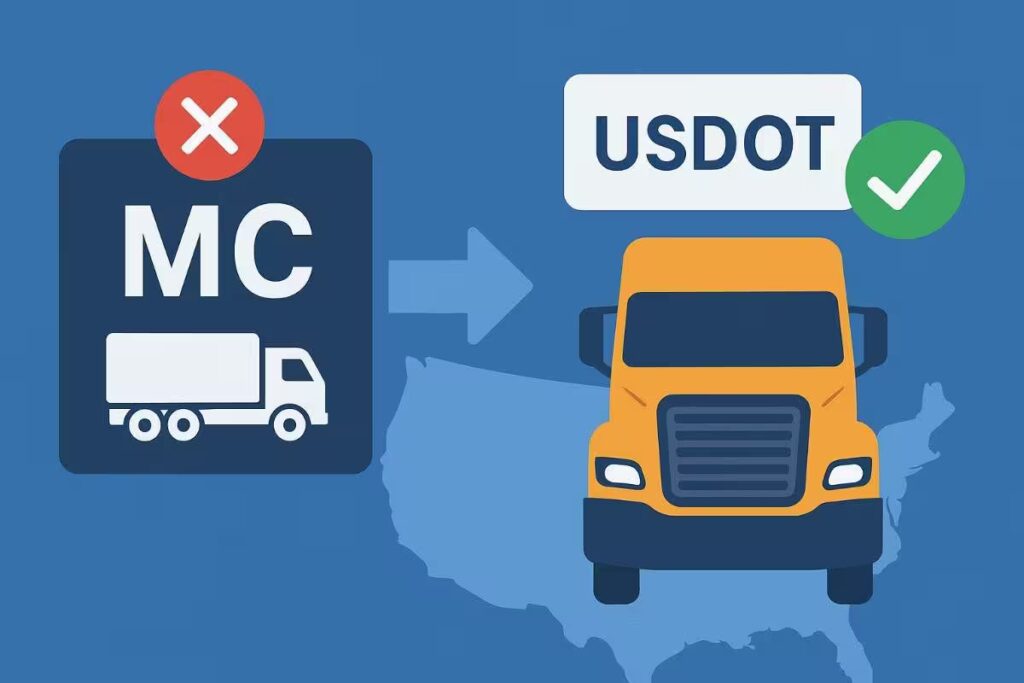
The trucking industry is gearing up for a major regulatory change. The FMCSA is eliminating MC numbers, with the phase-out effective October 1, 2025, meaning only the USDOT number will serve as the official identifier for motor carriers, brokers, and freight forwarders. According to FMCSA and industry reports (Freight waves), over 800,000 active motor carriers hold MC numbers in 2025 in the U.S., highlighting the magnitude of this transition.This update is part of the FMCSA’s efforts to streamline registrations, reduce fraud, and enhance compliance through the Unified Registration System (URS). Carriers, brokers, and logistics providers must act promptly to align with the new USDOT-only identification system.In this article, we’ll cover everything you need to know about the MC number elimination, its implications for carriers and brokers, and practical steps to prepare before the October 2025 deadline. Key Takeaways: FMCSA Eliminates MC Numbers by October 2025 What is an MC Number and Why is FMCSA Phasing It Out? An MC number (Motor Carrier number) has traditionally been issued by the Federal Motor Carrier Safety Administration (FMCSA) to track operating authority for carriers, brokers, and freight forwarders. While widely used, it was never legally required and mainly functioned as an administrative identifier alongside a USDOT number. Over time, this dual identifier system created duplicate records, compliance confusion, and increased risks of fraud, including double brokering.To modernize freight industry registration and align with MAP-21 regulations, the FMCSA is eliminating MC numbers and consolidating all authority records under a single USDOT number using the Unified Registration System (URS). Instead of separate MC identifiers, authority types (motor carrier, freight broker, or forwarder) will now be linked to the USDOT number with suffixes. A USDOT number serves as a unique identifier for safety monitoring, compliance audits, and inspections for all commercial vehicles operating interstate.This transition ensures regulatory consistency, stronger fraud prevention, and simplified compliance verification through FMCSA’s official databases. Existing Motor Carrier (MC) numbers will be phased out and no longer issued, with operating authority tied directly to the USDOT number moving forward. How the End of MC Numbers Will Reshape Carriers, Brokers, and Shippers The FMCSA’s elimination of MC numbers by October 1, 2025 is more than an administrative update—it transforms how operating authority, safety, and trust are maintained across the freight industry. Shifting to a United States Department of Transportation (USDOT)-only system increases efficiency but requires carriers, brokers, and shippers to adjust contracts, processes, and compliance practices. Carriers: From Multiple Identifiers to a Single Source of Truth Motor carriers will now consolidate all operating authority and compliance history under one USDOT number, closing loopholes where a fresh MC number could previously reset reputation or safety records. Carriers must: Brokers: Stronger Shields Against Fraud and Double Brokering Freight brokers and forwarders will benefit from reduced fraud risk. MC numbers previously allowed bad actors to manipulate identities or engage in double brokering. With USDOT numbers as the sole identifier: Shippers: Modern Carrier Vetting and Increased Transparency For shippers, due diligence now relies on USDOT-based verification instead of MC numbers. Industry Impact: Simplified Compliance and Greater Responsibility Eliminating MC numbers simplifies compliance and enhances fraud prevention but requires careful preparation. Companies across the freight ecosystem should: Ultimately, this change is about creating a safer, more accountable freight marketplace where every operating authority is tied to a single, verifiable USDOT identifier. Compliance Risks of MC Number Elimination After October 1, 2025 The FMCSA elimination of MC numbers on October 1, 2025 introduces critical compliance risks for carriers, brokers, and shippers. Failing to update USDOT records, contracts, and internal processes can disrupt trucking, logistics, and freight operations. Contract Rejections and Payment Disruptions Freight contracts, broker agreements, and factoring paperwork referencing MC numbers may be rejected. This can cause payment delays, interrupt load assignments, and weaken business partnerships in the competitive freight market. Insurance Coverage and Liability Exposure Insurance providers will now require USDOT-only documentation. Policies tied to outdated MC numbers may face disputes, cancellations, or coverage gaps, leaving carriers unprotected in accidents or claims. FMCSA Penalties and Audit Risks During FMCSA audits or roadside inspections, MC numbers will no longer be valid. Using outdated compliance records may trigger fines, audit red flags, or jeopardize operating authority.Want a quick checklist to stay compliant? See our full compliance update post here – Attention Carriers and Brokers: Big FMCSA Change Coming Operational Disruptions in Logistics Management Companies that rely on MC numbers for vetting will experience delays. USDOT-based verification through FMCSA databases will become the standard for freight management and supply chain operations. After October 1, 2025, continuing to use MC numbers exposes businesses to contract rejections, insurance issues, penalties, and operational delays. Early transition ensures compliance, protects revenue, and strengthens trust across the logistics ecosystem. Even beyond October 2025, maintaining accurate USDOT records is essential to avoid future audit and compliance issues. How Carriers, Brokers, and Shippers Can Prepare for MC Number Elimination The upcoming FMCSA MC number elimination requires all regulated entities to transition to a USDOT-only identification system by October 1, 2025. Early preparation reduces compliance risks, prevents contract disputes, and ensures uninterrupted operations in trucking, freight management, and logistics. Verify and Update Your USDOT Number on the FMCSA Website The USDOT number is now the primary identifier under FMCSA regulations. Carriers, brokers, and freight forwarders should verify their status using the official FMCSA SAFER System by searching with their USDOT number or company name. The results show status (‘Active’ or ‘Inactive’), authority type, insurance filings, and safety records. Make sure your USDOT number is active, accurate, and linked to the correct operating authority to avoid disruptions.Registering for a USDOT number is free online through the FMCSA Unified Registration System (URS). While the USDOT application has no fee, interstate for-hire carriers applying for operating authority (MC number until October 2025) must pay a $300 filing fee per authority. File and Update Your MCS-150 Form The MCS-150 form documents key business information, including operations, fleet size, and contact details. It also serves as the required biennial update for USDOT

FMCSA Eliminates MC Numbers by October 2025: What Carriers Need to Know Read More »

Trucking Dispatch Software vs. TMS Software: Key Differences Explained

Trucking Dispatch Software vs. TMS Software: Key Differences Explained

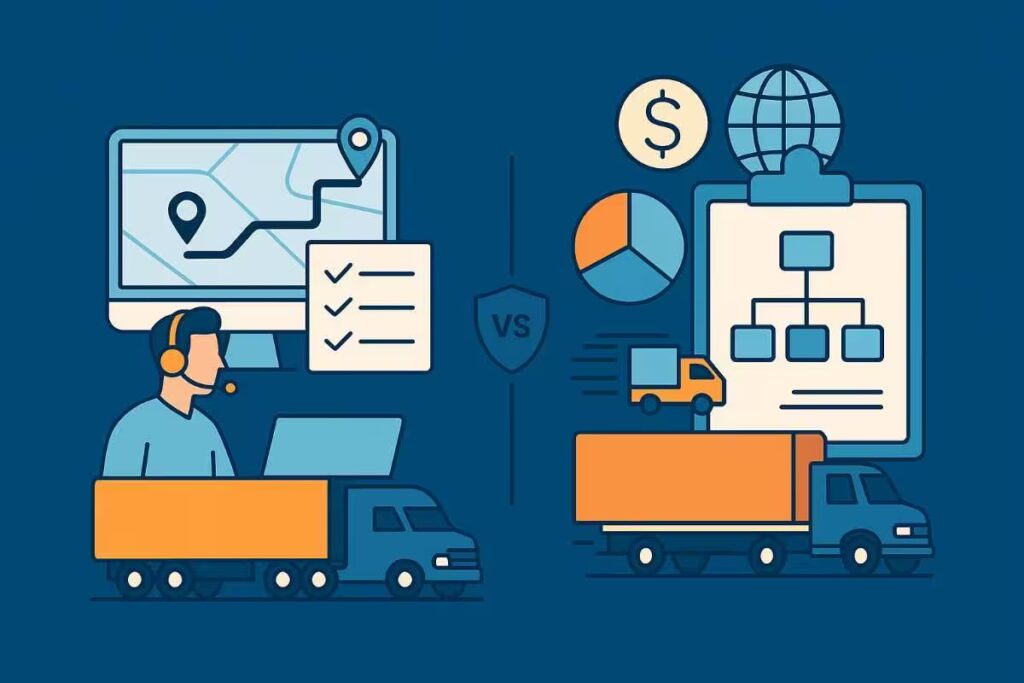
The trucking and logistics industry is undergoing rapid digital transformation. Global adoption of fleet technology is rising, with the Transportation Management System (TMS) market expected to grow from USD 16.69 billion in 2025 to USD 43.82 billion by 2034 (Precedence Research). This growth shows how carriers, freight brokers, and logistics providers worldwide are investing in smarter systems to cut costs, improve efficiency, and stay competitive. Within this shift, two types of solutions stand out: Trucking Dispatch Software and TMS Software. Both improve transportation efficiency, but they serve very different purposes. Dispatch software focuses on daily fleet operations like load assignments, routing, and driver communication. A TMS, on the other hand, manages the entire transportation lifecycle—from planning and carrier management to billing, compliance, and analytics. In this blog, we’ll break down the key differences between trucking dispatch software and TMS software, so that carriers, small fleets, and freight brokers can make the right software decision in 2025. Key Takeaways: Trucking Dispatch Software vs. TMS Software What is Trucking Dispatch Software? Daily Operations Made Simple for Carriers Trucking Dispatch Software is designed to simplify the day-to-day operations of small and mid-sized carriers. It serves as a central hub where dispatchers can manage drivers, assign loads, track routes, and maintain real-time communication. For many fleets, it is considered the best trucking dispatch software because it provides essential tools without the complexity or cost of a full TMS system. By automating routine tasks and offering clear visibility, dispatch software helps carriers cut delays, reduce errors, and ensure on-time deliveries. Core Features of Trucking Dispatch Software: For carriers operating in competitive markets globally, trucking dispatch software offers a cost-effective way to manage daily dispatch, optimize driver workflows, and maintain efficiency—without the heavy investment of enterprise-level systems.Also Read – How Trucking Dispatch Software Optimizes Load Planning & Delivery  What is TMS Software? Complete Transportation Management for Carriers A Transportation Management System (TMS) is more than dispatch software—it’s an all-in-one platform that manages every part of carrier operations. From load planning and route optimization to compliance, payroll, and fuel management, TMS software helps fleets run smarter and scale with confidence. Unlike basic dispatch tools, TMS software covers end-to-end logistics workflows, making it essential for carriers looking to grow regionally or globally. Key Benefits of TMS Software for Carriers: For fleets of all sizes, many consider it the best TMS software for trucking companies because it reduces costs, improves visibility, and delivers a fast return on investment. With cloud-based access and real-time data, carriers gain the control they need to compete in local and international markets.Also Read – What Is a Transport Management System (TMS) and How Does It Work?  Key Differences Between Trucking Dispatch Software and TMS Software for Carriers  Selecting the right software depends on fleet size, operational complexity, and business goals. Trucking dispatch software focuses on managing daily operations, including load assignments, driver tracking, route planning, and communication, making it ideal for small to mid-sized carriers.  TMS software, on the other hand, delivers a full transportation management system, offering advanced load planning, management, billing, analytics software, compliance, and integration with GPS, ePOD, and truck tracking software. This makes it the preferred solution for large carriers, freight brokers, 3PLs, and logistics providers needing scalable, data-driven tools.  Detailed Comparison of Trucking Dispatch Software vs. TMS Software  Factor  Trucking Dispatch Software  TMS Software  Primary Purpose  Streamlines daily dispatch operations  Manages the full transportation lifecycle  Best For  Small to mid-sized trucking companies  Large carriers, freight brokers, 3PLs, logistics providers  Core Features  Load assignments, route tracking, driver communication  Dispatch, load planning, carrier management, billing, analytics  Ease of Use  Simple interface, minimal training  Advanced functions, structured onboarding required  Integration Options  Limited or basic integrations  Extensive integrations with GPS, ERP, ePOD, compliance  Cost Level  Lower upfront cost, subscription-based  Higher investment, scalable pricing for enterprise needs  Scalability  Suitable for small fleets  Built for large, multi-carrier operations  Decision Support  Basic reporting and visibility  Predictive analytics, ROI insights, decision-making tools  Example Use Cases  Daily load dispatching, route optimization  Freight broker TMS, multi-carrier load assignment, compliance automation  In essence, trucking dispatch software is best suited for carriers seeking affordable, efficient, and simple daily operations management, while TMS software serves as a comprehensive transportation management platform for larger fleets and freight brokers.  Key Advantages of Trucking Dispatch Software for Fleet Operations Trucking Dispatch Software is specifically designed for small to mid-sized carriers aiming to enhance efficiency in daily fleet operations. It acts as a central hub for managing essential tasks, ensuring that dispatchers can allocate loads, communicate with drivers, and monitor routes in real time. By automating and streamlining these core activities, carriers can reduce manual errors, minimize delays, and improve overall operational control. This type of software is highly cost-effective and user-friendly, providing an accessible solution for fleets that require reliable performance without the complexity of larger enterprise systems.  Core Benefits:  Also Read – Top 5 Ways a TMS Software Reduces Manual Work for Dispatchers  Key Advantages of TMS Software for Fleet Operations  TMS Software (Transportation Management System) delivers a comprehensive, end-to-end solution for larger fleets, freight brokers, and logistics providers. Unlike trucking dispatch software, TMS covers the entire transportation lifecycle, offering advanced capabilities such as load planning, multi-carrier management, invoicing, compliance, and performance analytics. This software supports scalability and enables data-driven decision-making, making it ideal for operations that handle complex workflows and require long-term strategic growth.  Core Benefits:  Also Read – Top 10 Benefits of Using TMS for Carriers in 2025 Factors to Consider When Choosing Between Trucking Dispatch Software and TMS Software  Selecting the appropriate solution for fleet operations depends on fleet size, operational complexity, and long-term growth objectives. Key considerations include:  Careful evaluation of these factors ensures the selected software aligns with operational goals, supports growth, and maximizes efficiency across the fleet.  Fast Forward TMS: The All-in-One Carrier TMS Software for Smarter Dispatch and Growth Carriers often struggle to find a solution that is simple, affordable, and scalable. Fast Forward TMS solves this by combining the power of a dispatch-focused platform with

Trucking Dispatch Software vs. TMS Software: Key Differences Explained Read More »

Top 5 Ways a TMS Software Reduces Manual Work for Dispatchers 

Top 5 Ways a TMS Software Reduces Manual Work for Dispatchers 

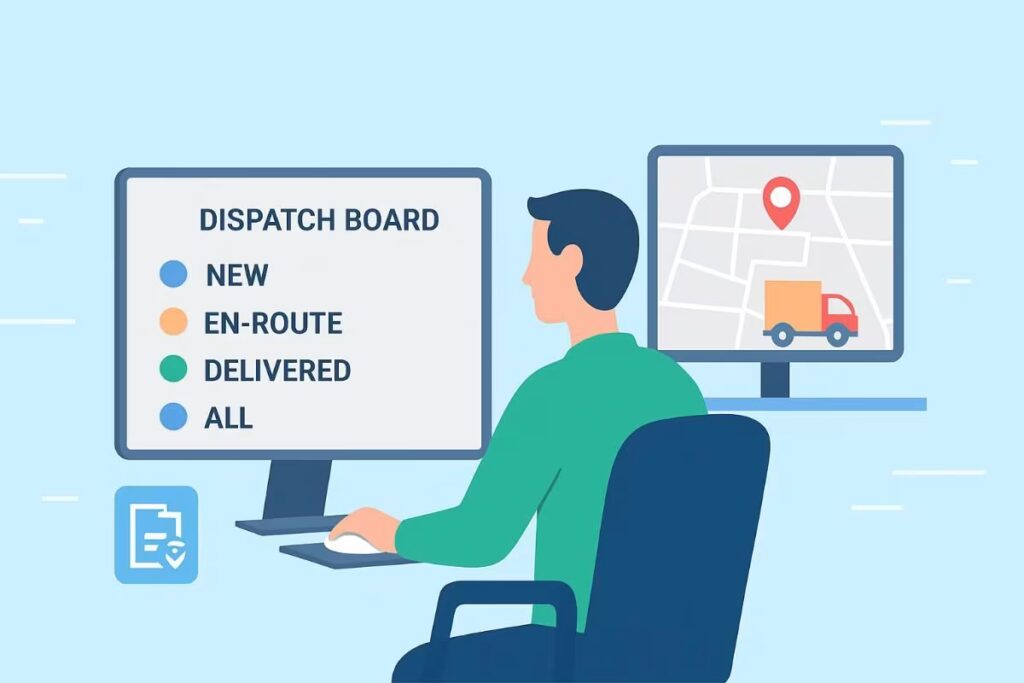
Introduction Dispatchers play a pivotal role in keeping trucking operations running smoothly every day. They assign loads, track drivers, manage paperwork, and ensure compliance with industry rules. When these tasks are handled manually through spreadsheets, phone calls, and paper records, operations slow down, mistakes multiply, and growth becomes harder to achieve.  A modern TMS Software Dispatch system changes the game. By automating load assignments, providing real-time fleet visibility, and digitizing paperwork, it reduces dispatcher workload and improves accuracy. According to Gartner (2024), fleets using TMS platforms have cut dispatcher admin time by up to 40%, proving how automation reshapes the trucking industry.  In this guide, we’ll explore the top 5 ways a TMS reduces manual work for dispatchers, highlight the key challenges of manual processes, and explain how carriers can successfully adopt dispatch automation.  What is TMS Dispatch in Trucking?  TMS Dispatch in trucking refers to using a TMS Software to automate daily dispatch operations. These include scheduling, assigning loads, tracking drivers, and managing communication between dispatchers and drivers.  A TMS Software platform brings all dispatch operations together on a single platform, eliminating the need for spreadsheets, phone calls, and manual logs. This streamlines workflows, eliminates repetitive work, and offers dispatchers and drivers instant operational visibility.  Carriers that adopt TMS dispatch systems experience fewer errors, faster deliveries, and improved fleet productivity, whether managing 5 trucks or 500. Also Read – How Trucking Dispatch Software Optimizes Load Planning & Delivery What Are the Primary Functions of a TMS Dispatch Software?  Modern TMS Software for dispatch is built to simplify trucking operations, reduce manual work, and boost overall fleet efficiency. By centralizing dispatch tasks on a single digital platform, dispatchers can save time, minimize errors, and make informed decisions quickly. The key functions of TMS dispatch software include:  Automated Load Assignment TMS dispatch software automatically matches loads with the most suitable drivers based on factors like real-time location, availability, truck capacity, and Hours of Service (HOS) compliance. This automation eliminates guesswork, reduces scheduling conflicts, prevents empty miles, and ensures each shipment is assigned to the right driver efficiently. Real-Time Fleet Visibility With integrated GPS tracking, dispatchers can monitor truck locations, estimated arrival times (ETAs), and potential delays instantly. This real-time visibility allows for proactive route adjustments, faster decision-making, and improved communication with customers, ensuring that shipments are delivered on time. Digital Document Management Paperwork such as proof of delivery (PODs), receipts, and invoices can slow down dispatch workflows and create errors. A TMS dispatch system replaces paper-based processes with secure digital storage. Dispatchers and drivers can upload, access, and share documents instantly, simplifying billing, compliance, and record-keeping while eliminating manual errors. Seamless Driver Communication Communication between dispatchers and drivers is centralized through in-app messaging, reducing the need for phone calls or texts. Dispatchers can quickly relay updates, handle route changes, or share load details in real time. This streamlined communication ensures fewer miscommunications and faster response times across the fleet. These core functions form the foundation of a TMS dispatch system, enabling carriers to reduce manual work, improve operational efficiency, and maintain a competitive edge in the fast-paced trucking industry. By leveraging these features, fleets can optimize routes, enhance productivity, and scale operations with ease.  What Major Challenges Do Dispatchers Face with Manual Truck Operations? Many carriers still depend on spreadsheets, whiteboards, and phone calls to assign drivers and manage routes, but TMS software can replace these manual processes efficiently. While these methods may work for very small fleets, they create significant challenges as operations expand. Manual truck dispatching can lead to inefficiencies, increased errors, delayed deliveries, and higher administrative workloads. Key challenges include:  These challenges highlight why a TMS Dispatch system is critical for carriers seeking efficiency, accuracy, and scalable operations.  Top 5 Ways TMS Dispatch Cuts Down Manual Work for Dispatchers  Manual dispatching can overload teams with constant phone calls, spreadsheets, and paperwork, which TMS software can automate.. A modern TMS Dispatch system automates these repetitive tasks, helping dispatchers save time, reduce errors, and focus on smarter decision-making. Key ways TMS dispatch reduces manual work include:  Automated Load Assignment Rather than relying on manual assignment, the system automatically identifies the ideal driver using live location data, availability status, truck capacity, and compliance criteria. Features like Driver Availability & Smart Geo-Location Matching ensure the closest and most suitable driver is assigned instantly, reducing empty miles and eliminating scheduling conflicts. Real-Time Communication & Rate Negotiation Endless calls and texts slow operations. Load Offer Negotiation allows dispatchers to send load offers digitally to drivers, enabling instant acceptance or counter-offers for real-time rate negotiation. All communication is stored in the system, saving hours of follow-up and providing transparency. Centralized Scheduling & Smart Alerts Managing multiple loads manually leads to errors and overlaps. A TMS dashboard consolidates schedules, offers drag-and-drop rescheduling, and sends automatic alerts for conflicts or delays. This ensures smoother operations at scale. Paperless Documentation & Billing Paper-based PODs, receipts, and invoices slow billing. With TMS, drivers upload documents via a TMS mobile app, which links directly to billing. Invoices are automatically created, missing documents are flagged, and dispatchers can focus on operations instead of administrative tasks. Real-Time Tracking & Analytics Instead of calling drivers for updates, dispatchers monitor locations, ETAs, and traffic conditions on a live dashboard. Built-in analytics generate reports on performance, fuel usage, and driver efficiency—enabling faster, data-driven decisions.Also Read – Top 10 Features of Trucking Management System Software: TMS Features Explained TMS Dispatch Automation vs. Manual Dispatch: Key Differences  Feature  Manual Dispatch  Automated TMS Dispatch  Speed  Hours spent on calls, texts, and spreadsheets  Instant assignments with real-time optimization  Accuracy  Higher risk of errors, missed HOS compliance  Algorithmic matching reduces mistakes  Scalability  Requires more staff for more loads  Handles thousands of loads without extra staff  Customer Visibility  Limited or no updates  Live tracking, ETAs, proactive notifications  Cost Efficiency  Empty miles, idle time, slow billing  Optimized routes, paperless billing, faster cash flow  Compliance  Manual HOS/IFTA checks  Automated alerts and audit-ready records  How to Implement TMS Dispatch Software: Step-by-Step  Implementing a TMS

Top 5 Ways a TMS Software Reduces Manual Work for Dispatchers  Read More »

How Trucking Dispatch Software Optimizes Load Planning & Delivery 

How Trucking Dispatch Software Optimizes Load Planning & Delivery 

Introduction Every delayed load costs carriers time, money, and customer trust—making efficient dispatch more important than ever. The logistics sector continually faces challenges as demand grows for quicker and more dependable delivery services. In fact, Sendcloud studies show that 23% of customers may not return after a late delivery, underscoring how critical on-time performance has become.  To keep supply chains moving, transportation must be efficient, transparent, and well-coordinated. Carrier TMS software, especially trucking dispatch software, has become a key enabler of this efficiency. By automating dispatch tasks, streamlining communication, and providing real-time visibility, it helps carriers and fleet operators manage daily operations with greater accuracy. Modern dispatch systems are now essential for scaling operations and minimizing costly inefficiencies.  As freight volumes continue to grow worldwide, businesses that adopt smarter carrier TMS software solutions gain a clear competitive edge. This blog—built on over 18 years of industry experience—explores how trucking dispatch software enhances performance, highlights must-have features, and explains the benefits it brings to carriers, dispatchers, and drivers alike.  What is Trucking Dispatch Software?  Trucking dispatch software is a digital platform that simplifies and automates day-to-day trucking operations. It allows dispatchers to assign loads, track drivers, and manage fleet activities through a single interface. By reducing manual processes and enabling real-time communication, it ensures faster, more accurate, and well-coordinated deliveries.  The system works for both individual truckers and large fleets, offering visibility into driver availability, location updates, and load status. With synchronized data and streamlined workflows, trucking companies can reduce errors, cut downtime, and improve overall delivery performance.  Explore More: The Best Trucking Dispatch Software What Are the Challenges of Operating Without Trucking Dispatch Software?  Dispatching forms the backbone of every fleet operation. Yet, without a modern trucking dispatch solution or a carrier TMS software, many carriers face delays, inefficiencies, and higher operating costs. Relying on manual methods like spreadsheets, calls, or paper logs may work for very small fleets, but as operations scale, these processes quickly become unsustainable. Below are the most common challenges fleets encounter when dispatch is not supported by smart technology.  Disconnected Communication  Dispatchers, drivers, and logistics partners often work in silos when communication isn’t centralized. This leads to missed updates, slow responses, and confusion across the supply chain. A connected platform ensures everyone stays aligned, reducing errors and delays.  Delivery Pressures and Delays  Manual dispatch makes it harder to assign loads quickly or adapt to changing schedules. With rising demand for faster deliveries, carriers without automated tools often struggle to meet customer expectations, which can hurt trust and profitability.  Limited Customer Visibility  In traditional systems, customers rarely get real-time order updates. This lack of transparency creates frustration and more service calls. Digital dispatch solutions solve this by offering live status updates and accurate delivery windows, leading to stronger customer relationships.  Dependence on Manual Work  Assigning drivers by hand, frequent phone communications, and handling paperwork consume valuable time and often lead to mistakes. A smart dispatch system automates repetitive tasks, helping teams save time and focus on more strategic operations.  Empty Miles and Wasted Resources  One of the biggest cost drivers in trucking is “empty miles,” when trucks return without freight. Modern dispatch software reduces this by helping fleets match loads more effectively and cut waste, improving both efficiency and margins.  Key Features of Trucking Dispatch Software for Smarter Fleet Management  Modern trucking dispatch software does more than just assign loads—it acts as the digital backbone of logistics operations. By combining automation, real-time visibility, and data-driven decision-making, it helps fleets of every size improve efficiency and reduce costly delays. Below are the most critical features that logistics experts and fleet managers rely on to keep operations running smoothly.  Centralized Dispatching  Relying on spreadsheets and phone calls often causes errors and delays. A centralized dispatch dashboard allows managers to assign loads, set schedules, and issue instructions in just a few clicks. This streamlined approach ensures consistent delivery performance and supports collaboration across in-house fleets and external partners.  Seamless Communication  Clear communication is often the difference between on-time and delayed deliveries. With in-app messaging, push notifications, and real-time alerts, dispatch software eliminates gaps between drivers, dispatchers, and customers. A lack of teamwork is a major cause of operational setbacks, emphasizing that seamless communication is essential for efficient logistics management.  Digital Documentation & E-Ticketing  Depending on paper-based records and manual filing often leads to mistakes and reduces operational efficiency. Digital ticketing allows drivers to upload load details, proof of delivery, and timestamps directly into the system. This creates a verified single source of truth, accelerates invoicing, and saves back-office teams hours of manual work—something industry experts highlight as a key driver of profitability.  Real-Time Monitoring & Visibility  Knowing truck locations in real time is now a baseline expectation in logistics. GPS-enabled Truck tracking helps dispatchers monitor vehicle status, update ETAs, and reroute when disruptions occur. This visibility not only builds trust with shippers but also reduces unnecessary service calls and improves driver accountability.  Automated Billing & Invoicing  Financial workflows can slow down if handled manually. Dispatch platforms automate billing by capturing trip and load data instantly, reducing payment delays and human errors. When integrated with accounting systems, this feature ensures faster cash flow and supports compliance with financial best practices.  Scalability for Growing Fleets  Logistics operations rarely stay static. A cloud-based dispatch system scales easily by adding vehicles, drivers, and service regions without downtime. This flexibility makes it a long-term solution for carriers aiming to expand into new markets while maintaining operational consistency.  Data Analytics & Insights  Data is now a competitive advantage in logistics. Dispatch systems with advanced analytics provide reports on delivery times, driver performance, and fuel usage. Managers can spot inefficiencies and make evidence-based decisions.   Top Benefits of Trucking Dispatch Software for Carriers  Trucking dispatch software goes beyond simple load assignments. It connects dispatchers, drivers, and customers in real time, creating efficiency across the entire logistics chain. The impact is seen in reduced costs, faster deliveries, and improved customer satisfaction. Below are the key benefits: 

How Trucking Dispatch Software Optimizes Load Planning & Delivery  Read More »

How Fast Forward TMS Stands Out as the Best Choice in Carrier TMS Software 

How Fast Forward TMS Stands Out as the Best Choice in Carrier TMS Software 

Introduction Every successful trucking company has one thing in common—they’ve mastered the art of keeping operations simple while the industry grows more complex each year. From managing multiple drivers on the road to ensuring loads reach the right destination on time, efficiency is no longer a luxury; it’s survival. That’s where the best Carrier TMS software steps in not as a back-office tool, but as the engine that powers modern fleet operations.  The challenge for carriers today isn’t just choosing any system—it’s finding one that balances ease of use with power, scalability, and real results. In this blog, we’ll explore how Fast Forward TMS has emerged as a standout solution, built with deep industry experience and proven to deliver measurable results, helping fleets grow smarter, faster, and stronger.  What is a Carrier TMS Software? A Carrier TMS (Transportation Management System) software is a cloud-based platform designed specifically for trucking companies, logistics providers, and owner-operators to manage, automate, and optimize all aspects of fleet operations. It serves as the central hub for dispatch, load planning, driver management, billing, customer communication, and regulatory compliance. What a Carrier TMS Software Does for Trucking Operations  Carrier TMS software acts as the core hub, coordinating every aspect of a trucking operation seamlessly. It integrates dispatch, compliance, driver management, customer communication, and reporting into one seamless workflow.  In the past, trucking operations relied heavily on manual logs, messy paperwork, and constant phone calls to track deliveries. Even spreadsheets and basic dispatching systems eventually became outdated, failing to keep up with the demands of modern supply chains that require speed, transparency, and real-time insights.  Without a reliable Carrier TMS software, trucking companies risk losing freight to competitors, burning unnecessary miles, running into payroll disputes, or even facing compliance penalties. A modern TMS like Fast Forward TMS eliminates these inefficiencies by giving fleets full visibility, automated workflows, and tools that reduce operating costs while boosting productivity.  How a Modern Carrier TMS Simplifies Fleet Operations  Not all TMS platforms are created equal. Many carriers invest in systems that look powerful during demos but fail in day-to-day operations. Complex onboarding, steep learning curves, poor mobile adoption, and hidden costs often leave fleets frustrated instead of empowered.  A modern Carrier TMS software solves these problems by simplifying onboarding, offering mobile-first solutions for drivers, providing real-time data visibility, and scaling affordably with the growth of the fleet. Instead of adding complexity, a strong TMS acts as a problem-solver, ensuring smooth workflows from dispatch to delivery.  What is Fast Forward TMS?  Fast Forward TMS is a cloud-based Carrier Transportation Management System (TMS) designed to simplify, streamline, and automate fleet operations for trucking companies, owner-operators, and logistics teams. Built by industry veterans with over 18+ years of combined experience, it is trusted by more than 1,500 fleets globally for its reliability, scalability, and user-friendly design.  Why Fast Forward TMS Stands Out in Carrier TMS Software  Why Fast Forward TMS stands out as the top choice in Carrier TMS software is clear in its combination of ease of use, affordability, and enterprise-grade reliability. Key advantages are highlighted below:  Affordable and Scalable Pricing for Fleets  Fast Forward TMS keeps pricing simple, flexible, and risk-free—so carriers can start small and scale as they grow:  First User Free  Your first dispatcher or fleet manager gets limited access at no cost. No credit card required, no hidden fees. This allows carriers to explore Fast Forward TMS fully and experience its features before expanding their team. Second User – $99/month As your fleet expands, add a second user to streamline collaboration between dispatch, billing, and operations. Additional Users – $29/month each Easily scale your team with cost-effective pricing for every user beyond the second. This pricing model ensures fleets of all sizes pay only for what they need—making growth both predictable and affordable. Fast Forward TMS maintains transparent pricing with no hidden charges, so carriers know exactly what they’re paying for.  Reliable Customer Support Backed by Industry Expertise  Even the best technology depends on skilled support and expert guidance to deliver real value. With over 18 years of industry experience, Fast Forward TMS offers dedicated support that’s always within reach—whether during setup, daily dispatching, or scaling operations.  Enterprise-Grade Security With SOC 2 Type 2 Compliance  Security is a top priority in modern trucking. Fast Forward TMS is SOC 2 Type 2 compliant, ensuring that fleet, financial, and driver data remain secure, confidential, and highly available at all times. Carriers can operate with confidence, knowing their information is safe at every step.  Features That Set Fast Forward TMS Apart from Competitors  What makes Fast Forward TMS the best Carrier TMS software isn’t just its ease of use or affordability—it’s the innovative features designed specifically for carriers and drivers. These capabilities go beyond what other Carrier TMS platforms in the industry offer, addressing challenges that they often overlook. Instead of offering generic tools, it focuses on solving real-world challenges like rate negotiations, empty miles, and driver–dispatcher communication. These exclusive capabilities help fleets operate with greater speed, transparency, and efficiency.  Load Offer Negotiation – A Game-Changer for Carriers  Rate negotiation has long been a challenge in trucking. Traditional methods—endless phone calls, emails, and delays—often cause confusion and missed opportunities. With Load Offer Negotiation, Fast Forward TMS transforms how carriers and drivers negotiate freight rates efficiently.  Dispatchers can share rate offers immediately, and drivers can respond with acceptance or a counteroffer instantly. The built-in chat eliminates miscommunication and speeds up decision-making. This transparency not only saves time but also builds fairness and trust—critical for long-term carrier–driver partnerships.  Driver Availability & Smart Geo-Location Matching  Assigning the most suitable load to a driver has become quick, accurate, and hassle-free. With this feature, drivers can mark themselves as “Available” or “Unavailable” and, with consent, share real-time location data. Dispatchers then match loads to drivers based on proximity and availability, reducing empty miles and ensuring faster pickups.  Strategic Benefits of Fast Forward TMS for Carriers  Selecting a Carrier TMS is not just a software decision—it’s choosing a partner

How Fast Forward TMS Stands Out as the Best Choice in Carrier TMS Software  Read More »

Top 10 Benefits of Using TMS for Carriers in 2025

Top 10 Benefits of Using TMS for Carriers in 2025

Introduction Imagine a small trucking fleet drowning in paperwork, juggling endless phone calls with drivers, and missing delivery updates. Every delay impacts profits, every mistake affects customer trust, and every manual process slows growth. According to the study of Conqueror Network, In 2025 small and medium carriers face rising fuel costs, stricter compliance rules, and growing customer demands for real-time shipment tracking. Without a TMS for Carriers, these challenges can quickly overwhelm traditional operations. Across the industry, fleets adopting TMS for Carriers are shifting from manual chaos to digital efficiency. The right Transport Management System (TMS) empowers carriers to streamline dispatch, automate documentation, improve communication, and reduce operational costs—making it easier to stay competitive in today’s fast-paced trucking landscape. What is a TMS for Carriers? A TMS for carriers is a software solution created to streamline and automate everyday trucking tasks, making fleet management faster, easier, and more accurate. Instead of juggling spreadsheets, paper logs, and phone calls, a TMS provides a centralized digital hub where carriers can manage dispatching, load assignments, invoicing, and real-time driver tracking all in one place. For small and medium fleets, a TMS for Carriers reduces errors, speeds up billing cycles, and improves communication between dispatchers and drivers. By streamlining operations, carriers can cut operational costs, save time, and increase productivity, ensuring they stay competitive in the evolving freight industry.Also Read – What Is a Transport Management System (TMS) and How Does It Work?  Why Carriers Need a TMS in 2025 In 2025, the trucking industry is more competitive and regulated than ever. Carriers still relying on spreadsheets, paper logs, and phone calls risk falling behind. Implementing a TMS for Carriers helps fleets tackle the industry’s biggest challenges: Overall, a TMS for Carriers ensures smarter freight management, fewer errors, and improved profitability, giving fleets the tools to remain competitive and efficient in a rapidly evolving market. Top 10 Benefits of Implementing a TMS for Carriers in 2025 In today’s fast-paced trucking environment, TMS for Carriers is no longer optional—it’s essential. Manual processes such as spreadsheets, phone calls, and paper records can no longer meet the demands of higher fuel expenses, tighter regulatory requirements, and increasing customer expectations. A TMS for Carriers provides an end-to-end solution that optimizes resources, improves efficiency, and enhances service delivery. Here are the top 10 benefits in 2025: 1 – Reduced Transportation Costs with Smart Optimization TMS for carriers minimizes operational costs by cutting empty miles, optimizing fuel usage, and automating billing. Advanced routing ensures trucks run on the most efficient paths, saving both money and time. Examples of Cost Savings: 2 – Smarter Load Planning and Resource Utilization Carriers often lose revenue due to underutilized trucks. A TMS ensures that vehicles are matched to the right loads in real time, maximizing fleet usage and driver schedules. Feature Highlight: Load Planning & Optimization assigns trips automatically based on truck capacity, availability, and delivery deadlines—ensuring no mile goes wasted. 3 – Real-Time Shipment Tracking and Analytics Modern TMS trucking software provides real-time visibility into shipment status, driver location, and delivery progress. This level of insight helps fleets avoid delays, make faster decisions, and keep customers informed. Impact on Customer Service: 4 – Stronger Customer Satisfaction with Transparent Deliveries In logistics, trust is everything.With a TMS for carriers, fleets can provide instant shipment updates, precise delivery times, and digital proof of delivery. This transparency enhances trust, improves client satisfaction, and fosters long-term partnerships. Example in Action: Carriers using Customer Portal & Automated Notifications report fewer support calls, improved transparency, and stronger repeat business. 5 – Simplified Documentation and Faster Cash Flow Paperwork delays cash flow and adds unnecessary complexity. A TMS for carriers digitizes key documents like bills of lading, PODs, and invoices—reducing errors and accelerating payment cycles. Feature Highlight: Digital Documentation & eBOLs eliminate duplicate records and create a faster, error-free billing process. 6 – Safety and Compliance Made Simple Compliance with HOS, driver logs, and safety reports is critical for avoiding fines and maintaining contracts. A carrier TMS automates these checks, ensuring fleets stay compliant without drowning in paperwork. Compliance Benefits: 7 – Seamless Integrations with Other Tools The best TMS for carriers integrates with GPS systems, accounting platforms, and even freight broker TMS software. This creates one connected workflow where every system talks to each other—no silos, no delays. Feature Highlight: API & Third-Party Integrations enable carriers to connect all operational tools in one hub. 8 – Smarter Fleet and Asset Management Every year, carriers face significant financial losses due to avoidable vehicle breakdowns and unscheduled downtime. A TMS ensures proactive maintenance, extended asset life, and maximum truck availability. Example in Action: Fleets using Fleet & Asset Tracking reduce breakdowns, cut repair costs, and keep more trucks road-ready. 9 – Increased Efficiency with Automated Operations Manual processes like dispatching, payroll, and load matching slow down growth. A TMS for carriers automates these workflows, freeing up staff to focus on business expansion. Feature Highlight: Automated Dispatch & Driver Communication ensures every load is assigned and tracked with minimal human input. 10 – Future-Ready with AI and Predictive Analytics As logistics becomes more digital, carriers using AI-powered TMS gain a competitive edge. Predictive analytics forecast delays, recommend routes, and identify cost-saving opportunities before they happen. Impact on Growth: Also Read – Five Ways AI Is Transforming the Trucking Industry in 2025 How to Choose the Best TMS for Carriers Choosing the right TMS for Carriers is critical for improving efficiency, reducing errors, and supporting fleet growth. The ideal solution balances simplicity, reliability, and scalability. Key factors to consider include: These features make a TMS for carriers a trusted choice in 2025, providing a powerful, easy-to-use, and future-ready system that supports fleet growth and operational efficiency.Also Read – Top 10 Features of Trucking Management System Software: TMS Features Explained Why Fast Forward TMS is the Best TMS for Carriers in 2025 Fast Forward TMS, built on 18+ years of industry expertise and 7+ years of product development, powers 1,500+ carriers with easy-to-use,

Top 10 Benefits of Using TMS for Carriers in 2025 Read More »

TMS Software vs Traditional Methods – A Complete Comparison for Fleet Management in 2025

TMS Software vs Traditional Methods – A Complete Comparison for Fleet Management in 2025

In the fast-paced world of logistics and trucking, managing operations efficiently is the difference between profit and loss. Many fleets still rely on traditional methods like spreadsheets, phone calls, and paper logs. While these methods have worked for decades, they can’t keep up with the speed, accuracy, and flexibility needed in 2025.  According to the report of Data Intelo, Across global freight markets, from cross-border trucking to last-mile delivery, carriers face increasing operational complexity. Insights from industry experts with decades of experience in transportation management highlight how cloud-based TMS platforms help fleets reduce empty miles, streamline dispatching, and comply with regional regulations — all while improving profitability.  That’s where Transportation Management Software (TMS) steps in to transform the process.  In this article, we’ll compare TMS software vs traditional methods for fleet management, highlight key differences, and explain why modern fleets are making the switch.  Traditional Fleet Management Methods: Challenges in the Modern Trucking Industry  For decades, many carriers have relied on manual, paper-based systems to manage routes, assign loads, and coordinate drivers. While these methods once worked, experts in transportation management now agree they no longer meet the needs of today’s fast-moving, technology-driven logistics market. A closer look shows why fleets are shifting away from these outdated practices. 1. Limited Real-Time Visibility and Communication  Phone calls, text messages, and handwritten schedules remain the backbone of traditional coordination. Without GPS tracking or automated status updates, dispatchers lack real-time visibility. This gap often causes delays, missed load opportunities, and reduced operational control compared to TMS solutions with integrated navigation capabilities. 2. Inefficiency from Paperwork and Manual Data Entry  Paper bills of lading, physical delivery slips, and siloed spreadsheets create extra work and raise error risks. Manual data entry slows down invoicing and settlement, increasing costs for growing fleets. In contrast, modern TMS solutions make automation possible—reducing repetitive tasks and improving accuracy. 3. Inability to Scale with Business Growth  As fleet sizes expand, manual processes quickly break down. Traditional systems rarely integrate with payroll, compliance, or fuel management software, leading to data silos that hinder decision-making. When comparing TMS systems, fleets find that automation and integration are key advantages for scaling operations without adding unnecessary overhead.Also Read – Five Ways AI Is Transforming the Trucking Industry in 2025 TMS Software in 2025: A Smarter Alternative to Manual Fleet Management 1. Real-Time Insights That Strengthen Control Instead of guessing where trucks are, a TMS delivers GPS-based tracking, live delivery status, and automated notifications. This turns dispatching from reactive to proactive—helping carriers prevent delays and build trust with shippers. 2. Automation That Eliminates Manual Processes TMS platforms make automation part of everyday operations. From ePOD and invoicing to payroll and load matching, the system cuts down on repetitive tasks, reduces manual data entry, and ensures accuracy across the board. 3. Growth-Ready Scalability with Integrated Tools Unlike manual systems that collapse under pressure, TMS software scales with your business. It integrates with fleet maintenance software, compliance reporting, and accounting tools—allowing carriers to manage higher freight volumes without adding complexity. By comparing TMS solutions against traditional methods, it’s clear why carriers worldwide are upgrading in 2025. A modern TMS doesn’t just replace paperwork, it creates a connected, automated, and growth-ready fleet management system. TMS Software vs Traditional Fleet Management – Feature-by-Feature Comparison Modern trucking fleets are moving away from outdated manual workflows. Here’s how TMS software compares to traditional methods across key operational areas in 2025: Feature TMS Software Traditional Methods Load Management Automates load planning and assignment with real-time updates. Dispatchers can track available trucks, driver availability, and shipment status instantly, reducing empty miles and preventing delays. Manual entry using paper logs or spreadsheets. High risk of mismanaged loads, delays, and missed opportunities. Dispatching Instant, automated dispatching through a central dashboard. Updates routes and driver assignments in real time for faster, error-free operations. Dispatching via phone calls or messages. Slow, error-prone, and hard to monitor. Load Assignment Smart algorithms with integrated navigation match loads to drivers based on location, capacity, and availability. Based on guesswork or outdated availability records. Inefficient and prone to mistakes. Document Handling Centralized, digital and mobile-accessible records, including ePOD, invoices, and compliance forms. Easy retrieval and audit-ready storage. Paper-based documents that are hard to track and retrieve. High error risk and slower processes. Communication Integrated apps enable instant updates between dispatchers, drivers, and clients. Improves service reliability and reduces miscommunication. Calls and SMS only. Fragmented communication causing delays and confusion. Route Optimization AI-powered, fuel-efficient routing considers traffic, delivery deadlines, and cost efficiency. Manual route planning, ignoring dynamic factors like traffic or weather, leading to inefficiencies. Compliance & Reporting Automated tracking for HOS, safety audits, and regulatory reporting. Reports are generated instantly and audit-ready. Manual logs and calculations. High risk of errors and non-compliance penalties. Cost Control Tracks fuel usage, operational metrics, and route efficiency in real time. Enables proactive cost reduction. High operational costs persist due to inefficiencies and manual errors. Data Security Cloud-based, encrypted, SOC-compliant systems protect sensitive operational and financial data. Paper records are vulnerable to loss, damage, or theft. Security risks are high. Scalability Supports fleet growth and integrates with ERP, accounting, payroll, and other systems seamlessly. Manual processes become unmanageable as fleet size increases. Limits growth potential. Reporting & Analytics Provides automated reports, KPI tracking, and trend analysis for data-driven decisions. Manual calculations and scattered data. Limited visibility and slower decision-making. Also Read – Top 10 Features of Trucking Management System Software: TMS Features Explained Why Modern Trucking Fleets Are Switching to TMS Software in 2025 Modern fleets around the globe are adopting TMS software because it consolidates critical operations—real-time visibility, automated dispatching, AI-powered route planning, and seamless driver communication—into a single platform. Industry experience confirms that these capabilities help fleets improve sustainability, cut costs, enhance efficiency, and stay competitive in the fast-paced logistics market. By replacing outdated manual processes, fleet TMS solutions give carriers a clear operational advantage. Real-Time Visibility With truck transport management systems, dispatchers can track drivers’ real-time locations and monitor delivery progress from a centralized dashboard. This reduces empty miles, anticipates

TMS Software vs Traditional Methods – A Complete Comparison for Fleet Management in 2025 Read More »

Scroll to Top