
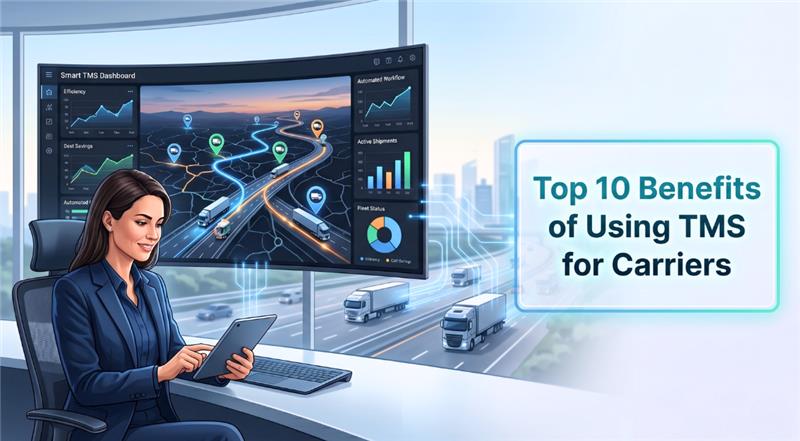
Top 10 Benefits of Using TMS for Carriers
Introduction Managing a trucking business today requires operational control, cost efficiency, and real-time visibility. Carriers are dealing with rising fuel prices, compliance requirements, and increasing pressure from customers who expect accurate delivery updates. Manual systems such as spreadsheets, phone calls, and paperwork often create inefficiencies and slow down growth. A TMS for carriers solves these challenges by centralizing operations and introducing automation across dispatching software, truck tracking software, billing, and fleet management. It allows carriers to move from reactive operations to proactive decision-making. What is a TMS for Carriers A TMS for carriers is a software solution that helps manage and optimize transportation operations from a single platform. It enables carriers to: Beyond automation, this transportation management system for carriers provides actionable insights that help improve operational efficiency, reduce costs, and support business growth. Why Carriers Need a TMS Carriers today operate in a fast-moving and competitive logistics environment. Without digital tools, it becomes difficult to maintain efficiency and profitability. Challenge Without TMS With TMS for Carriers Dispatch Manual coordination Automated workflows Visibility Limited updates Real-time tracking Costs High fuel and empty miles Optimized operations Compliance Risk of penalties Automated systems Billing Slow invoicing Faster payments This carrier TMS software brings structure, control, and scalability to daily operations. Top 10 Benefits of Using a TMS for Carriers 1. Reduced Transportation Costs A transportation management system for carriers helps reduce transportation costs by optimizing routes, minimizing empty miles, and improving fuel efficiency. Instead of relying on manual planning, carriers can use system-driven routing that ensures each trip is cost-effective. Over time, this leads to significant savings and better profit margins. 2. Smarter Load Planning Efficient load planning is critical for maximizing fleet utilization. This trucking management system automatically assigns loads based on truck capacity, availability, and delivery timelines. This reduces idle time and ensures that every trip contributes to revenue generation. 3. Real-Time Tracking and Visibility With a carrier TMS software, dispatchers and managers get real-time visibility into shipments, vehicles, and driver activity. This helps identify delays early, adjust routes if needed, and provide accurate updates to customers, improving operational control. 4. Improved Customer Satisfaction Customers expect transparency and timely communication. This transportation management platform enables automated notifications, real-time tracking links, and accurate ETAs. This builds trust, improves service quality, and increases the chances of repeat business. 5. Faster Billing and Cash Flow Manual invoicing often delays payments and creates errors. This carrier TMS software automates billing processes and digitizes documentation such as proof of delivery. This speeds up payment cycles and improves overall cash flow with automated driver payroll software solution. 6. Compliance and Safety Management Regulatory compliance is a major concern for carriers. This trucking management system helps manage driver logs, safety reports, and compliance documentation automatically. This reduces the risk of violations and ensures smooth audits. 7. Seamless Integrations Modern logistics operations depend on multiple tools. This transportation management system for carriers integrates with GPS tracking systems, accounting software, and fuel management platforms, creating a unified system where all data flows seamlessly. 8. Better Fleet Management Fleet performance directly impacts operational efficiency. This carrier TMS software allows businesses to monitor vehicle usage, track maintenance schedules, and reduce unexpected breakdowns. This improves reliability and reduces downtime. 9. Automation of Operations This logistics automation platform automates repetitive tasks such as dispatching, load matching, and communication. This reduces manual workload, minimizes errors, and allows teams to focus on strategic activities. 10. Data-Driven Decision Making Data is essential for improving performance. This trucking management system provides detailed reports and analytics that help carriers identify inefficiencies, track key metrics, and make informed business decisions. Comparison Table Operations Area Before TMS After TMS Dispatch Manual calls Automated workflows Tracking Limited visibility Real-time updates Billing Delayed invoices Faster payments Compliance Paper-heavy Automated reports Efficiency Low High How to Choose the Best TMS for Carriers When selecting a TMS for carriers, consider: The right system should simplify operations while supporting long-term business expansion. Why Fast Forward TMS is Built for Carriers Fast Forward TMS is designed specifically for carriers, focusing on real operational challenges rather than generic logistics workflows. With over 18 years of industry expertise, it provides a practical and easy-to-use platform that simplifies dispatch, improves visibility, and accelerates billing processes. Features such as smart load matching, GPS tracking, driver mobile applications, and automated payroll create a complete ecosystem for managing transportation operations. Trusted by more than 1,500 carriers, it enables businesses to streamline workflows, reduce operational inefficiencies, and scale with confidence. Final Thoughts The trucking industry continues to evolve, and carriers that rely on manual systems often struggle to keep up with increasing demands. A TMS for carriers provides the structure, automation, and insights needed to improve efficiency, reduce costs, and deliver better service. If your goal is to optimize operations and scale your business without added complexity, adopting a modern transportation management system is a critical step. Explore how Fast Forward TMS can support your growth and transform your operations. FAQ’s