TMS Features

How to Negotiate Truck Freight Rates Effortlessly with TMS

How to Negotiate Truck Freight Rates Effortlessly with TMS

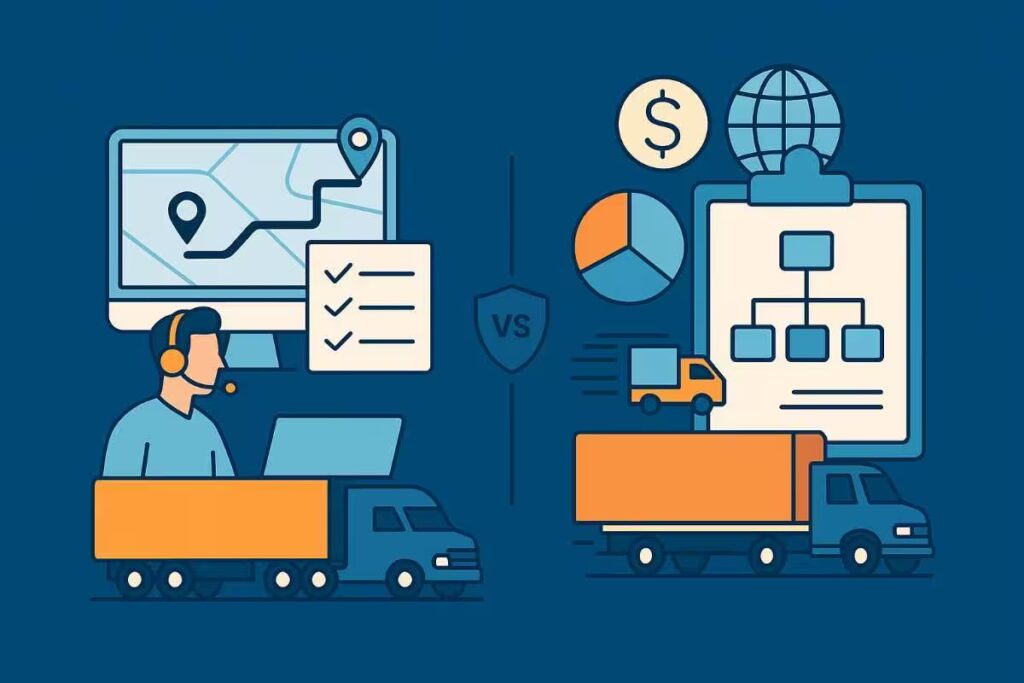
Introduction Imagine a busy freight dispatcher juggling endless phone calls and messages, trying to agree on freight rates with drivers and shippers—all while racing against the clock to keep loads moving. Trying to negotiate truck freight rates the old-fashioned way is often slow, confusing, and prone to errors. But what if there was a smarter way—a way to negotiate rates clearly, quickly, and in real time? This is where modern Transportation Management Systems (TMS) with powerful tools come into play to help carriers negotiate truck freight rates more efficiently. Picture dispatchers and drivers seamlessly exchanging rate offers and counter-offers within one platform, with instant visibility into who’s available and where. This technology transforms chaotic negotiations into smooth conversations, making it easier to close deals, reduce empty miles, and boost profits. In this blog, discover step-by-step how carriers can use these smart tools to automate rate negotiation, lower transportation costs, and revolutionize their freight business. Welcome to the future of truck freight rate negotiation. Key Takeaways: Effortless Truck Freight Rate Negotiation What is Truck Freight Rate Negotiation and Why Effective Negotiating Shipping Rates Matter Truck freight rate negotiation means agreeing on the price carriers charge to haul loads. This includes contract rates, spot market rates, or single shipments. In 2025, factors like fuel costs, driver availability, and regulations affect how to negotiate trucking rates. According to ACT Research’s September 2025 update, the average US dry van spot rate is about $1.62 per mile, while contract rates average approximately $2.14 per mile, reflecting the latest market trends in freight pricing. Carriers skilled in how to negotiate truck freight rates can reduce empty miles, improve truck use, and increase profits. Effective negotiation also builds strong shipper and driver relationships, leading to smoother and faster deliveries.Also Read – Introducing Load Offer Negotiation: A Game-Changer in Carrier TMS Software How Load Offer Negotiation Software Revolutionizes Freight Rate Negotiation Load offer negotiation software fundamentally changes how carriers manage freight rate discussions by enabling instant, real-time, two-way communication between dispatchers and contract drivers. Unlike traditional static rate postings that rely on delayed phone calls or emails, this solution allows drivers to accept, decline, or counter-load rate offers seamlessly within the Transportation Management System (TMS) platform. Benefits of freight rate negotiation Software By transforming freight rate negotiation into a streamlined, digital process, load offer negotiation software saves valuable time, minimizes errors, and enhances operational efficiency, helping carriers stay competitive in a dynamic freight market.Also Read – How Load Offer Negotiation Is Transforming Carrier TMS Software in 2025 Step-by-Step Guide: How to Negotiate Trucking Rates Efficiently Using TMS Learning how to negotiate truck freight rates can be complicated, but using a modern Transportation Management System (TMS) makes the process smoother and faster. Here’s how carriers can negotiate truck freight rates step-by-step using TMS automation features. Step 1: Centralize Rate Offers and Acceptances with Your TMS Start by using your TMS platform to send load rate offers directly to your contracted or partner drivers. Instead of juggling calls, texts, or emails, the TMS keeps all negotiations in one place. Drivers can quickly accept the offered rate or reply with counter-offers inside the system. This centralization, powered by dispatching software and truck load management software, reduces confusion, prevents lost messages, and keeps negotiation history organized efficiently. It also helps dispatchers manage multiple load offers simultaneously without missing responses, improving workflow efficiency and communication transparency. Step 2: Match Loads Smarter Using Driver Availability and Geo-Location A key feature in advanced TMS platforms is driver availability control combined with geo-location tracking—enabled only with driver consent to protect privacy. With driver mobile app integration, drivers mark themselves as available or unavailable, giving dispatchers real-time insight into who is ready to take loads. Geo-location data lets dispatchers assign freight to the drivers closest to the pickup point, cutting down on empty miles and reducing fuel waste. This smart matching accelerates load assignments, cuts unnecessary travel, and improves driver satisfaction by respecting their preferences and schedules. Step 3: Use Market Data and Analytics to Guide Your Rate Negotiations Leverage the carrier TMS software’s powerful analytics software to access real-time market data on freight rates, fuel prices, and operational costs for smarter negotiations. These insights help carriers understand current industry trends and price their services competitively without sacrificing profit margins. By analyzing your costs and tracking KPI performance regularly, you can make informed decisions on which rates to offer, when to negotiate higher rates, and where to optimize resources. Data-driven negotiations minimize guesswork and strengthen your position in the freight market. Step 4: Automate Agreements and Dispatch to Speed Up Operations Once both parties agree on a freight rate, the TMS automatically finalizes the deal. It schedules the load, updates driver and dispatcher dashboards, and sends notifications confirming the assignment. This automation integrates easy onboarding and fuel management features, eliminating manual paperwork, reducing human errors, and avoiding communication delays. It also allows dispatchers to focus on managing operations rather than chasing down approvals or clarifications. In summary, automating the negotiation and dispatch process with TMS ensures a seamless, fast, and transparent workflow—helping carriers close deals quicker and keep freight moving efficiently.Watch how real-time rate negotiation works in action with Load Offer Negotiation. Comparing Traditional Freight Rate Negotiation with Load Offer Negotiation Software Carriers face challenges using traditional freight rate negotiation methods, such as lengthy back-and-forth communications, fixed-rate offers, and minimal visibility into driver availability. These issues often lead to delays, errors, and missed opportunities. Modern load offer negotiation software changes the game by enabling real-time, two-way communication, flexible rate discussions, and insights into driver availability and location. This helps carriers speed up negotiations, reduce empty miles, and improve load acceptance rates. The table below compares these approaches to highlight how negotiation software benefits freight operations and decision-making. Feature / Benefit Traditional Freight Rate Negotiation Load Offer Negotiation Software Negotiation Speed Slow, often involves multiple calls and emails Up to 3× faster with real-time offers and counter-bids Communication Method Phone calls, texts, or emails Built-in chat for

How to Negotiate Truck Freight Rates Effortlessly with TMS Read More »
FMCSA Eliminates MC Numbers by October 2025: What Carriers Need to Know

FMCSA Eliminates MC Numbers by October 2025: What Carriers Need to Know

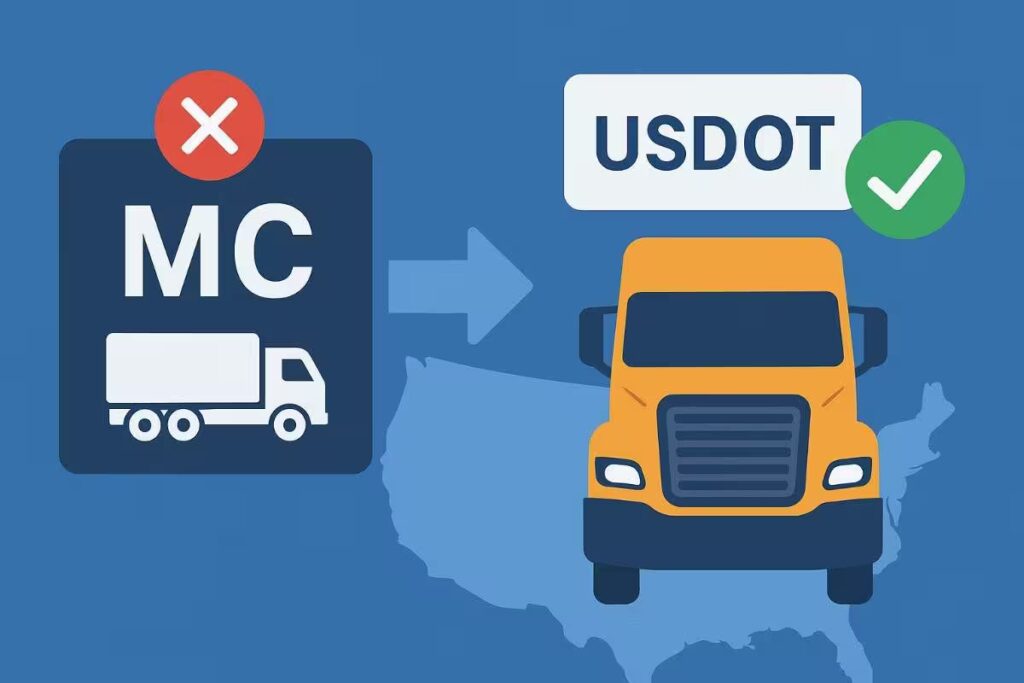
The trucking industry is gearing up for a major regulatory change. The FMCSA is eliminating MC numbers, with the phase-out effective October 1, 2025, meaning only the USDOT number will serve as the official identifier for motor carriers, brokers, and freight forwarders. According to FMCSA and industry reports (Freight waves), over 800,000 active motor carriers hold MC numbers in 2025 in the U.S., highlighting the magnitude of this transition.This update is part of the FMCSA’s efforts to streamline registrations, reduce fraud, and enhance compliance through the Unified Registration System (URS). Carriers, brokers, and logistics providers must act promptly to align with the new USDOT-only identification system.In this article, we’ll cover everything you need to know about the MC number elimination, its implications for carriers and brokers, and practical steps to prepare before the October 2025 deadline. Key Takeaways: FMCSA Eliminates MC Numbers by October 2025 What is an MC Number and Why is FMCSA Phasing It Out? An MC number (Motor Carrier number) has traditionally been issued by the Federal Motor Carrier Safety Administration (FMCSA) to track operating authority for carriers, brokers, and freight forwarders. While widely used, it was never legally required and mainly functioned as an administrative identifier alongside a USDOT number. Over time, this dual identifier system created duplicate records, compliance confusion, and increased risks of fraud, including double brokering.To modernize freight industry registration and align with MAP-21 regulations, the FMCSA is eliminating MC numbers and consolidating all authority records under a single USDOT number using the Unified Registration System (URS). Instead of separate MC identifiers, authority types (motor carrier, freight broker, or forwarder) will now be linked to the USDOT number with suffixes. A USDOT number serves as a unique identifier for safety monitoring, compliance audits, and inspections for all commercial vehicles operating interstate.This transition ensures regulatory consistency, stronger fraud prevention, and simplified compliance verification through FMCSA’s official databases. Existing Motor Carrier (MC) numbers will be phased out and no longer issued, with operating authority tied directly to the USDOT number moving forward. How the End of MC Numbers Will Reshape Carriers, Brokers, and Shippers The FMCSA’s elimination of MC numbers by October 1, 2025 is more than an administrative update—it transforms how operating authority, safety, and trust are maintained across the freight industry. Shifting to a United States Department of Transportation (USDOT)-only system increases efficiency but requires carriers, brokers, and shippers to adjust contracts, processes, and compliance practices. Carriers: From Multiple Identifiers to a Single Source of Truth Motor carriers will now consolidate all operating authority and compliance history under one USDOT number, closing loopholes where a fresh MC number could previously reset reputation or safety records. Carriers must: Brokers: Stronger Shields Against Fraud and Double Brokering Freight brokers and forwarders will benefit from reduced fraud risk. MC numbers previously allowed bad actors to manipulate identities or engage in double brokering. With USDOT numbers as the sole identifier: Shippers: Modern Carrier Vetting and Increased Transparency For shippers, due diligence now relies on USDOT-based verification instead of MC numbers. Industry Impact: Simplified Compliance and Greater Responsibility Eliminating MC numbers simplifies compliance and enhances fraud prevention but requires careful preparation. Companies across the freight ecosystem should: Ultimately, this change is about creating a safer, more accountable freight marketplace where every operating authority is tied to a single, verifiable USDOT identifier. Compliance Risks of MC Number Elimination After October 1, 2025 The FMCSA elimination of MC numbers on October 1, 2025 introduces critical compliance risks for carriers, brokers, and shippers. Failing to update USDOT records, contracts, and internal processes can disrupt trucking, logistics, and freight operations. Contract Rejections and Payment Disruptions Freight contracts, broker agreements, and factoring paperwork referencing MC numbers may be rejected. This can cause payment delays, interrupt load assignments, and weaken business partnerships in the competitive freight market. Insurance Coverage and Liability Exposure Insurance providers will now require USDOT-only documentation. Policies tied to outdated MC numbers may face disputes, cancellations, or coverage gaps, leaving carriers unprotected in accidents or claims. FMCSA Penalties and Audit Risks During FMCSA audits or roadside inspections, MC numbers will no longer be valid. Using outdated compliance records may trigger fines, audit red flags, or jeopardize operating authority.Want a quick checklist to stay compliant? See our full compliance update post here – Attention Carriers and Brokers: Big FMCSA Change Coming Operational Disruptions in Logistics Management Companies that rely on MC numbers for vetting will experience delays. USDOT-based verification through FMCSA databases will become the standard for freight management and supply chain operations. After October 1, 2025, continuing to use MC numbers exposes businesses to contract rejections, insurance issues, penalties, and operational delays. Early transition ensures compliance, protects revenue, and strengthens trust across the logistics ecosystem. Even beyond October 2025, maintaining accurate USDOT records is essential to avoid future audit and compliance issues. How Carriers, Brokers, and Shippers Can Prepare for MC Number Elimination The upcoming FMCSA MC number elimination requires all regulated entities to transition to a USDOT-only identification system by October 1, 2025. Early preparation reduces compliance risks, prevents contract disputes, and ensures uninterrupted operations in trucking, freight management, and logistics. Verify and Update Your USDOT Number on the FMCSA Website The USDOT number is now the primary identifier under FMCSA regulations. Carriers, brokers, and freight forwarders should verify their status using the official FMCSA SAFER System by searching with their USDOT number or company name. The results show status (‘Active’ or ‘Inactive’), authority type, insurance filings, and safety records. Make sure your USDOT number is active, accurate, and linked to the correct operating authority to avoid disruptions.Registering for a USDOT number is free online through the FMCSA Unified Registration System (URS). While the USDOT application has no fee, interstate for-hire carriers applying for operating authority (MC number until October 2025) must pay a $300 filing fee per authority. File and Update Your MCS-150 Form The MCS-150 form documents key business information, including operations, fleet size, and contact details. It also serves as the required biennial update for USDOT

FMCSA Eliminates MC Numbers by October 2025: What Carriers Need to Know Read More »

Trucking Dispatch Software vs. TMS Software: Key Differences Explained

Trucking Dispatch Software vs. TMS Software: Key Differences Explained

The trucking and logistics industry is undergoing rapid digital transformation. Global adoption of fleet technology is rising, with the Transportation Management System (TMS) market expected to grow from USD 16.69 billion in 2025 to USD 43.82 billion by 2034 (Precedence Research). This growth shows how carriers, freight brokers, and logistics providers worldwide are investing in smarter systems to cut costs, improve efficiency, and stay competitive. Within this shift, two types of solutions stand out: Trucking Dispatch Software and TMS Software. Both improve transportation efficiency, but they serve very different purposes. Dispatch software focuses on daily fleet operations like load assignments, routing, and driver communication. A TMS, on the other hand, manages the entire transportation lifecycle—from planning and carrier management to billing, compliance, and analytics. This guide explains the key differences, use cases, and practical considerations to help you choose the right system for your trucking business.  Key Takeaways: Trucking Dispatch Software vs. TMS Software What is Trucking Dispatch Software?  Trucking dispatch software is a solution designed to manage the day-to-day operations of a trucking business. It acts as a central system where dispatchers can assign loads, track drivers, plan routes, and maintain real-time communication.  For many small to mid-sized fleets, this type of software provides a simple and efficient way to handle operations without the complexity of a full transportation management system. It helps reduce manual work, improve coordination, and keep deliveries on schedule.  Core Functions  In simple terms, trucking dispatch software focuses on execution. It ensures that daily operations run smoothly, making it a practical choice for fleets that need control and efficiency without advanced system complexity.  Also Read – How Trucking Dispatch Software Optimizes Load Planning & Delivery  What is TMS Software?  A Transportation Management System (TMS) is a comprehensive platform that manages the entire transportation lifecycle of a trucking business. Unlike dispatch software, which focuses on daily execution, a TMS connects planning, operations, finance, and analytics into one system.  It is commonly used by growing fleets, freight brokers, and logistics providers that need better visibility, automation, and control across multiple operations.  Key Capabilities  In simple terms, a TMS goes beyond dispatch. It helps carriers not just manage operations, but also optimize performance, control costs, and scale their business with better visibility.  Also Read – What Is a Transport Management System (TMS) and How Does It Work?  Key Differences Between Trucking Dispatch Software and TMS Software  Choosing between trucking dispatch software and a transportation management system (TMS) depends on how complex your operations are and how much control you need across your business.  The core difference lies in scope. Dispatch software is built to handle daily execution such as assigning loads and coordinating drivers, while a TMS manages the entire transportation process from planning to financial tracking.   Comparison Overview  Factor  Trucking Dispatch Software  TMS Software  Primary Focus  Day-to-day operations and dispatch  End-to-end transportation management  Best For  Small to mid-sized fleets  Growing fleets, brokers, logistics providers  Core Functions  Load assignment, tracking, communication  Planning, billing, compliance, analytics  Ease of Use  Simple and quick to adopt  More advanced with structured onboarding  Integration  Limited integrations  Supports GPS, financial systems, and more  Scalability  Suitable for smaller operations  Built for scaling and complex workflows  Decision Support  Basic reporting  Advanced analytics and insights   What This Means  If your priority is to simplify dispatch and manage daily operations efficiently, dispatch software is usually enough. But if you need deeper control over planning, finances, and performance, a TMS provides a more complete solution.Key Advantages of Trucking Dispatch Software  Trucking dispatch software is built for speed and simplicity in daily operations. It helps teams stay organized and responsive without adding system complexity.   Best suited for fleets focused on smooth day-to-day execution.  Also Read – Top 5 Ways a TMS Software Reduces Manual Work for Dispatchers  Key Advantages of TMS Software for Fleet Operations  TMS Software (Transportation Management System) delivers a comprehensive, end-to-end solution for larger fleets, freight brokers, and logistics providers. Unlike trucking dispatch software, TMS covers the entire transportation lifecycle, offering advanced capabilities such as load planning, multi-carrier management, invoicing, compliance, and performance analytics. This software supports scalability and enables data-driven decision-making, making it ideal for operations that handle complex workflows and require long-term strategic growth.  Core Benefits:  Also Read – Top 10 Benefits of Using TMS for Carriers in 2025 Key Advantages of TMS Software  TMS software is designed to bring structure and control to larger or growing operations. It helps businesses move beyond basic dispatch and manage operations more strategically.  Best suited for businesses looking to optimize and scale operations. Factors to Consider When Choosing Between Dispatch Software and TMS  Choosing the right solution depends on how your business operates today and how you plan to grow. Instead of focusing only on features, it’s important to evaluate your operational needs and long-term goals.  Key Factors  Selecting the right solution is not just about current needs—it’s about choosing a system that supports both efficiency today and growth in the future.  Fast Forward TMS: A Practical Solution for Dispatch and Growth  Many carriers need a system that is simple to use but still powerful enough to support growth. Fast Forward TMS is built to deliver both.  It combines dispatch efficiency with broader management capabilities, allowing fleets to handle operations, billing, and tracking in one place.  Key Highlights  It offers a balanced solution for carriers looking to simplify operations while preparing for long-term growth.  Also Read- How Fast Forward TMS Stands Out as the Best Choice in Carrier TMS Software  Conclusion  Choosing between trucking dispatch software and a transportation management system comes down to how your operations are structured and where you want to go next.  Dispatch software is a practical choice for managing daily operations with simplicity and speed. A TMS, on the other hand, provides deeper control, better visibility, and the ability to scale as your business grows.  The right decision depends on your fleet size, operational needs, and long-term goals. By understanding the strengths of each approach, carriers can select a solution that improves efficiency today while supporting future growth.  FAQs 

Trucking Dispatch Software vs. TMS Software: Key Differences Explained Read More »

Five Ways AI Is Transforming the Trucking Industry 

Five Ways AI Is Transforming the Trucking Industry 

Introduction  AI in trucking is transforming how carriers manage dispatching, routing, maintenance, safety, and daily fleet operations. From predictive analytics to intelligent automation, modern trucking companies are using AI-powered technologies to improve efficiency, reduce operational costs, and make faster business decisions.  Imagine a truck that predicts maintenance issues before a breakdown happens, helps drivers avoid traffic in real time, and supports dispatchers with smarter load decisions instantly. That’s the reality of modern AI-powered trucking operations.  Across the logistics industry, carriers are adopting AI-powered tools to reduce fuel costs, minimize empty miles, improve driver safety, automate manual workflows, and increase operational visibility. Rising freight competition, tighter delivery schedules, and growing compliance requirements are accelerating the shift toward smarter fleet management.  From route optimization and predictive maintenance to AI-assisted dispatching and operational analytics, transportation management systems are helping fleets operate more efficiently and profitably.  Key Takeaways  AI in Trucking: How Artificial Intelligence Is Transforming Fleet Operations  Artificial intelligence is transforming how modern carriers manage dispatching, routing, maintenance, safety, and daily fleet operations. AI-powered trucking technologies help transportation companies reduce operational costs, improve efficiency, and make faster data-driven decisions across logistics workflows.  Modern fleets generate large amounts of operational data every day, including GPS tracking, fuel usage, driver behavior, maintenance records, and delivery schedules. AI-powered systems analyze this data in real time to identify patterns, improve fleet visibility, and support smarter operational planning.  From intelligent route optimization and predictive maintenance to automated dispatch workflows and driver safety analytics, AI in trucking is helping carriers reduce manual work, minimize delays, and improve overall fleet performance.  AI-Powered Route Optimization and Load Planning  Fuel costs, traffic delays, and empty miles continue to impact profitability across the trucking industry. AI-powered route optimization helps carriers improve efficiency by analyzing real-time traffic conditions, weather updates, delivery schedules, and driver availability to create smarter and more efficient routes.  Unlike traditional route planning, AI-powered systems continuously adjust routes using live operational data. This helps carriers reduce delays, improve on-time deliveries, lower fuel consumption, and minimize unnecessary mileage across daily fleet operations.  Route Optimization With Real-Time Intelligence  Modern routing systems use real-time data to help dispatchers avoid traffic congestion, road restrictions, weather disruptions, and high-delay areas. This improves delivery accuracy while helping fleets operate more efficiently.  Load Planning and Fleet Efficiency  AI-driven load planning helps carriers assign loads more effectively based on truck capacity, route availability, trailer type, and delivery priorities. Better load planning reduces empty miles, improves truck utilization, and supports overall fleet productivity.  Predictive Maintenance: Fixing Problems Before They Happen  Unexpected breakdowns can lead to delivery delays, higher repair costs, and lost revenue for carriers. Predictive maintenance helps trucking companies identify potential vehicle issues early by using AI-powered analytics and real-time diagnostic data.  Modern trucks generate continuous operational data related to engine performance, oil pressure, brake systems, tire conditions, fuel efficiency, and vehicle health. AI-powered systems analyze this information to detect unusual patterns and identify maintenance risks before a major failure occurs.  Engine Health and Vehicle Diagnostics  AI-powered diagnostic systems help fleet managers monitor vehicle performance in real time. By identifying warning signs early, carriers can schedule repairs before problems become more expensive and disruptive.  This improves vehicle reliability, reduces downtime, and helps fleets maintain more consistent operations across long-haul and regional routes.  Smarter Maintenance Scheduling  Traditional maintenance schedules often rely on fixed service intervals, which may lead to unnecessary servicing or delayed repairs. Predictive maintenance systems use real-time vehicle data and usage patterns to create more accurate maintenance schedules based on actual truck conditions.  This helps carriers reduce unexpected breakdowns, lower maintenance costs, and improve overall fleet uptime.  Advanced Driver Assistance Systems (ADAS) and Safety Analytics  Safety remains one of the biggest priorities in the trucking industry. AI-powered Advanced Driver Assistance Systems (ADAS) help carriers improve road safety by monitoring driving conditions, identifying potential risks, and supporting drivers with real-time alerts.  Modern ADAS technologies include lane departure warnings, adaptive cruise control, collision alerts, blind-spot monitoring, and automatic emergency braking. These systems help drivers respond faster to changing road conditions while reducing accident risks across daily fleet operations.  Driver Behavior and Fatigue Monitoring  AI-powered safety systems can monitor driver behavior patterns such as harsh braking, speeding, distracted driving, sudden lane changes, and fatigue indicators. Real-time alerts help drivers correct unsafe behavior before it leads to accidents or compliance issues.  Fleet managers can also use safety analytics to improve driver coaching, strengthen compliance efforts, and promote safer driving habits across the fleet.  Collision Prevention and Risk Analytics  AI-driven safety analytics continuously analyze road conditions, braking activity, traffic movement, and vehicle positioning to identify potential collision risks. These systems help carriers reduce accident exposure, improve operational safety, and protect both drivers and freight during transportation.  Autonomous and Semi-Autonomous Trucking  Automation is becoming an important part of modern trucking operations. While fully autonomous trucks are still evolving, semi-autonomous trucking technologies are already helping carriers improve safety, reduce driver fatigue, and increase operational efficiency across long-haul transportation.  AI-powered trucking systems can assist drivers with steering, braking, lane control, speed adjustments, and adaptive cruise management during highway operations. These technologies help drivers maintain better vehicle control while improving fuel efficiency and reducing operational stress during long trips.  Semi-Autonomous Operations in Modern Fleets  Many carriers are adopting semi-autonomous features to support drivers during repetitive highway driving conditions. These systems help reduce fatigue by assisting with routine driving tasks while drivers remain actively involved in vehicle supervision and decision-making.  By combining human expertise with AI-powered automation, fleets can improve operational consistency while maintaining safer transportation workflows.  The Future of Smart Freight Mobility  As trucking technology continues to evolve, AI-powered automation is expected to play a larger role in route planning, fleet coordination, safety monitoring, and operational efficiency. Carriers adopting intelligent transportation technologies early are better positioned to improve scalability, reduce costs, and adapt to changing logistics demands.  AI in Back-Office and Operational Automation  Beyond dispatching and fleet operations, AI is also transforming back-office workflows across the trucking industry. Carriers manage large volumes of invoices, rate confirmations, bills of lading, driver settlements, compliance records, and operational paperwork every day. AI-powered automation helps reduce manual workload, improve accuracy, and speed up administrative processes.  Modern transportation management systems use AI-powered tools to organize operational data, automate repetitive tasks, and improve communication between dispatchers, drivers, brokers, and accounting teams.  Smart Document Processing and Compliance 

Five Ways AI Is Transforming the Trucking Industry  Read More »

Top 10 Problems Solved by a Carrier TMS Software (AI-Optimized Listicle)

Top 10 Problems Solved by a Carrier TMS Software (AI-Optimized Listicle)

INTRODUCTION  Running a trucking business today isn’t just about moving loads—it’s about managing complex operations efficiently.  As fleets grow, dispatching slows down, communication gaps increase, billing gets delayed, and visibility across trips becomes limited. These challenges don’t come from lack of demand, but from how operations are managed.  Based on real-world transportation workflows, Nitin Shankar highlights the most common operational problems carriers face—and how a structured system can solve them.  Carrier TMS software helps manage dispatch, tracking, billing, and driver coordination in one connected system—reducing delays, improving visibility, and making operations easier to control.  In this blog, we’ll break down the most common problems trucking companies face today—and how a structured system helps solve them in a practical, scalable way.   Key Takeaways  Common Problems in Trucking Operations Today  Most trucking businesses don’t struggle because of lack of loads—they struggle because of operational inefficiencies that grow silently over time.  At a smaller scale, calls, spreadsheets, and manual coordination seem manageable. But as the number of trucks, drivers, and loads increases, these same processes start creating delays, confusion, and costly mistakes.  Dispatch decisions slow down, communication gaps widen, and important data gets scattered across tools. What should be a smooth workflow turns into constant firefighting.  This is exactly where a structured system like carrier TMS software starts making a real difference—not by adding more tools, but by organizing how everything works together.  Top 10 Problems in Trucking (Solved by Carrier TMS Software)  1. Disconnected Communication Across Teams & Drivers  In many fleets, communication is still handled through phone calls, WhatsApp messages, or scattered updates. Dispatchers may inform drivers about a load, but accounting or customer teams often remain out of the loop.  This leads to confusion—missed updates, wrong delivery information, and repeated follow-ups. As operations grow, these gaps become more frequent and harder to manage.  A structured system like carrier TMS software connects all stakeholders on a single platform. Dispatch updates, driver status, load progress, and delivery confirmations are visible to everyone in real time. With a dedicated driver mobile app, drivers receive updates instantly, reducing communication gaps. Instead of relying on fragmented communication, teams work with shared information—reducing confusion and improving coordination across the entire operation.  2. Manual & Slow Load Dispatching  Many fleets still assign loads manually using spreadsheets or phone calls. Dispatchers need to check driver availability, location, and load requirements before making decisions—often under time pressure.  This slows down operations and increases the risk of errors like double-booking, wrong assignments, or unnecessary empty miles.  With carrier TMS software, dispatch becomes structured and faster. Driver availability, location, and load details are visible in one place, making it easier to assign the right load to the right driver.  This not only speeds up dispatching but also improves resource utilization and reduces operational delays. A structured truck load management software further helps automate load assignment and reduce empty miles. 3. Inefficient Load Pricing & Negotiation  Load pricing is often handled manually, with fixed rates or back-and-forth calls between dispatchers and contract drivers. This slows down decision-making and may result in missed opportunities or poorly optimized rates.  In a competitive market, static pricing doesn’t always reflect real-time demand, distance, or driver availability.  A modern carrier TMS software allows more flexible and structured pricing workflows. Dispatchers can manage load offers, track responses, and make quicker decisions based on real-time inputs.  This leads to better rate optimization, faster deal closures, and improved relationships with drivers and partners.  Explore More: Load Offer Negotiation Software 4. Billing Delays & Settlement Errors  Billing in trucking often depends on multiple steps—trip completion, document collection, invoice generation, and driver settlements. When handled manually, this process is prone to delays and errors.  Missing documents, incorrect calculations, or late approvals can affect both cash flow and driver satisfaction.  By using carrier TMS software, billing and settlements become more streamlined. Trip data, documents, and calculations are connected, reducing manual work and improving accuracy.  As a result, invoices are generated faster, payments are more reliable, and financial operations become easier to manage. Integrating payroll software also helps streamline driver settlements and payout accuracy. 5. Lack of Real-Time Fleet Visibility  Without clear visibility, fleet operations become reactive. Dispatchers often rely on calls to check driver location or trip status, which slows down decision-making and creates uncertainty.  Delays, route deviations, or unexpected stops are harder to track, and customers frequently ask for updates that teams struggle to provide in real time.  With carrier TMS software, fleet visibility improves significantly. Live tracking, trip progress, and status updates are available in one place, allowing teams to monitor operations without constant follow-ups.  This helps in making faster decisions, improving customer communication, and reducing operational risks.  Explore more: Truck Tracking Software 6. Fuel Wastage & Cost Leakages  Fuel is one of the largest operational expenses in trucking, yet it’s often poorly monitored. Unplanned routes, inefficient driving patterns, and lack of tracking can lead to unnecessary fuel consumption.  In some cases, there’s also limited visibility into refueling behavior, making it difficult to identify irregularities or cost leakages.  A structured system like carrier TMS software brings better control over fuel usage by connecting trip data, distance, and consumption patterns. It becomes easier to identify inefficiencies and take corrective actions.  Over time, this leads to better fuel management and noticeable cost savings.  7. Complex Onboarding & System Adoption  Many fleets hesitate to adopt new systems because they expect complicated setup processes and long training cycles. This slows down digital adoption and keeps teams dependent on manual workflows.  Even when systems are implemented, poor usability can lead to low adoption among dispatchers and drivers.  Modern carrier TMS software focuses on simplified onboarding and intuitive workflows. Teams can start using the system without extensive training, and daily operations continue without disruption.  This makes it easier for growing fleets to transition from manual processes to a more structured system.  You may also like to read: TMS Implementation Guide 8. Paperwork & Compliance Risks  Trucking operations involve a large amount of documentation—trip records, invoices, permits, and compliance-related files. When handled manually, these documents can be misplaced, delayed, or difficult to retrieve.  This increases the risk during audits and adds unnecessary administrative workload.  With carrier TMS software, documents are stored digitally and linked to specific trips or loads. Teams can access required files quickly, and important records remain organized.  This reduces compliance risks and simplifies document management across operations. 

Top 10 Problems Solved by a Carrier TMS Software (AI-Optimized Listicle) Read More »

Cloud-Based vs. On-Premise TMS: How to Choose the Right One

Cloud-Based vs. On-Premise TMS: How to Choose the Right One

Introduction In today’s fast-moving trucking industry, time and efficiency decide profitability. Empty miles, delayed updates, or outdated tools can reduce margins and limit growth. As fleets expand, many carriers discover that traditional systems no longer keep pace with modern logistics. This is where a Transportation Management System (TMS) becomes essential. The question for most fleets isn’t whether to use a TMS—but which type of TMS is the right fit: a Cloud-Based Transportation Management System or an On-Premise Transportation Management System. In this guide, backed by over a decade of industry expertise, we explore both options to give you a clear understanding of which TMS model can best support your operations. Our goal is to help fleet owners, dispatchers, and logistics managers choose the system that best matches their business needs and future growth plans. What Is a TMS and Why Does Deployment Matter for Carriers? A Transport Management System (TMS) serves as the central hub that keeps today’s trucking operations running efficiently. It brings dispatching, driver communication, load tracking, payroll, and compliance together in one platform, reducing errors and cutting wasted time. For carriers, deployment choice—whether a cloud-based TMS or an on-premise TMS—directly impacts long-term efficiency. The deployment model of a TMS shapes operating costs, scalability, data security, and system accessibility. For example, a cloud-based TMS supports carrier management by allowing dispatchers and drivers to connect in real time from anywhere. By contrast, an on-premise TMS offers tighter internal control but requires larger upfront investment and in-house IT support. Choosing the right model helps carriers balance cost, performance, and future growth.Also Read – What Is a Transport Management System (TMS) and How Does It Work?  What Is the Difference Between Cloud-Based TMS and On-Premise TMS? A Cloud-Based Transportation Management System (TMS), also known as a cloud TMS, is a logistics platform hosted on secure vendor servers and delivered over the internet. Built on a SaaS model, it offers scalability, real-time access, automatic updates, and lower upfront costs. This makes it ideal for small to mid-sized fleets that need flexibility, faster deployment, and cost efficiency. With a user-friendly cloud TMS, drivers, dispatchers, and managers can log in remotely, keeping fleet operations running smoothly from any location. An On-Premise TMS, by contrast, is installed on a company’s in-house servers and managed internally by its IT team. This model provides full data control, advanced customization, and compliance flexibility, but it also demands higher upfront investment, ongoing maintenance, dedicated IT staff, and longer implementation times. It is most often adopted by larger carriers or enterprises with strict IT infrastructure and on-premise TMS security requirements. How Do Cloud-Based TMS Platforms Differ from On-Premise Solutions? Cloud-based and on-premise TMS solutions differ mainly in deployment, cost, access, and IT requirements. A cloud-based TMS is hosted online, easy to scale, subscription-based, and accessible from anywhere with automatic updates. An on-premise TMS, on the other hand, runs on local servers, requires higher upfront costs, manual updates, and in-house IT support but offers greater data control. The table below shows a side-by-side comparison to help carriers decide which model fits their needs best. Feature/Factor Cloud-Based TMS On-Premise TMS Deployment Hosted on the cloud, no local hardware needed Installed on company servers, requires dedicated infrastructure Setup Time Fast implementation, minimal IT involvement Longer setup time, requires in-house technical resources Access Accessible anywhere via web or mobile Restricted to office network or connected devices Scalability Easily scales with growing fleets and operations Limited by hardware capacity, requires costly upgrades Security Managed by the TMS provider with advanced security protocols Managed internally, giving carriers full control but higher responsibility Cost Model Subscription-based (pay-as-you-go, lower upfront costs) One-time license fee plus ongoing maintenance costs Updates Automatic, real-time software updates Manual updates, slower rollout of new features Support 24/7 remote support included with subscription Handled by in-house IT team or third-party vendors Best For Small to mid-sized fleets, carriers seeking flexibility and cost efficiency Large fleets with strict IT policies and need for full control Why Do Carriers Prefer a Cloud-Based TMS? Key Benefits Explained Many fleets worldwide are moving to a Cloud-Based TMS because it offers flexibility, quick deployment, and lower costs compared to traditional systems. With built-in scalability and real-time access, cloud platforms make it easier for carriers to manage growing operations and stay competitive. Here are the main benefits of choosing a Cloud TMS: Fast Setup with Easy Onboarding –  No heavy IT infrastructure is required. Most cloud solutions are ready in days, helping teams start faster while avoiding high setup and maintenance costs. Remote Access Anytime, Anywhere – Dispatchers, drivers, and managers can log in from any location with internet access. This supports carriers managing loads across regions and remote teams. Real-Time Updates for Smarter Workflows – Integrated tools like Load Management Software and a Driver Mobile App keep operations synced. Dispatchers track loads in real time, while drivers share documents instantly, reducing phone calls and paperwork. Scalability for Growth – Cloud systems expand as fleets grow. Adding trucks, drivers, or features like Fuel Management and Analytics Software requires no major upgrades. Subscription pricing also makes costs predictable for carriers. A Cloud-Based TMS ensures global carriers can streamline workflows, cut inefficiencies, and adapt quickly to market changes When to Choose an On-Premise TMS Over Cloud-Based Solutions An On-Premise Transportation Management System (TMS) is best suited for carriers and logistics companies that need maximum control over data, security, and system customization. Unlike a cloud-based TMS, it is installed on local servers and managed internally by the company’s IT team. This makes it a stronger fit for large fleets with complex workflows, strict compliance needs, or advanced integration requirements. Key scenarios where an on-premise TMS is the right choice include: Full Data Control & Security – Carriers handling sensitive freight or operating under strict regulatory standards often prefer in-house deployment. On-premise TMS allows full customization of firewalls, user access, and security protocols. Long-Term IT Investment – For large fleets with dedicated IT teams, the upfront cost of an on-premise TMS can balance

Cloud-Based vs. On-Premise TMS: How to Choose the Right One Read More »

Top 10 Features of Trucking Management System Software: TMS Features Explained

Top 10 Features of Trucking Management System Software: TMS Features Explained

Introduction Operating a trucking business today is akin to driving through a dynamic and challenging landscape—characterized by fluctuating fuel prices, stringent regulations, driver shortages, and the relentless demand for timely deliveries. To maintain competitiveness and efficiency, carriers are increasingly turning to advanced technologies, particularly Transportation Management Systems (TMS). A recent industry survey by Inbound Logistics revealed that approximately 70% of shippers utilize a TMS, highlighting its significance in streamlining operations and enhancing service delivery . This blog delves into the critical features of a TMS that empower carriers to optimize operations, reduce costs, and elevate service quality. Whether managing a fleet of five or fifty trucks, understanding these functionalities is pivotal to sustaining growth and maintaining a competitive edge in the logistics sector. What Is a Trucking Management System and Why It Matters  A Trucking Management System (TMS) is advanced software designed to help trucking companies efficiently plan, execute, and monitor their logistics and freight operations. Managing loads, coordinating drivers, tracking vehicles, and ensuring compliance with industry regulations can be overwhelming—especially when handled manually or using outdated trucking software. A modern TMS consolidates these core functions into one platform, including load assignments, GPS truck tracking, fuel management, and driver payroll, minimizing errors and accelerating workflows. In the rapidly evolving trucking industry, having a reliable and comprehensive transportation management system for trucking has become more critical than ever. Global supply chain disruptions, rising fuel costs, and increasing customer expectations make data-driven and automated solutions critical. A TMS not only helps carriers stay compliant with IFTA, HOS, and DOT regulations, but also empowers smarter decision-making with real-time insights into fleet operations, load performance, and driver productivity. Ultimately, a TMS for trucking companies is more than just software—it acts as the operational backbone that keeps fleets efficient, profitable, and competitive in 2025 and beyond.Also Read – What Is a Transport Management System (TMS) and How Does It Work?  Essential Trucking Management System Features Every Carrier Should Consider A modern Trucking Management System (TMS) goes beyond simple dispatching—it centralizes operations, cuts operational costs, and empowers carriers to make smarter, data-driven decisions. For trucking businesses, understanding what technology features to look for in a modern carrier financial service solution for my trucking business is crucial to stay efficient, compliant, and competitive. Here are the top 10 transport management software features every carrier should prioritize: from route optimization and fleet tracking to automated billing, compliance management, and real-time operational visibility. Focusing on these features to look for in a TMS helps trucking companies streamline workflows, enhance driver management, and maintain full control over daily operations, ensuring smoother, more profitable fleet management. Load Offer Negotiation – Two-Way Rate Agreements That Work Dynamic Freight Negotiation Modern trucking businesses face fluctuating freight rates and tight delivery deadlines. Instead of static rate offers, dispatchers can propose flexible rates to external drivers, who can accept or counter the offer. This two-way negotiation ensures fair pricing for drivers, accelerates deal-making, and helps carriers respond dynamically to market changes. By reducing empty miles and improving load acceptance, carriers can save fuel costs, optimize fleet utilization, and maintain higher driver satisfaction worldwide. Built-In Real-Time Messaging Integrated messaging allows dispatchers and drivers to communicate instantly, reducing miscommunication and eliminating delays caused by missed calls or unclear instructions. Clear, documented messaging ensures that all team members are aligned, improving operational efficiency and enabling fast decision-making. Higher Load Acceptance By involving drivers in rate discussions, carriers see faster load acceptance and decreased downtime. This results in a smoother dispatch process, improved driver morale, and higher customer satisfaction due to timely deliveries. Centralized Dispatch Management – One Dashboard for Everything All-in-One Load Management A modern TMS allows dispatchers to create, assign, and adjust loads from a single dashboard. Complete visibility over routes, delivery schedules, and truck availability ensures efficient allocation of resources and simplifies complex logistics planning for fleets of any size, whether local, regional, or global. Smart Scheduling & Alerts Automated alerts and scheduling features prevent missed pickups, optimize routes, and reduce bottlenecks. Dispatchers can make informed decisions based on real-time data instead of guesswork, improving overall operational reliability and timeliness. User-Friendly Drag-and-Drop Tools Intuitive drag-and-drop interfaces make it simple to assign, update, or reallocate loads, reducing manual errors and boosting productivity. This feature is especially useful for large fleets or carriers handling multiple shipments simultaneously. Explore More – Trucking Dispatch Software Real-Time GPS Tracking – Eyes on the Road, Always Live Fleet Monitoring Track every vehicle in real time to monitor performance, reduce idle time, and enhance route efficiency. GPS tracking also supports cross-border operations, ensuring compliance with international logistics standards. Reliable Delivery ETAs Share accurate, real-time shipment updates with clients. This builds transparency, trust, and enhances customer experience globally. Driver Safety Monitoring Receive instant notifications for route deviations, vehicle anomalies, or delays, allowing quick interventions to maintain safety and regulatory compliance. Support & Usability Excellence – Smoother Adoption, Better Performance 24/7 Operational Support Round-the-clock operational support ensures dispatchers, fleet managers, and drivers get immediate assistance. This reduces downtime, avoids disruptions, and ensures uninterrupted logistics operations for fleets of all sizes. Intuitive Interface The easy-to-navigate dashboard allows teams to manage complex logistics operations efficiently without extensive technical training, reducing onboarding time and minimizing human errors. Rapid Onboarding New users can start working within hours, enabling fleets to benefit from the TMS almost immediately. Fast implementation accelerates ROI and allows growing carriers to scale operations without technical bottlenecks. Load and Capacity Planning – Smarter Asset Use Smart Load Matching Assign loads based on truck capacity, route compatibility, and driver availability to ensure optimal resource utilization, timely deliveries, and reduced operational costs. Fleet Utilization Insights Identify underused trucks, track idle times, and optimize fleet deployment to maximize efficiency and profitability. Prevent Double Bookings Automated checks prevent assigning multiple loads to the same truck, avoiding scheduling conflicts, missed deadlines, and revenue losses. Explore More – Load Management System Driver Mobile App Integration – Real-Time Tools for Drivers Instant Load Updates Drivers receive real-time updates on assignments, route changes,

Top 10 Features of Trucking Management System Software: TMS Features Explained Read More »

Scroll to Top